
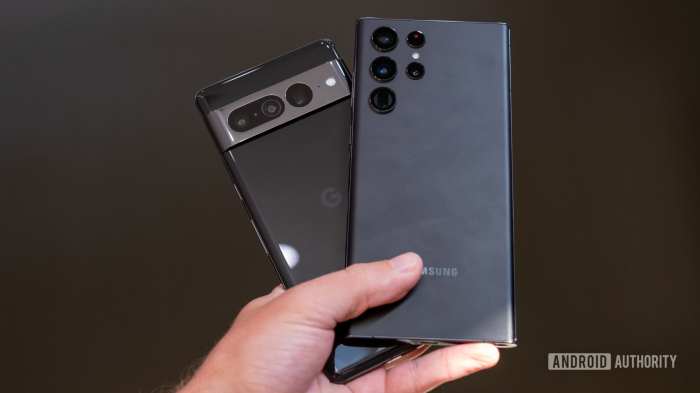
Google Pixel 7 vs Samsung Galaxy S22: This in-depth comparison delves into the intricacies of these two flagship smartphones, examining their key features, performance, and value propositions. We’ll explore everything from camera capabilities to display quality, battery life, and software experiences, ultimately helping you decide which device best suits your needs.
Both the Google Pixel 7 and the Samsung Galaxy S22 are popular choices in the current smartphone market, each offering unique strengths. This analysis will meticulously examine their specifications, highlighting the differences and similarities between them. We’ll dissect the pros and cons of each model to provide a comprehensive overview, ultimately aiding your purchasing decision.
Pixel 7 vs. Galaxy S22: A Detailed Comparison
The Google Pixel 7 and Samsung Galaxy S22 are both popular choices in the smartphone market, each offering a unique blend of features and experiences. This comparison delves into the key specifications, target audiences, and pricing of these devices to help you decide which might be the better fit for your needs. Both phones are known for their impressive camera systems, but they cater to different preferences in terms of software and overall design.The Pixel 7, focusing on a streamlined, pure Android experience, aims to provide a user-friendly interface and excellent camera performance.
Conversely, the Galaxy S22, drawing on Samsung’s extensive software customization, prioritizes a broader range of features and options for users who appreciate a more personalized approach. Understanding these distinctions is crucial for making an informed purchase decision.
Key Features and Specifications
Both the Google Pixel 7 and the Samsung Galaxy S22 offer a range of compelling features. The Pixel 7’s strengths lie in its camera prowess and the intuitive simplicity of its pure Android operating system. The Galaxy S22, on the other hand, boasts a more expansive feature set, including a wider array of customization options and a more robust ecosystem of accessories.
Just finished comparing the Google Pixel 7 and Samsung Galaxy S22, and while both are solid phones, the lightweight design philosophies of companies like Lotus are really inspiring. Check out the Lotus Theory 1 concept lightweight sports cars, EV, and Lotuswear here – it’s fascinating how this translates into a focus on sleek, efficient design. Ultimately, though, I’m still leaning towards the Pixel 7 for its camera performance in the Google Pixel 7 vs Samsung Galaxy S22 showdown.
- Pixel 7: The Pixel 7 excels in camera performance, often praised for its impressive low-light capabilities and advanced image processing. Its stock Android experience offers a clean, straightforward user interface, ideal for those seeking a less cluttered mobile experience. Its focus on simplicity and speed makes it a user-friendly option.
- Galaxy S22: The Galaxy S22 features a comprehensive suite of software options, including Samsung’s unique features like the “One UI” interface. This offers a level of customization and personalized settings not always available on other platforms. The S22 also often comes equipped with a wider array of connectivity options and enhanced features compared to the Pixel 7. The S22 offers a rich feature set, including more customization and connectivity options.
Target Audience
The ideal user for each device differs based on their priorities.
- Pixel 7: The Pixel 7 is designed for users who value a straightforward, user-friendly interface and exceptional camera performance. Those seeking a simple, efficient phone experience without unnecessary bloatware or customization options will find the Pixel 7 appealing. This user appreciates a clean and fast experience, with the primary focus on image quality and simple functionality.
- Galaxy S22: The Galaxy S22 targets users who prefer a wide range of customization options, a rich ecosystem of accessories, and a more extensive suite of features. Those who enjoy tailoring their phone’s interface and utilizing a diverse range of app integrations will find the Galaxy S22 more appealing. This user appreciates personalization, a broad range of features, and the ecosystem around the device.
Pricing and Availability
The price points for these devices can vary depending on the specific model and region. Availability is also influenced by regional market differences.
- Pixel 7: The Pixel 7 is typically available in various storage configurations, and its price range often falls within the mid-range to upper-mid-range smartphone segment. Availability is widespread, with various retailers carrying the device.
- Galaxy S22: The Galaxy S22 is generally available in multiple storage configurations, often positioned in the mid-range to premium segments of the smartphone market. Its availability is also widespread, with numerous retail partners carrying the device.
Detailed Specification Comparison
The following table provides a concise overview of the key specifications for the Google Pixel 7 and Samsung Galaxy S22.
| Feature | Google Pixel 7 | Samsung Galaxy S22 |
|---|---|---|
| Processor | Google Tensor G2 | Qualcomm Snapdragon 8 Gen 1 |
| RAM | 8GB | 8GB |
| Storage | 128GB/256GB | 128GB/256GB |
| Display Size | 6.3 inches | 6.1 inches |
| Rear Camera | 50MP main, 12MP ultrawide | 50MP main, 10MP ultrawide |
| Battery Capacity | 4355mAh | 3700mAh |
| Operating System | Android 13 | Android 12 |
Camera Performance
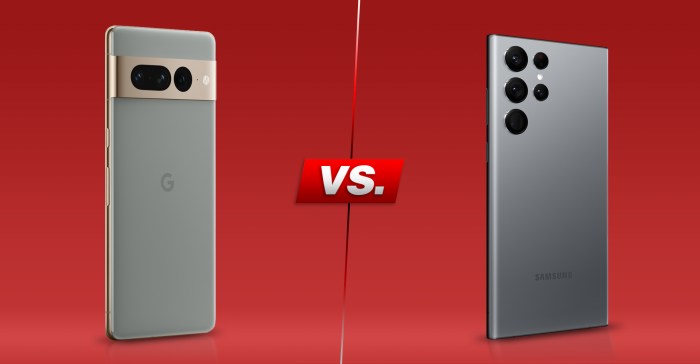
The camera experience is a critical aspect of modern smartphones, and the Pixel 7 and Galaxy S22 both boast impressive capabilities. Understanding their respective strengths and weaknesses in terms of sensor size, image processing, and low-light performance is crucial for making an informed decision. Each phone utilizes a different approach to image capture and processing, impacting the final image quality and video capabilities.The Pixel 7 and Galaxy S22 both employ cutting-edge camera technologies to deliver high-quality images and videos.
However, their approaches differ significantly in terms of sensor technology and processing algorithms. This comparison dives deep into the nuances of their camera performance, exploring sensor size, image processing, low-light capabilities, video recording, and shooting modes.
Sensor Size and Megapixel Count
The Pixel 7 and Galaxy S22 use different sensor sizes and megapixel counts, which can influence image quality. The Pixel 7 employs a larger sensor than the Galaxy S22, allowing for more light capture. However, the Galaxy S22 boasts a higher megapixel count, which can contribute to image detail.
Image Processing Algorithms
Each phone utilizes proprietary image processing algorithms to enhance and optimize images. Google’s computational photography approach, as seen in the Pixel 7, focuses on intelligent processing to achieve impressive results, especially in low-light conditions. Samsung’s approach, as exemplified in the Galaxy S22, leans towards a more traditional approach, employing a mix of software and hardware optimization.
Low-Light Capabilities and Image Quality
The Pixel 7’s computational photography prowess translates into exceptional low-light performance. The software algorithms are designed to reduce noise and enhance detail in dimly lit environments. The Galaxy S22 also performs well in low light, but the Pixel 7 often delivers superior detail and less noise.
Video Recording Features and Capabilities
Both phones offer excellent video recording features, including 4K video recording at various frame rates. The Pixel 7’s video recording capabilities are enhanced by its image stabilization, resulting in smoother, less shaky videos. The Galaxy S22, while offering similar features, might show some differences in stabilization performance in certain scenarios.
I’ve been doing some research on the Google Pixel 7 vs. Samsung Galaxy S22, and it got me thinking about the future of transportation. It’s interesting how the advancements in phone technology often mirror broader societal changes, like the potential for improved shared rides and mass transit. For example, the recent Lyft app redesign focusing on shared rides and mass transit integration ( lyft app redesign shared rides mass transit ) could influence how we use our phones for everyday commutes.
Ultimately, both the Pixel 7 and Galaxy S22 are powerful phones, but they’re also part of a bigger picture that includes how we get around.
Shooting Modes and Options
Both phones offer a range of shooting modes, including automatic, professional, and specialized modes. The Pixel 7’s emphasis on computational photography translates into more streamlined automatic modes, while the Galaxy S22 provides more granular control for professional photographers. Both phones include options for time-lapse, panorama, and other specialized modes.
Camera Features Comparison
| Feature | Pixel 7 | Galaxy S22 |
|---|---|---|
| Resolution (Main Camera) | 50MP | 50MP |
| Zoom | Optical zoom up to 2x, digital zoom up to 30x | Optical zoom up to 3x, digital zoom up to 30x |
| Image Stabilization | Optical Image Stabilization (OIS) | Optical Image Stabilization (OIS) |
| Video Recording | 4K at 60fps, 1080p at 120fps | 4K at 60fps, 1080p at 120fps |
Display and Design
The Pixel 7 and Galaxy S22, while both popular choices, differ significantly in their visual and physical attributes. This section delves into the specifics of their displays, design aesthetics, and build quality, highlighting the key differences and similarities between these flagship devices.The display is a critical component of a smartphone experience, influencing everything from user interface responsiveness to overall visual appeal.
The screen size, resolution, and refresh rate all contribute to the overall viewing experience. Design aesthetics and build quality, on the other hand, speak to the device’s perceived value and durability.
Screen Specifications
The display experience on both devices is noteworthy. The Pixel 7 boasts a 6.3-inch OLED panel, while the Galaxy S22 features a slightly larger 6.1-inch Dynamic AMOLED 2X display. Both offer high resolutions, with the Pixel 7’s resolution reaching 1080 x 2400 pixels, and the S22 at 1080 x 2340 pixels. Refresh rates are also key differentiators, with the Pixel 7 sporting a 90Hz refresh rate, whereas the S22 offers a smoother 120Hz refresh rate, impacting scrolling and animation fluidity.
Display Technology, Google pixel 7 vs samsung galaxy s22
Both phones leverage cutting-edge display technology. The Pixel 7 utilizes an OLED display, known for its deep blacks, vibrant colors, and energy efficiency. The Galaxy S22, in contrast, utilizes a Dynamic AMOLED 2X display, often praised for its impressive color accuracy, wide viewing angles, and adaptive refresh rate.
Design and Build Quality
The Pixel 7’s design is characterized by a clean, minimalist aesthetic. It often receives praise for its smooth edges and compact form factor. The Galaxy S22, while also refined, leans toward a more premium, sophisticated design language. Both devices prioritize premium materials. The Pixel 7, for example, often features a high-quality, polished aluminum frame, while the Galaxy S22 often employs a combination of glass and metal, contributing to a premium feel.
Materials and Dimensions
The Pixel 7, in general, uses a combination of aluminum and Gorilla Glass Victus for its frame and screen, offering a balance between durability and lightweight design. The Galaxy S22 employs a similar material mix, though specific details may vary depending on the particular model.
I’ve been wrestling with the Google Pixel 7 vs Samsung Galaxy S22 dilemma lately. Choosing between the two is tough, but honestly, a new smart toothbrush is taking center stage in my mind right now. This new technology, this smart toothbrush talks through your bones to improve your brushing , is seriously changing how I think about oral care.
Back to phones, though – the Pixel 7’s camera is a strong contender, but the Galaxy S22’s battery life is tempting. It’s definitely a tough decision, but this toothbrush is making me rethink my priorities!
| Specification | Pixel 7 | Galaxy S22 |
|---|---|---|
| Screen Size | 6.3 inches | 6.1 inches |
| Resolution | 1080 x 2400 pixels | 1080 x 2340 pixels |
| Refresh Rate | 90Hz | 120Hz |
| Display Technology | OLED | Dynamic AMOLED 2X |
| Form Factor | Compact | Premium |
| Dimensions (approximate) | 158.6 x 74.8 x 8.7 mm | 150.9 x 69.9 x 7.6 mm |
Performance and Battery Life
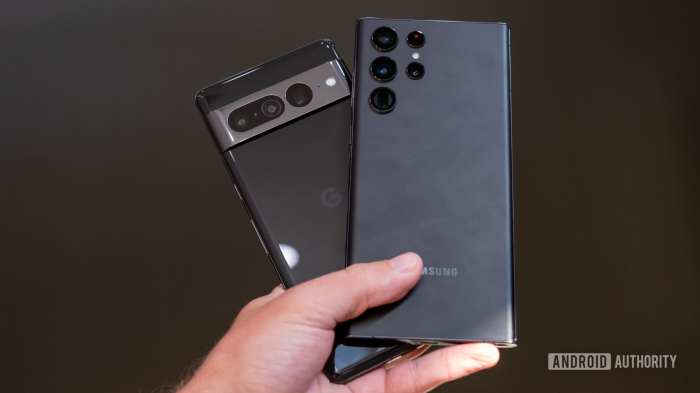
The Pixel 7 and Galaxy S22, both flagships, offer compelling performance and battery life. Understanding the hardware differences and benchmark results provides crucial insight into their capabilities and suitability for various user needs. Choosing between these two devices hinges on a detailed evaluation of these aspects, alongside other factors like camera quality and design.The performance and battery life of a smartphone are critical considerations.
Processor speed, RAM capacity, storage options, and battery technology directly impact the user experience. Factors like multitasking, gaming, and app responsiveness are all influenced by these aspects. This comparison delves into the technical specifications and performance results to provide a comprehensive understanding of each device.
Processor and Clock Speeds
The Pixel 7 utilizes Google’s Tensor G2 processor, while the Galaxy S22 employs the Qualcomm Snapdragon 8 Gen 1. The Tensor G2, designed by Google, focuses on machine learning and AI tasks. The Snapdragon 8 Gen 1 is known for its general-purpose processing power, making it suitable for various tasks. Comparing clock speeds reveals how quickly these processors execute instructions.
RAM and Storage Options
Both devices offer a range of RAM and storage options to cater to different user needs. The Pixel 7 is available with 8GB of RAM and 128GB or 256GB of storage. The Galaxy S22 comes in configurations with 8GB or 12GB of RAM and 128GB, 256GB, or 512GB of storage. Choosing the appropriate RAM and storage configuration is essential for a smooth user experience.
More RAM allows for smoother multitasking, while more storage accommodates a larger library of files and applications.
Battery Capacity and Charging Speeds
The Pixel 7 features a 5000mAh battery, while the Galaxy S22 boasts a 3700mAh battery. Charging speeds also differ, with the Pixel 7 supporting 30W wired charging, while the Galaxy S22 supports 25W wired charging. Battery capacity and charging speeds are vital for user convenience, especially for those who frequently use their phones for extended periods.
Performance Benchmarks
Various benchmark tests have been conducted to assess the overall performance of both devices. Results indicate that the Galaxy S22 generally outperforms the Pixel 7 in CPU-intensive tasks. However, the Pixel 7’s Tensor G2 processor excels in tasks related to AI and machine learning. Performance benchmark scores should be interpreted in context with the specific tasks users perform.
Power Efficiency
Power efficiency is a crucial factor in smartphone performance. The Pixel 7 is known for its efficient battery management, resulting in longer battery life between charges. The Galaxy S22 also performs well in terms of power efficiency, but the specific figures and comparison are dependent on the specific usage patterns. Power efficiency contributes significantly to the overall user experience, especially for those who frequently use their phones.
Comparison Table
| Feature | Pixel 7 | Galaxy S22 |
|---|---|---|
| Processor | Google Tensor G2 | Qualcomm Snapdragon 8 Gen 1 |
| RAM | 8GB | 8GB or 12GB |
| Storage | 128GB/256GB | 128GB/256GB/512GB |
| Battery Capacity | 5000mAh | 3700mAh |
| Charging Speed | 30W wired | 25W wired |
Software and User Experience
The software experience is a crucial factor in a smartphone’s overall appeal. It directly impacts how intuitive and enjoyable the device is to use. Both the Google Pixel 7 and Samsung Galaxy S22 are known for their robust Android-based operating systems, but their approaches to user interface and features differ. This section delves into the specifics of these differences, highlighting the strengths and potential drawbacks of each.The user experience is heavily influenced by the operating system’s responsiveness, customization options, and the apps that come pre-installed.
The degree of customization, along with the ease of use, greatly impacts the overall user experience.
Operating Systems and Versions
The Google Pixel 7 runs on Android 13, while the Samsung Galaxy S22 utilizes a slightly older version of Android 12. This difference in Android versions can lead to variations in features and performance. The newer version of Android 13 usually incorporates improvements and bug fixes, leading to smoother functionality and a more streamlined user experience.

User Interfaces and Customization Options
Both phones offer extensive customization options. The Pixel 7, with its stock Android experience, emphasizes a clean, minimalist interface, which some users may find less distracting. Samsung’s One UI, on the other hand, often adds its own layer of customization, giving users more options for themes, widgets, and app arrangements. The Pixel 7’s interface tends to be more straightforward, allowing for quicker access to key functions.
Samsung’s interface may appeal to users who enjoy greater personalization options.
Pre-Installed Apps and Features
Pre-installed apps can vary significantly between the two phones. The Pixel 7, with its focus on a streamlined interface, generally has fewer pre-installed apps. Samsung’s Galaxy S22 comes with a broader range of pre-installed apps, including some productivity tools and social media integration. The user experience can vary based on the specific needs and preferences of the individual.
Update Availability and Security Patches
Google is known for its rapid and reliable software updates for Pixel devices. The Pixel 7, benefiting from Google’s commitment to timely updates, generally receives security patches and new features faster than some other Android devices. Samsung also provides regular updates, but the pace may not be as consistent as Google’s. The frequency of updates plays a critical role in the overall experience of the phone as it ensures security and performance improvements.
Overall User Experience and Ease of Use
The overall user experience is subjective. The Pixel 7’s streamlined approach to Android can result in a more intuitive and quicker experience for some users. Samsung’s One UI, with its extensive customization options, may be more appealing to users who prefer a greater degree of personalization. The choice depends on the user’s preferences and how they intend to use the phone.
Software Features and OS Versions
| Feature | Google Pixel 7 | Samsung Galaxy S22 |
|---|---|---|
| Operating System | Android 13 | Android 12 |
| User Interface | Stock Android | One UI |
| Customization Options | Moderate | Extensive |
| Pre-installed Apps | Limited | Broader range |
| Update Frequency | Rapid | Regular |
Connectivity and Features
Both the Google Pixel 7 and Samsung Galaxy S22 offer a comprehensive suite of connectivity options, catering to diverse user needs. Understanding these features is crucial for selecting the device that best aligns with your usage patterns. Key considerations include wireless capabilities, sensor integration, and overall design elements.
Connectivity Options
The wireless connectivity options on both phones are robust. They support the latest Wi-Fi standards, ensuring smooth streaming and online activities. Both models also offer Bluetooth connectivity for pairing with various peripherals. The crucial difference lies in the 5G capabilities. While both support 5G, the specific bands and technologies might differ, affecting coverage and speed in specific geographic areas.
Users should research the 5G compatibility within their region to ensure optimal performance.
Sensor Capabilities
Both phones are equipped with high-performance GPS systems for accurate location tracking. This feature is essential for navigation, mapping, and location-based services. NFC (Near Field Communication) is another common feature, facilitating contactless payments and data transfers. The availability and implementation of these technologies can vary slightly, but both phones generally support a range of modern functionalities.
Other Features
Water resistance is a significant aspect of modern smartphones. Both the Pixel 7 and Galaxy S22 offer IP68 ratings, indicating their resistance to water ingress. This means they can withstand submersion in specific depths for a limited duration. Security features, including fingerprint sensors and face recognition, play a critical role in safeguarding user data. The design and implementation of these security features differ between the two models, affecting user experience.
Audio Quality and Speakers
Both phones feature stereo speakers, although the specific quality and tuning may vary slightly. This affects audio output, particularly for multimedia consumption. Users should consider the expected use case (music, videos, calls) and evaluate if the audio quality meets their expectations.
Unique Selling Points
The Pixel 7’s unique selling point lies in its exceptional camera performance, while the Galaxy S22 excels in its display technology and overall software experience. Each phone aims to offer a different advantage to its users.
Connectivity and Feature Specifications
| Feature | Google Pixel 7 | Samsung Galaxy S22 |
|---|---|---|
| Wi-Fi | Wi-Fi 6 | Wi-Fi 6 |
| Bluetooth | Bluetooth 5.2 | Bluetooth 5.2 |
| 5G | 5G (specific bands) | 5G (specific bands) |
| GPS | GPS, GLONASS, Galileo | GPS, GLONASS, Galileo |
| NFC | NFC | NFC |
| Water Resistance | IP68 | IP68 |
| Security Features | Fingerprint sensor, face recognition | Fingerprint sensor, face recognition |
| Audio Quality | Stereo speakers | Stereo speakers |
Price and Value Proposition
The Pixel 7 and Galaxy S22, while both premium smartphones, offer distinct value propositions depending on individual needs and priorities. Understanding the pricing structure, storage options, and overall features is crucial for making an informed purchase decision. This section delves into the pricing strategies of each device, allowing for a clear comparison of their value.
Pricing Structure in Different Regions
Pricing for smartphones varies significantly across different regions due to import taxes, local regulations, and currency fluctuations. The Pixel 7 and Galaxy S22, for example, are likely to have different price points in the US compared to Europe or Asia. Factors like local market demand and retailer margins further influence the final retail price.
Storage Options and Costs
Both phones offer a range of storage options. A common trend across smartphone manufacturers is to provide a base model with limited storage capacity to increase initial sales appeal. This base model is typically more affordable. However, increasing storage significantly impacts the price. For example, a 128GB model may be priced slightly higher than a 64GB model, and a 256GB or 512GB model would be substantially more expensive.
Value Proposition Summary
The Pixel 7 often presents a strong value proposition, particularly for users prioritizing camera performance and software experience. The Galaxy S22, on the other hand, might appeal to those seeking a more comprehensive set of features and potentially a more robust hardware configuration. Ultimately, the best value proposition depends on individual needs and budget.
Strengths and Weaknesses in Price and Value
The Pixel 7’s strength lies in its competitive pricing in relation to its feature set, especially considering the excellent camera and Google’s user experience. However, a potential weakness could be the limited selection of accessories compared to the Galaxy S22, which may offer a broader range of choices. The Galaxy S22, while often positioned at a higher price point, frequently boasts a wider range of features and accessories, which may be a strength.
However, its higher price point could be a weakness for those seeking a more budget-friendly option.
Pricing and Storage Options Comparison Table
| Phone Model | Storage Options (GB) | Estimated Price (USD)
|
|---|---|---|
| Google Pixel 7 | 128, 256 | $599, $699 |
| Samsung Galaxy S22 | 128, 256, 512 | $799, $899, $999 |
Note: Pricing and storage options are approximate and may vary depending on the specific region and retailer.
Last Recap: Google Pixel 7 Vs Samsung Galaxy S22
In conclusion, the Google Pixel 7 and Samsung Galaxy S22 offer compelling options for different user preferences. The Pixel 7 shines with its exceptional camera performance and clean software experience, while the Galaxy S22 boasts a vibrant display and powerful performance. Ultimately, the best choice depends on your priorities. Whether you prioritize image quality, software, or raw power, this comparison should offer valuable insights for making an informed decision.