Svelte Ecosystem Evolution Security Enhancements Feature Updates and the Expanding Community Landscape

The Svelte and SvelteKit ecosystems have reached a critical juncture in their development lifecycle, marked by a dual focus on rigorous security hardening and the continuous expansion of community-driven tooling. This month’s developments highlight a maturing framework that is increasingly prioritizing enterprise-grade stability alongside its hallmark developer experience. As the web development landscape shifts toward more performant, compiler-centric architectures, the recent updates to Svelte and SvelteKit serve as a barometer for the broader industry’s move away from heavy runtime dependencies.
Security Consolidation and Vulnerability Management
A primary focus of the recent period has been the resolution of five distinct vulnerabilities identified across the Svelte ecosystem. These Common Vulnerabilities and Exposures (CVEs) represent a significant milestone in the framework’s security maturity. The Svelte maintainers released a series of patches designed to mitigate risks that could potentially affect applications built on earlier versions of the framework.
The vulnerabilities addressed primarily concerned the way the framework handles data sanitization and server-side rendering (SSR) edge cases. While specific technical details are often withheld to prevent exploitation before widespread patching, the core team emphasized that these updates are essential for maintaining the integrity of the software supply chain. In a landscape where front-end frameworks are increasingly targeted by sophisticated attacks, the proactive identification and remediation of these flaws demonstrate a high level of institutional responsibility.
Industry analysts note that as Svelte gains market share—particularly in sectors like fintech and healthcare where security is paramount—the scrutiny on its codebase has intensified. The release of these patches is a direct response to this increased scrutiny, ensuring that the framework remains a viable choice for high-stakes production environments. Developers are urged to consult the official Svelte security advisories and update their dependencies to the latest versions to ensure compliance with modern security standards.
Technical Enhancements in Svelte and SvelteKit
Beyond security, the current update cycle has introduced several incremental but impactful features to both the Svelte compiler and the SvelteKit meta-framework. SvelteKit, which serves as the official application framework for Svelte, has seen refinements in its routing engine and adapter ecosystem. These changes are aimed at improving the developer workflow and optimizing the final build output for various deployment environments, including serverless functions and edge computing platforms.
The Svelte compiler itself continues to receive optimizations that reduce the footprint of generated JavaScript. Unlike traditional frameworks that rely on a Virtual DOM (VDOM) to update the user interface, Svelte’s "disappearing framework" approach compiles components into highly efficient, vanilla JavaScript at build time. Recent updates have focused on refining the reactivity model, ensuring that DOM updates are even more granular and performant.
For SvelteKit, the focus has been on enhancing the "Adapter" system. Adapters allow SvelteKit apps to be deployed across a variety of environments, such as Vercel, Netlify, Cloudflare Workers, and traditional Node.js servers. The latest updates have improved the compatibility of these adapters with the latest runtime APIs provided by cloud providers, ensuring that developers can take full advantage of features like streaming SSR and localized caching at the edge.
Chronology of Development and Ecosystem Growth
To understand the current state of Svelte, it is necessary to view it through the lens of its developmental timeline. Since the release of Svelte 4, which focused on internal refactoring and performance improvements, the community has been in a state of high anticipation for the upcoming Svelte 5.
- Mid-2023: Release of Svelte 4, which streamlined the codebase and improved the underlying architecture to support future innovations.
- Late 2023: The announcement of "Runes," a new reactivity system for Svelte 5, which aims to simplify state management and improve scalability for large-scale applications.
- Early 2024: Focus shifted toward security and stability, leading to the identification and patching of the five CVEs mentioned in the current report.
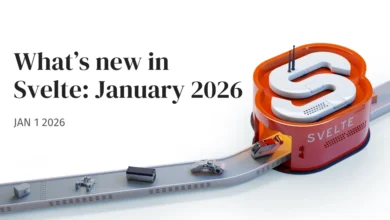
- Current Month: The release of a suite of new community libraries and incremental updates to SvelteKit, signaling a robust and active ecosystem.
This chronology illustrates a framework that is not merely chasing features but is carefully balancing innovation with the practical needs of its user base. The period of "consolidation" seen this month is a necessary precursor to the major shifts expected in the next major version.
The Role of Community Contributions
The Svelte ecosystem is unique in its high degree of community involvement. This month’s update highlights a significant influx of new libraries across several categories, including UI components, state management, and developer tools. This decentralized innovation is a key driver of Svelte’s adoption.
UI Components and Animations
The community has introduced several new component libraries that leverage Svelte’s native support for transitions and animations. These libraries provide pre-built, accessible UI elements that allow developers to build complex interfaces without reinventing the wheel. The focus on accessibility (A11y) remains a standout feature of the Svelte community, with many new libraries including built-in ARIA support and keyboard navigation.
State Management and Data Handling
While Svelte’s built-in stores are sufficient for many use cases, the growth of more complex applications has led to the development of specialized state management libraries. These tools are designed to handle global state, client-side caching, and real-time data synchronization with greater efficiency. The latest entries in this category focus on type safety, integrating deeply with TypeScript to provide a seamless development experience.
Plugins and Tooling
The expansion of the Vite-based tooling ecosystem has also benefited Svelte developers. New plugins for the Svelte compiler and SvelteKit have emerged, offering better integration with CSS-in-JS solutions, internationalization (i18n) frameworks, and testing utilities. These tools lower the barrier to entry for teams migrating from other frameworks like React or Vue.
Official Responses and Strategic Direction
The Svelte core team, led by creator Rich Harris, has remained transparent about the framework’s strategic direction. In recent discussions and blog posts, the maintainers have emphasized that the primary goal is to make web development more intuitive and less prone to the "boilerplate fatigue" that plagues other ecosystems.
In response to the recent security patches, the team noted that the collaborative effort between security researchers and framework maintainers is a sign of a healthy project. They reiterated their commitment to a "security-first" mindset, encouraging the community to report vulnerabilities through official channels.
Furthermore, the team’s focus on Svelte 5 and the "Runes" API suggests a long-term vision of making Svelte the most scalable framework on the market. By moving away from some of the syntactical limitations of previous versions, the team aims to provide a more robust foundation for enterprise-level software.
Broader Impact and Industry Implications
The evolution of Svelte has broader implications for the web development industry. As performance becomes an increasingly critical factor in search engine rankings and user retention, the "compiler-first" approach pioneered by Svelte is being closely watched by competitors.
- Performance Benchmarks: Svelte consistently ranks at the top of performance benchmarks, particularly in terms of "Time to Interactive" (TTI) and "First Contentful Paint" (FCP). The recent updates continue this trend by shaving bytes off the runtime and optimizing server-side execution.
- Developer Satisfaction: According to various industry surveys, Svelte remains one of the most "loved" frameworks among developers. This high level of satisfaction is a key indicator of future growth, as developers often influence the technology stacks chosen by their organizations.
- Enterprise Adoption: The focus on security and the resolution of CVEs is a direct play for the enterprise market. Companies that were previously hesitant to adopt a relatively young framework are now seeing the infrastructure and support systems necessary for long-term stability.
Conclusion and Future Outlook
The current updates to Svelte and SvelteKit represent a period of calculated growth. By addressing critical security vulnerabilities and fostering a vibrant community of library developers, the Svelte ecosystem is positioning itself as a mature, reliable, and high-performance alternative to the established giants of the JavaScript world.
Looking ahead, the transition to Svelte 5 will likely be the most significant event in the framework’s history since its inception. However, the work being done now—the patches, the incremental feature updates, and the community building—is the foundation upon which that future will be built. For developers and stakeholders, the message is clear: Svelte is no longer a niche tool for enthusiasts; it is a professional-grade framework that is ready for the challenges of the modern web.
As the community continues to grow on platforms like Reddit and Discord, the feedback loop between users and maintainers remains tight. This agility, combined with a rigorous approach to software engineering, ensures that Svelte will remain at the forefront of the industry for the foreseeable future. Developers are encouraged to stay informed by following the official CHANGELOGs and participating in the broader community dialogue.