The Looming Redistribution: Why Tech Leaders Face a Choice Between Philanthropy and Taxation in the AI Era


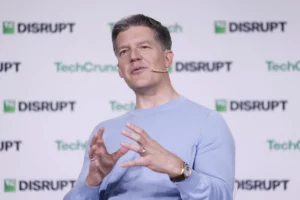
The rapid accumulation of wealth within the artificial intelligence sector is driving a renewed debate over economic inequality and the social responsibilities of the "technocracy." During a recent tech festival in Athens, Neil Rimer, a co-founder of the prominent venture capital firm Index Ventures, articulated a sentiment that has begun to circulate among the upper echelons of Silicon Valley: a major redistribution of wealth is inevitable. Speaking on the immense financial gains generated by AI, Rimer suggested that this shift would occur either voluntarily through philanthropy or involuntarily through government intervention. His comments underscore a growing tension between the unprecedented speed of wealth creation in the 21st century and the shifting public and political tolerance for extreme economic concentration.
The Architect of the Venture Capital Boom
Neil Rimer is not a typical voice for populist rhetoric. As a founding partner of Index Ventures, he has helped steer one of the most successful venture firms of the last thirty years. Since its inception, Index has raised approximately $15 billion from outside investors. The firm’s recent track record is particularly notable; in 2023 alone, major exits—including the initial public offering of Figma and Google’s acquisition of the cybersecurity firm Wiz—reportedly netted the firm roughly $9 billion.
Despite stepping back from day-to-day investing in 2021, Rimer remains a central figure in the tech ecosystem. His perspective is informed by a career that spans the rise of the internet to the current AI revolution. Currently spending much of his time in Greece, Rimer’s focus has shifted toward mentorship and human rights, having chaired the board of Human Rights Watch from 2019 to 2025. His family’s $13 million donation to McGill University in 2021 for Indigenous research further exemplifies his commitment to traditional philanthropy. However, Rimer’s recent warnings suggest he believes the traditional models of giving may no longer be sufficient to stave off a more aggressive legislative response to inequality.
The Decline of Voluntary Philanthropy
The "voluntary" path Rimer referenced—the tradition of the wealthy giving back to society—is currently facing a crisis of participation. The Giving Pledge, an initiative launched in 2010 by Warren Buffett and Bill Gates to encourage billionaires to donate at least half of their fortunes, has seen a marked decline in new signatories. In its first five years, 113 families joined the pledge. By 2024, that number had dwindled to just four.
This trend is reflective of a broader shift in how the ultra-wealthy view their social obligations. Elon Musk, currently the world’s wealthiest individual with a net worth exceeding $1 trillion following SpaceX’s recent valuation surge, has famously stated that his businesses themselves are a form of philanthropy. This "utilitarian" view of wealth suggests that creating jobs and advancing technology is a greater service to humanity than traditional charitable grants.
The data suggests this decline is not limited to the billionaire class. According to the Stanford Social Innovation Review, the number of American households participating in charitable giving has fallen for five consecutive years. While the total dollar amount of giving hit a record $592.5 billion in 2024, the donor base is narrowing. In 2000, two-thirds of American households donated to charity; today, that figure has dropped to roughly half. Even among affluent households, participation has slipped from 90% in 2017 to 81% in 2023.
The AI Windfall and the Wealth Gap
The emergence of generative AI has accelerated wealth concentration to levels that invite comparison to the Gilded Age. Forbes recently identified 45 new AI billionaires in its 2026 rankings, representing a combined $2.9 trillion in wealth. This surge has occurred even before the anticipated public offerings of industry leaders OpenAI and Anthropic.
In San Francisco, the localized impact of this wealth is profound. Financial planners report that many newly minted millionaires and billionaires at firms like Anthropic are eschewing traditional philanthropy in favor of angel investing or launching their own startups. Projections suggest that once OpenAI and Anthropic complete their respective IPOs, their employees will hold enough collective wealth to purchase nearly one-third of all residential real estate in the San Francisco metropolitan area.
This concentration is reflected in national statistics. The share of wealth held by the top 1% of U.S. households reached 31.7% in late 2023, a record since the Federal Reserve began tracking the data in 1989. While this remains below the 45% peak seen in 1916, economist Gabriel Zucman notes that the "tippy top" of the pyramid is wealthier than ever. In 1910, the four largest American fortunes represented 4% of the U.S. GDP. Today, the top 19 households represent 14% of the GDP.
The Legislative Response: From California to Washington
As voluntary giving wanes, the "involuntary" redistribution Rimer warned of is taking the form of new tax proposals and political concessions. In California, voters are set to decide on a 5% one-time wealth tax targeting billionaires. The proposal has already triggered a migration of high-net-worth individuals; Google founders Sergey Brin and Larry Page are among those who have reportedly moved their primary residences to South Florida to avoid the potential levy.
There is also speculation regarding the timing of OpenAI’s potential 2027 IPO. Some analysts suggest that a public offering could be timed to manage tax liabilities if the California wealth tax—which calculates net worth based on assets held at the end of the calendar year—is enacted.
Simultaneously, OpenAI has reportedly proposed a novel form of redistribution: granting the federal government a 5% equity stake in the company. CEO Sam Altman has framed this as a way to share the "upside" of AI with the American public. However, critics and veteran investors remain skeptical. Roelof Botha of Sequoia Capital has expressed traditional Silicon Valley wariness regarding government involvement in corporate cap tables, suggesting such moves are often attempts to buy political favor rather than genuine efforts at redistribution.
Historical Precedents: Carnegie and the "Soak-the-Rich" Tax
The tension Rimer describes has historical parallels. In 1889, at the height of the first Gilded Age, steel magnate Andrew Carnegie published "The Gospel of Wealth." He argued that the rich had a moral obligation to distribute their wealth for the public good during their lifetimes, famously stating that "the man who dies thus rich dies disgraced." Carnegie’s philosophy laid the groundwork for modern American philanthropy.
However, Carnegie’s voluntary model was eventually deemed insufficient by the public. By the 1930s, the Great Depression had fueled a populist movement led by figures like Louisiana Senator Huey Long. Long’s "Share Our Wealth" program demanded radical redistribution to fund a guaranteed national income. In response to this mounting political pressure, President Franklin D. Roosevelt pushed through the Revenue Act of 1935. Known as the "soak-the-rich" tax, it raised the top marginal income tax rate to 79%. This era demonstrated that when voluntary redistribution fails to address societal pressure, the political system eventually mandates it.
The Moral Center of the Tech Industry
For Rimer, the current debate is not merely about economics; it is about the "moral center" of the technology industry. He recalls his time as a Stanford student in the 1980s, when Apple’s founders were viewed as cultural heroes building tools for human empowerment. He notes with concern that today’s youth—including his own children—often view modern tech giants with the same skepticism once reserved for defense contractors or tobacco companies.
The shift in public perception is a significant risk for the tech sector. If the industry is perceived as a closed loop that generates immense wealth for a few while automating away the livelihoods of many, the call for involuntary redistribution will only grow louder.
Analysis of Future Implications
The path forward for the AI industry likely involves a hybrid of the two scenarios Rimer outlined. While traditional philanthropy is declining, new models of "impact investing" and "corporate social responsibility" are emerging. However, these are unlikely to satisfy a public increasingly concerned with the cost of living and the displacement of labor.
If tech leaders do not take a "leading role" in addressing the wealth gap voluntarily, the following implications are likely:
- Increased Jurisdictional Competition: As seen in the move from California to Florida, wealth will continue to flow toward tax-friendly regions, potentially forcing high-tax states to reconsider their strategies or implement "exit taxes."
- Expansion of Direct Equity Proposals: The OpenAI model of offering government stakes could become a standard "peace offering" for large-scale tech companies facing antitrust or regulatory scrutiny.
- Political Polarization: Wealth redistribution will remain a central theme in national elections, with AI-driven automation serving as the primary catalyst for Universal Basic Income (UBI) debates.
Neil Rimer’s assessment serves as a warning to his peers: the window for voluntary action is narrowing. History suggests that when the gap between the "trillionaire class" and the general public becomes too wide to ignore, the mechanisms of the state will inevitably move to close it. For the architects of the AI revolution, the choice is between defining their own legacy of giving or having it defined for them by the tax collector.
Related posts: