Kotlin Turns 15: Celebrating a Decade and a Half of Innovation and Community Impact

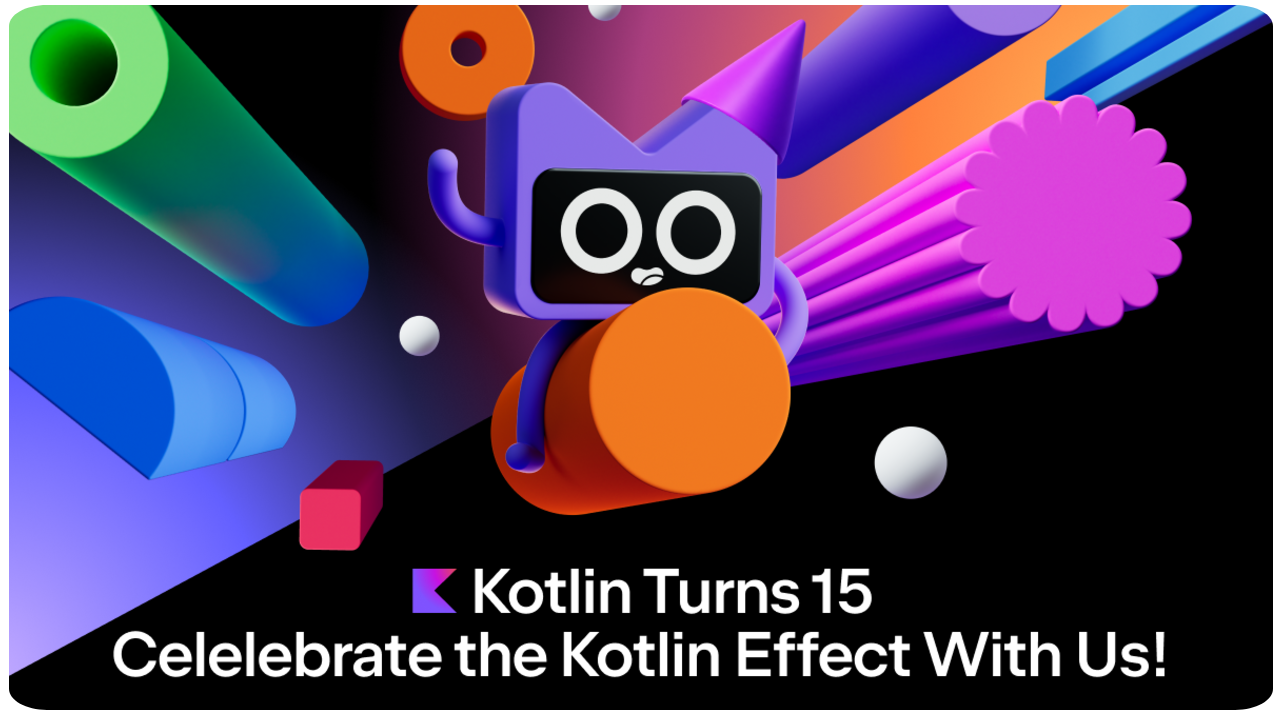
Fifteen years have passed since the inception of Kotlin, the concise, multiplatform programming language developed by JetBrains, a milestone now commemorated as "The Kotlin Effect." This significant anniversary marks a pivotal moment for a language that has profoundly reshaped the landscape of software development, particularly within the Android ecosystem and increasingly across various other platforms. The celebration acknowledges the extensive contributions of a global community that has been instrumental in shaping Kotlin from its nascent stages into the robust, versatile tool it is today. From individual developers building innovative applications to ecosystem contributors, educators, and companies adopting it for critical projects, the collective effort has fueled Kotlin’s remarkable journey and cemented its position as a leading modern programming language.
A Chronology of Kotlin’s Ascent: From Internal Project to Industry Standard
The journey of Kotlin began in 2010 within JetBrains, a Czech software development company renowned for its integrated development environments (IDEs). The initial motivation was clear: address the perceived shortcomings of Java, the dominant language for server-side and Android development at the time, by creating a more modern, expressive, and safer alternative that could still interoperate seamlessly with existing Java codebases. The project, officially unveiled in July 2011, aimed to develop a language that was pragmatic, concise, and designed to minimize common programming errors, particularly those related to null pointer exceptions.
A critical turning point in Kotlin’s early development was its decision to be open-sourced in February 2012. This move not only garnered significant community interest and contributions but also aligned with the ethos of collaborative development, which would become a hallmark of Kotlin’s growth. The open-source model allowed for transparent development, community feedback, and the rapid identification and resolution of issues, fostering a sense of ownership among early adopters.
The first stable release, Kotlin 1.0, arrived in February 2016. This release was a monumental achievement, signaling that Kotlin was ready for production environments. It promised API stability and backward compatibility, crucial assurances for businesses and developers contemplating adopting a new language. This period saw gradual adoption by early-moving companies and individual developers who recognized Kotlin’s potential for increased productivity and code quality.
However, the most significant catalyst for Kotlin’s widespread adoption occurred in May 2017 at Google I/O, where Google announced first-class support for Kotlin on the Android platform. This endorsement from the platform owner immediately elevated Kotlin’s status, transforming it from an interesting alternative into a mainstream choice for mobile application development. Google’s explicit backing signaled confidence in the language’s stability, performance, and long-term viability. This announcement led to an exponential surge in Kotlin’s popularity, particularly among Android developers who were eager to leverage its modern features, such as null safety, data classes, and coroutines for asynchronous programming, which significantly simplified complex tasks and reduced boilerplate code.
Following Google’s endorsement, Kotlin’s ecosystem expanded rapidly. Libraries and frameworks specifically designed for Kotlin, or with strong Kotlin support, began to emerge. The introduction of Kotlin Coroutines, a lightweight threading solution for asynchronous programming, became a game-changer, offering a more readable and maintainable approach to concurrent operations compared to traditional callbacks or RxJava. By 2019, Google officially declared Kotlin its preferred language for Android app development, reinforcing its "Kotlin-first" approach and further solidifying its dominance in the mobile space.
The period from 2020 onwards has seen Kotlin’s maturation and diversification beyond Android. Kotlin Multiplatform (KMP), which allows developers to share code across different platforms like Android, iOS, web (Kotlin/JS), and desktop (Compose Multiplatform), has gained significant traction. This initiative promises to revolutionize cross-platform development by maximizing code reuse while maintaining native performance and user experience. The development of the K2 compiler, designed for improved performance, faster compilation, and a more robust compiler architecture, also highlights JetBrains’ ongoing commitment to evolving the language’s core infrastructure.
Statistical Insights into Kotlin’s Dominance and Growth
The narrative of Kotlin’s 15-year journey is strongly supported by compelling data from various industry surveys and reports. These statistics underscore its remarkable growth and widespread adoption across the developer community.
According to the Stack Overflow Developer Survey, Kotlin consistently ranks among the most loved or desired programming languages. For instance, in recent years, it has frequently appeared in the top echelons, reflecting a strong preference among developers who have used it. The number of professional developers using Kotlin has seen a steady increase, moving from niche adoption to mainstream usage.
JetBrains’ own Developer Ecosystem Survey provides even more granular insights. Their reports consistently show Kotlin’s impressive penetration, especially within the Android development sphere. In recent years, over 60% of Android developers reportedly use Kotlin, with a significant portion of new Android projects being initiated in Kotlin. This cements its position as the de facto standard for Android.
Beyond mobile, Kotlin’s versatility is evident in its growing use for other application types. JetBrains’ surveys indicate that a substantial percentage of Kotlin developers utilize it for backend web development, often with frameworks like Ktor or Spring Boot. Its use in desktop applications (especially with Compose Multiplatform) and even data science, though smaller, demonstrates its expanding reach.
The growth of the Kotlin ecosystem is also measurable by the proliferation of libraries, tools, and frameworks. The official Kotlin libraries, such as Coroutines, Serialization, and Ktor, are widely adopted. Furthermore, third-party libraries for functional programming (e.g., Arrow), database access (e.g., Exposed), and testing frameworks have seen robust development, indicating a healthy and active community contributing to its utility.
Major tech companies have publicly endorsed or adopted Kotlin for critical parts of their infrastructure. Google itself uses Kotlin extensively for its internal Android applications and libraries. Companies like Netflix, Pinterest, Uber, Slack, and Trello have integrated Kotlin into their production environments, often citing improved developer productivity, reduced crash rates due to null safety, and more concise codebases as key benefits. This corporate adoption further validates Kotlin’s maturity and reliability.
The job market also reflects Kotlin’s increasing demand. Analysis of job postings on major platforms indicates a consistent rise in demand for Kotlin developers, particularly for mobile and backend roles. This trend suggests that businesses are actively seeking talent proficient in Kotlin to build and maintain their modern applications.
Official Responses and Community Acclaim
The 15th anniversary provides an opportunity for reflection and forward-looking statements from the key stakeholders.
From JetBrains, the sentiment is overwhelmingly one of gratitude and continued commitment. Representatives from the Kotlin team frequently emphasize that the language’s success is a direct result of its vibrant and engaged community. "For 15 years, you’ve helped shape Kotlin into the language it is today," a recent statement noted, expressing thanks to those who have built apps, contributed to the ecosystem, taught others, or simply chosen Kotlin for their projects. JetBrains reiterates its vision for Kotlin as a multiplatform, concise, and safe language that continually seeks to remove friction from the development process. The company remains dedicated to advancing Kotlin’s core capabilities, including enhancing the K2 compiler, expanding Kotlin Multiplatform’s reach and stability, and ensuring robust tooling integration within IntelliJ IDEA and other IDEs. The long-term goal is to make Kotlin an even more compelling choice for diverse development needs, ensuring performance, scalability, and developer experience remain paramount.
Google’s continued support for Kotlin is also a cornerstone of its success. While direct statements for this specific anniversary are inferred, Google’s past and ongoing actions speak volumes. Their "Kotlin-first" approach for Android development is a clear testament to the language’s positive impact on the Android ecosystem, leading to more stable, performant, and developer-friendly applications. Google has actively contributed to Kotlin’s development through its own libraries and frameworks (e.g., Jetpack Compose), and by providing extensive documentation and educational resources, solidifying its commitment to the language’s future on its platform.
The broader developer community, including prominent educators, authors, and open-source contributors, consistently praises Kotlin for its elegant design, pragmatic features, and the productivity gains it offers. Many highlight its ease of learning for developers familiar with Java, its expressive syntax, and its powerful features like extension functions and higher-order functions that enable more functional programming paradigms. The null safety feature is almost universally lauded as a critical innovation that significantly reduces runtime errors, contributing to more robust software. Educators often point to Kotlin’s approachable nature as an excellent entry point for new programmers into modern programming concepts.
Broader Impact and Future Implications
Kotlin’s impact extends far beyond its syntax and features; it has fundamentally altered how developers approach problem-solving and collaboration.
One of the most significant implications is the enhancement of developer productivity. Kotlin’s conciseness means less boilerplate code, allowing developers to achieve more with fewer lines. Features like data classes, sealed classes, and smart casts reduce the need for verbose constructs common in older languages. This increased efficiency translates into faster development cycles and reduced time-to-market for applications.
The emphasis on safety and reliability is another profound impact. Kotlin’s null safety is arguably its most celebrated feature, addressing the infamous "billion-dollar mistake" of null pointer exceptions. By enforcing nullability checks at compile time, Kotlin drastically reduces a common source of runtime crashes, leading to more stable and trustworthy applications. This inherent safety contributes to higher code quality and lower maintenance costs over the long run.
Kotlin has also acted as an innovation catalyst within the programming language landscape. Its success has demonstrated the viability and demand for modern, pragmatic languages that prioritize developer experience while maintaining strong performance and interoperability. It has influenced other language designs and encouraged continuous evolution within existing ecosystems.
The rise of Kotlin Multiplatform represents a strategic shift in cross-platform development. By enabling code sharing across diverse platforms while preserving native user experiences, KMP offers a compelling alternative to frameworks that often compromise on performance or look-and-feel. This has profound implications for businesses seeking to reduce development costs, unify their codebase, and accelerate feature delivery across Android, iOS, web, and desktop without sacrificing quality. The ongoing development in this area promises to make KMP an even more formidable player in the coming years, potentially redefining how multi-platform applications are conceived and built.
Educationally, Kotlin has become a staple in computer science curricula and online learning platforms. Its modern features make it an excellent language for teaching contemporary programming paradigms, from object-oriented to functional programming, and concurrency concepts. This ensures a steady stream of new developers entering the workforce with Kotlin proficiency.
Looking ahead, Kotlin faces the challenge of continuous evolution while maintaining backward compatibility and ecosystem stability. The ongoing development of the K2 compiler, the expansion of its multiplatform capabilities, and the integration of new language features will be crucial for its sustained relevance. Competition from other modern languages and evolving industry trends will also require Kotlin to adapt and innovate constantly. However, with a strong foundation built on a robust language design, a committed development team at JetBrains, and an incredibly active and supportive global community, Kotlin is well-positioned for its next chapter. The journey of removing more friction and building more things together continues.
Celebrating the Kotlin Effect: A Community Call to Action
To mark this significant 15th anniversary, JetBrains has initiated a community-wide celebration focused on "The Kotlin Effect." This campaign encourages developers worldwide to reflect on their personal journeys with Kotlin and contribute to a collective expression of appreciation and anticipation for its future.
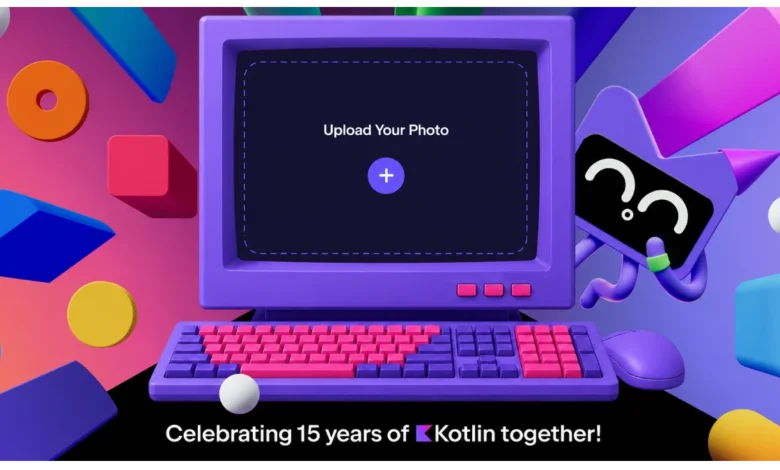
A central element of the celebration is the creation of a "digital birthday postcard." This interactive platform allows individuals to craft personalized messages, share their wishes or predictions for Kotlin’s next chapter, and even upload their own photos to customize their postcards. These digital mementos are then shared with the broader Kotlin community, forming a collective tapestry of experiences and aspirations. This initiative not only provides a fun and engaging way for individuals to participate but also serves as a testament to the strong bond between the language and its users.
The "Kotlin Effect" theme underscores the profound and multifaceted influence the language has had, extending beyond lines of code to impact careers, projects, and the very culture of software development. It acknowledges that Kotlin’s success is a shared achievement, a collaborative endeavor made possible by everyone who has contributed to its growth and adoption.
Fifteen years is an extraordinary milestone in the fast-paced world of technology. It speaks volumes about the enduring quality of Kotlin’s design, the foresight of its creators, and the unwavering dedication of its global community. As the celebrations unfold, the overarching sentiment is one of profound gratitude for the journey thus far and eager anticipation for the innovations and collaborative achievements that lie ahead. Happy 15th birthday, Kotlin, and here’s to many more years of shaping the future of programming.
Related posts: