The Strategic Imperative of Integrated Workforce Intelligence in Modern Public Sector Operations

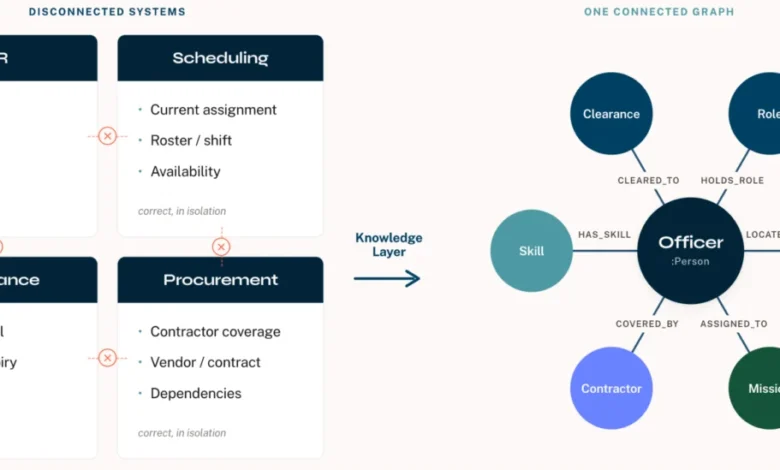
The fundamental challenge facing modern public sector operations is no longer a lack of data, but the inability to synthesize that data into actionable intelligence during high-stakes scenarios. Public sector leaders, particularly those in defense, emergency response, and critical infrastructure, are increasingly confronted with a complex, multi-layered question: who is available immediately with the specific skills and security clearances required, in the correct geographical location, whose redeployment will not inadvertently create a critical operational gap elsewhere in the organization? This inquiry represents a chain of dependencies that current administrative systems were never designed to navigate. While individual departments such as Human Resources, Security, and Procurement maintain accurate records within their own domains, the "seams" between these systems have become the primary source of operational risk.
In the current landscape, HR departments maintain records of who is employed; scheduling systems track who is currently deployed; security databases verify who holds necessary clearances; and procurement offices manage the contractors supporting specific programs. Each of these siloed systems may answer its specific question correctly, yet none can answer the compound question required for rapid mobilization. When a crisis occurs, the burden falls on personnel to manually assemble these answers, stitching together headcount reports, deployment statuses, and clearance records under intense time pressure. By the time a comprehensive briefing is prepared, the operational situation has often evolved, rendering the data obsolete and leaving the organization in a state of reactive instability.
The Evolution of Operational Pressure: From Sequential to Concurrent
Historically, workforce management systems were built for a more predictable operating environment. In previous decades, operational pressure typically arrived in sequence: an organization would respond to a crisis, enter a recovery phase, and then prepare for the subsequent event. This linear progression allowed for deliberate workforce decisions, planned handovers, and a thorough understanding of the downstream consequences of moving personnel between missions.
This environment of sequential crisis management has effectively ceased to exist. According to the OECD Employment Outlook 2025, governments across advanced economies are facing a convergence of structural pressures, including aging workforces, shrinking talent pipelines, and skills shortages that are accumulating faster than organizations can address them. Simultaneously, the demand for operational response has become increasingly concurrent. Data from the EU Civil Protection Mechanism highlights this shift, noting that the mechanism was activated 64 times in 2025. These activations were not spaced out over the year but occurred in response to simultaneous conflicts and natural disasters, forcing a redistribution of limited resources across multiple high-priority fronts.
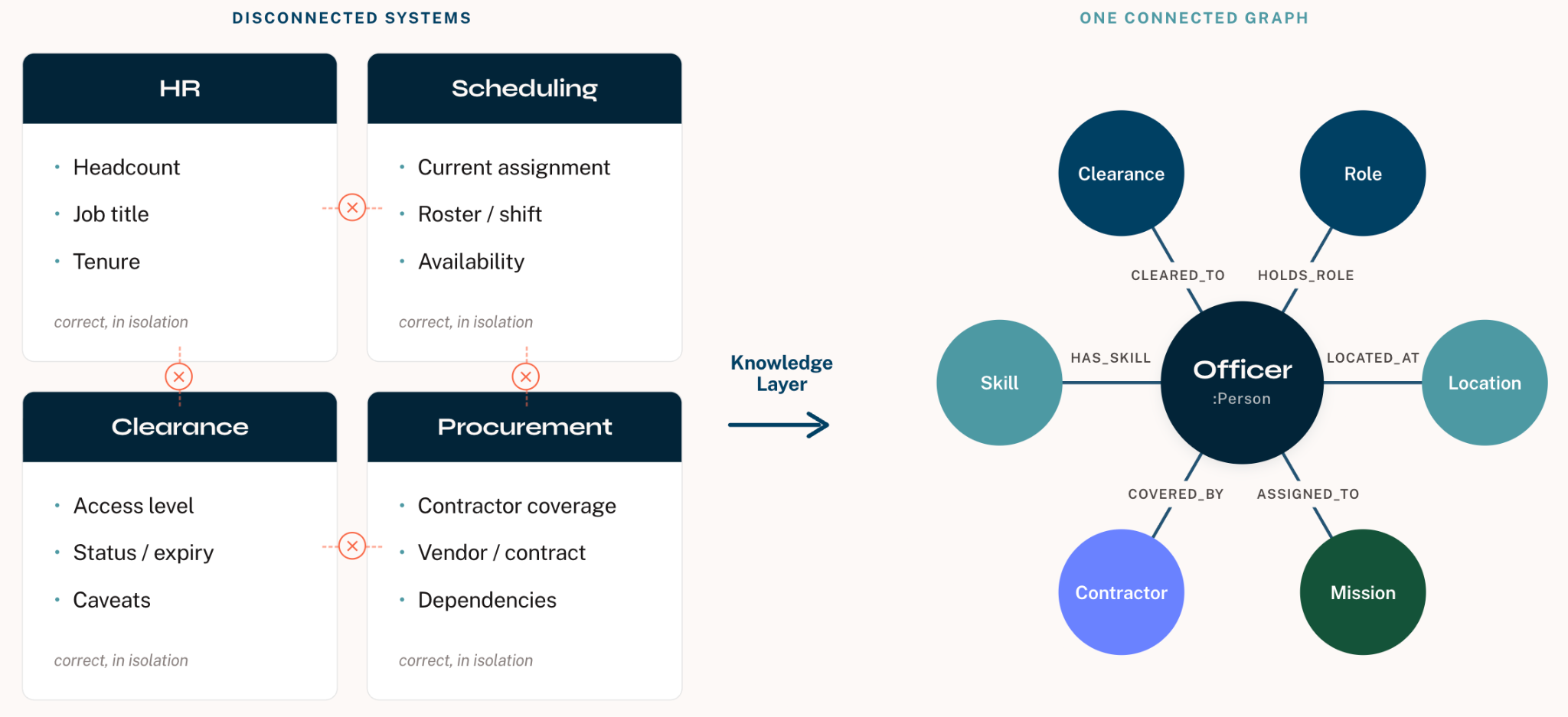
When these trends are viewed individually, they appear manageable. However, when combined, they create "compound workforce pressure." Organizations are now expected to respond to a higher frequency of overlapping events with fewer experienced personnel. In this context, every recruitment or deployment decision becomes a high-stakes prioritization exercise. Leadership must determine which vacancy carries the most weight, which capability gap creates the greatest exposure, and where a single specialist can provide the most leverage across multiple simultaneous missions.
The Data Paradox and the Silver Tsunami
The crisis of workforce intelligence is further exacerbated by an impending demographic shift within the public sector. Research from the MissionSquare Research Institute indicates that more than 50% of public sector HR leaders in the United States expect a significant wave of retirements within the next few years. Despite this looming "silver tsunami," only 13% of state and local governments have implemented a formal succession planning process. This lack of preparation creates a vacuum of institutional knowledge and specialized skills at the exact moment that operational demands are intensifying.
Budgetary constraints add another layer of difficulty. Workforce leaders are forced to decide where limited investments in hiring and training will yield the highest operational impact. This requires a level of visibility that traditional systems cannot provide. The question is no longer a simple inventory of skills; it is a dynamic assessment of capability, availability, clearance, and proximity, balanced against the risk of creating new vulnerabilities. The failure to answer these questions is not a failure of the data itself, but an architectural failure of the systems housing it.
Technical Barriers: Why Relational Databases Struggle with Relationships
The gap between a system being "correct" and an organization being "informed" is where mission risk emerges. Most public sector entities utilize traditional relational databases that are designed to retrieve individual records. While these systems are efficient for managing lists—such as a list of employees or a list of certifications—they struggle to traverse the complex web of relationships that define an operational workforce.
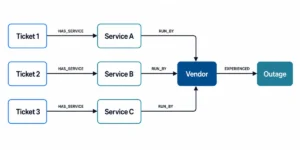
A deployment decision is essentially a chain of dependencies. Moving a single individual involves checking their current assignment, their replacement’s readiness, the status of their security clearance, their proximity to the new site, and the impact on the contractor support they might be supervising. In a relational database, answering such a query requires increasingly complex "joins" and manual orchestration. As the number of relationships multiplies across disparate systems, the technical query becomes harder to maintain and slower to execute than the decision-making process itself.
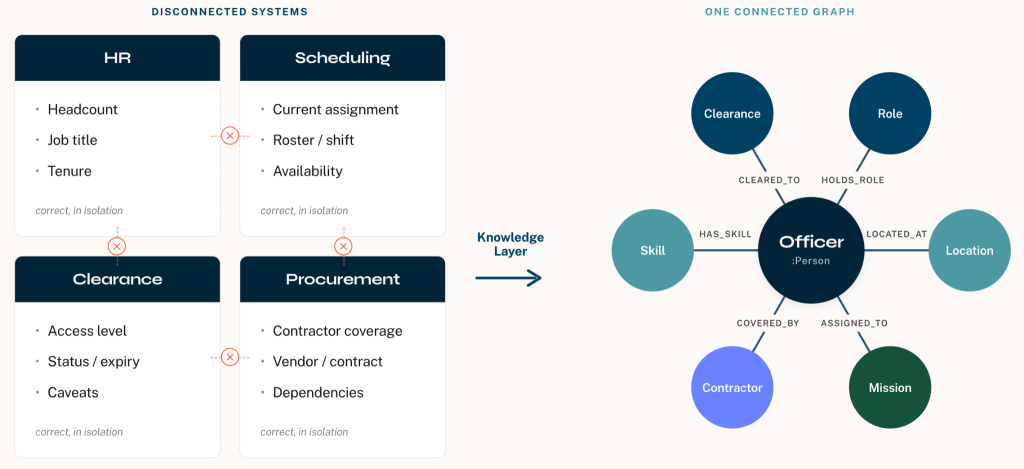
This architectural bottleneck often forces leaders to rely on "gut feeling" or outdated spreadsheets. In sectors like cybersecurity or emergency medicine, a three-day delay in reconciling data is more than an administrative hurdle; it is a threat to public safety and national resilience. For instance, in the event of a major cyber incident, an organization must instantly identify a response team that satisfies all criteria—certification, clearance, and availability—without leaving other critical infrastructure unmonitored.
The Rise of Graph Intelligence and Knowledge Layers
To bridge these systemic gaps, a shift from workforce management to workforce intelligence is required. This involves the implementation of a "knowledge layer" that sits atop existing systems. Rather than replacing established HR, procurement, or security platforms, this layer connects the data points between them using graph intelligence technology.
Graph intelligence, such as that provided by Neo4j, approaches data differently by prioritizing the relationships between entities. In a graph-based knowledge layer, people, skills, certifications, clearances, contractors, and missions are mapped as a single, interconnected view. This allows organizations to maintain their existing, trusted systems of record while gaining the ability to reason across them in real-time.
By grounding data in structured relationships, leaders can transition from reporting on what exists to predicting what will happen next. This enables "operational intelligence" questions that were previously impossible to answer quickly:
- Which upcoming retirements will leave a mission-critical gap in a specific geographic region?
- If a specific team is redeployed to an emergency, which secondary missions will lose their required supervisor-to-staff ratio?
- Which contractors possess the necessary clearances to fill immediate gaps left by transitioning civil servants?
- Where can a single training investment bridge the most capability gaps across multiple departments?
Broader Impact and the Future of Public Sector Resilience
The transition toward integrated workforce intelligence has profound implications for national and regional stability. As concurrent crises become the "new normal," the ability to move with agility and precision will define the success of public sector institutions. Organizations that successfully navigate these pressures will be those that have built a connected understanding of their people and dependencies.

The broader impact of this shift is visible in the resilience of critical infrastructure. When a healthcare system can see the real-time relationship between staff certifications and equipment availability across an entire region, it can optimize patient outcomes during a pandemic. When a defense department can map the interplay between personnel clearances and emerging technological threats, it can bolster national security more effectively than by simply increasing headcount.
The ultimate conclusion for public sector leaders is that their workforce already operates as a highly connected, interdependent system. The challenge is that their data does not yet reflect that reality. The choice facing these organizations is whether they will proactively integrate their data to discover these dependencies now, or whether they will only become aware of them when a system fails during the next major crisis. In an era of compound pressure, the most valuable asset is not just the size of the workforce, but the intelligence used to deploy it. In the final analysis, workforce intelligence is not an IT project; it is a fundamental component of operational readiness and public trust.
Related posts: