Global Cybersecurity Landscape Faces Escalating Threats from Compromised AI Extensions and Infrastructure Vulnerabilities


The intersection of artificial intelligence, geopolitical espionage, and systemic software vulnerabilities has created a turbulent cybersecurity landscape, according to recent developments monitored across global research groups and security forums. Cybersecurity researchers and defense analysts have flagged a series of critical incidents ranging from malicious code injections in developer ecosystems to massive geopolitical trade secret investigations and alarming hardware-level security regressions. The convergence of these events underscores an urgent need for enhanced digital hygiene and a fundamental re-evaluation of how automated systems interact with core enterprise and governmental infrastructure.
Malicious Extensions Target Developer Workflows
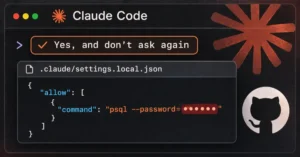
In late October 2026, security analysts from Phorion and OpenSourceMalware disclosed a targeted supply-chain attack involving a compromised Claude Code extension used within the Cursor development environment. Attackers successfully inserted a malicious JavaScript loader at the very beginning of the extension’s core "extension.js" file, cleverly leaving the legitimate functionality of the extension intact to avoid immediate detection by end-users.
The primary objective of the injected payload was to plant persistent Secure Shell (SSH) backdoors on compromised developer workstations running Windows and macOS. However, due to coding errors within the malware’s initialization routines, the threat actors failed to fully achieve their objective on systems where SSH services were not already natively running. The reverse tunnels established by the script were unable to force-enable dormant SSH services, severely limiting the attackers’ ability to gain remote access to a wide swath of infected machines.
Despite the operational failure of this specific campaign, the incident highlights a growing vector for supply-chain compromises: the targeted weaponization of AI coding assistants and IDE extensions. Because developers routinely grant these extensions broad filesystem and network access to streamline programming workflows, a successful compromise of the extension repository represents an elevated risk to corporate source code repositories and proprietary infrastructure.
Geopolitical Espionage and Export Controls Under Scrutiny
On the geopolitical front, intelligence reports emerging in late 2026 revealed that high-level political figures allegedly ignored a sophisticated Chinese espionage plot directed at the Chief Executive Officer of Nvidia, Jensen Huang. Investigators discovered close ties between the Nvidia CEO and Huang Le, an executive at Megaspeed—a firm marketing itself as an artificial intelligence cloud datacenter company.
The investigation intensified after regulatory and intelligence agencies noted irregularities in hardware shipments destined for Megaspeed facilities. Boxes containing high-performance Nvidia components delivered to Megaspeed remained uninstalled, sitting packed and seemingly ready for secondary transit to unauthorized destinations. Questions regarding Megaspeed’s operational legitimacy intensified when researchers discovered that its designated Singapore-based director, James Tan, permanently resided in China and was virtually never present at the company’s registered operational base.
Critics point out that despite extensive intelligence briefings provided to the administration over the preceding year, systemic oversight and policy enforcement regarding advanced AI chip exports remained lax. Observers argue that political pressures and economic priorities frequently override rigorous national security reviews, leaving critical technology supply chains vulnerable to covert state-sponsored infiltration. This regulatory vacuum is further complicated by recent high-profile incidents involving federal contractors, such as an Accenture contractor reportedly connecting an unauthorized AI agent directly to the Pentagon’s secure network and transmitting sensitive data to high-risk external websites—an event security experts labeled an unambiguous national security threat.
Infrastructure Bottlenecks and Public Backlash Against Data Centers
Simultaneously, the physical infrastructure underpinning the artificial intelligence boom is facing severe democratic and economic pushback. During the United States midterm elections, artificial intelligence data centers became a central point of contention for local electorates. Voters across multiple states decisively rejected proposed datacenter developments, enacting municipal and county-level restrictions through ballot measures.
According to aggregate data from tracking groups like "Data Centers on the Ballot," roughly 33 measures restricting datacenter development passed successfully, with several additional initiatives leading in early tallies. Polling data suggests that approximately 70% of Americans oppose unchecked AI datacenter build-outs in their local communities, driven by valid concerns regarding massive water consumption, skyrocketing electrical grid demands, and localized noise pollution. This widespread "Not In My Back Yard" (NIMBY) sentiment poses a significant operational hurdle for technology conglomerates attempting to scale their infrastructure rapidly.
Compounding these terrestrial resistance movements are profound economic doubts surrounding the long-term return on investment (ROI) for generative AI initiatives. Financial analysts and industry critics have increasingly warned that corporate expenditure on large language models and automated agents vastly outstrips measurable productivity gains. The premature replacement of skilled human labor with unproven AI systems has triggered what economists term the "AI Layoff Trap"—a scenario where corporations degrade their own customer base by eliminating middle-class jobs, ultimately choking off the consumer spending required to sustain macroeconomic stability.
Persistent Operating System Vulnerabilities and the Limits of Perimeter Defense
Technical vulnerabilities continue to plague foundational operating systems and communication networks. Security disclosures in early November 2026 highlighted a recurring class of privilege escalation flaws reminiscent of historical Unix login bugs. A newly discovered vulnerability in Musl Linux systems demonstrated that attackers could achieve root privileges simply by overwhelming the login prompt with an excessively long password string. This discovery emphasizes a frustrating reality for systems administrators: despite decades of architectural evolution, basic input-handling and memory-management flaws continue to provide straightforward pathways to system compromise.
Network-level anonymity tools have similarly faced intense scrutiny. Recent analyses revealed that approximately 300 Tor exit nodes were hijacked by malicious threat actors to execute advanced Man-in-the-Middle (MitM) attacks. By intercepting unencrypted email traffic and redirecting Secure Shell connections to compromised servers, the attackers demonstrated the inherent dangers of relying blindly on intermediary routing nodes without end-to-end encryption and strict host-key verification.
Implications and Future Outlook
The convergence of compromised software extensions, geopolitical intelligence failures, infrastructural gridlock, and foundational code vulnerabilities paints a sobering picture of modern digital ecosystems. As artificial intelligence tools become more deeply embedded in software development, corporate management, and governmental defense operations, the attack surface expands exponentially.
Security researchers emphasize that traditional perimeter defenses are no longer sufficient to protect sensitive assets. Mitigating these multi-layered risks requires a fundamental shift toward Zero Trust architectures, rigorous supply-chain verification, and energy-gapped network segregation. Without proactive regulatory enforcement and a renewed commitment to secure-by-design engineering principles, organizations will remain acutely vulnerable to the cascading failures of an increasingly interconnected and fragile global infrastructure.