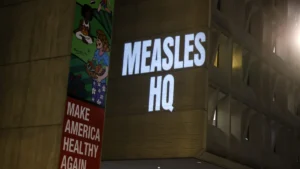
Pennsylvania Reports Third Measles-Related Death as Statewide Outbreak Reaches Critical Threshold

A 40-year-old woman in Jefferson County has died due to complications stemming from a suspected measles infection, marking a grim milestone in an ongoing public health crisis that has gripped Pennsylvania throughout 2026. This tragedy represents the third measles-linked death reported in the United States this year, all of which have occurred within the borders of Pennsylvania. The state is currently grappling with an explosive and unprecedented outbreak, with health officials documenting over 670 confirmed cases and 124 hospitalizations spanning 37 counties. This spike in fatalities is particularly alarming, as the state had not recorded a single death attributable to the measles virus in over three decades.
The death, confirmed by the Jefferson County Coroner’s Office on September 12, serves as a stark reminder of the virulence of the measles virus and the persistent threat it poses to vulnerable populations. According to the preliminary death certificate obtained by the New York Times, the deceased individual suffered from pre-existing chronic health conditions, including chronic obstructive pulmonary disease (COPD), which necessitated the constant use of supplemental oxygen. These underlying health issues significantly increased her susceptibility to the severe respiratory complications often associated with the virus.
The Mechanics of a Resurgent Virus
Measles is one of the most contagious human viruses, capable of remaining infectious in the air and on surfaces for up to two hours after an infected person has left a room. While widely regarded in modern medicine as a childhood illness—largely due to the success of the MMR (measles, mumps, and rubella) vaccine—health experts emphasize that the disease is systemic and can strike individuals of any age.
In the case of the Jefferson County woman, although official laboratory confirmation is still pending, local authorities have noted that she was unvaccinated and had a documented exposure to a confirmed measles patient. At the time of her passing, she exhibited the hallmark clinical presentation of the virus, most notably the characteristic maculopapular rash that typically initiates at the hairline before progressing downward across the torso and extremities. Coroner Greg Furlong, in a public statement, expressed his condolences, describing the event as a "heartbreaking loss for the family and an unfortunate reminder that measles can be a serious and potentially life-threatening disease."
Chronology of the Pennsylvania Outbreak
The current outbreak in Pennsylvania has been characterized by its rapid transmission rate, testing the limits of local and state public health infrastructure. The following timeline outlines the progression of the crisis:
- Early 2026: Sporadic, isolated cases begin to appear across several counties, initially appearing as localized clusters.
- Spring 2026: Transmission rates accelerate, moving beyond isolated clusters into broader community spread.
- Mid-2026: Hospitalizations begin to climb as healthcare systems in the affected regions report increased patient volume, primarily among unvaccinated individuals.
- September 2026: The death toll reaches three, including the most recent case in Jefferson County. The Pennsylvania Department of Health reports the tally has reached 670 confirmed cases across 37 counties, with a significant percentage of those patients requiring inpatient care.
Data Analysis and Public Health Implications
The scale of the current Pennsylvania outbreak is historically anomalous. Epidemiologists point to several factors driving these figures, most notably a decrease in vaccination coverage rates in specific pockets of the state. Vaccination provides the only reliable defense against the virus; the CDC recommends two doses of the MMR vaccine for children, which provides approximately 97% protection against measles.
When community vaccination levels drop below the threshold required for "herd immunity"—typically cited as 95%—the virus gains a foothold, allowing it to circulate among those who are either unvaccinated or immunocompromised. The 124 hospitalizations reported to date underscore the severity of the clinical manifestations observed in this outbreak. Beyond the rash, measles is frequently accompanied by high fevers, cough, coryza, and conjunctivitis. More dangerous complications include secondary pneumonia, which is the most common cause of measles-related mortality, as well as encephalitis, an inflammation of the brain that can lead to permanent neurological damage.
Official Responses and Clinical Guidance
The Jefferson County Coroner’s Office has maintained a posture of caution, coordinating closely with the Pennsylvania Department of Health. While the state health department has acknowledged the death in their communications with the press, they have yet to formally integrate this specific case into their official cumulative outbreak tally, citing the need for definitive laboratory confirmation.
Chief Deputy Coroner Jason Stiver has been vocal in urging the public to reconsider the dangers of vaccine-preventable illnesses. "Many people associate measles with a childhood illness, but it can lead to severe complications in individuals of any age," Stiver stated. "Measles is highly contagious and can result in serious respiratory illness, hospitalization, and in rare cases like this, death."
Healthcare providers throughout the state are currently operating under heightened surveillance protocols. They are advised to screen patients for travel history and vaccination status if they present with fever and rash. Furthermore, the state health department has been issuing recurring bulletins, encouraging residents to review their vaccination records and seek out immunization services if they have not yet received two doses of the MMR vaccine.
The Socio-Economic Impact of the Outbreak
The ripple effects of this outbreak extend far beyond the direct medical costs of treating 124 hospitalized patients. The administrative burden on public health departments—which must conduct contact tracing for every confirmed case—is immense. Furthermore, the outbreak has disrupted daily life, with school districts in affected counties implementing temporary exclusion policies for unvaccinated students to mitigate further spread.
The economic implications are equally significant. Public health interventions, including widespread immunization clinics, public education campaigns, and the management of quarantine protocols, require substantial financial and personnel resources. As the outbreak continues, the strain on local health departments increases, potentially impacting the delivery of other essential health services.
Broader Context: A National Perspective
While Pennsylvania is the current epicenter of the virus, the situation reflects a broader, concerning trend of declining vaccination rates in various regions across the United States. Public health experts argue that the normalization of measles as a "mild" illness has contributed to a false sense of security, leading some parents and adults to forgo the vaccine.
The three deaths in Pennsylvania this year are a somber metric that challenges the narrative that measles is a benign inconvenience. Medical history shows that before the widespread adoption of the measles vaccine in 1963, the virus killed hundreds of Americans annually and hospitalized tens of thousands. The current resurgence serves as a reminder that the eradication of such diseases is not permanent; it requires continuous, high-level vaccination coverage to maintain.
Conclusion and Looking Ahead
As of mid-September 2026, the Pennsylvania Department of Health continues to monitor the situation, urging residents to utilize state-provided resources for vaccination. The tragic death in Jefferson County has galvanized local officials to double down on their advocacy for preventative care.
The path forward, according to medical experts, remains clear: a redoubling of efforts to reach under-vaccinated communities, a commitment to rigorous clinical monitoring, and a public communication strategy that emphasizes the real-world dangers of measles. As the state moves into the autumn months, health authorities are bracing for the possibility of continued transmission, hoping that increased awareness and access to the vaccine will eventually break the chain of infection. For now, the loss of the 40-year-old woman remains a poignant and sobering chapter in what has become one of the most significant public health challenges in Pennsylvania’s modern history.
Related posts: