Sam Altman’s World Expands Global Footprint with Tinder Integration and New AI Verification Protocols

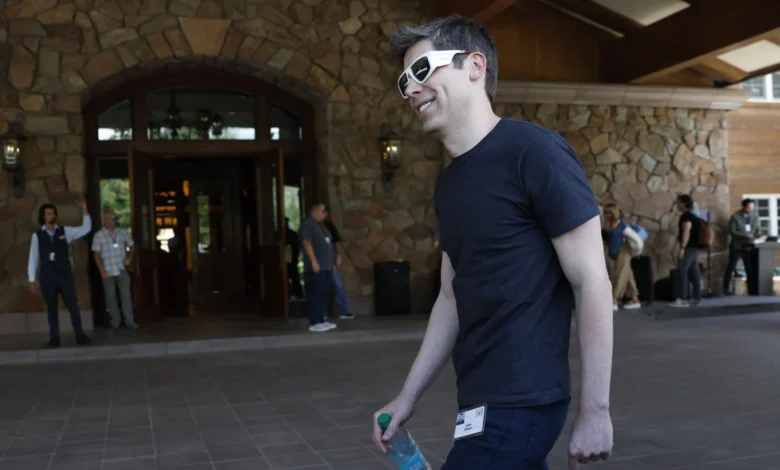
At a high-profile launch event held at The Midway near the San Francisco pier, World, the digital identity project co-founded by Sam Altman, unveiled a major strategic pivot aimed at embedding its "proof of human" technology into the fabric of everyday digital life. Formerly known as Worldcoin, the project’s rebranding to simply "World" signals a shift from a cryptocurrency-focused initiative to a comprehensive infrastructure for human verification in an era increasingly dominated by artificial intelligence. The most immediate application of this expansion is a global partnership with Tinder, the world’s most popular dating app, designed to combat the rising tide of AI-generated profiles and romance scams.
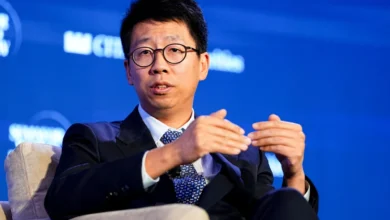
Speaking to a capacity crowd, Altman, who also serves as the CEO of OpenAI, emphasized the urgency of establishing a reliable method for distinguishing humans from machines. "The world is getting close to very powerful AI, and this is doing a lot of wonderful things," Altman stated. "We are also heading to a world now where there’s going to be more stuff generated by AI than by humans. I’m sure many of you have had moments where you’re like, ‘Am I interacting with an AI or a person, or how much of each, and how do I know?’"
The Global Rollout of World ID on Tinder
The integration with Tinder represents the project’s most significant move into the consumer social space. Following a successful pilot program in Japan last year, Tools for Humanity (TFH), the parent company behind World, announced that the verification service will now be available in global markets, including the United States.
Under this partnership, Tinder users who have been verified through World’s systems will receive a unique "World ID" emblem on their profiles. This badge serves as a cryptographic guarantee that the account holder is a real, living human being who has undergone a biometric or credential-based check. For Match Group, the owner of Tinder, the integration addresses a critical pain point: the proliferation of "catfishing" and bot-driven scams. According to data from the Federal Trade Commission (FTC), romance scams resulted in reported losses of $1.14 billion in 2023 alone, with AI-generated imagery making it increasingly difficult for users to identify fraudulent accounts.
Combatting the "Bot-pocalypse" in Live Entertainment
Beyond social discovery, World is targeting the multi-billion dollar live entertainment industry. The company introduced "Concert Kit," a specialized feature designed to protect fans from automated ticket-buying bots and predatory scalping. Concert Kit allows musical artists and promoters to reserve a specific allocation of tickets exclusively for World ID-verified humans.
The system is built to be compatible with industry giants such as Ticketmaster and Eventbrite. To demonstrate the tool’s efficacy, World announced partnerships with high-profile acts including Bruno Mars and 30 Seconds to Mars, both of whom intend to utilize the technology for their upcoming tours. The move comes at a time of heightened scrutiny for the ticketing industry; a 2023 report by Distil Networks estimated that bots account for nearly 40% of all ticketing site traffic, often vacuuming up inventory within seconds of a general sale. By requiring a "proof of human" credential, World aims to ensure that tickets end up in the hands of genuine fans rather than automated resellers.

Enterprise Security: Zoom, DocuSign, and Deepfake Prevention
The expansion of World’s ecosystem extends into the professional sphere, where the threat of "deepfakes"—highly realistic AI-generated video and audio—is becoming a primary security concern for corporations. World announced new integrations with Zoom and DocuSign to provide an additional layer of identity assurance.
The Zoom integration allows meeting participants to verify their human identity in real-time, mitigating the risk of "business email compromise" (BEC) attacks where attackers use deepfake technology to impersonate executives on video calls. Earlier this year, a multinational firm in Hong Kong reportedly lost $25 million after an employee was deceived by a deepfake-heavy video conference. Similarly, the partnership with DocuSign ensures that digital signatures are backed by a verified World ID, providing a higher level of non-repudiation for sensitive legal and financial documents.
Technological Infrastructure: Zero-Knowledge Proofs and the Orb
At the heart of World’s value proposition is the "Orb," a spherical hardware device that uses iris-scanning technology to create a unique cryptographic identifier. Unlike traditional biometric databases, World utilizes "zero-knowledge proof-based authentication." This cryptographic method allows a user to prove they are a unique human without revealing their name, iris pattern, or any other personal data to the third-party application.
Tiago Sada, World’s Chief Product Officer, explained that the company is evolving its verification methods to lower the barrier to entry. While the "Orb" remains the gold standard for security, World is introducing a tiered verification system:
- Orb Verification: The highest tier, requiring a physical iris scan to ensure unique personhood.
- Government ID Tier: A mid-level tier that uses the NFC chip in official government passports or IDs to verify identity.
- Selfie Check: A "low-friction" tier that utilizes local on-device processing to verify a user via a smartphone camera.
"Selfie is private by design," said Daniel Shorr, an executive at TFH. "We maximize the local processing that’s happening on your device, which means that your images are yours." While Sada acknowledged that selfie-based systems are more susceptible to spoofing than iris scans, the tiered approach allows developers to choose the level of security appropriate for their specific use case.
The Future of the Agentic Web: Human Delegation
One of the most forward-looking announcements involved "agent delegation." As AI "agents"—autonomous software capable of performing tasks like booking travel or managing finances—become more common, a new problem arises: how does a website know that an AI agent is acting on behalf of a legitimate human?
In partnership with the authentication firm Okta, World has launched a beta system that ties a World ID to a specific AI agent. When the agent interacts with a web service, it carries a digital certificate proving it is authorized by a verified human. Gareth Davies, Okta’s Chief Product Officer, noted that this system is essential for maintaining the integrity of the "agentic web," ensuring that automated actions remain tethered to human accountability.

Chronology and Strategic Evolution
The journey of World has been marked by rapid technological iteration and significant controversy.
- 2019: Tools for Humanity is founded by Sam Altman, Alex Blania, and Max Novendstern.
- 2021: The project emerges from stealth, introducing the "Orb" and the concept of a global basic income funded by cryptocurrency.
- 2023: Worldcoin officially launches its token and app globally. It faces immediate regulatory scrutiny in Europe and Kenya over data privacy concerns.
- Late 2023: The project begins shifting focus toward "Proof of Personhood" as a service for third-party developers.
- 2024: Rebranding to "World" and the announcement of "World Chain," a blockchain network designed specifically for humans.
- 2025 (Current): Massive expansion into consumer apps like Tinder and enterprise tools like Zoom.
Scaling Challenges and Geographic Expansion
Despite its ambitious goals, World has faced significant hurdles in scaling its physical infrastructure. To receive the highest level of verification, users must physically interact with an Orb, a process that many find inconvenient or intrusive.
To address this, World announced a major expansion of Orb availability in key metropolitan hubs, including New York City, Los Angeles, and San Francisco. Furthermore, the company is testing an "Orb on demand" service, where the hardware can be brought to a user’s location for private verification. The project has also begun placing Orbs in major retail chains to integrate verification into routine activities like shopping or dining.
Broader Implications and Industry Impact
The expansion of Sam Altman’s World project represents a significant bet on the future of digital identity. If successful, World ID could become the "passport of the internet," a universal layer of trust that sits above existing social and financial platforms.
However, the project continues to navigate a complex regulatory landscape. Privacy advocates and government regulators in jurisdictions like Spain and Portugal have previously raised concerns regarding the collection of biometric data. World has responded by open-sourcing its hardware designs and emphasizing its commitment to "personal data custody," where users retain control over their biometric information on their own devices.
The implications for the AI industry are profound. As generative AI makes it cheaper and easier to create fake personas, the economic value of "proven humanity" increases. By positioning World as the solution to the problems created by the very AI technology Altman’s other company, OpenAI, is pioneering, the project occupies a unique and powerful position in the technological ecosystem. Whether the public will embrace iris-scanning Orbs in exchange for a "verified human" badge remains the central question as World embarks on its most aggressive expansion to date.
Related posts: