Streamlining Web Publishing with Docsify-This: A Comprehensive Look at the Zero-Setup Markdown Rendering Revolution

The digital landscape is currently witnessing a significant shift in how content is published and consumed, moving away from heavy, database-driven content management systems toward lightweight, text-based workflows. At the forefront of this movement is Docsify-This, an innovative open-source project that leverages the power of Docsify.js to provide a seamless bridge between raw Markdown files and polished, responsive web pages. By eliminating the traditional build processes and complex server configurations typically associated with static site generators, Docsify-This offers a "zero-setup" alternative that is rapidly gaining traction among educators, technical writers, and open-source contributors. This tool allows users to instantly transform any publicly accessible Markdown file into a standalone web page, providing a versatile solution for embedding content across diverse platforms, including Learning Management Systems (LMS) and corporate intranets.
The Evolution of Markdown and the Rise of On-the-Fly Rendering
To understand the impact of Docsify-This, one must first look at the evolution of Markdown itself. Created in 2004 by John Gruber and Aaron Swartz, Markdown was designed to be a "plain text-to-HTML conversion tool for web writers." Over the last two decades, it has become the lingua franca of technical documentation, fueled by the rise of platforms like GitHub, GitLab, and Bitbucket. However, while Markdown is easy to write, displaying it as an aesthetic, user-friendly web page has historically required a secondary step: a build process.

Traditional static site generators like Jekyll, Hugo, and Gatsby require a compilation phase where Markdown is converted into HTML files before being deployed to a server. While powerful, these tools introduce a technical barrier for non-developers. Docsify.js, the foundation upon which Docsify-This is built, changed this paradigm by rendering Markdown files in the browser at runtime. This "no-build" approach ensures that the moment a text file is updated in a repository, the changes are reflected on the live site without human intervention or CI/CD pipelines. Docsify-This takes this a step further by removing the need to even host the Docsify core files; it acts as a centralized rendering engine that can point to any remote repository, effectively democratizing web publishing for those without server access.
Core Functionalities and the Web Page Builder Interface
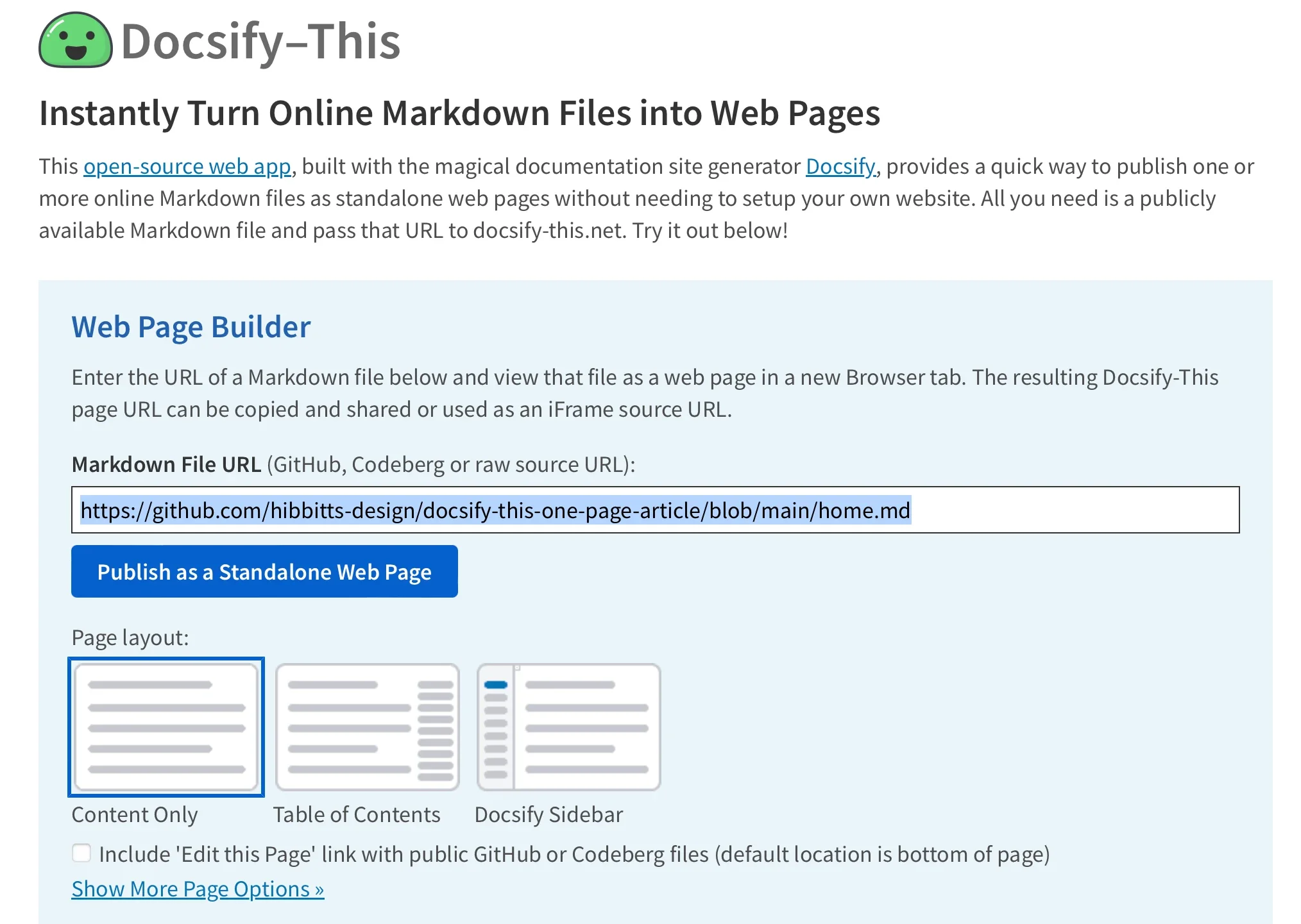
The primary appeal of Docsify-This lies in its simplicity and the "Web Page Builder" interface. This tool serves as a configuration layer where users can input the URL of a Markdown file hosted on platforms such as GitHub or Codeberg. Upon clicking the "Publish" button, the system generates a unique URL that renders the Markdown file as a standalone, responsive web page.
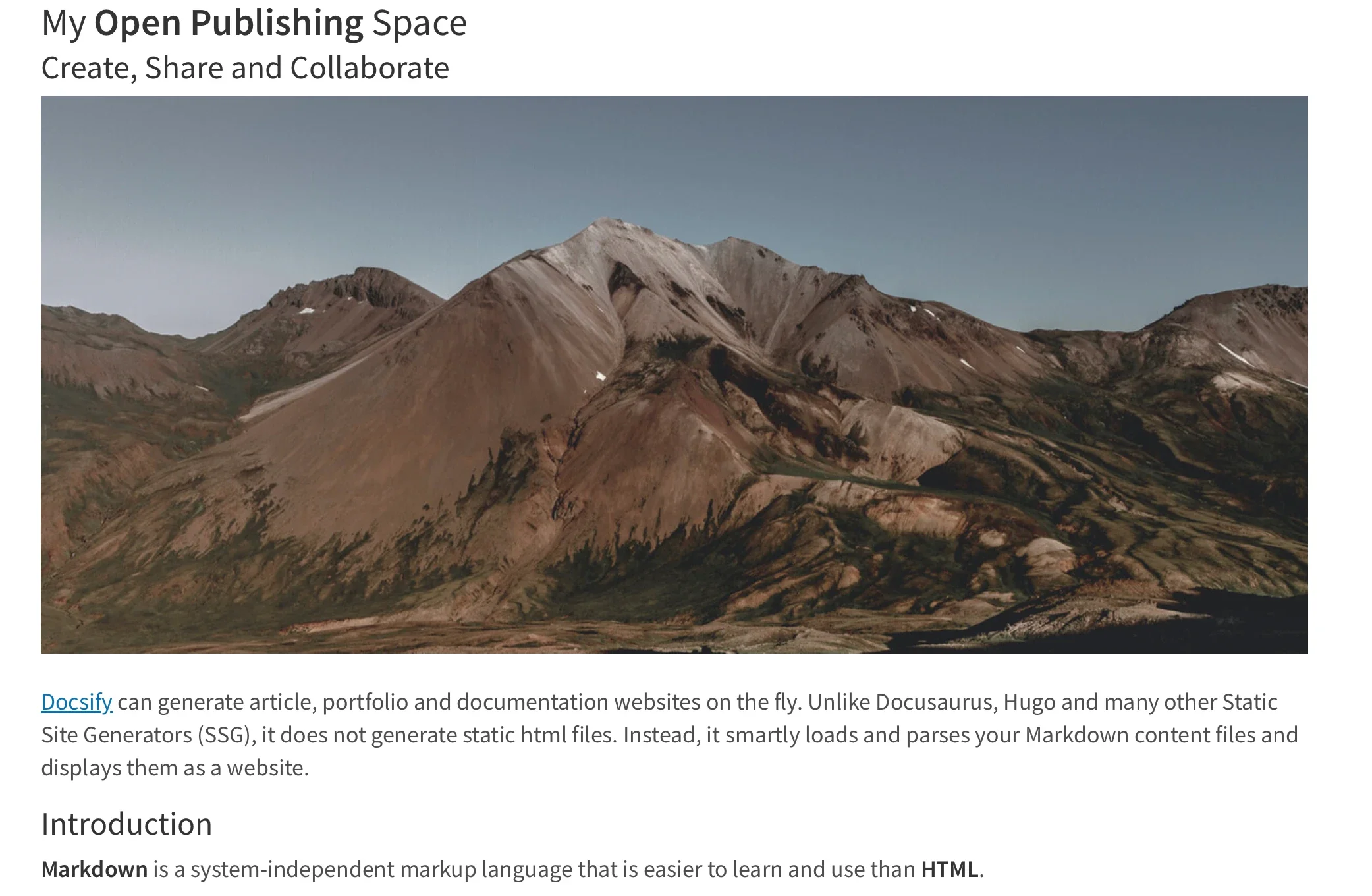
This process is not merely a static conversion; it is highly dynamic. The tool allows for the creation of multi-page environments by linking several Markdown files together, effectively functioning as a lightweight website builder. For designers and content strategists, the visual appearance is not locked into a single template. Through the use of URL parameters, users can dictate the aesthetic properties of the page—such as font family, font size, link colors, and line height—directly within the link itself. This capability is particularly useful for brand consistency, allowing a single Markdown source to appear differently depending on where it is being viewed.
Technical Customization and Extensibility
Beyond simple URL parameters, Docsify-This provides a robust framework for advanced customization. The project supports a variety of specialized Markdown CSS classes. For instance, a standard Markdown link can be transformed into a stylized button by appending a simple class string (e.g., ':class=button'). This level of control extends to the inclusion of custom CSS blocks directly within the Markdown file.
By embedding <style> tags, authors can define unique classes for specific elements, such as custom-colored buttons, specialized containers, or unique typography. This hybrid approach—combining the simplicity of Markdown with the power of CSS—allows for the creation of sophisticated layouts that were previously the domain of dedicated web developers. Furthermore, because Docsify-This supports standard HTML snippets, users can implement complex grid systems or multi-column layouts, providing a level of design flexibility that exceeds standard Markdown rendering.
Integration with Global Version Control Systems
A critical component of the Docsify-This ecosystem is its deep integration with Git-based platforms. By storing content in repositories on Codeberg or GitHub, authors benefit from built-in version control, audit trails, and collaborative workflows. Docsify-This capitalizes on this by offering an "Edit this Page" feature. When enabled, this feature adds a direct link to the source file in the repository, allowing authorized users to suggest edits or update content via the Git platform’s native interface.
This integration is supported by a wide array of open-source tools. Developers and writers can use graphical interfaces like GitHub Desktop, Git-Cola, or SparkleShare to manage their content. Additionally, modern text editors such as VSCode and Pulsar Edit (the community-led successor to Atom) offer seamless Git integration, allowing for a "write-push-publish" workflow that is both efficient and transparent. This ecosystem ensures that content remains portable and avoids the "platform lock-in" associated with proprietary content management systems.
Educational Impact: Use Cases in Learning Management Systems
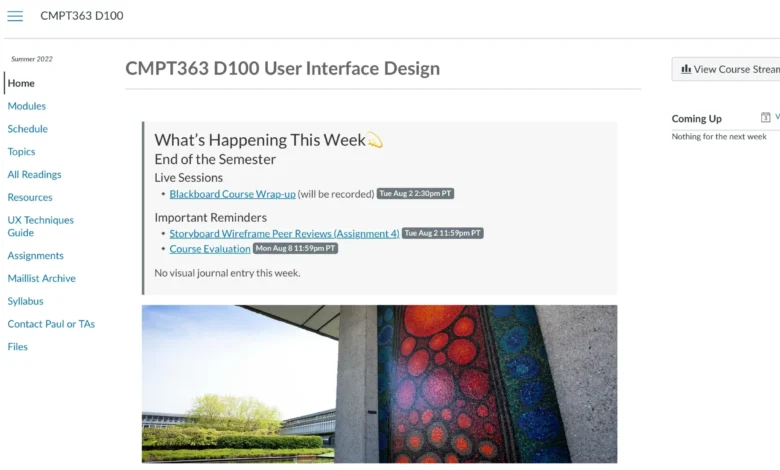
One of the most significant sectors adopting Docsify-This is the global education community. Learning Management Systems (LMS) like Moodle and Canvas often have restrictive content editors that can make it difficult to maintain consistent styling across multiple course modules. Docsify-This solves this by allowing educators to host their course content in a Git repository and embed it into the LMS via an iFrame or an external URL tool.
In this scenario, the educator maintains a "single source of truth" in their Markdown files. When a syllabus or an assignment description needs updating, the teacher simply edits the Markdown file in their repository. Because Docsify-This renders the content dynamically, the updated information is instantly visible within the LMS, across all course sections where the content is embedded. This "write once, publish everywhere" methodology significantly reduces the administrative burden on teaching staff and ensures that students always have access to the most current information.

Data and Market Analysis: The Shift Toward Decentralized Content
The emergence of tools like Docsify-This is backed by broader trends in the technology sector. According to recent developer surveys, Markdown has consistently ranked as one of the most loved and widely used markup languages due to its portability and readability. Simultaneously, the "Jamstack" (JavaScript, APIs, and Markup) architecture has seen a 200% growth in adoption over the last five years, as organizations seek faster, more secure ways to deliver web content.
Docsify-This aligns perfectly with these trends by minimizing the attack surface of a website. Since there is no database to hack and no server-side processing (in the traditional sense), the security profile of a Docsify-rendered page is significantly higher than that of a WordPress or Drupal site. For organizations, this translates to lower maintenance costs and reduced risk. Furthermore, the open-source nature of the project—licensed under Creative Commons and available for self-hosting—appeals to the growing demand for digital sovereignty, where users retain full ownership and control over their tools and data.
Expert Analysis: Implications for Collaborative Authoring
Industry experts suggest that the "documentation-as-code" movement is entering a new phase of accessibility. Previously, this workflow was reserved for software engineers who were comfortable with terminal commands and build scripts. Docsify-This represents a "bridge" technology that brings the benefits of Git-based workflows to the "no-code" and "low-code" masses.

By providing a point-and-click Web Page Builder, the project lowers the barrier to entry, allowing marketing teams, HR departments, and academic researchers to leverage professional-grade version control without a steep learning curve. This transition has profound implications for collaborative authoring. In a traditional CMS, tracking changes and managing multiple contributors can be cumbersome. In a Git-backed Docsify-This environment, every change is tracked, and "pull requests" can be used to review and approve content before it goes live, bringing a level of rigor to content creation that was previously exclusive to software development.
Future Outlook and Conclusion
As the project continues to evolve, the community surrounding Docsify-This is exploring new frontiers in content delivery. Potential future developments include enhanced offline capabilities, deeper integration with decentralized hosting protocols like IPFS, and expanded support for more diverse Git hosting providers.
In conclusion, Docsify-This is more than just a rendering tool; it is a catalyst for a more open, efficient, and collaborative web. By removing the friction between writing and publishing, it empowers individuals and organizations to focus on what truly matters: the content. Whether it is a single-page article, a complex technical manual, or a dynamic university course, Docsify-This provides the infrastructure to share information with the world instantly, beautifully, and without compromise. As open-source software continues to eat the world, tools like Docsify-This prove that the most powerful solutions are often the ones that simplify our digital lives.
Related posts: