Modern enterprise security architecture is increasingly moving away from static, long-lived credentials toward dynamic, identity-based authentication systems. As organizations scale their data infrastructure, the integration of robust Identity and Access Management (IAM) providers like Okta with specialized database systems such as Neo4j has become a cornerstone of secure DevOps practices. The transition from traditional username-and-password authentication to OAuth 2.0 and OpenID Connect (OIDC) represents a significant shift in how service-to-service communication is secured, particularly within graph database environments where data relationships are complex and sensitive.

The Evolution of Service-to-Service Authentication
Historically, applications connecting to databases relied on hardcoded credentials stored in configuration files or environment variables. This practice, while simple to implement, created significant security vulnerabilities, including credential leakage and the difficulty of rotating passwords without causing service downtime. According to the 2023 Verizon Data Breach Investigations Report, stolen credentials remain a primary entry point for unauthorized access, accounting for nearly 50% of non-error-related breaches.
To mitigate these risks, the industry has pivoted toward Machine-to-Machine (M2M) authentication. By utilizing an API Services application with the OAuth 2.0 Client Credentials flow, organizations can issue non-human identities to their applications. This methodology allows for the use of short-lived access tokens, which expire automatically and must be periodically refreshed, thereby drastically reducing the window of opportunity for an attacker if a token is intercepted.
Neo4j, the leading graph database platform, has evolved to support these modern protocols. By integrating with Okta, a leader in the IAM space, Neo4j allows administrators to centralize user management and authorization logic. This integration ensures that the database does not need to store local passwords for every service; instead, it trusts the cryptographically signed tokens issued by Okta.
Strategic Advantages of OIDC for Graph Databases
Implementing an OIDC service account for Neo4j offers several architectural advantages. First and foremost is the elimination of credential persistence. When an application requires access to the graph, it requests a JSON Web Token (JWT) from Okta using its Client ID and Secret. This token is then passed to Neo4j, which validates the token’s signature against Okta’s public keys.
Furthermore, this approach enables granular Role-Based Access Control (RBAC). In a traditional setup, changing a service’s permissions might require manual intervention within the database’s internal security tables. With Okta integration, permissions can be mapped directly to OIDC claims. If a service needs to be promoted from a ‘reader’ to an ‘admin’ role, the change is made in the Okta console, and the updated permissions are reflected in the next token issued to the service.
Finally, the auditability of these systems is greatly enhanced. Security teams can monitor Okta logs to see exactly when and where tokens are being requested, providing a comprehensive trail of service-to-service interactions that is often difficult to achieve with local database accounts.
Chronology of Technical Implementation
The integration process follows a structured path, moving from the identity provider setup to the database configuration and finally to the client-side implementation.
Phase 1: Establishing the Okta Service Application
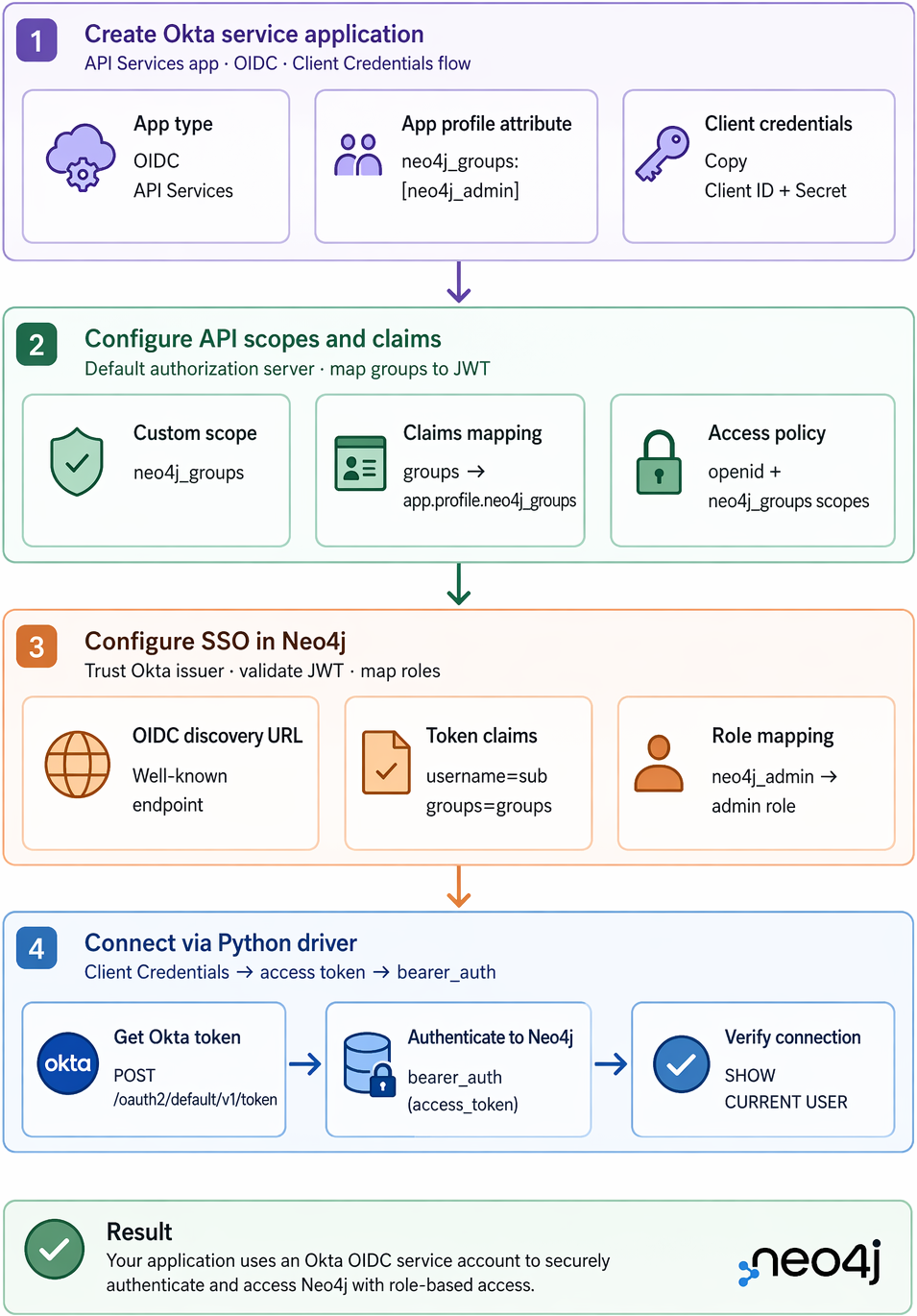
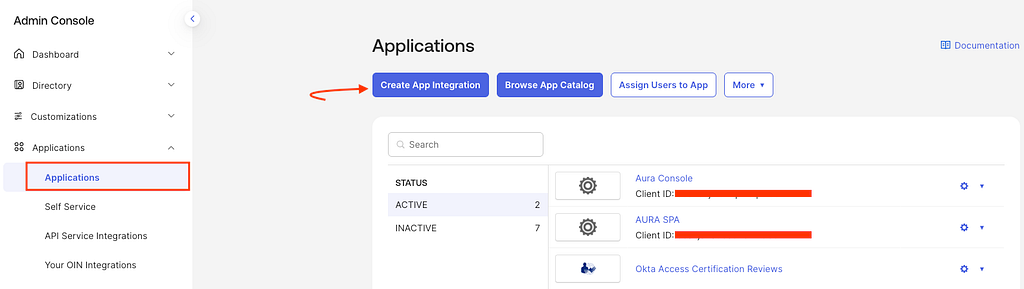
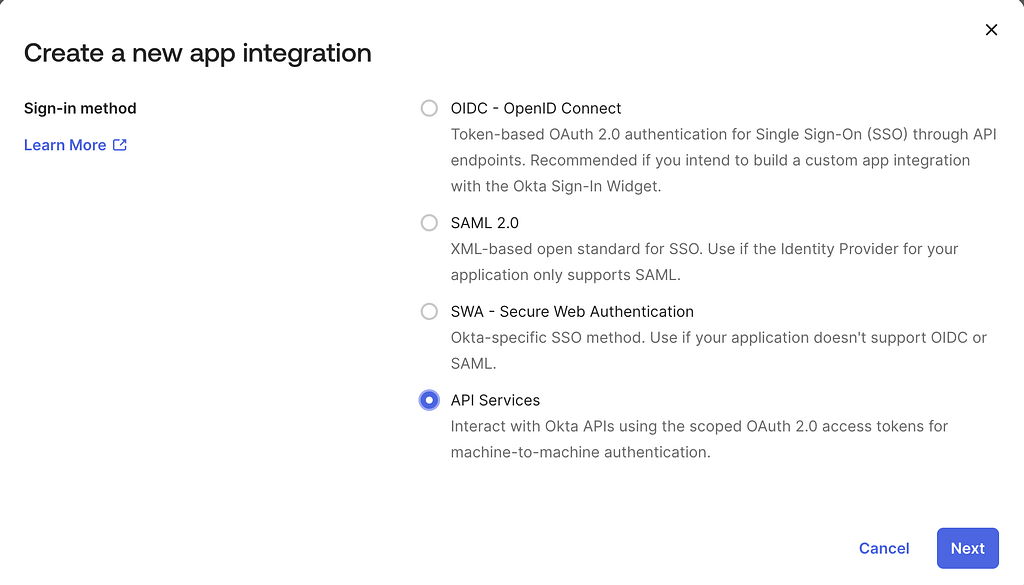
The first step in the sequence is the creation of a dedicated service application within the Okta Admin Console. Administrators must navigate to the "Applications" section and select "Create App Integration." For M2M communication, the "API Services" option is selected. This tells Okta that the application will authenticate using its own credentials rather than on behalf of a human user.

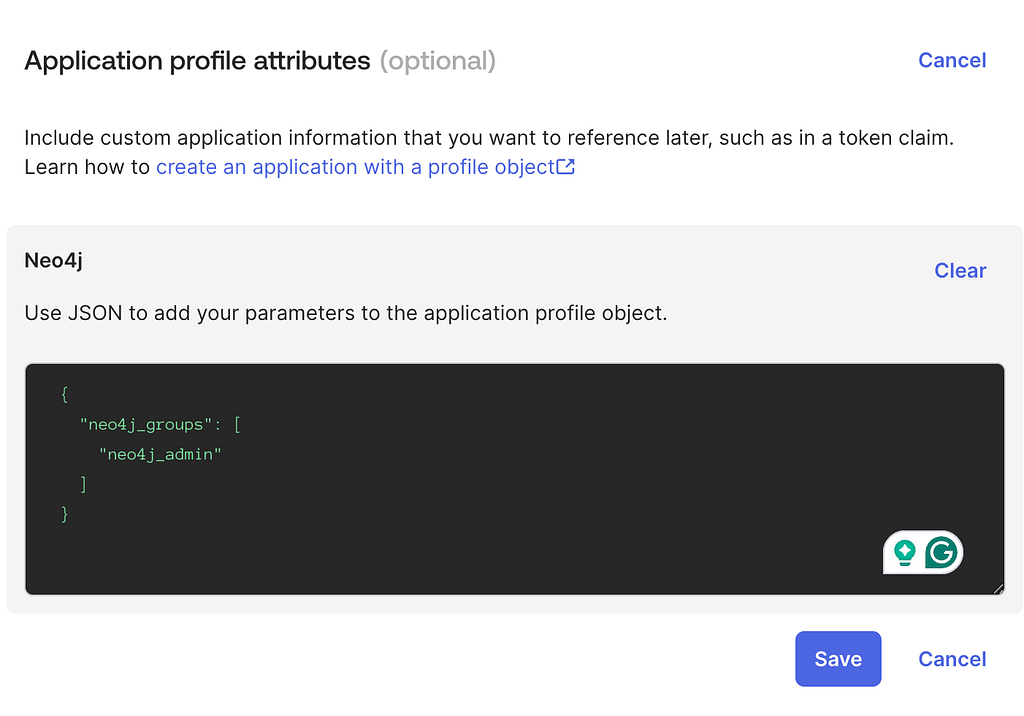
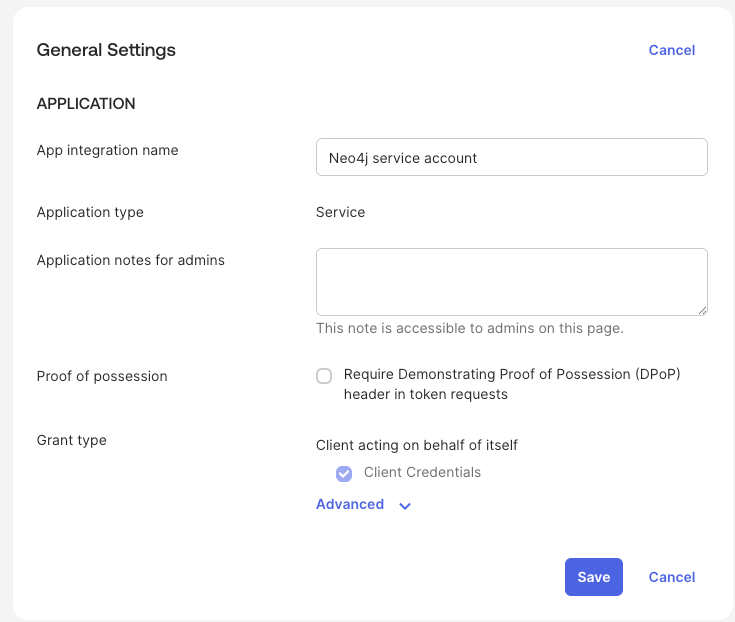
During the configuration, a unique name (e.g., neo4j-service-account) is assigned. A critical component of this phase is the definition of application claims. In Okta, a custom attribute—often named neo4j_groups—is created. This attribute is populated with the desired Neo4j role, such as neo4j_admin. It is a best practice to adhere to the principle of least privilege; while neo4j_admin is useful for setup, production environments should utilize more restrictive roles like publisher or reader to limit the potential blast radius of a compromised service.
Another vital technical detail is the client security setting. Administrators must ensure that "Demonstrating Proof-of-Possession" (DPoP) is disabled. While DPoP is a robust security enhancement for certain OAuth flows, Neo4j currently requires standard bearer tokens. Leaving DPoP enabled would result in token rejection by the database driver.
Phase 2: Authorization Server and Claim Mapping
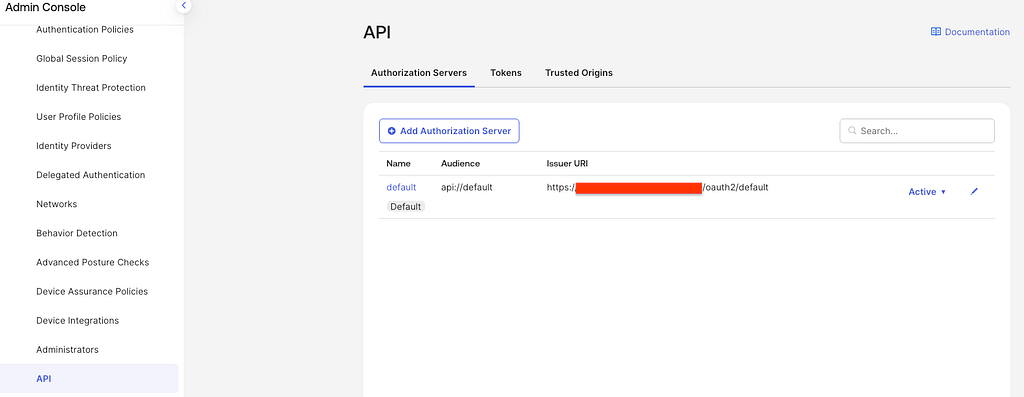
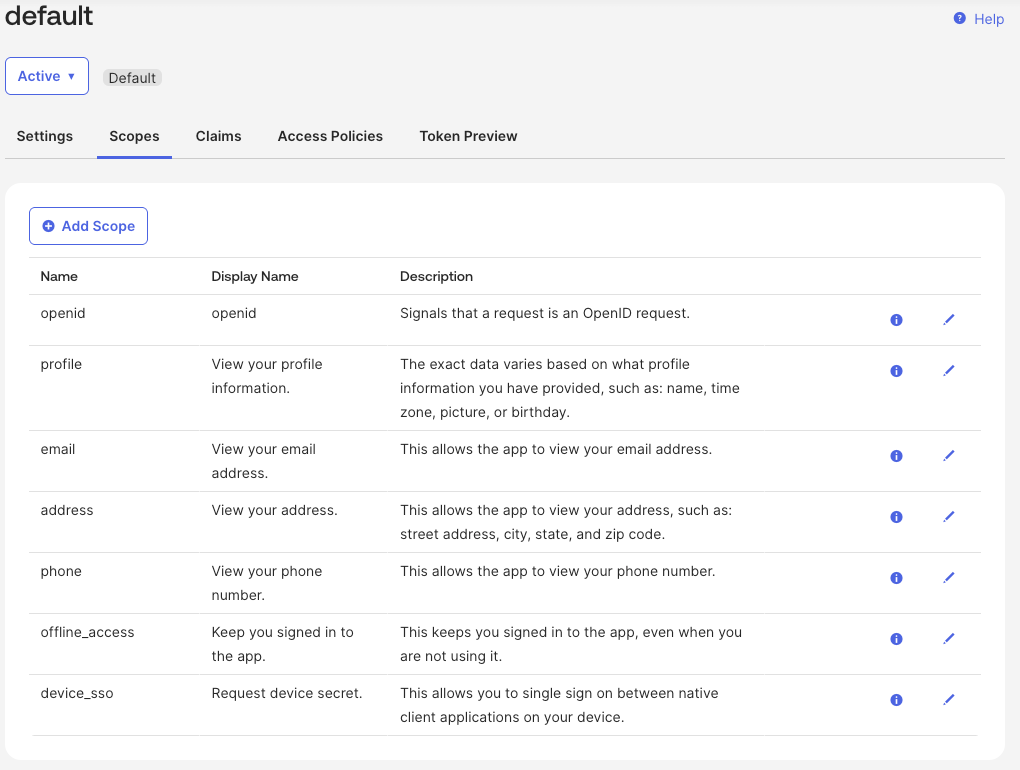
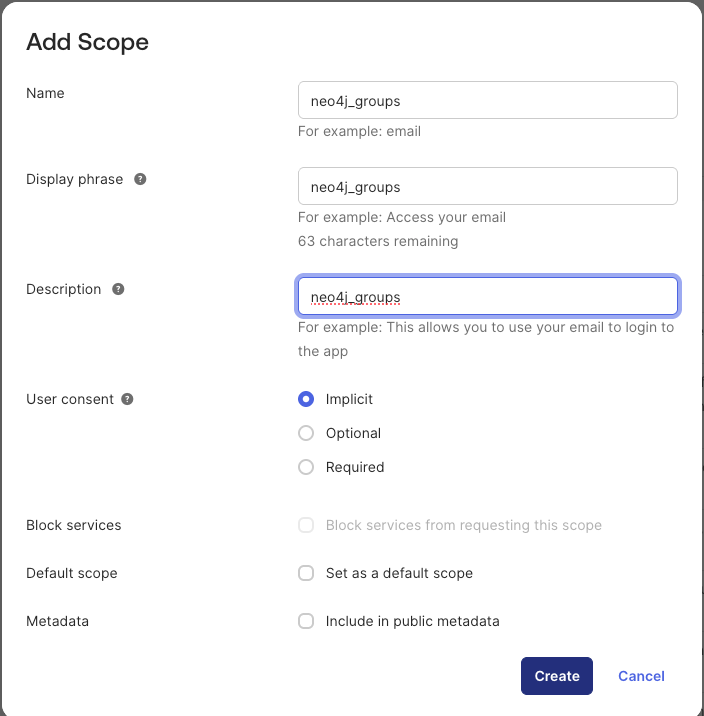
Once the application is created, the focus shifts to the Okta Authorization Server. Most organizations utilize the "Default" server provided by Okta. Within this server, a new scope named neo4j_groups must be added. Scopes act as a mechanism to limit the permissions granted by an access token.
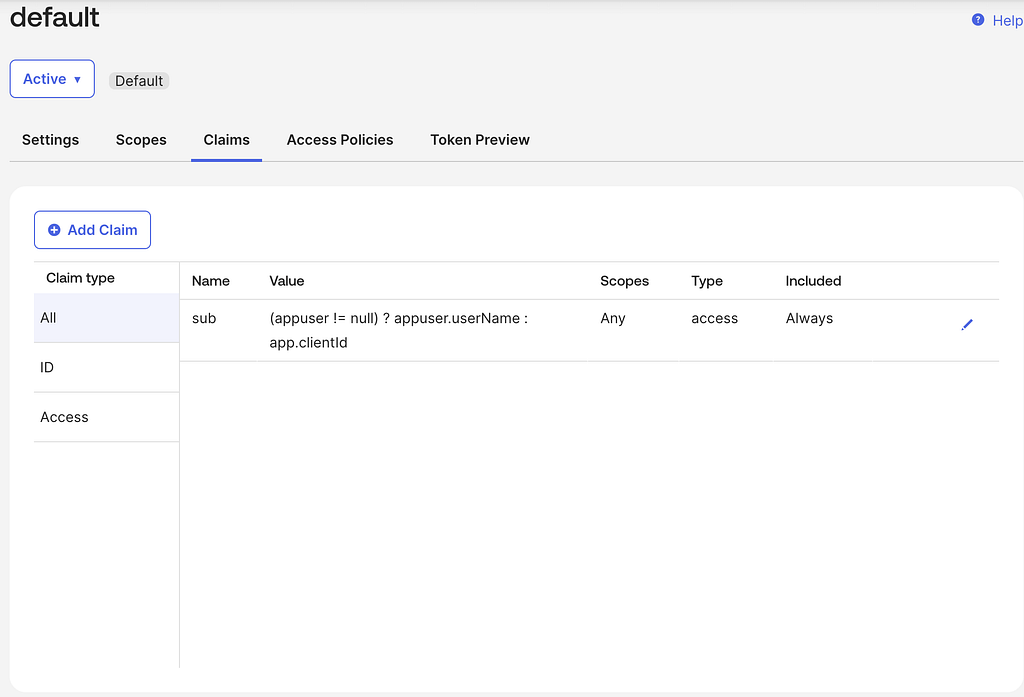
The mapping of the application attribute to the JWT is handled through the "Claims" tab. A new claim is created, typically named groups, which maps to the appuser.neo4j_groups value defined in the previous phase. This ensures that when the Python driver requests a token, the resulting JWT contains a field specifying that the service belongs to the neo4j_admin group.
To finalize the Okta side of the configuration, an Access Policy must be established. This policy dictates which applications are allowed to request the neo4j_groups scope. By creating a rule that specifically allows the neo4j-service-account application to access this scope, administrators create a secure boundary around the authorization process.
Phase 3: Neo4j Server Configuration
With the identity provider ready, the Neo4j environment must be configured to recognize Okta as a trusted source of identity. This is achieved by modifying the neo4j.conf file or setting environment variables in a containerized deployment.
The configuration involves enabling OIDC as an authentication and authorization provider. Key parameters include:
- Well-known Discovery URI: This is the endpoint (e.g.,
https://your-domain.okta.com/oauth2/default/.well-known/openid-configuration) where Neo4j retrieves the metadata required to validate tokens, including the issuer name and the public keys (JWKS). - Audience: Usually set to
api://default, this must match the audience claim in the issued JWT. - Claims Mapping: This tells Neo4j where to find the username (often the
subclaim) and the group memberships (thegroupsclaim created in Phase 2). - Role Mapping: A specific directive, such as
dbms.security.oidc.okta-backend.authorization.group_to_role_mapping="neo4j_admin"=admin, instructs the database to treat any token with theneo4j_admingroup as having internaladminprivileges.
Phase 4: Programmatic Integration via Python
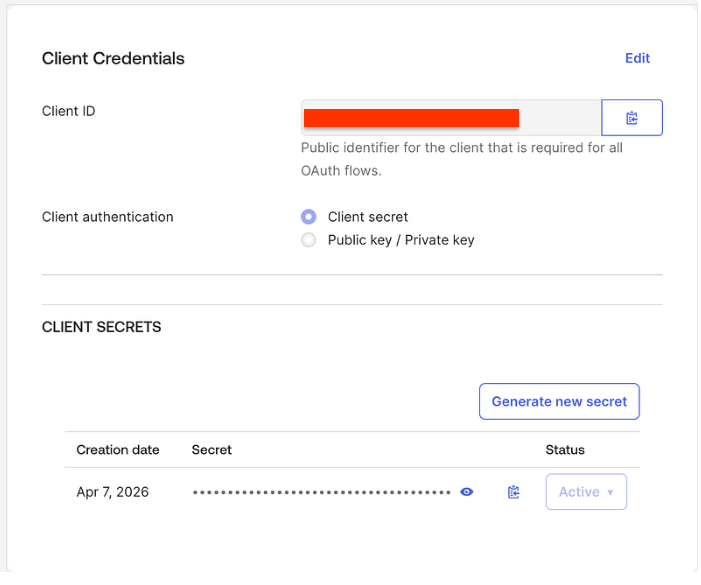
The final phase involves the application-side logic. Using the Neo4j Python driver, the application must first perform a POST request to Okta’s token endpoint. This request is authenticated using Basic Auth, consisting of the Base64-encoded Client ID and Client Secret.
Upon receiving the JSON response from Okta, the application extracts the access_token. This token is then passed to the Neo4j driver using the bearer_auth method. Unlike standard authentication, which requires a username and password, bearer authentication simply presents the token. The Neo4j driver handles the underlying complexity of including this token in the bolt protocol headers.
Industry Impact and Security Analysis
The move toward OIDC-based service accounts for database access reflects a broader industry trend toward "Zero Trust" architecture. In a Zero Trust model, no entity is trusted by default, whether inside or outside the network. Every request must be authenticated and authorized based on dynamic policy.
Data from the Identity Defined Security Alliance (IDSA) suggests that 84% of organizations experienced an identity-related breach in the past year. By offloading the authentication burden to a specialized provider like Okta, Neo4j users significantly reduce their attack surface. The database no longer serves as a silo of identity data, which is often the weakest link in a security chain.
Furthermore, this integration supports the scalability of modern microservices. In a cloud-native environment where services are ephemeral and may scale up or down based on demand, managing individual database users for every instance is functionally impossible. OIDC provides a stateless, scalable alternative that fits perfectly into Kubernetes and CI/CD workflows.
Broader Implications for Data Governance
Beyond security, the integration of Okta and Neo4j has profound implications for data governance and compliance. Regulatory frameworks such as GDPR, HIPAA, and SOC2 require strict controls over who can access sensitive data and how those permissions are managed.
By centralizing access control in Okta, organizations can implement "Single Source of Truth" for identity. If an employee leaves the company or a project is decommissioned, disabling the service account in Okta immediately revokes access across all integrated systems, including the Neo4j database. This level of synchronization is essential for maintaining compliance in high-stakes industries like finance and healthcare, where graph databases are frequently used for fraud detection and patient journey mapping.
As the ecosystem continues to mature, we can expect further enhancements in token-bound security, such as the eventual adoption of DPoP by database drivers and the integration of Continuous Access Evaluation (CAE), which would allow Okta to signal Neo4j to terminate a session immediately if a security policy change occurs. For now, the implementation of OAuth 2.0 Client Credentials remains the gold standard for securing the intersection of graph data and identity management.