Svelte Ecosystem Update Security Patches and Community Growth Mark a Pivotal Month for Modern Web Development

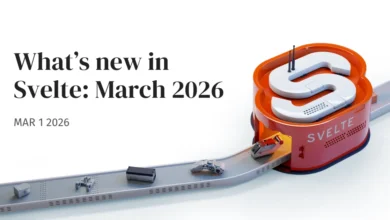
The Svelte development team and its broader community have marked a significant period of transition and fortification this month, characterized by a dual focus on platform security and the expansion of the framework’s technical capabilities. As the web development landscape increasingly shifts toward high-performance, compiled-at-build-time frameworks, the latest updates to Svelte and SvelteKit underscore a commitment to both developer experience and the structural integrity of the ecosystem. This month’s developments are headlined by a critical security sweep that resulted in patches for five distinct vulnerabilities, alongside a surge in community-driven tooling that spans state management, user interface components, and compiler enhancements.
Strengthening the Core: Addressing Security Vulnerabilities
In an era where software supply chain attacks are becoming more sophisticated, the Svelte maintainers have taken proactive steps to address potential exploits within their ecosystem. Last month, the team released a series of patches targeting five Common Vulnerabilities and Exposures (CVEs) that affected various components of the Svelte environment. While the specific technical details of these vulnerabilities are documented in the official blog post "CVEs affecting the Svelte ecosystem," the overarching theme of these patches is the mitigation of risks associated with how data is handled and rendered within the framework.
The decision to release these patches collectively reflects a mature approach to open-source maintenance. Security in JavaScript frameworks often hinges on preventing Cross-Site Scripting (XSS) and ensuring that server-side rendering (SSR) processes do not inadvertently leak sensitive information. By consolidating these fixes, the Svelte team has provided a clear roadmap for developers to secure their applications. Industry analysts suggest that this transparency is crucial for Svelte’s adoption in enterprise environments, where security compliance is a non-negotiable prerequisite for technology selection. Organizations utilizing Svelte and SvelteKit are strongly urged to audit their current versions and update to the latest releases to ensure they are protected against these identified vectors.
Technical Evolution of Svelte and SvelteKit
Beyond security, the current month has seen iterative but impactful updates to the Svelte compiler and the SvelteKit framework. SvelteKit, the official application framework for Svelte, continues to refine its handling of routing, server-side logic, and adapter-based deployments. The latest changes, documented in the Svelte compiler’s changelog and the SvelteKit/Adapter repositories, focus heavily on stability and the resolution of edge-case bugs that have emerged as more developers migrate complex applications to the platform.
One of the primary areas of focus has been the refinement of the developer experience (DX) through better error messaging and more robust type-checking. As SvelteKit serves as a full-stack solution, ensuring that the bridge between client-side interactions and server-side data fetching remains seamless is a top priority. The recent bug fixes address issues ranging from navigation inconsistencies to the way environment variables are handled across different deployment targets, such as Vercel, Netlify, and Cloudflare Pages. These refinements are essential as the community prepares for the eventual transition to Svelte 5, which promises a paradigm shift in how reactivity is handled through the introduction of "Runes."
A Chronology of Recent Developments
To understand the current state of the ecosystem, it is necessary to look at the timeline of events leading up to this month’s updates.
In late 2023 and early 2024, the Svelte team began signaling a major architectural shift toward Svelte 5. This announcement sparked a wave of innovation within the community as developers sought to align their libraries with the upcoming changes. Following this, the mid-year period was dominated by stability updates for Svelte 4, ensuring that the current stable version remains the most reliable option for production environments.
The discovery and subsequent disclosure of the five CVEs occurred over several weeks of internal auditing and community reporting. The release of the patches last month served as a "hardening" phase for the framework. This month, the focus has shifted toward expansion, with the community releasing a significant number of libraries designed to fill gaps in the existing ecosystem. This chronology illustrates a healthy lifecycle: innovation, followed by stabilization and security, leading back into a period of community-led growth.
Community Innovation: UI, State, and Tooling
The vibrancy of the Svelte ecosystem is perhaps most visible in the "Community" section of this month’s updates. The framework’s philosophy of "doing more with less code" has inspired a new generation of libraries that prioritize performance and ease of use.
UI Components and Animations
The front-end landscape has seen a proliferation of new UI component libraries and animation tools. These libraries are increasingly focusing on accessibility (A11Y) and modularity. Unlike traditional component libraries that often come with significant "bundle bloat," new Svelte-specific offerings leverage the framework’s compiler to ensure that only the necessary code is shipped to the end-user. Innovations in animation are also notable, with several new libraries providing declarative ways to handle complex transitions, a feature that has historically been one of Svelte’s strongest selling points.
State Management and Plugins
State management remains a central topic of discussion. While Svelte’s built-in stores are sufficient for many use cases, larger applications often require more structured approaches. The new libraries released this month offer varied philosophies on state, from deeply integrated reactive patterns to more traditional flux-like architectures. Furthermore, the expansion of the plugin ecosystem—including new compilers and runtimes—indicates that Svelte is being used in increasingly diverse environments, from edge computing to resource-constrained IoT devices.
Supporting Data and Market Context
The growth of Svelte is supported by data from various industry surveys. According to the "State of JavaScript" report, Svelte consistently ranks as one of the frameworks with the highest developer satisfaction scores. While its market share currently trails behind giants like React, its growth trajectory is significant.
Data indicates that Svelte’s compilation model—which moves the heavy lifting from the browser to the build step—is a major draw for performance-critical applications. In benchmarks comparing initial load times and memory usage, Svelte-based applications frequently outperform those built with virtual DOM-based frameworks. This month’s updates, particularly the security patches, are expected to bolster these figures by increasing the framework’s "trust score" among CTOs and technical architects who prioritize long-term maintainability and safety.
Official Responses and Maintainer Sentiment
While formal press releases are rare in the open-source world, the sentiments expressed by Svelte maintainers through GitHub discussions and community forums reflect a sense of disciplined optimism. The maintainers have emphasized that while Svelte 5 is the future, the current maintenance of Svelte 4 and SvelteKit is paramount.
The response to the CVE disclosures was met with general approval from the developer community. One contributor noted on Discord that "the transparency regarding the vulnerabilities actually increases my confidence in the framework, as it shows the team is actively looking for and fixing issues rather than ignoring them." This sentiment is echoed across Reddit and other social platforms, where the focus has been on the rapid turnaround time between the identification of the vulnerabilities and the release of the patches.
Broader Impact and Implications for the Web
The implications of this month’s Svelte updates extend beyond the framework itself. They represent a broader trend in web development toward "disappearing frameworks"—tools that provide a rich developer experience during production but leave a minimal footprint in the final product.
- Security as a Standard: The proactive patching of CVEs sets a standard for other mid-sized open-source projects. It demonstrates that a project does not need the resources of a multi-billion dollar corporation to maintain a rigorous security posture.
- Ecosystem Maturity: The influx of community libraries suggests that Svelte has reached a "critical mass" where developers can find off-the-shelf solutions for most common problems, reducing the "not-invented-here" syndrome that can plague newer technologies.
- Performance Parity: As SvelteKit continues to mature, it offers a compelling alternative to Next.js and Nuxt, potentially decentralizing the influence that a few major players have over the modern web stack.
As the month draws to a close, the Svelte ecosystem appears more robust and diverse than ever. Developers are encouraged to engage with the community on platforms like Reddit and Discord to stay informed about the rapid pace of change. With the security foundations reinforced and the community providing a steady stream of new tools, Svelte is well-positioned for its next phase of evolution. The transition to Svelte 5 will likely be the next major milestone, but for now, the focus remains on building a secure, efficient, and highly functional web.