GitHub Engineer Brittany Ellich Revolutionizes Personal Productivity with AI-Powered Command Center.

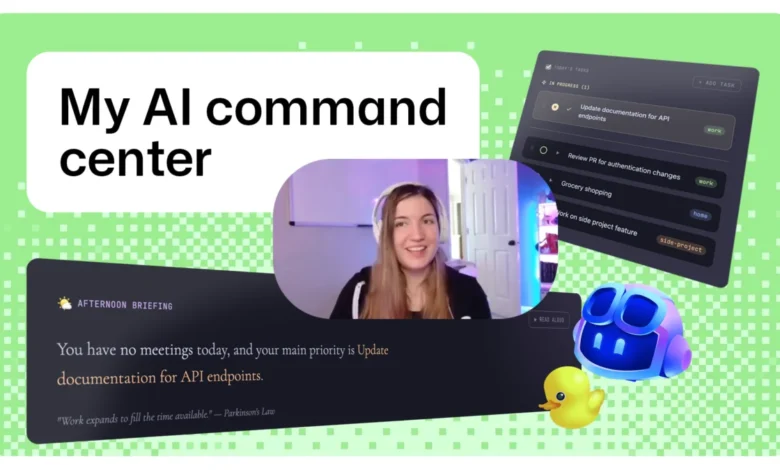
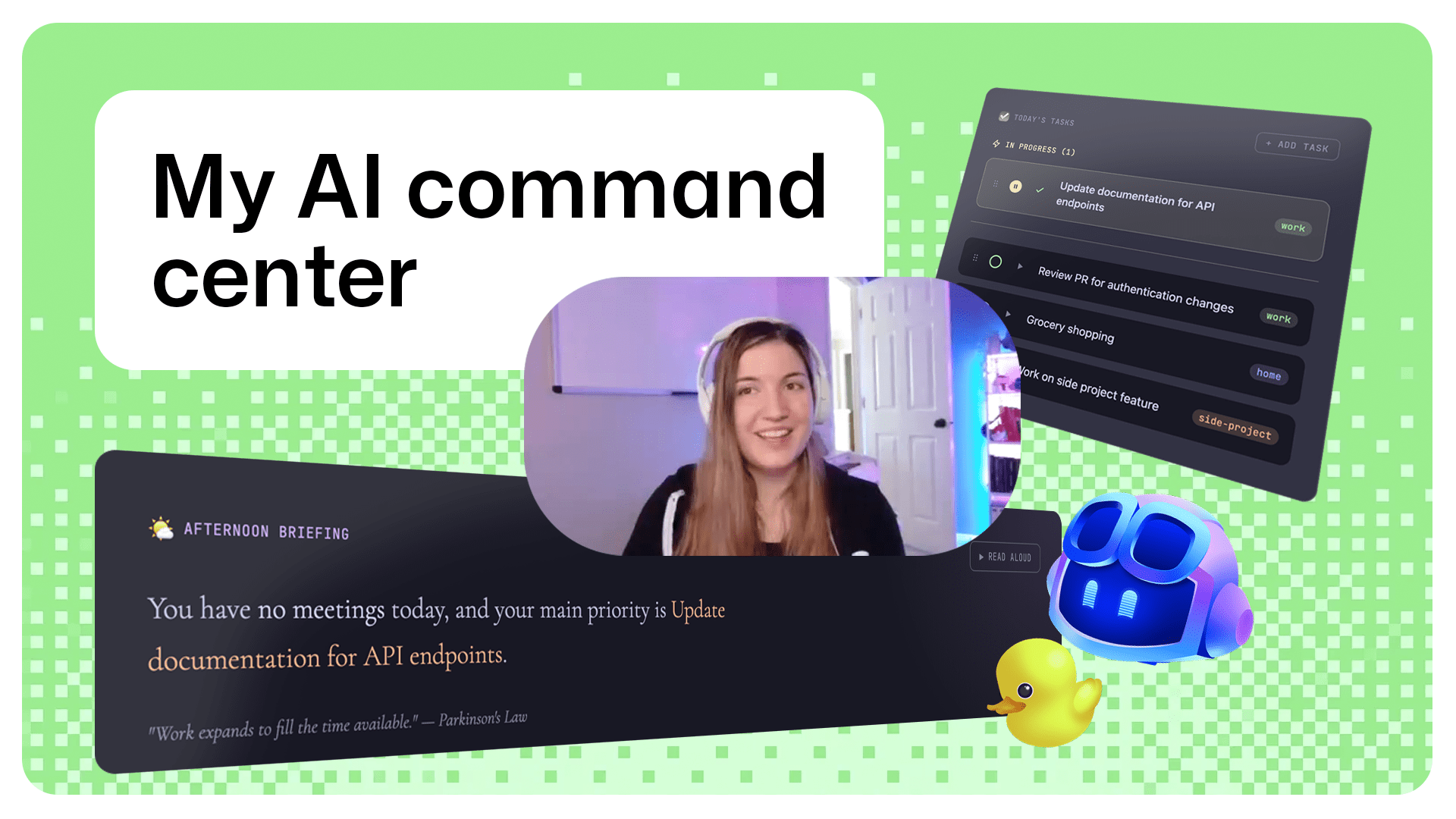
Brittany Ellich, a Staff Software Engineer at GitHub, has pioneered a transformative personal organization tool, the "Command Center," designed to consolidate disparate digital workflows and combat the pervasive challenge of context switching. This innovative solution, developed with significant assistance from artificial intelligence, exemplifies a new era of rapid prototyping and personalized software development, offering a glimpse into the future of developer productivity.
The Pervasive Problem of Digital Fragmentation
In an increasingly digitized professional landscape, knowledge workers, particularly software engineers, frequently grapple with the complexities of managing numerous applications and platforms simultaneously. Research consistently highlights that the average professional switches between a dozen or more applications daily, leading to significant time loss and cognitive load. Studies, such as those conducted by various productivity consultancies, indicate that context switching can reduce an individual’s effective productivity by as much as 40%, as the brain requires time and effort to re-engage with a new task after an interruption. This "digital fragmentation" often results in decreased focus, increased stress, and a measurable dip in overall efficiency. For engineers like Ellich, who are deeply immersed in intricate coding tasks, the constant toggling between code editors, communication platforms, project management tools, documentation, and various browser tabs can severely disrupt their flow state, a critical component of high-quality software development.
Ellich’s motivation for creating the Command Center stemmed directly from this personal experience of digital overwhelm. Her vision was to transcend the conventional multi-app paradigm, envisioning a unified, serene digital environment where all essential tools and information converged. This concept, inspired by the capabilities demonstrated by the GitHub Copilot CLI, sought to create a bespoke visual home tailored to her unique learning and thinking style, thereby mitigating the inherent friction of a fragmented digital workspace.
Brittany Ellich: A Profile in Innovation
As a Staff Software Engineer on GitHub’s billing team, Ellich’s daily responsibilities involve critical infrastructure work, specifically focusing on metered billing for services like Actions minutes, storage amounts, and Copilot usage. Her role demands meticulous attention to detail and a high degree of organizational prowess. Beyond her core responsibilities, Ellich is a fervent advocate and "dogfooder" of products from the Copilot organization, integrating these AI tools into her daily workflow. Her commitment to open-source development is also evident through her contributions to ATProto projects and the creation of Open Social, an application built on the AT Protocol, further underscoring her proactive approach to building and contributing to the wider developer ecosystem. Her journey with the Command Center is not merely a personal project but a testament to her dedication to improving developer experience and leveraging cutting-edge technologies.
AI as the Architect: A Revolutionary Development Workflow
The most striking aspect of the Command Center’s development is the central role played by artificial intelligence, particularly GitHub Copilot and its advanced functionalities. Ellich employed a highly efficient "plan-then-implement" workflow, a methodology that leveraged AI extensively during both phases. For the initial planning stage, she utilized Copilot to engage in a dialogue, effectively "interviewing" the AI with questions about how the system should function. This iterative questioning process allowed her to refine her requirements and generate a comprehensive plan, significantly reducing the guesswork traditionally associated with software design. This collaborative planning with AI ensured a more robust and well-defined blueprint for implementation.
Once the plan was solidified, Copilot took on the role of primary implementer. This AI-assisted approach enabled Ellich to transition from the initial concept to a fully functional version one (v1) of the Command Center in a remarkable single day, all while maintaining her regular work schedule. This rapid prototyping capability underscores the profound impact AI coding assistants are having on developer velocity. Industry reports, including data from GitHub itself, suggest that developers using Copilot complete tasks 55% faster on average and experience higher satisfaction. The ability to offload repetitive coding tasks, generate boilerplate code, and even suggest complex logic allows engineers to focus on higher-level architectural decisions and creative problem-solving.
Ellich’s preferred tool stack further illustrates this AI-centric workflow. She extensively uses VS Code’s "agent mode" for synchronous development, often managing two non-competing agent workflows concurrently. For asynchronous tasks, such as minor bug fixes or well-scoped technical debt, she relies on Copilot Cloud Agent, allowing her to keep multiple development threads active without constant manual oversight. This multi-agent strategy maximizes efficiency, enabling her to dedicate her primary cognitive resources to more oversight-intensive work while AI handles background tasks.
From Concept to Command Center: A Rapid Prototyping Success
The Command Center itself addresses the core problem of "digital fragmentation" by unifying scattered digital assets into a single, calm, and central interface. While Ellich had long harbored a desire to build an Electron app, the development process for v1 of the Command Center provided a unique learning experience. Due to the extensive involvement of Agent Mode, the initial creation required minimal direct manual coding, making it her "first" Electron app built largely by AI. This highlights a significant shift in how developers can approach new technologies; AI tools can abstract away much of the initial learning curve, allowing for rapid experimentation and deployment even in unfamiliar frameworks.
However, Ellich’s subsequent work to simplify the repository and make it publicly accessible required a more hands-on approach. She noted that while AI agents are proficient at adding code, they are "much less enthusiastic about removing code." This process of refinement and simplification deepened her understanding of Electron, demonstrating that while AI can accelerate initial development, human oversight and intervention remain crucial for optimization, maintainability, and ultimately, true mastery of a technology. The project, now openly available as "command-center-lite" on GitHub, serves as both a functional tool and a practical demonstration of AI-assisted development.
Broader Implications for the Developer Community and Beyond
Ellich’s Command Center project carries significant implications for the broader software development industry. It exemplifies several burgeoning trends:
- Democratization of Development: AI tools like Copilot are lowering the barrier to entry for complex software projects. Individual developers can now tackle ambitious projects that previously might have required larger teams or extensive specialized knowledge, fostering greater innovation and personalized solutions.
- Shift in Developer Skillset: The emphasis is moving from rote coding to more strategic thinking, problem-solving, and effective AI prompt engineering. Developers become orchestrators and editors of AI-generated code, requiring a new blend of technical acumen and critical evaluation skills.
- Enhanced Productivity and Efficiency: The "single day" development of v1 underscores the potential for unprecedented acceleration in prototyping and iteration. This could lead to faster product cycles, quicker bug fixes, and more responsive development teams across the industry.
- Personalized Tooling: The Command Center is a prime example of an engineer building a highly personalized tool to solve a personal pain point. With AI, creating bespoke solutions tailored to individual workflows becomes increasingly feasible, moving beyond generic off-the-shelf software.
- The Rise of Agentic AI Workflows: Ellich’s use of "agent mode" and "Copilot Cloud Agent" points to a future where developers manage multiple AI agents performing concurrent tasks, transforming the traditional linear coding process into a more parallel and dynamic one.
Industry analysts and developer advocates frequently highlight these shifts. Experts predict that AI will not replace developers but will augment their capabilities, making them significantly more productive and enabling them to focus on higher-value creative work. The Command Center stands as a tangible artifact of this future.
The Open-Source Ethos and Collaborative Future
Ellich’s decision to open-source the Command Center project aligns perfectly with the collaborative spirit of the GitHub community. By sharing her code, she not only provides a valuable tool but also offers a blueprint and an educational resource for other aspiring builders. The project’s availability allows others to inspect her work, learn from her approach, and even fork and adapt the tool to their own needs. This open-source contribution reinforces the idea that innovative solutions, even those initially conceived for personal use, can have a ripple effect, inspiring and empowering a wider audience.
Her involvement with ATProto projects further demonstrates her commitment to emerging decentralized technologies and community-driven development. The AT Protocol, a new federated protocol for social networking, represents a significant effort to build open and interoperable social platforms, and Ellich’s contributions to applications like Open Social highlight her forward-thinking engagement with the future of online interaction.

Navigating the Information Landscape: Staying Ahead in a Dynamic Industry
In a rapidly evolving field like software engineering, continuous learning is not just an advantage but a necessity. Ellich’s strategies for staying abreast of industry news and technological advancements are emblematic of a successful modern engineer. She emphasizes a multi-pronged approach, drawing information from various reliable sources:
- Internal GitHub Resources: She leverages internal Slack channels where fellow engineers curate and share valuable articles and insights. This highlights the importance of internal knowledge sharing and a strong organizational learning culture.
- GitHub Blog: As a platform for official announcements, technical deep dives, and community stories, the GitHub blog serves as a critical source for staying updated on the platform’s evolution and broader industry trends.
- Podcasts: Ellich specifically mentions "How I AI" and "Last Week in AI," demonstrating a preference for audio content that provides in-depth discussions and expert analysis on artificial intelligence, a field central to her work. Podcasts offer a convenient way to consume complex information during commutes or other activities.
- Social Media: Active engagement on platforms like Bluesky allows her to participate in real-time discussions with other engineers, exchange ideas, and gain diverse perspectives on emerging technologies and challenges. This informal network often provides early insights into trends before they hit mainstream news.
This comprehensive approach to information gathering ensures that Ellich remains at the forefront of technological innovation, enabling her to effectively integrate new tools and methodologies, such as AI-assisted development, into her projects.
Embracing the AI-Assisted Development Paradigm: A Call to Action
Brittany Ellich’s Command Center project serves as a powerful testament to the adage that "the most useful projects often start as small fixes for everyday problems." Her journey from identifying a personal pain point (digital fragmentation) to developing a sophisticated, AI-assisted solution in record time offers a compelling case study for all developers. Her one-line takeaway for other builders encapsulates this sentiment perfectly: "Go build something! Building solutions from scratch has never been easier, and it’s helpful for learning how to work with new AI tools."
This statement is not merely an encouragement but a profound observation about the current state of software development. The advent of powerful AI coding assistants has dramatically lowered the barrier to entry for complex projects, empowering individuals to bring their ideas to fruition with unprecedented speed and efficiency. It encourages a mindset of experimentation and rapid iteration, where learning new technologies becomes an integrated part of the building process rather than a prerequisite.
For those inspired to follow Ellich’s path, she outlines the core tools utilized in her project:
- GitHub Copilot: The foundational AI coding assistant that powered much of the development.
- Agent Mode in VS Code: For synchronous, interactive AI-assisted coding.
- Copilot Cloud Agent: For managing asynchronous development tasks.
- Electron: The framework used to build the cross-platform desktop application.
- TypeScript: The programming language providing type safety and scalability.
- React: A JavaScript library for building user interfaces.
- Vite: A fast build tool for modern web projects.
- Tailwind CSS: A utility-first CSS framework for rapid UI development.
All these tools are either open-source or supported by open-source components, making them accessible to the wider developer community. GitHub Copilot, in particular, can significantly expedite the learning curve for these technologies. Aspiring builders can directly clone Ellich’s "command-center-lite" repository, provided they have Node.js, npm, and Git installed on their machines, with detailed setup instructions available in the project’s README file. This accessible blueprint makes replicating her success or adapting her solution to unique needs a straightforward process, further democratizing the power of AI-assisted development.
In conclusion, Brittany Ellich’s Command Center is more than just a productivity tool; it is a vivid demonstration of the transformative power of AI in the hands of an innovative engineer. It heralds a future where developers can rapidly build highly personalized, sophisticated solutions, effectively combating the challenges of modern digital work, and ultimately fostering a more focused and productive development experience.
Related posts: