Trump Nominates Dr. Erica Schwartz to Lead CDC Amid Growing Tension Between Public Health Mandates and RFK Jr.’s Anti-Vaccine Agenda

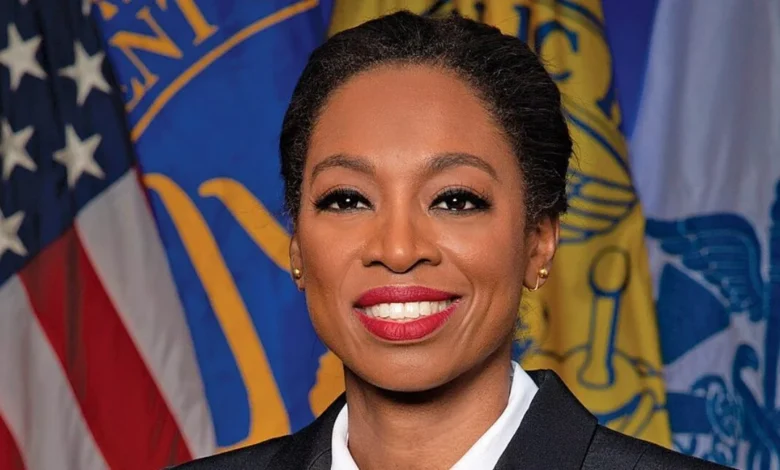
President Donald Trump has announced the nomination of Dr. Erica Schwartz, a retired Rear Admiral and former Deputy Surgeon General, to serve as the Director of the Centers for Disease Control and Prevention (CDC). The appointment comes at a period of intense transition for the nation’s leading public health agency, as the administration seeks to overhaul the federal health bureaucracy under the leadership of Department of Health and Human Services (HHS) Secretary nominee Robert F. Kennedy Jr. While the President hailed Dr. Schwartz as a "star" capable of restoring scientific integrity, the nomination has ignited a firestorm of criticism from both sides of the political and scientific spectrum. Public health advocates fear the agency will lose its autonomy to political interference, while Kennedy’s core anti-vaccine allies have labeled the appointment a "disaster" due to Schwartz’s career-long history of enforcing vaccine mandates.
The nomination highlights a growing rift within the administration’s health transition team. On one hand, the President seeks to install experienced military and medical professionals to project an image of stability and competence. On the other, the "Make America Healthy Again" (MAHA) movement, spearheaded by Kennedy, has built its platform on a skepticism of the very public health structures Dr. Schwartz has spent decades defending. The tension surrounding this appointment suggests that the future of the CDC will be defined by a tug-of-war between traditional public health protocols and a radical shift in federal health policy.
The Nominee and the Presidential Mandate
Dr. Erica Schwartz is no stranger to the inner workings of federal health agencies. A physician and lawyer by training, she served as a Rear Admiral in the U.S. Coast Guard and held the position of Deputy Surgeon General. During the initial years of the COVID-19 pandemic, Schwartz played a pivotal role in the federal response, overseeing aspects of the nationwide vaccine deployment. Her background is characterized by a commitment to operational readiness and the implementation of health standards within the military and civilian sectors.
In a social media post announcing the nomination, President Trump praised Schwartz and three other nominees for leadership positions at the CDC, stating, "These Highly Respected Doctors of Medicine have the knowledge, experience, and TOP degrees to restore the GOLD STANDARD OF SCIENCE at the CDC." The President’s rhetoric suggests a desire to frame the new leadership as a corrective measure against what he has previously characterized as the "politicization" of the agency during previous administrations. However, the definition of "scientific integrity" remains a point of contention among stakeholders.
Internal Dissent and the Autonomy Crisis
The nomination of Dr. Schwartz has not been met with universal acclaim within the halls of the CDC. Debra Houry, the agency’s former Chief Medical Officer, recently resigned in protest of what she described as Robert F. Kennedy Jr.’s political interference in the agency’s operations. In an interview with Stat News, Houry expressed deep skepticism regarding Schwartz’s ability to lead effectively under the current administration.
“We saw what happened with Susan,” Houry remarked, referring to a previous official who allegedly struggled to maintain agency independence. “She couldn’t make staffing or policy decisions. What has changed? Kennedy hasn’t changed.”
Houry’s comments reflect a broader concern among career scientists that the CDC Director will serve as a figurehead while policy is dictated by the HHS Secretary’s office. Reporting by The Washington Post indicated that during the search for a new director, several highly qualified candidates withdrew from consideration or were passed over after they sought guarantees of autonomy. These candidates reportedly asked for the power to hire and fire staff without political clearance and to keep scientific recommendations insulated from the Secretary’s influence. According to sources familiar with the process, the administration was unwilling to grant such independence, leading to the selection of Schwartz, whom some perceive as more likely to operate within the constraints set by Kennedy.
The Anti-Vaccine Backlash: A "Disaster" in the Making
Perhaps the most vocal opposition to Dr. Schwartz has come from the very constituency that helped propel Robert F. Kennedy Jr. to his influential position within the administration. Aaron Siri, a prominent attorney known for his legal challenges against vaccine mandates and a close ally of Kennedy, did not mince words regarding the nomination. In a public statement, Siri described the prospect of Schwartz leading the CDC as a "disaster."
Siri’s grievances center on Schwartz’s military record. As a high-ranking official in the Coast Guard and the Surgeon General’s office, Schwartz was responsible for enforcing vaccine requirements for service members. Siri pointed to her role in mandating vaccines for smallpox, anthrax, and influenza, as well as her oversight of the COVID-19 vaccine rollout.
“Schwartz led nationwide Covid-19 vaccine deployment and her long track record of directly issuing rights-crushing civilian and military vaccine mandates… reflects she lacks the basic ethics and morals to lead the CDC,” Siri wrote. He further argued that her prior promotion of nearly a dozen different vaccines leaves "little hope" that she will objectively oversee the CDC’s vaccine safety programs.
This internal friction poses a significant political challenge for Kennedy. While he issued a measured statement congratulating Schwartz and expressing a desire to "restore trust, accountability, and scientific integrity," his most ardent supporters view Schwartz as a representative of the "biomedical security state" they wish to dismantle. The clash suggests that Kennedy may face a delicate balancing act between maintaining his credibility with the anti-vaccine movement and managing a functional federal agency.
Timeline of the CDC Transition
The path to Dr. Schwartz’s nomination has been marked by a series of rapid shifts in the federal health landscape:
- November 2025: Following the election, Robert F. Kennedy Jr. is tapped to lead the HHS transition, signaling a major shift in public health priorities.
- January-February 2026: A search begins for a CDC Director. Several candidates from academic and private sectors express concern over the proposed reorganization of the agency.
- March 2026: Debra Houry resigns as Chief Medical Officer, citing concerns over Kennedy’s influence on scientific communications.
- April 15, 2026: President Trump officially announces Dr. Erica Schwartz as the nominee for CDC Director via social media.
- April 16, 2026: Major news outlets report on the rejection of candidates who requested autonomy, while anti-vaccine advocates begin a public campaign against Schwartz.
Supporting Data: The CDC’s Evolving Role
To understand the stakes of this nomination, one must look at the scale of the agency Dr. Schwartz is set to lead. The CDC operates with an annual budget of approximately $9 billion and employs over 10,000 people. Its mission extends far beyond vaccines, encompassing chronic disease prevention, occupational safety, global health security, and injury prevention.
However, public trust in the CDC has fluctuated significantly over the last several years. According to data from the Pew Research Center, the percentage of Americans who say they have a "great deal" of confidence in public health officials to act in the best interest of the public dropped from 43% in 2020 to 29% by 2024. The administration’s focus on "restoring trust" is a response to this trend, though the methods proposed—such as revisiting the childhood vaccine schedule—remain highly controversial among the medical community.
Furthermore, vaccination rates for kindergarteners have seen a slight but steady decline. For the 2023-2024 school year, the national coverage for state-required vaccines fell to roughly 93%, below the 95% threshold required for herd immunity against diseases like measles. Critics of the new administration argue that appointing a director who is under the thumb of vaccine skeptics could further erode these numbers, leading to outbreaks of preventable diseases.
Broader Implications and Analysis
The nomination of Dr. Erica Schwartz represents a pivotal moment for the future of American public health. If confirmed, she will be tasked with reconciling two seemingly incompatible agendas: the traditional, evidence-based mandates of a public health agency and the disruptive, skeptical philosophy of the MAHA movement.
1. The Erosion of Agency Independence
The reporting that candidates were denied autonomy suggests a shift toward a more centralized model of health governance. Historically, the CDC has operated with a degree of distance from the White House to ensure that its guidance is based on data rather than political expediency. A director who lacks the authority to manage their own staff or protect scientific reports from political review may find it difficult to maintain the agency’s "Gold Standard" reputation internationally.
2. Legal and Regulatory Challenges
Dr. Schwartz’s background in law and her experience with mandates may be a double-edged sword. While she understands the legal framework of public health, she will be operating under a Secretary who has spent years litigating against that very framework. This could lead to internal legal battles over the CDC’s authority to issue guidance or manage the Vaccine Adverse Event Reporting System (VAERS).
3. Impact on Global Health Security
The CDC is a global leader in detecting and responding to emerging infectious diseases. If the agency becomes bogged down in domestic political disputes over vaccine safety and agency structure, its ability to lead international efforts against threats like avian flu or new coronavirus variants could be compromised.
4. The "MAHA" litmus test
For Robert F. Kennedy Jr., Schwartz’s performance will be a litmus test for his ability to reform the "deep state" of public health. If Schwartz adheres to traditional protocols, Kennedy risks alienating his base. If she pivots to accommodate Kennedy’s views on "toxins" and vaccine skepticism, she may face a mass exodus of career scientists and a loss of credibility with the broader medical establishment.
As the confirmation process moves forward, the Senate will likely scrutinize Dr. Schwartz’s past support for mandates and her current willingness to follow Kennedy’s lead. For an agency whose motto is "CDC 24/7: Saving Lives, Protecting People," the coming months will determine whether it remains a beacon of scientific authority or becomes a central theater in the nation’s ongoing culture wars.
Related posts: