GitHub and Microsoft Pilot Project Successfully Turns Raw AI Vulnerabilities into Actionable Open Source Fixes

The open-source software ecosystem underpins the vast majority of modern digital infrastructure, from cloud-native web servers to artificial intelligence pipelines. However, the maintainers who safeguard these critical repositories face an escalating operational bottleneck: the proliferation of automated security reports. While generative artificial intelligence and automated scanners have made discovering potential code vulnerabilities faster and cheaper than ever, the burden of reviewing, triaging, and remediating these findings continues to fall squarely on human maintainers. In response to this unsustainable flood of false positives and redundant notices, GitHub and Microsoft have concluded a joint pilot program demonstrating a fundamentally different approach. By combining advanced multi-model artificial intelligence scanning with meticulous human review, the initiative successfully converted thousands of raw security alerts into a refined, highly targeted set of private vulnerability reports equipped with pre-tested remediation patches.
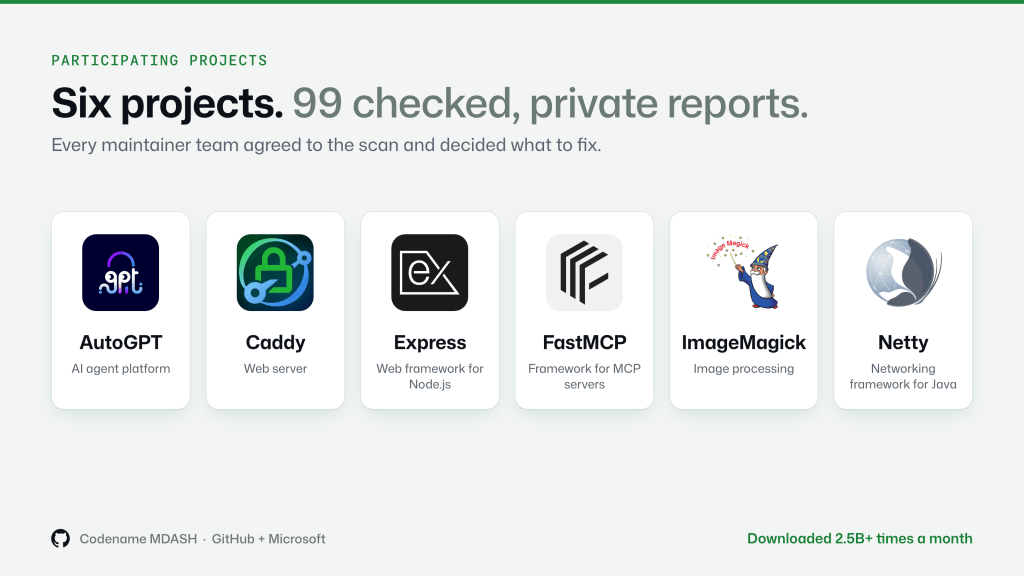
The pilot program, designated Codename MDASH, utilized Microsoft’s multi-model agentic scanning harness alongside the MAI Cyber model to inspect six widely utilized open-source projects: AutoGPT, Caddy, Express, FastMCP, ImageMagick, and Netty. Each of these participating projects is an alumnus of the GitHub Secure Open Source Fund, an initiative designed to bolster the security and sustainability of critical digital supply chain components. Rather than overwhelming maintainers with thousands of unverified, noisy alerts—a common pitfall of traditional automated scanning—the Codename MDASH workflow prioritized strict quality controls. The core objective of the pilot was deceptively simple yet historically difficult to achieve at scale: send only findings that matter, and never present a maintainer with an unverified vulnerability.
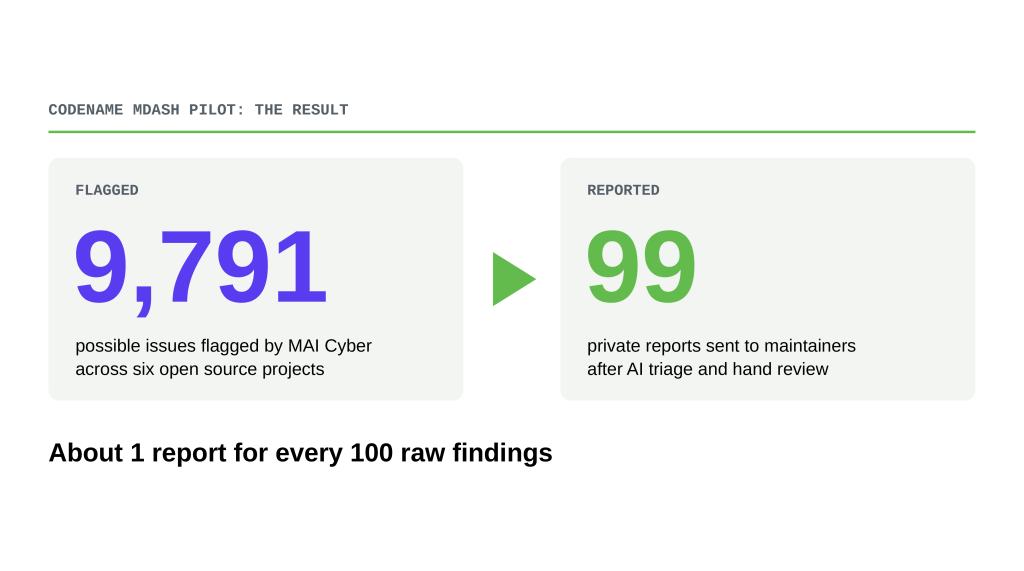
The operational pipeline of the pilot relied heavily on a synergistic partnership between artificial intelligence and human cybersecurity expertise. Initially, Codename MDASH deployed automated code analysis agents powered by the MAI Cyber model to run deep scans across the target repositories. This initial phase generated an immense volume of data, flagging a staggering 9,791 possible issues across the six open-source projects. Left unmanaged, dumping this raw output onto project maintainers would have severely disrupted their development workflows. To prevent this, the raw findings underwent rigorous AI-driven triage followed by meticulous manual verification conducted by seven security researchers from the Microsoft FORGE Lab. These human experts spent approximately two days per project thoroughly validating the AI-generated flags, eliminating false positives, and drafting concrete, scoped remediation patches.
Only after passing through this multi-layered filtration process were the refined findings delivered to the project maintainers. Out of the nearly ten thousand raw flags identified by the initial scans, just 99 private vulnerability reports were ultimately generated and sent to the respective development teams. This rigorous screening ratio meant that maintainers received roughly one highly curated, actionable report for every one hundred raw findings. Furthermore, all reports and suggested fixes were delivered directly within GitHub using private vulnerability reporting features, ensuring that maintainers could review, test, and merge the patches within the familiar environment where they already conducted their daily development work.
The results of the pilot underscore the viability of shifting the security paradigm from mere vulnerability discovery to proactive remediation delivery. As of mid-November, project maintainers had already addressed and fixed 55 of the 99 private reports received, with 14 of those patches successfully integrated into official software releases within days of initial delivery. The speed at which maintainers were able to act highlighted a central lesson of the pilot: finding vulnerabilities is no longer the primary bottleneck in open-source security; rather, the difficulty lies in the time-consuming process of triage, verification, and patch writing. By receiving a well-scoped patch rather than an abstract warning, maintainers were able to bypass hours of investigative work.
Individual project responses highlighted the tangible efficiency gains of the Codename MDASH methodology. Caddy’s maintainers successfully resolved all 22 of the private reports they received within a single week, noting that the AI-driven harness successfully surfaced obscure, unknown security bugs while simultaneously filling critical visibility gaps left behind by previous scanning tools. Similarly, the maintainers of ImageMagick—operating as a lean, two-person core team—received 22 reports and noted that the contextual precision of the findings drastically reduced their administrative burden. While a traditional security advisory typically required between 30 to 60 minutes of intensive reading, verification, and debugging, the pre-checked reports allowed ImageMagick maintainers to push verified fixes in as little as 15 minutes.
Meanwhile, AutoGPT maintainers demonstrated the collaborative potential of the system when dealing with recent code regressions. Having recently deployed a new security check that contained a flaw, the team received a Codename MDASH report pointing directly to the problematic line of code just three days later. Leveraging the AI-suggested patch as a baseline, the AutoGPT team expanded upon the fix, wrote a robust solution within a single day, and pushed it to production in less than a week. Maintainers across other participating projects, including Express, FastMCP, and Netty, echoed these sentiments, emphasizing that the primary value of the pilot lay in its ability to effectively silence the ambient noise of modern vulnerability scanning and deliver meaningful, ready-to-merge code.
Despite the impressive success metrics of the Codename MDASH pilot, project organizers and security analysts have emphasized that the current workflow relies heavily on intensive manual labor that does not yet scale universally across the entire open-source ecosystem. The active involvement of Microsoft FORGE Lab researchers—spending dozens of hours manually verifying proofs-of-concept and refining patches—was a critical linchpin in ensuring the high accuracy of the final reports. Without this human-in-the-loop verification layer, deploying raw, unvetted generative AI models directly to open-source maintainers risks exacerbating the very fatigue it aims to alleviate. Christian Grobmeier, a maintainer of the widely used Log4j project, has previously noted that any artificial intelligence defending open-source infrastructure must ultimately be superior in capability and reliability to the automated threats deployed by malicious actors.
The broader implications of the Codename MDASH pilot point toward a necessary evolution in how the broader software industry approaches supply chain security. Historically, security tooling vendors and automated researchers have operated under a model where the discovery of a vulnerability constitutes a completed job, leaving the downstream burden of verification, prioritization, and patching entirely to under-resourced open-source maintainers. The success of the GitHub and Microsoft pilot establishes a compelling counter-standard: entities that deploy artificial intelligence tools to scan open-source projects bear a professional and ethical responsibility to come prepared with verified fixes rather than raw, unfiltered complaints.

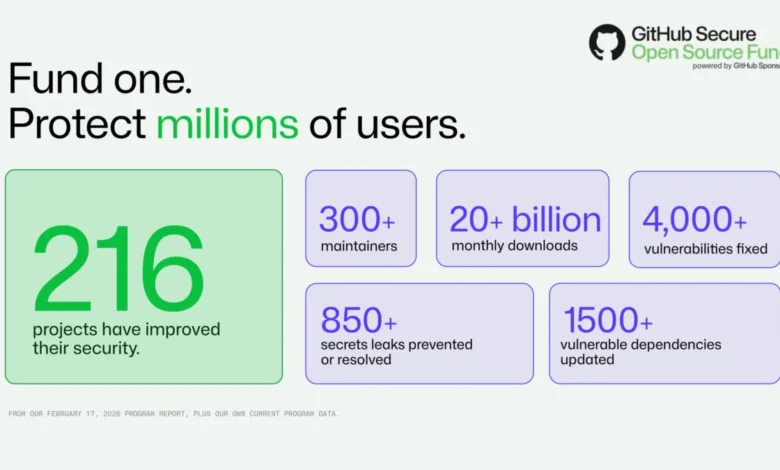
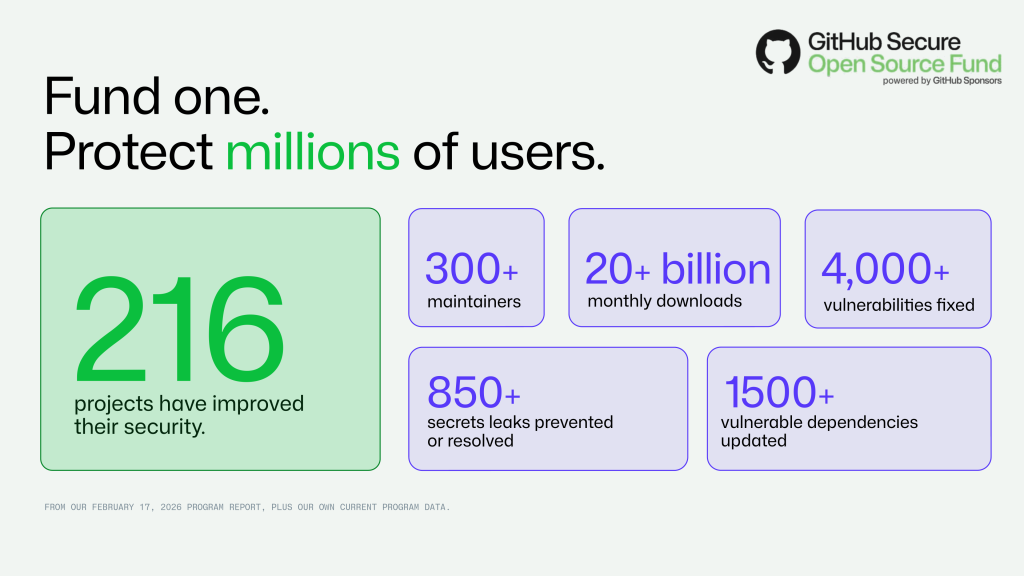
This philosophy aligns closely with the overarching mission of the GitHub Secure Open Source Fund, which has systematically worked to fortify the digital supply chain. Supported by financial backing through GitHub Sponsors, Azure credits from Microsoft for Startups, and structured security training, the fund has historically empowered hundreds of critical projects. Recent program data indicates that alumni projects backed by the fund have successfully resolved thousands of vulnerabilities, prevented or remediated numerous secret leaks, and updated thousands of vulnerable dependencies across software ecosystems downloaded tens of billions of times every month. Initiatives like Codename MDASH represent a technological extension of this foundational support, bridging the gap between automated threat detection and sustainable human maintenance.
Looking ahead, the stakeholders behind the pilot are evaluating pathways to scale the underlying agentic scanning technology while preserving the strict quality filters that made the initial phase successful. By integrating private vulnerability reporting mechanisms, encouraging the execution of automated continuous integration and continuous deployment tests on private forks, and expanding access to cyber-capable validation models, the security community aims to systematically narrow the gap between defenders and attackers. As modern software development continues to accelerate the deployment of new features through artificial intelligence, the long-term resilience of the digital ecosystem will increasingly rely on systemic investments in the maintainers who manage its foundational code. The GitHub and Microsoft pilot demonstrates that when industry leaders actively share the operational weight of security verification, open-source maintainers are empowered to build, fix, and protect the digital world without standing alone.