SvelteKit 3.0 officially launches, bringing enhanced type safety and refined performance to the popular web framework ecosystem.

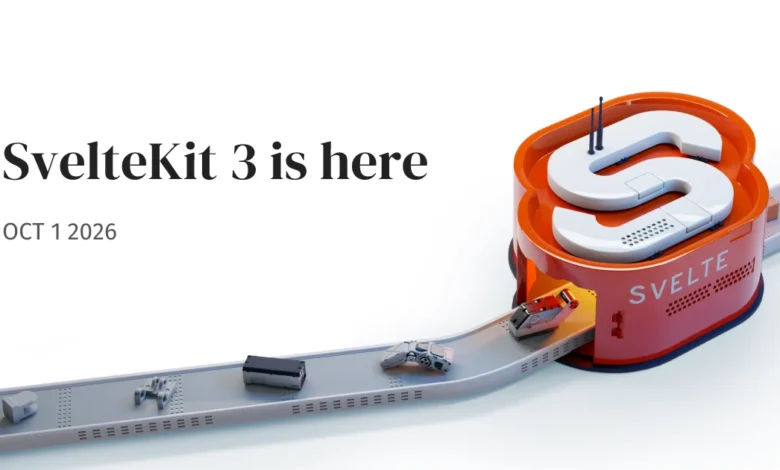
The release of version 3.0 marks a significant milestone for the Svelte ecosystem, representing the culmination of months of iterative development aimed at streamlining the developer experience and hardening the framework for enterprise-grade applications. As the official application framework for Svelte, SvelteKit serves as the primary gateway for developers looking to build robust, server-rendered web applications with the reactivity and performance benefits that have made Svelte one of the most beloved frameworks in the JavaScript landscape.
A Chronology of SvelteKit Development
The evolution of SvelteKit from its initial public beta to the stable 3.0 release reflects the broader maturity of the modern web development landscape. When SvelteKit was first introduced to replace the aging Sapper framework, the goal was to provide a more cohesive, batteries-included experience for developers.
The transition from 1.0 to 2.0 was defined by architectural stabilization, ensuring that the framework could handle complex routing, data loading, and server-side rendering (SSR) requirements without the configuration overhead common in competitors like Next.js or Nuxt. Version 3.0 continues this trajectory by focusing on "polish"—reducing technical debt, improving type safety through deeper TypeScript integration, and pruning deprecated APIs that had persisted since the framework’s early days.
For developers currently maintaining SvelteKit 2.x applications, the transition to 3.0 has been designed to be as frictionless as possible. The framework maintainers have introduced the sv migrate command, a sophisticated automation tool that parses existing codebases to apply necessary changes. By executing npx sv migrate sveltekit-3 --tasks all --confirm, developers can automate the majority of the refactoring process. The tool is designed to generate a comprehensive TODO list for any edge cases that require manual intervention, acknowledging that complex, highly customized applications may still necessitate human oversight during the upgrade cycle.
Strengthening the Developer Experience
The primary objective behind the 3.0 release is the reduction of "junk" within the framework’s codebase—a move that directly benefits performance and maintenance. By slimming down the core library, the Svelte team has managed to improve both cold-start times and overall bundle sizes. This is critical in an era where web vitals and initial load performance are prioritized by search engines and mobile-first users alike.
Furthermore, the enhanced type safety in SvelteKit 3.0 is a direct response to the industry-wide shift toward TypeScript. As applications grow in complexity, the ability to catch errors at compile time rather than at runtime becomes paramount. The new version offers deeper integration with the Svelte language tools, providing developers with more accurate autocompletion and more descriptive error messages when navigating the complexities of server-side data loading and form actions.
The Roadmap and the Future of Remote Functions
While version 3.0 is a significant achievement, the Svelte team has been transparent regarding features that are currently in development but not yet ready for production deployment. Chief among these are "Remote Functions." These utilities are designed to revolutionize how developers handle client-server communication. By allowing developers to invoke server-side logic as if it were a local function call, while maintaining strict type safety, Remote Functions aim to eliminate the boilerplate traditionally associated with REST or GraphQL API endpoints.
Although the feature did not make it into the 3.0 stable release, the team has identified it as the top priority for the next development cycle. Implementation of these functions will rely heavily on "Async Svelte," a new architectural paradigm that allows components to handle asynchronous data more natively. Currently, users wishing to experiment with these capabilities must enable an experimental flag, signaling that while the technology is functional, it has not yet reached the stability standards required for widespread enterprise adoption. This pragmatic approach—separating the stable 3.0 release from experimental, bleeding-edge features—demonstrates a commitment to reliability that professional engineering teams often demand.
Market Context and the Svelte Ecosystem
Svelte’s position in the current front-end framework market remains unique. Unlike React, which relies on a heavy virtual DOM (Document Object Model), Svelte’s approach involves compiling code into highly optimized, vanilla JavaScript that updates the DOM directly. This architectural difference has long been touted as the "secret sauce" behind its superior runtime performance.
Recent industry surveys, including the State of JS, have consistently placed Svelte among the top frameworks in terms of developer satisfaction and interest. The release of SvelteKit 3.0 comes at a time when the framework is facing increased competition from meta-frameworks like Qwik and SolidStart, which also emphasize performance. By focusing on stability and type safety, SvelteKit 3.0 effectively defends its position as a reliable, production-ready solution for modern web projects.
Industry analysts observe that the success of a web framework is no longer measured solely by its syntax, but by the strength of its ecosystem, the quality of its tooling, and the stability of its upgrade path. The inclusion of the sv migrate tool and the clear documentation provided in the migration guide suggest that the Svelte core team is prioritizing the long-term sustainability of the applications built on their framework.
The 10th Anniversary and Community Engagement
Beyond the technical release notes, the Svelte project is approaching a significant cultural milestone: the 10th anniversary of the framework’s inception. Originally created by Rich Harris, Svelte has grown from a personal project into a global open-source phenomenon.
To commemorate a decade of development, the community is convening in Ljubljana, Slovenia, on November 19-20 for the Svelte Summit. This in-person event serves as more than just a conference; it is a celebration of the community-driven nature of the framework. Svelte has remained largely independent, avoiding the corporate capture that has affected other major frameworks. This independence is a point of pride for the project, and the summit is expected to highlight the collective contributions of thousands of developers who have helped shape the framework’s current trajectory.
Broader Implications and Final Analysis
The deployment of SvelteKit 3.0 is a signal to the development community that the framework has reached a state of relative maturity. For businesses and organizations that were previously hesitant to adopt Svelte due to concerns regarding long-term support or the volatility of the JavaScript ecosystem, this release provides a stable foundation.
The implications for the broader web development industry are clear: developers are increasingly demanding frameworks that do more of the heavy lifting. By providing built-in routing, server-side rendering, and automated migration tooling, SvelteKit 3.0 effectively reduces the "configuration fatigue" that often leads to burnout in front-end engineering.
As the industry moves toward the widespread adoption of server-side components and more sophisticated data-fetching patterns, the Svelte team’s focus on Remote Functions suggests they are positioning themselves to lead the next wave of web architecture. While 3.0 delivers on the promises of stability and performance today, the upcoming integration of experimental features will likely define the framework’s relevance in the years to come.
For now, the recommendation for development teams is to begin the evaluation process for the 3.0 migration. The availability of the migration guide and the automated CLI tools ensures that the cost of adoption is low, while the benefits—specifically the improved type safety and reduced technical debt—offer immediate value for ongoing projects. As the Svelte ecosystem prepares to enter its second decade, version 3.0 stands as a testament to the framework’s evolution from an experimental compiler into a cornerstone of modern web development.