Amazon Web Services Integrates OpenAI Agents API into Bedrock to Expand Enterprise AI Capabilities

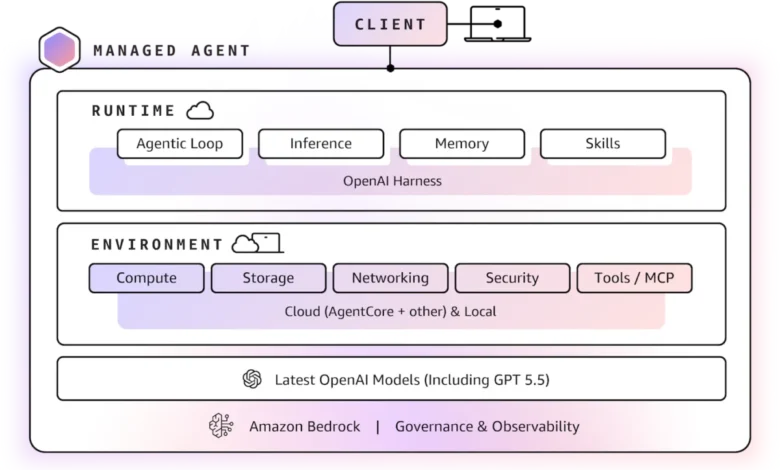
Amazon Web Services has officially launched the public preview of Amazon Bedrock Managed Agents powered by OpenAI, marking a significant milestone in cross-ecosystem collaboration for generative artificial intelligence. Built on a customized version of OpenAI’s Agents API, the new integration is engineered to be fully AWS-native, allowing developers and enterprise organizations to deploy sophisticated, model-optimized agents that operate directly within their existing AWS architectures. This development bridges foundational technologies from two of the industry’s most prominent artificial intelligence leaders, offering corporations an integrated framework that leverages established cloud governance, strict access controls, and enterprise-grade security protocols.
Main Facts and Technical Integration
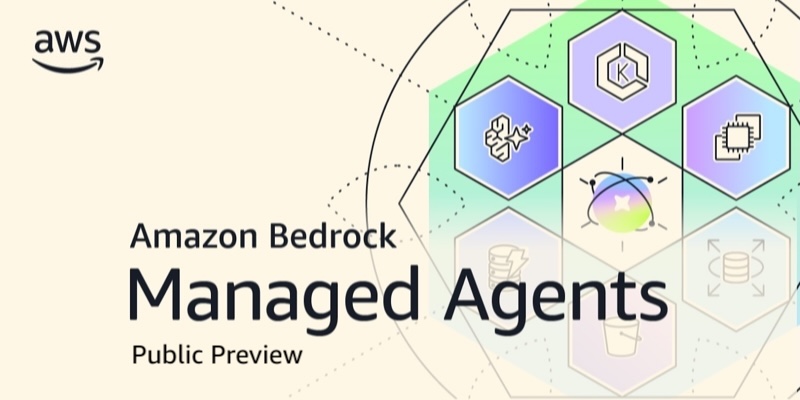
The newly introduced Amazon Bedrock Managed Agents feature is designed to alleviate the traditional friction associated with managing multi-agent workflows across disparate platforms. By embedding OpenAI’s agentic capabilities directly into the Bedrock ecosystem, AWS enables users to execute complex tasks—such as automated reasoning, multi-step problem solving, and tool invocation—while maintaining absolute residency within their secure cloud perimeters.
Architecturally, the service provides high flexibility regarding execution environments. Enterprise customers can choose between a self-hosted compute model, which allows developers to utilize existing local development machines, custom containers, or internal compute infrastructure, and the Amazon Bedrock AgentCore Runtime. The latter option offers fully managed runtime sessions alongside configurable, secure storage managed natively within the user’s AWS account.
This approach ensures that organizations do not need to compromise on compliance or data privacy when experimenting with or deploying OpenAI-driven models. The system inherits all existing IAM (Identity and Access Management) policies, encryption standards, and auditing trails established within the parent AWS account, providing a seamless transition for DevOps and security teams tasked with overseeing artificial intelligence deployments.
Background Context and Evolution of Managed Agents
The evolution of enterprise artificial intelligence has rapidly shifted from static, single-turn text generation to dynamic, multi-turn agentic workflows capable of autonomously executing complex business processes. Initially, organizations deploying advanced language models faced significant engineering overhead when attempting to stitch together external APIs, state management systems, and proprietary enterprise databases.
Amazon Bedrock was originally launched to simplify this process by providing a unified API layer for accessing a diverse portfolio of foundational models from leading AI companies, including Anthropic, Cohere, Meta, and Stability AI. However, as enterprise demand for autonomous agents escalated, developers sought deeper integrations with OpenAI’s specialized agent architectures without sacrificing the scalability and security guarantees inherent to hyperscale cloud providers.
The introduction of Bedrock Managed Agents powered by OpenAI directly addresses this market demand. By customizing the underlying OpenAI Agents API for native AWS deployment, Amazon has created a hybrid paradigm where proprietary model intelligence meets enterprise cloud infrastructure. This move reflects a broader industry trend toward interoperability, wherein cloud providers recognize that enterprise clients require multi-model strategies tailored to specific use cases rather than single-vendor lock-in.
Chronology of Recent Cloud and AI Announcements
The rollout of the OpenAI-powered Bedrock Managed Agents is part of a continuous, accelerated cadence of updates across the AWS ecosystem throughout the year. Industry watchers and cloud architects have closely monitored Amazon’s systematic expansion of its machine learning infrastructure, particularly following major roadmap announcements earlier in the year regarding enhanced model choice and runtime optimization.
Last week’s public preview announcement represents the culmination of months of backend engineering designed to align OpenAI’s API architecture with AWS’s rigorous compliance frameworks. Alongside this flagship release, AWS continues to iterate on its broader product lifecycle management, ensuring that legacy services are systematically phased out or transitioned into maintenance modes to make way for modern, cloud-native generative AI architectures.
Concurrently, AWS management has updated its product lifecycle documentation, detailing the systematic retirement of select older services and features. Such lifecycle adjustments are part of a standard operational cadence designed to streamline resource allocation, steering customers toward modern alternatives that offer superior performance, lower latency, and enhanced security postures.

Supporting Data and Industry Implications
The integration of advanced model APIs into managed cloud services highlights the escalating scale of enterprise cloud spending dedicated to generative artificial intelligence. According to recent enterprise technology surveys, a substantial majority of Fortune 500 companies are actively piloting or deploying multi-agent AI systems to automate customer service, software engineering, and internal data analysis.
By offering flexible execution environments—spanning self-hosted options and the Bedrock AgentCore Runtime—AWS is catering to diverse enterprise compliance requirements. Organizations operating under strict regulatory frameworks, such as healthcare providers, financial institutions, and government agencies, often face stringent limitations regarding data egress and external API calls. Running OpenAI-powered agents natively inside an isolated AWS account mitigates many of these compliance hurdles, as data processed by the agents remains governed by enterprise-managed cryptographic keys and perimeter security controls.
Official Responses and Stakeholder Perspectives
While specific public commentary from competing cloud providers remains restrained, industry analysts have widely interpreted the partnership as a pragmatic response to enterprise demands for architectural flexibility. Technical leaders within the developer community have expressed optimism regarding the reduced friction of combining OpenAI’s reasoning capabilities with Amazon’s robust infrastructure services.
Spokespersons for AWS have emphasized that the primary objective of the Bedrock Managed Agents launch is to empower builders with choice. By eliminating the artificial boundaries between different AI ecosystems, AWS aims to position Amazon Bedrock as the definitive orchestration layer for modern enterprise artificial intelligence applications. Engineers and system integrators are encouraged to consult the official Amazon Bedrock documentation to review configuration guidelines, pricing tiers, and best practices for deploying these native agents securely at scale.
Broader Impact on the Enterprise Cloud Landscape
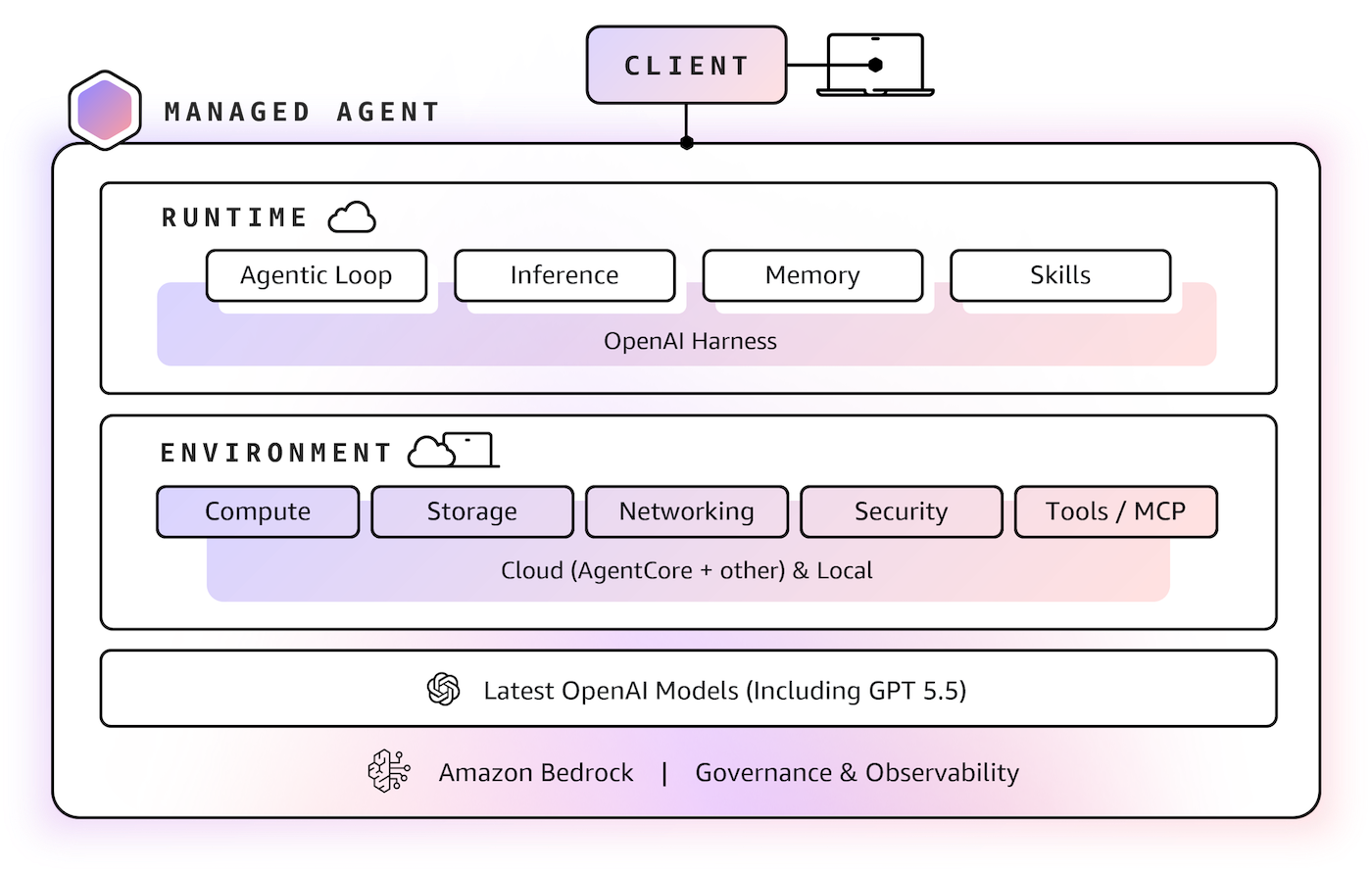
The launch of Amazon Bedrock Managed Agents powered by OpenAI carries far-reaching implications for the enterprise software development lifecycle. As artificial intelligence moves from experimental pilot projects to core mission-critical infrastructure, the demand for unified governance, observability, and cost management tools has never been higher.
By embedding complex agent runtimes directly into cloud infrastructure, AWS is effectively commoditizing the underlying orchestration layer, enabling developers to focus on business logic rather than infrastructure plumbing. This shift is expected to accelerate time-to-market for enterprise AI solutions, allowing companies to iterate rapidly on agentic workflows without rewriting their foundational security and deployment pipelines.
Furthermore, the continuous evolution of AWS service availability—marked by the careful deprecation of legacy tools in favor of advanced AI frameworks—signals a definitive industry-wide transition. As cloud portfolios modernize, companies that successfully adopt native, multi-model agent architectures will likely secure a distinct operational advantage in efficiency, automation, and scalability.
Upcoming Industry Events and Developer Engagement
To support developers, architects, and technology leaders navigating these rapid technological advancements, AWS continues to host a comprehensive series of in-person and virtual events. Upcoming gatherings, including regional AWS Community Days, specialized startup events, and the highly anticipated annual AWS re:Invent conference, serve as critical forums for education, networking, and hands-on technical training.
Developers seeking to deepen their expertise are encouraged to engage with the AWS Builder Center, a collaborative online community designed for sharing architectural solutions, troubleshooting complex deployments, and accessing up-to-date technical documentation. As the generative AI landscape continues its rapid maturation, weekly updates, continuous documentation revisions, and active community participation will remain essential resources for organizations striving to maintain a competitive edge in cloud-native software engineering.