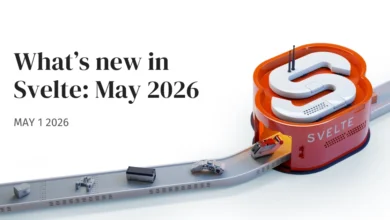
Svelte Monthly Update Highlights Svelte 5.57 Advancements and the Impending Arrival of SvelteKit 3

The Svelte ecosystem continues its aggressive pace of innovation as the development team pushes toward the highly anticipated launch of SvelteKit 3. This month’s release cycle, anchored by the deployment of Svelte 5.57 and a series of robust updates to the Svelte tooling suite, signals a significant maturation phase for the framework. By prioritizing developer experience through enhanced CLI capabilities and refined migration paths, the Svelte core team is effectively positioning its ecosystem to handle the complexities of modern web applications with greater efficiency and architectural stability.
The Evolution of the Svelte Core
Svelte 5.57 arrives as a testament to the framework’s commitment to incremental improvement and reactive stability. At the heart of this release is the introduction of new methods for the SvelteMap object, a primitive designed to facilitate more predictable and performant state management within component trees. By refining how reactivity is tracked and processed, these additions help developers avoid common pitfalls associated with mutable state, ensuring that the framework’s signature "compile-time" performance advantages remain intact even as application complexity scales.
The significance of these updates lies in the broader trajectory of Svelte 5. This major version, which introduced the revolutionary "Runes" system, represents a paradigm shift in how developers write Svelte components. By moving away from component-level reactivity toward more granular, signal-based reactivity, Svelte 5 has fundamentally altered the performance landscape for reactive web frameworks. The 5.57 update is essentially a refinement layer, smoothing out the edges of this new architecture and addressing the feedback gathered from the community since the initial rollout of the Runes system.
SvelteKit 3: The Path to Stability
As SvelteKit 3 approaches its general availability, the current Release Candidate (RC) phase serves as a critical period for stress-testing and API stabilization. The transition from SvelteKit 2 to 3 is not merely a version bump but a strategic alignment with the capabilities introduced in Svelte 5. The recent releases on the @next branch demonstrate a clear focus on modularity and server-side performance.
The Svelte team has implemented a rigorous release schedule for these prereleases, ensuring that developers can audit breaking changes and adapt their infrastructure before the stable release. The current documentation available at next.svelte.dev provides a comprehensive guide for those preparing for the transition. This shift toward a more robust, standards-compliant server-side architecture is expected to reduce the boilerplate required for data fetching and route management, two areas that have historically been points of friction for large-scale web projects.
Enhancing Developer Tooling
Perhaps the most notable change in the developer experience (DX) landscape is the reorganization of the Svelte CLI (sv). The replacement of the legacy Model Context Protocol (MCP) add-on with the new ai-tools package reflects the growing integration of artificial intelligence in modern software development. By streamlining how AI-driven code suggestions and refactoring tools interact with the Svelte CLI, the core team is lowering the barrier to entry for developers looking to leverage generative AI in their workflow.
Furthermore, the introduction of a task-based sveltekit-3 migration tool within the sv@next package is a major strategic win. For enterprise teams and maintainers of large codebases, the manual effort required to migrate between framework major versions is often the primary bottleneck for adoption. By automating the migration of configuration files, routing structures, and deprecated syntax, the Svelte team is minimizing the technical debt associated with staying current, thereby encouraging broader adoption of the newest framework features.
Timeline of Recent Developments
The chronology of these releases underscores the methodical approach taken by the Svelte maintainers:
- Early Month: Release of the SvelteKit 3 Release Candidate, signaling a code freeze on major architectural features.
- Mid-Month: Deployment of Svelte 5.57, focusing on stability, bug fixes, and the new Map reactive primitives.
- Ongoing: Iterative updates to the @next branch of SvelteKit, incorporating feedback from early adopters and testing the new task-based migration CLI.
- Concurrent: Continued maintenance of the stable 2.x line, with three patch releases (2.70.1, 2.70.2, 2.70.3) ensuring that current production environments remain secure and performant while the team focuses on the v3 transition.
Data-Driven Development and Community Feedback
While Svelte has historically been known for its lightweight footprint, the introduction of AI-integrated tools and complex reactive primitives demonstrates an evolution toward supporting heavy, data-intensive applications. Supporting data from the Svelte GitHub repository indicates a significant uptick in pull requests related to performance optimization in the compiler, suggesting that the team is successfully balancing the addition of new features with the maintenance of the framework’s core performance benchmarks.
The community reaction, as observed across official channels like the Svelte Discord server and the r/sveltejs subreddit, has been largely supportive. Developers have noted that the task-based migration tool is a welcome departure from the manual refactoring required in previous major updates. This proactive communication between the maintainers and the user base is a hallmark of the Svelte project, which has long prioritized community-driven development over corporate mandates.
Broader Implications for the Framework Ecosystem
The move toward SvelteKit 3 and the consolidation of tooling have profound implications for the JavaScript framework landscape. In a market currently dominated by React and Next.js, Svelte’s value proposition is increasingly defined by its "less is more" philosophy—reducing the amount of code shipped to the browser while maximizing developer productivity.
By standardizing the AI tooling interface, Svelte is also setting a precedent for how web frameworks should integrate with the next generation of coding assistants. Rather than leaving integration to third-party plugins, Svelte’s decision to provide first-party ai-tools ensures that these integrations are optimized for the framework’s unique compiler and reactive system. This creates a cohesive ecosystem where the tooling, the language, and the deployment framework work in concert.
For businesses currently utilizing SvelteKit 2, the transition to version 3 will likely be characterized by improved build times and more intuitive server-side state management. The focus on migration tools suggests that the Svelte core team anticipates a high rate of adoption, aiming to prevent the fragmentation of the ecosystem that can occur when a major version change is perceived as too burdensome.
As the development cycle for SvelteKit 3 nears its conclusion, the focus will likely shift from feature implementation to long-term support (LTS) planning and documentation refinement. The commitment to maintaining the 2.x line alongside the 3.x development underscores a mature approach to project management, ensuring that teams who cannot migrate immediately are not left behind.
In summary, this month’s updates represent a significant milestone for the Svelte project. Through the optimization of core reactive primitives, the automation of migration workflows, and the proactive integration of AI-assisted development tools, the Svelte ecosystem is reinforcing its position as a leading-edge solution for modern web development. As the community moves toward the final release of SvelteKit 3, the emphasis remains on stability, scalability, and the continuous refinement of the developer experience. The collective efforts of the maintainers and the active feedback loop from the community serve as the primary engines driving this progress, ensuring that the framework remains both powerful and accessible for developers across the spectrum of project requirements.