Designing reliable memory systems for AI agents has emerged as the critical frontier in machine learning engineering, as developers transition from building stateless chatbots to deploying autonomous agents capable of long-term reasoning and multi-step execution. When an AI agent operates within a singular, isolated context, its functionality is limited to the immediate prompt-response cycle. However, as agents are tasked with maintaining continuity across days or weeks of interaction, the requirement for robust memory systems—capable of storing state, facts, and past decisions—becomes unavoidable. Without a sophisticated memory architecture, agents suffer from "context decay," where they repeatedly fail to recall past preferences, duplicate previous errors, and lack the historical awareness required to function as reliable digital assistants.
Defining the architecture of agentic memory requires moving beyond the simplistic view that memory is merely a long list of conversation logs. In contemporary software engineering, agent memory is defined as information written to external storage during runtime, which is subsequently retrieved in future cycles, across distinct steps, or over multiple user sessions. This distinction is vital: system prompts, conversation history, and static knowledge bases are configuration and fixed references, whereas true agent memory is dynamic, evolving, and frequently updated by the agent itself.
The Taxonomy of Agentic Memory
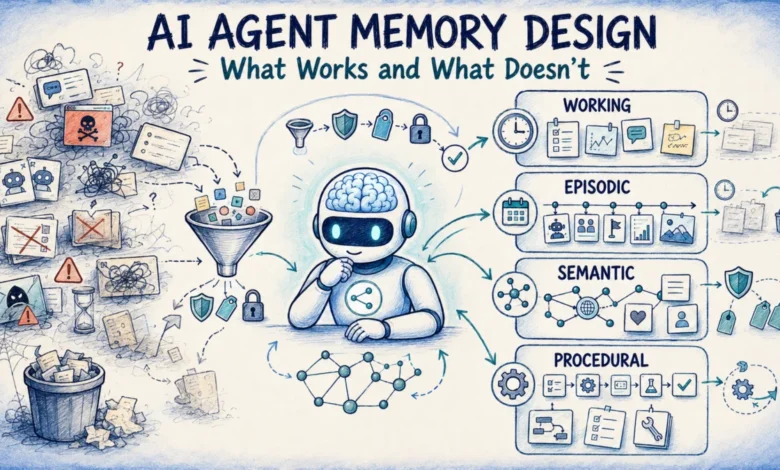
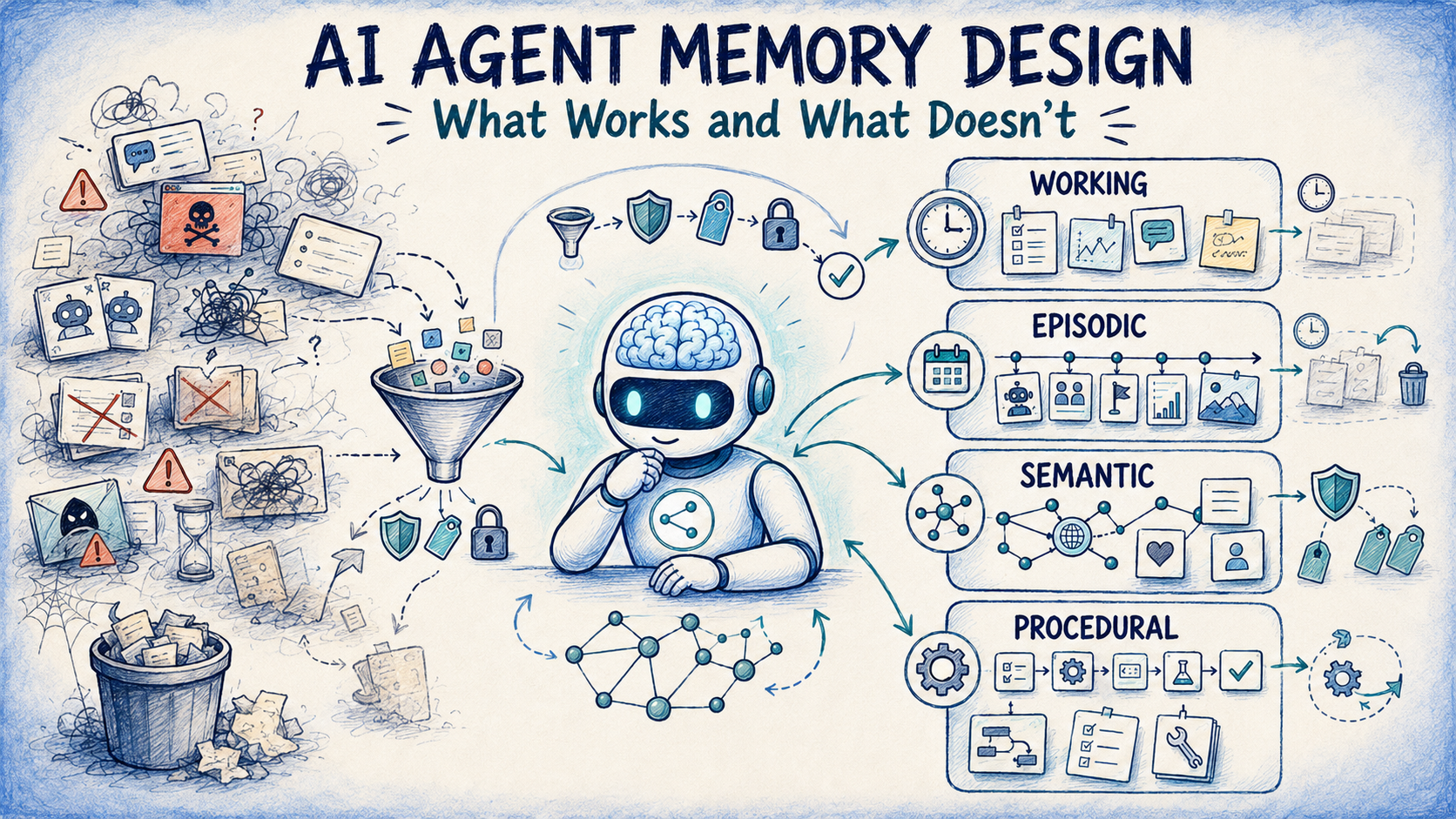
The industry standard for categorizing memory in agentic systems involves a four-layer framework, each serving a distinct operational purpose.
Episodic memory serves as the "diary" of the agent, recording specific events, task runs, and historical decisions. It is most effectively implemented using vector stores or document databases, allowing the agent to perform semantic similarity searches to reconstruct past experiences. Semantic memory, by contrast, stores crystallized knowledge, such as user preferences, domain-specific facts, and learned constraints. This layer often utilizes a hybrid approach, combining vector search for broad queries with key-value stores for precise, high-confidence fact retrieval.
Procedural memory is the repository of "how-to" knowledge—successful action patterns and workflows that have yielded positive results in previous executions. This layer is critical for agent efficiency and is typically stored in structured formats that allow for direct pattern matching. Finally, working memory functions as the agent’s "scratchpad." It holds active task state, intermediate calculations, and temporary variables. Because working memory is highly volatile, it is usually managed via in-memory data structures or short-lived key-value stores. Collapsing these distinct layers into a single, undifferentiated data store is a frequent architectural failure that inevitably leads to noisy retrieval and system-wide performance degradation.
Strategies for High-Performance Memory Design
The most successful implementations of agent memory incorporate hierarchical importance scoring. By assigning a weight to each piece of information, agents can differentiate between transient context and durable knowledge. Developers should implement a validation layer that screens entries based on both importance and confidence scores. For example, a system might define a MemoryEntry model that records the content, type, creation timestamp, and a confidence metric. By gating the persistence of this information—only writing to the long-term store if the entry meets a specific threshold—developers ensure that the database remains free of low-value, noisy data.
In complex multi-agent ecosystems, a significant design flaw is the use of a "flat" memory structure, where all agents have universal access to a single, shared storage pool. This leads to cross-pollination of irrelevant data, where a research-focused agent might inadvertently trigger a code-generation agent to act on incomplete or non-pertinent information. The professional standard for addressing this is the implementation of scoped namespaces. By assigning each agent a specific role-based scope—such as "research," "execution," or "global"—and enforcing these boundaries at the API level, architects can ensure that information remains siloed until explicitly shared via a centralized orchestrator.
The Fallacy of Post-Task Persistence
One of the most common pitfalls in agent development is the practice of writing to memory only upon the successful completion of a task. This creates a "brittle" system; if an agent encounters an error or is interrupted midway through a complex operation, all intermediate learning is lost. A more resilient architectural approach involves writing to working memory after every atomic step. This provides a granular audit trail. If a step is successful, the data can then be promoted to episodic memory. This process, often referred to as "step-based promotion," ensures that the permanent storage layer is reserved for validated, successful outcomes, while the working memory layer acts as a safety net for ongoing tasks.
The Dangers of Compression and Unbounded Growth
A recurring failure mode in AI memory design is the reliance on automated summarization to "compress" context. While this seems like an efficient way to manage storage, it introduces severe risks, including the loss of critical edge-case details and the compounding of hallucinations. When an LLM summarizes a conversation, it inherently discards information. If that discarded information happens to be a specific constraint or a vital parameter, the agent will lack the necessary context for future sessions. Furthermore, if a hallucination is present in the original history, the summary may "fossilize" that error, effectively embedding it as a high-confidence fact in the long-term store.
Instead of prose-based summaries, developers are increasingly adopting structured fact extraction. By utilizing a schema-constrained model to pull discrete, verifiable facts from context, the system can store data as structured objects rather than amorphous blocks of text. This facilitates more accurate retrieval and allows for easier deduplication and maintenance.
Security and Memory Poisoning
As AI agents become more prevalent, the threat of "memory poisoning" has moved from theoretical research to practical production risk. In a memory poisoning attack, an agent processes external content—such as a web scrape or user input—that contains hidden instructions or adversarial commands. These instructions are then stored in the long-term memory. During subsequent sessions, the agent retrieves this poisoned information and may inadvertently follow the malicious directive.
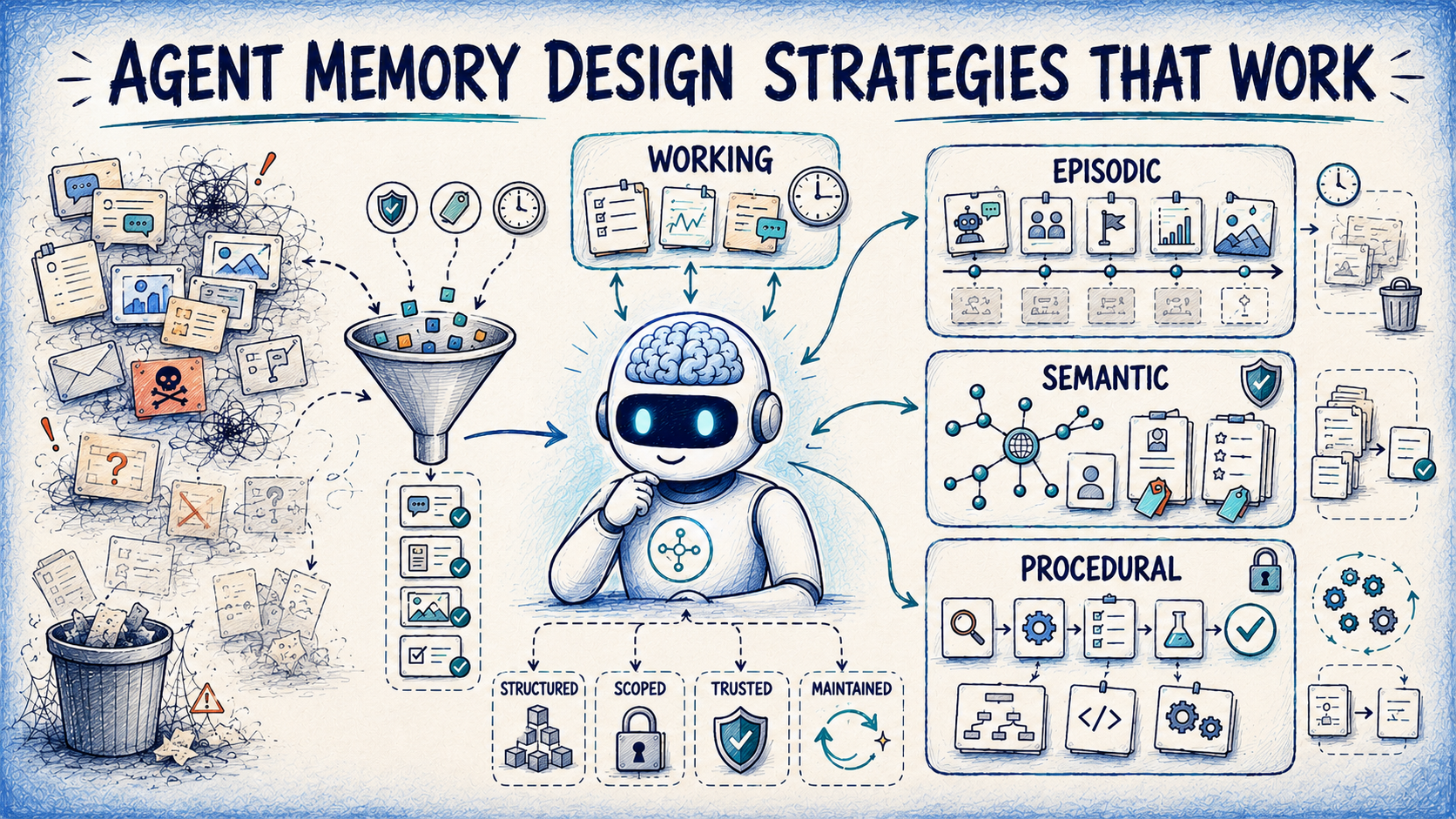
To mitigate this, developers must implement strict sanitization protocols and trust-level metadata for every memory entry. By tagging content with a provenance trail (which agent generated it, which tool was used, and the trust level of the source), developers can implement a "trust filter" before high-stakes operations. If an entry originates from an untrusted source, the system should run a validation check to detect embedded instructions before allowing the data to be written into the long-term storage layer.
The Future of Agentic State
The evolution of agent memory represents a maturation of the AI field. We are moving away from the "black box" model, where the agent is expected to remember everything perfectly, toward a "database-first" model, where the agent acts as a client to a well-structured, tiered, and secure memory architecture.
The implications for enterprise adoption are significant. For AI agents to function effectively in sectors like finance, healthcare, or legal services, they must maintain a reliable and auditable state. The transition to multi-layer storage—working, episodic, semantic, and procedural—is not merely a design preference; it is a prerequisite for system reliability.
As we look toward the next generation of autonomous systems, the focus will likely shift toward automated maintenance routines. These include periodic "garbage collection" of stale information, automated deduplication of conflicting facts, and the continuous decay of confidence scores for information that has not been verified or used over long periods. By treating memory as a critical infrastructure component rather than an auxiliary feature, developers can build agents that not only perform better in the short term but also exhibit the stability and long-term intelligence required for complex, real-world deployments. In the final analysis, the difference between a novelty chatbot and a reliable, scalable agent is not found in the model itself, but in the rigor of the memory architecture that supports it.