Microsoft Azure Databricks Delivers Unprecedented Return on Investment, Underscored by Independent Forrester Study

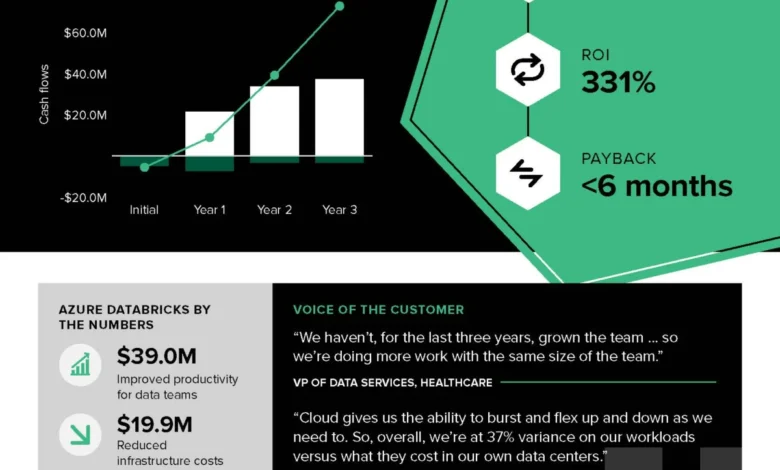
Microsoft Azure Databricks, the deeply integrated data and AI platform co-engineered by Microsoft and Databricks, is demonstrating significant and measurable business value for organizations, according to a recent Total Economic Impact™ (TEI) study commissioned by Microsoft and conducted by Forrester Consulting. The findings reveal a compelling financial case for adopting Azure Databricks, highlighting a substantial return on investment, a rapid payback period, and considerable net present value for a composite organization.
The core advantage of Azure Databricks lies in its "first-party" status within the Azure ecosystem. This signifies a level of integration and co-engineering that goes beyond typical partnerships. Unlike solutions that might be bolted on or require extensive custom integration, Azure Databricks is built from the ground up to work seamlessly with the broader Microsoft data and AI stack. This native integration translates into a more streamlined user experience, enhanced performance, and reduced operational overhead for technical teams, while simultaneously offering tangible cost savings and lower risk profiles for business leaders.
The strategic alignment between Microsoft and Databricks is a key driver behind this integrated approach. This partnership ensures a shared roadmap for feature development and ongoing optimization, allowing customers to benefit from continuous improvements in performance and functionality. However, in the competitive landscape of enterprise technology, demonstrating concrete business value is paramount. Decision-makers are increasingly scrutinizing investments by asking for quantifiable returns. It is precisely this critical question that the Forrester TEI study was designed to address.
Forrester Study Reveals Staggering Financial Returns
The Forrester Total Economic Impact™ study of Microsoft Azure Databricks, released in June 2026, analyzed the financial and operational benefits experienced by organizations leveraging the platform. The research methodology involved in-depth interviews with existing Azure Databricks customers to construct a "composite organization" representative of typical user profiles. This composite entity was modeled as a $6 billion company operating within a regulated industry, managing approximately 10 petabytes of data.
The study’s headline findings are remarkably strong:
- 331% Return on Investment (ROI) over a three-year period.
- $58.1 million in Net Present Value (NPV) over the same three-year timeframe.
- Payback period of less than six months, indicating a rapid recouping of initial investment.
These figures are not hypothetical projections but are derived from the actual experiences of businesses that have implemented Azure Databricks. The study posits that this composite organization realized total benefits amounting to $75.6 million, offset by costs of $17.5 million over three years, leading to the substantial net present value.
Understanding the Sources of Value
The significant financial gains attributed to Azure Databricks stem from several key areas, primarily driven by its inherent integration and the elimination of inefficiencies common in fragmented data architectures. Forrester identified four primary drivers of quantified value:
- Reduced Infrastructure and Operational Costs: By leveraging Azure Databricks as a native Azure service, organizations can consolidate their data warehousing and analytics infrastructure. This eliminates the need for multiple disparate systems, reducing licensing, maintenance, and operational expenditures. The unified platform simplifies management and reduces the complexity associated with integrating and maintaining separate tools. This consolidation directly addresses the "fragmented and expensive" data estate that the composite organization experienced prior to adopting Azure Databricks, which was also noted as being "unreliable at scale and hard to govern."
- Enhanced Developer Productivity: The seamless integration of Azure Databricks with familiar Microsoft development tools and workflows significantly boosts the productivity of data engineers, data scientists, and analysts. Native integration means less time spent on complex setup, configuration, and custom scripting to connect different services. This allows technical teams to focus more on deriving insights and building data-driven applications rather than managing infrastructure.
- Accelerated Time to Insight and Business Value: Faster development cycles and more efficient data processing translate directly into quicker delivery of actionable insights. Organizations can respond to market changes, identify new opportunities, and mitigate risks with greater agility. This speed is critical in today’s fast-paced business environment, where the ability to act on data quickly can provide a significant competitive advantage.
- Improved Data Governance and Security: The study points to the inherent governance capabilities within Azure Databricks, particularly through Unity Catalog, as a significant, albeit not always directly quantified, benefit. Robust governance ensures that data is managed securely, compliance requirements are met, and access controls are consistently enforced. This reduces the risk of data breaches and ensures that insights are derived from trusted, governed data sources.
Beyond these quantifiable benefits, Forrester also highlighted several crucial advantages that, while harder to assign a direct dollar value, are critical enablers of overall success. These include deeper native integration with other Azure services, leading to faster time-to-insight across the board, wider accessibility of data to a broader range of users within the organization, and the robust governance provided by Unity Catalog, which ensures data security and compliance without hindering accessibility.
The Power of Native Integration: Genie and Microsoft Copilot
A prime example of the deep integration that drives these benefits is the synergy between Azure Databricks Genie and Microsoft Copilot. Azure Databricks Genie is an AI-powered assistant that allows users to query their lakehouse in natural language. This capability has been progressively integrated into the tools that employees use daily. The ability to ask questions of vast datasets using simple language, directly within platforms like Microsoft Teams, Microsoft 365 Copilot, and the recently announced Copilot Cowork, fundamentally transforms how individuals interact with data.
This integration is further enhanced by Genie Ontology, which grounds these queries in trusted data, ensuring that responses are accurate and relevant. Crucially, all answers are scoped by Unity Catalog, ensuring that users only see the data they are permitted to access. This "intelligence at the flow of work" approach empowers a wider audience to leverage data insights without compromising organizational governance and security protocols. This seamless embedding of AI-driven data interaction within existing productivity tools is a significant factor in accelerating adoption and realizing value across the enterprise.
The depth of this integration extends across the entire Azure Databricks platform and its complementary Azure services. This includes:
- Enhanced Machine Learning Operations (MLOps): Streamlined workflows for building, training, deploying, and managing machine learning models, reducing the time and effort required to bring AI solutions to production.
- Cost Optimization Tools: Built-in features and integrations that help monitor and optimize cloud spending, ensuring that resources are used efficiently.
- Seamless Data Ingestion and Transformation: Robust capabilities for bringing data from various sources into the lakehouse and transforming it for analysis, reducing the complexity of data pipelines.
- Advanced Analytics and Business Intelligence: Powerful tools for performing complex analytics and visualizing data, enabling deeper understanding and more informed decision-making.
- Scalability and Performance: The ability to scale compute and storage resources dynamically to meet fluctuating demands, ensuring consistent performance even with massive datasets.
These integrations, while not always explicitly priced out in the Forrester study, are the silent engines driving the productivity gains and cost efficiencies that were ultimately quantified. They represent the "built-in, not bolted on" philosophy that underpins the Azure Databricks offering.
Independent Performance Benchmarks Validate Speed and Efficiency
Beyond financial metrics, the performance of a data platform is a critical determinant of its value, especially as data volumes and analytical demands grow. To address this, an independent firm, Principled Technologies, conducted a rigorous decision-support benchmark. This benchmark, similar to the industry-standard TPC-DS, was executed on a 10-terabyte dataset to assess query performance.
The results of this benchmark provided further validation for Azure Databricks’ efficiency. The study demonstrated that Azure Databricks completed single query streams up to 21.1% faster than Databricks on AWS (when autoscale was disabled). Even more significantly, when running four concurrent query streams, Azure Databricks outperformed its AWS counterpart by over nine minutes. These performance advantages translate directly into faster insights and improved user experience, especially in scenarios with high concurrency and complex analytical workloads. Such efficiency gains are crucial for organizations aiming to derive maximum value from their data in a timely manner.
Implications for Decision-Makers
The comprehensive findings from the Forrester TEI study offer a compelling narrative for organizations considering their data and AI platform strategies. The decision to invest in a data and AI platform is a strategic one with long-term implications. Azure Databricks, by virtue of its first-party integration within Azure, presents a cohesive and reinforcing ecosystem.
The deep integrations foster the cost savings identified by Forrester. The inherent performance advantages ensure that these savings are sustained as data volumes and analytical needs expand. At its foundation is the robust partnership between Microsoft and Databricks, offering unified engineering efforts, a shared development roadmap, and a singular support structure. This backing provides a level of confidence and reliability that is difficult to achieve with less integrated solutions.
The value proposition of Azure Databricks is not merely a marketing claim; it is a measured reality, evidenced by a 331% three-year ROI and a payback period under six months. This confluence of factors—strong financial returns, superior performance, and a deeply integrated platform backed by a strategic partnership—explains why an increasing number of teams are choosing to build and manage their lakehouses on Microsoft Azure Databricks.
For IT leaders and business strategists, the implications are clear: adopting Azure Databricks offers a pathway to unlock significant economic benefits, accelerate innovation through data, and enhance operational efficiency, all within a secure and governed Azure environment. The study serves as a powerful endorsement of the platform’s ability to deliver tangible, quantifiable value to a wide spectrum of enterprises.
Exploring Further
Organizations interested in understanding how Azure Databricks can transform their data and AI initiatives can explore a wealth of resources. These include detailed case studies showcasing real-world implementations, technical documentation outlining platform capabilities, and access to the full Forrester Total Economic Impact™ study. Engaging with these resources can provide deeper insights into the specific benefits and strategic advantages that Azure Databricks offers, empowering informed decision-making for the future of data and AI within their organizations. The journey towards data-driven success is often complex, but with a platform like Azure Databricks, the path is demonstrably clearer and more rewarding.