Apple Addresses Critical Privacy Flaw in Hide My Email Service After Extended Disclosure Period

Apple has finally implemented a fix for a significant security vulnerability within its Hide My Email service, a feature designed to enhance user privacy by masking real email addresses. The flaw, which could expose users’ personal inboxes, remained unaddressed for over a year after its initial disclosure, raising concerns about the integrity of Apple’s privacy promises and the security of its iCloud+ subscribers. The resolution was deployed on July 3, 2026, following extensive reporting and the diligent efforts of security researchers.
The Nature of the Vulnerability and its Discovery
The Hide My Email service, a key component of Apple’s iCloud+ subscription offering, functions by generating unique, random email addresses for users. These addresses act as intermediaries, forwarding incoming messages to a user’s designated personal inbox. The primary objective of this service is to combat spam and protect users’ genuine email addresses from being harvested by malicious actors or shared without consent. Introduced in June 2021, the feature was marketed as a robust tool for safeguarding online privacy.
However, a critical vulnerability came to light at the beginning of July 2026, revealing that the privacy guarantees of Hide My Email were fundamentally compromised. Details emerged of a loophole that allowed for the unmasking of a user’s real email address, effectively defeating the purpose of the service. The issue was first brought to Apple’s attention on June 13, 2025, by Tyler Murphy, co-founder of EasyOptOuts, a platform dedicated to helping individuals manage their online privacy.
A Prolonged Path to Resolution
The timeline leading up to the fix highlights a concerning lag in Apple’s response. Following Murphy’s initial disclosure in June 2025, Apple reportedly made unsuccessful attempts to patch the vulnerability in March 2026 and again on June 30, 2026, just days before the successful deployment. The protracted nature of this resolution has fueled criticism and legal challenges.
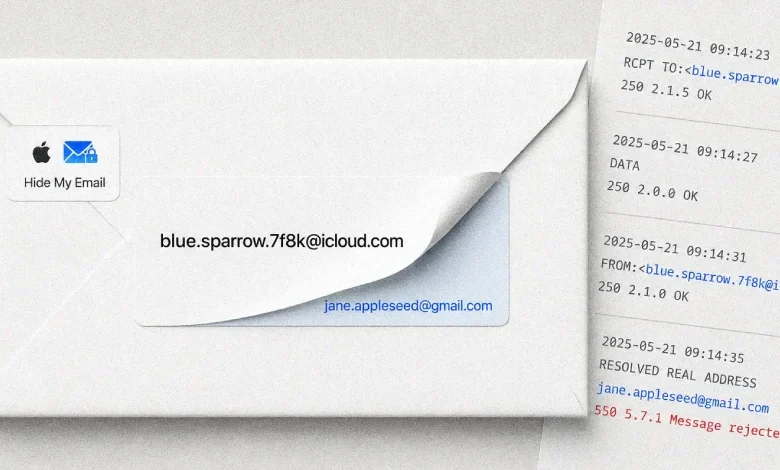
While the specifics of the vulnerability were initially kept under wraps to prevent exploitation, the successful implementation of the fix has allowed for a more detailed public discussion of the technical aspects. The core of the problem lay in a simple yet impactful mechanism: sending a targeted Hide My Email user a message that was automatically rejected as spam could inadvertently reveal their true email address within the email logs.
The Mechanics of the Leak
According to statements made by Tyler Murphy and fellow EasyOptOuts co-founder Ben Weiner to 404 Media, the vulnerability was triggered by an email being flagged and rejected as spam. This rejection, even for legitimate messages, caused the user’s actual email address to be logged. The implications are significant, as users would not have been privy to these bounced emails, making it impossible to check their spam folders for evidence of their personal address being exposed.
"We don’t know how often hidden email addresses were leaked in email logs," Murphy and Weiner stated. "For many major email hosts, the leak was triggered simply by an email being automatically rejected as spam, even if it was a legitimate message. Such emails probably didn’t make it to your inbox, so you can’t review your spam folder to learn whether you were affected."

This means that any Hide My Email address created before July 7, 2026, could have potentially had its associated real email address captured in mail transfer logs when non-malicious emails were bounced. The extent of this exposure remains unknown, but the potential for widespread data leakage is a significant concern for users who relied on Hide My Email for privacy.
Broader Context: Class Action Lawsuit and User Trust
The resolution of this vulnerability occurs against the backdrop of a class-action lawsuit filed against Apple. The lawsuit accuses the tech giant of misleading consumers about the privacy protections offered by its Hide My Email feature, particularly given that the service is part of a paid subscription tier.
The legal complaint argues that "Apple promised Hide My Email as a privacy feature customers paid for, whether directly through iCloud+ or indirectly through Apple’s product-wide privacy representations, and failed to deliver it." A particularly damning assertion within the lawsuit is that "Apple has been fully aware of this problem for over a year and has not fixed it." The plaintiffs further allege that "At no point during this period did Apple disable or pause Hide My Email, warn its customers of the flaw, or correct its privacy representations."
This legal challenge underscores the erosion of user trust that can result from such security lapses, especially when a company markets a service heavily on its privacy benefits. The prolonged period without a fix, coupled with the potential for extensive email address exposure, could have far-reaching consequences for Apple’s reputation and its commitment to user privacy.
Analysis of Implications and Future Considerations
The Hide My Email vulnerability raises several critical questions for both Apple and its users:
- The Effectiveness of Disclosure Mechanisms: While security researchers played a vital role in identifying and reporting the flaw, the extended period before a resolution was implemented suggests potential inefficiencies or prioritization issues within Apple’s security response protocols.
- User Awareness and Recourse: The inherent nature of the leak meant that affected users were likely unaware of their personal email addresses being exposed. This lack of direct notification limits their ability to take immediate precautionary measures, such as monitoring for suspicious activity or changing passwords on linked accounts.
- The Cost of Privacy: Hide My Email is a feature exclusive to iCloud+, a paid subscription service. The revelation that a core privacy feature within a paid service was compromised for an extended period, without adequate warning or swift remediation, raises questions about the value proposition for subscribers and the fairness of the pricing model.
- Future of Privacy Services: This incident serves as a stark reminder of the complexities involved in maintaining robust privacy in the digital age. Even sophisticated services can harbor unforeseen vulnerabilities. For consumers, it highlights the importance of due diligence and understanding the limitations of any privacy-enhancing technology.
- Apple’s Response and Future Safeguards: While Apple has now patched the vulnerability, the long-term impact on user trust remains to be seen. The company will likely need to demonstrate a renewed commitment to proactive security measures, faster patch deployment, and more transparent communication with its users regarding security incidents. This event may also prompt a review of their internal processes for handling reported vulnerabilities.
Background on Hide My Email
Hide My Email was introduced as part of Apple’s broader push to enhance user privacy across its ecosystem. Launched in June 2021 at the Worldwide Developers Conference (WWDC), it was presented alongside other privacy-focused features like Mail Privacy Protection and App Tracking Transparency. The service leverages Apple’s existing infrastructure and its commitment to on-device processing and end-to-end encryption for many of its services.
The underlying technology for Hide My Email relies on a forwarding system. When a user signs up for a service or provides an email address online, they can opt to use a generated Hide My Email address instead of their primary one. This randomly generated address is then linked to their actual email inbox. Any email sent to the temporary address is routed through Apple’s servers and then forwarded to the user’s personal inbox. If the user wishes to stop receiving emails from a particular source, they can simply deactivate the corresponding Hide My Email address, effectively blocking further communication without needing to change their primary email.
Supporting Data and Industry Trends
The incident involving Hide My Email is not an isolated event in the broader landscape of cloud security and privacy concerns. According to a 2023 report by Verizon, phishing remains a prevalent threat, with email being a primary vector for such attacks. This underscores the critical need for robust email privacy features. Furthermore, a study by the Pew Research Center in 2022 found that a significant portion of internet users express concerns about how their personal data is collected and used by companies, highlighting a growing demand for privacy-preserving technologies.

The market for privacy-enhancing technologies (PETs) has seen substantial growth, with consumers increasingly seeking tools that offer control over their digital footprint. Services like Hide My Email are designed to meet this demand. However, the success of such services hinges on their absolute reliability and security. A single significant vulnerability can undermine years of trust-building efforts and expose users to considerable risk. The average cost of a data breach for organizations, as reported by IBM’s Cost of a Data Breach Report, continues to rise, emphasizing the financial and reputational stakes involved in maintaining robust cybersecurity.
Statements and Reactions
While Apple has not issued a public statement specifically addressing the prolonged delay in fixing the Hide My Email vulnerability, their deployment of the patch on July 3, 2026, signifies their acknowledgment of the issue. The legal action taken by consumers, however, speaks volumes about the impact of this security lapse.
"Apple promised Hide My Email as a privacy feature customers paid for… and failed to deliver it," the class-action lawsuit complaint states, reflecting the sentiment of many users who feel their trust has been betrayed. The lawsuit’s assertion that Apple was aware of the problem for over a year and did not act swiftly further intensifies the criticism.
The reporting by 404 Media and the continued coverage by outlets like The Hacker News have been instrumental in bringing this issue to light and advocating for user privacy. The diligence of researchers like Tyler Murphy and Ben Weiner, who brought the vulnerability to Apple’s attention and continued to push for a resolution, highlights the crucial role of the cybersecurity community in holding tech giants accountable.
The Path Forward for Apple and Users
The resolution of the Hide My Email vulnerability is a positive step, but it serves as a critical lesson for Apple. The company must reassess its vulnerability management and patching processes to ensure that critical security flaws are addressed with greater expediency. Transparency with users, especially regarding potential data exposure, is paramount in maintaining trust.
For users who utilize Hide My Email, it is advisable to remain vigilant. While the vulnerability has been patched, any exposure that may have occurred prior to July 7, 2026, cannot be undone. Users should continue to practice good cybersecurity hygiene, including using strong, unique passwords and enabling two-factor authentication on all their online accounts. Monitoring email for any unusual activity or phishing attempts is also recommended.
The incident with Hide My Email underscores the ongoing challenges in balancing innovation with robust security and privacy. As technology continues to advance, so too must the commitment to protecting user data and ensuring the integrity of the services that users rely on for their digital safety. Apple’s handling of this issue will undoubtedly be a benchmark against which its future privacy initiatives are measured.