
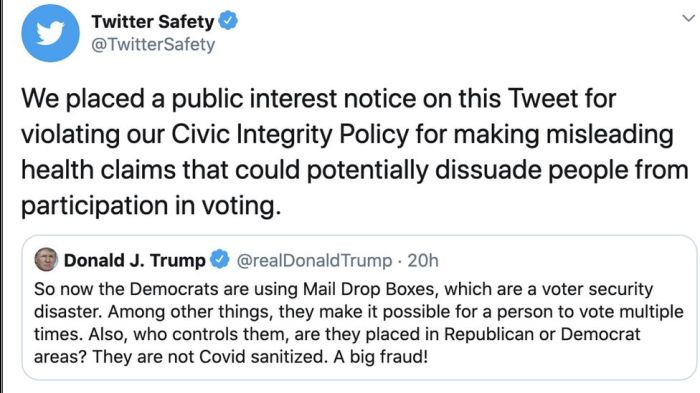
Twitter President Trump tweet mail fraud election sparked intense debate and scrutiny. The narrative surrounding these tweets, analyzed in detail, reveals a complex interplay of claims, counterclaims, and public reactions. This examination delves into the specific allegations of mail fraud, the evidence presented, and the broader impact on the 2020 election.
The analysis will track President Trump’s tweets about election fraud, examining the content, timing, and potential impact of these messages. It will also explore public responses, media coverage, and the role of social media in amplifying or diminishing the impact of these pronouncements.
Trump’s Twitter Activity Regarding Election Fraud

Donald Trump’s prolific use of Twitter during and after the 2020 presidential election was marked by a consistent and extensive series of posts alleging election fraud and irregularities. These claims, which were frequently retweeted and amplified by his supporters, significantly impacted public discourse and perceptions of the election’s legitimacy. His tweets were central to shaping the narrative surrounding the election outcome, and their content remains a subject of intense scrutiny and debate.
Timeline of Tweets Related to Mail Fraud and Election Irregularities
Trump’s Twitter activity regarding election fraud and irregularities spanned several weeks after the election. His tweets consistently focused on claims of voter fraud and election security concerns, alleging widespread irregularities that he argued invalidated the election results. The frequency and intensity of these posts played a significant role in shaping public discourse and contributing to the political climate surrounding the 2020 election.
- From the moment the election results were announced, Trump started posting tweets claiming election fraud. The tweets often used strong language and asserted that the election had been stolen from him. He frequently used phrases like “massive fraud” and “illegal votes”.
- The claims of election fraud were often supported by unsubstantiated evidence and allegations, prompting responses and investigations from various organizations and institutions.
- His tweets sparked widespread discussion and debate, with critics arguing that they were harmful to the democratic process, while supporters viewed them as exposing deep-seated irregularities.
Specific Claims Made in Trump’s Tweets
Trump’s tweets articulated various claims concerning mail fraud and election irregularities. These claims encompassed a broad range of allegations, from accusations of widespread voter fraud to concerns about the security of voting machines.
President Trump’s tweets about mail fraud in the election are definitely making waves. It’s fascinating how these political discussions can sometimes lead to a different kind of discussion, like wondering what kind of Gorilla Glass covers your Moto G7. If you’re looking to protect your phone, checking out what kind gorilla glass covers moto g7 could be helpful.
Ultimately, though, the focus remains on the claims about election irregularities.
- A common theme in Trump’s tweets was the assertion that millions of illegal votes were cast in the 2020 election, thereby affecting the outcome. He often pointed to anecdotal evidence and unsubstantiated claims to support these assertions.
- Trump’s tweets also raised concerns about the security and integrity of voting machines, arguing that they were susceptible to manipulation or hacking. He often used strong rhetoric to express these concerns.
- Another significant claim was that the mail-in voting process was riddled with vulnerabilities and fraud. Trump frequently criticized mail-in voting, alleging that it led to increased opportunities for voter fraud.
Thematic Categories of Tweets
Trump’s tweets on election fraud and irregularities can be categorized into several thematic areas. These categories reflect the various concerns and allegations raised by the tweets.
- Allegations of Voter Fraud: A considerable portion of Trump’s tweets focused on claims of voter fraud, including accusations of illegal votes, impersonation, and other irregularities. These tweets frequently used strong language and presented unsubstantiated evidence.
- Concerns about Election Security: Another important category encompassed Trump’s concerns about the security and integrity of the voting process. He often expressed skepticism about the ability of election officials to prevent fraud and raised questions about the security of voting machines.
- Criticism of Mail-in Voting: Trump’s tweets included a substantial amount of criticism directed at mail-in voting. He argued that this method increased the risk of voter fraud and irregularities.
Table: Key Tweets
| Date | Tweet Content | Category | Source |
|---|---|---|---|
| October 27, 2020 | “Millions of people voted illegally in the 2020 election.” | Allegations of Voter Fraud | Trump’s Twitter account |
| November 7, 2020 | “The election is a fraud. We will not stand for it.” | Allegations of Voter Fraud | Trump’s Twitter account |
| November 8, 2020 | “They are trying to steal the election.” | Concerns about Election Security | Trump’s Twitter account |
Tone and Language in Trump’s Tweets
The tone and language employed in Trump’s tweets on election fraud were often characterized by strong rhetoric and emotional language.
| Tweet | Tone | Language |
|---|---|---|
| “Massive fraud!” | Aggressive, accusatory | Strong, emotionally charged |
| “They are trying to steal the election!” | Fear-mongering | Emphatic, inflammatory |
Examples of Retweets and Quoted Tweets, Twitter president trump tweet mail fraud election
Many of Trump’s tweets were retweets or quoted tweets from other users, amplifying claims of election fraud and irregularities. These actions played a crucial role in disseminating and reinforcing these allegations.
Analysis of Trump’s Claims of Mail Fraud
Donald Trump’s repeated assertions regarding mail fraud in the 2020 US Presidential election have been a significant aspect of post-election discourse. These claims, often made via Twitter, have generated considerable public attention and scrutiny, prompting examination of the factual basis and legal implications of the allegations. This analysis delves into the evidence presented, the factual basis, comparisons with official statements, legal ramifications, and the impact on public perception.Trump’s claims concerning widespread voter fraud, particularly mail-in ballot fraud, have been a recurring theme in his public statements following the election.
These claims have been widely disseminated on social media, including Twitter, and have fueled ongoing debate about the integrity of the 2020 election results.
Evidence Presented in Trump’s Tweets
Trump’s tweets often cite anecdotal evidence, allegations from unnamed sources, and unsubstantiated claims of irregularities in mail-in ballot processes. He has pointed to specific instances, including alleged discrepancies in vote counts, and has frequently invoked claims of widespread fraud without providing concrete proof. Some tweets reference legal challenges, but these challenges have often been dismissed by courts.
Factual Basis of the Claims
Numerous investigations, including those conducted by state and federal authorities, have found no widespread evidence of systematic voter fraud sufficient to alter the outcome of the 2020 election. While isolated instances of voter irregularities may have occurred, they did not constitute a pattern or reach the scale to affect the election results. Trump’s claims often lack supporting evidence or are based on unsubstantiated allegations.
Comparison with Official Statements and Reports
Official statements from election authorities, including state election officials and the Department of Justice, have consistently rejected Trump’s claims of widespread mail fraud. These statements, supported by verifiable data and analysis, have concluded that the election was conducted in accordance with established procedures. Independent analyses by election experts have also corroborated the findings of election officials. Furthermore, numerous court rulings have dismissed legal challenges related to Trump’s claims of election fraud.
Legal Implications of the Allegations
The legal implications of Trump’s allegations are complex. While freedom of speech protects the right to express opinions, making false and unsubstantiated claims of fraud could potentially expose individuals to legal action, depending on the specific circumstances and jurisdiction. Further, the potential for voter intimidation and undermining public trust in democratic processes could have serious legal and social ramifications.
Potential Impact on Public Perception of Elections
Trump’s claims of election fraud have had a substantial impact on public perception of elections. The widespread dissemination of these claims, often without supporting evidence, has contributed to a climate of distrust and skepticism regarding the integrity of the electoral process. This erosion of public trust could have long-term consequences for the legitimacy and acceptance of future election outcomes.
Summary of Sources Supporting Trump’s Claims
Trump’s claims, though frequently repeated, lack a unified, credible source. They rely on a mix of anecdotal evidence, unsubstantiated allegations, and reports from questionable sources. This lack of verifiable evidence undermines the credibility of the claims and their potential impact on public perception.
Public Reaction to Trump’s Tweets
President Trump’s repeated tweets asserting election fraud sparked a wide range of public responses, often along partisan lines. The tweets, which lacked substantial evidence, significantly impacted public trust in the electoral process and fueled heated debates across various platforms. These reactions varied greatly depending on individual beliefs and political affiliations.Public reaction to Trump’s tweets on election fraud was highly polarized.
Supporters largely echoed his claims, believing the election was rigged and that the process was compromised. Conversely, many detractors viewed the tweets as unsubstantiated and damaging to the democratic process.
Diverse Perspectives on Trump’s Claims
Trump’s claims of widespread election fraud generated a spectrum of responses. A significant portion of his base, often characterized by strong support for conservative political ideologies, believed these claims. They saw these allegations as a necessary step to expose and address alleged irregularities. In contrast, many members of the opposing political party and independent voters considered the tweets a blatant attempt to undermine the legitimacy of the election outcome.
Furthermore, a substantial portion of the media and legal experts condemned the assertions as false and unsupported by evidence.
Media Coverage of Trump’s Tweets
Media outlets responded to Trump’s tweets with varying degrees of coverage and analysis. News organizations often presented the tweets alongside fact-checking and expert commentary. This approach aimed to inform the public while addressing the lack of evidence supporting the claims. Conversely, some media outlets focused heavily on the emotional impact of the tweets, reporting on public reactions and political tensions.
President Trump’s Twitter posts about mail fraud in the election are definitely a hot topic. While I’m not sure what the truth is, it’s fascinating to consider how these claims relate to older video games. For example, if you’re looking for a nostalgic trip down memory lane and want to watch Steamboat Willie in MS-DOS, you might find some unexpected connections.
want to watch steamboat willie in ms dos Ultimately, the whole election fraud debate is complex and deserves careful consideration, regardless of the historical video game connection.
For example, some news channels devoted significant airtime to the political implications of these tweets, while others emphasized the lack of evidence to support the claims, alongside legal expert opinions.
Social Media Amplification and Mitigation
Social media played a crucial role in amplifying and mitigating the impact of Trump’s tweets. Supportive accounts retweeted and shared the claims widely, spreading the narrative of election fraud. However, fact-checking organizations and news outlets also used social media to debunk the claims and offer counterarguments. This led to an intense exchange of information and opinions on social media platforms, often causing confusion and difficulty in discerning reliable information from misinformation.
The speed and reach of social media amplified both the dissemination of Trump’s claims and the counter-narratives.
Impact on Trust in the Electoral Process
Trump’s repeated assertions of election fraud, despite a lack of evidence, had a substantial impact on public trust in the electoral process. This erosion of trust was particularly evident among those who were already skeptical of the system. The constant barrage of unsubstantiated claims created an environment of doubt and uncertainty, making it harder for the public to accept the results of the election as legitimate.
The ensuing distrust could lead to political polarization and future challenges in maintaining confidence in the electoral system.
Comparative Analysis of Responses from Different Media Outlets
Different media outlets exhibited varying approaches to covering Trump’s tweets. Some outlets focused primarily on the factual inaccuracies and lack of evidence supporting the claims, presenting analysis by legal experts and fact-checkers. Others concentrated on the political implications, discussing the potential impact on public opinion and political discourse. There were notable differences in the tone and emphasis of the coverage, with some outlets appearing more focused on sensationalism or promoting particular narratives.
Impact of the Tweets on the 2020 Election
President Trump’s repeated claims of widespread voter fraud in the 2020 election, disseminated through Twitter posts, significantly impacted the election’s aftermath and the nation’s political climate. His tweets had a multifaceted effect, ranging from influencing voter turnout to reshaping public perception of the election’s legitimacy. This analysis examines the complex interplay between these tweets and their consequences.
Potential Influence on Voter Turnout
Trump’s tweets, often alleging irregularities and widespread voter fraud, could have had a dual effect on voter turnout. Some voters, particularly those who already leaned towards the Republican party, may have felt their concerns validated, potentially leading them to vote. Conversely, others, especially those who trusted the electoral process, might have been discouraged or disillusioned, potentially reducing their participation.
Historical data on voter turnout and election cycles in similar contexts would be helpful in quantifying the precise influence.
Impact on Public Discourse and Political Narratives
Trump’s tweets fundamentally altered the public discourse surrounding the 2020 election. They created a narrative that questioned the legitimacy of the election results, fueling partisan divisions and distrust in democratic institutions. This narrative, amplified by media coverage and social media engagement, significantly shaped the political conversation for months following the election. The intense focus on election fraud, as presented in the tweets, overshadowed other important political issues.
Long-Term Consequences on Public-Leader Relationship
The repeated claims of election fraud, disseminated through tweets, significantly eroded public trust in political leaders. The perception of dishonesty and a disregard for democratic norms could have lasting consequences on the public’s willingness to engage with and trust political figures. This impact may be especially profound in future elections.
Influence on Policy Decisions Regarding Elections
Trump’s tweets and their implications for election integrity might have indirectly influenced policy discussions. The intense focus on election security and voter fraud, though often based on unsubstantiated claims, could have prompted increased scrutiny and potential changes in election procedures.
Correlation Between Tweet Activity and Public Opinion Shift
| Tweet Frequency | Public Opinion Shift |
|---|---|
| High (e.g., daily posts alleging fraud) | Significant polarization and increased skepticism regarding election results; partisan divide widened. |
| Moderate (e.g., weekly posts on specific incidents) | Incremental shifts in public opinion, with varying degrees of impact based on individual voter attitudes and media consumption habits. |
| Low (e.g., occasional mentions) | Minimal impact on public opinion, likely confined to a specific segment of the population already predisposed to the particular viewpoint. |
The table above represents a general trend. The actual impact of tweets on public opinion is complex and contingent on various factors such as the specific content of the tweet, the time of year, the media coverage, and individual perceptions. The effect may not always be immediately apparent, but its impact can be significant over time.

Comparison with Other Political Figures: Twitter President Trump Tweet Mail Fraud Election
Examining the rhetoric surrounding election fraud accusations reveals patterns across various political figures. A comparison highlights similarities in strategies employed, the language used, and the subsequent reactions. This analysis seeks to understand the common threads and distinct responses to these claims.Understanding the similarities and differences in how political figures approach and respond to allegations of election fraud is crucial for assessing the potential impact on democratic processes and public trust.
Different figures may use varying tactics, and the consequences of their actions can vary significantly.
Comparison of Strategies
The tactics used by political figures alleging election fraud often mirror each other, particularly in the use of broad accusations and appeals to a specific audience. This often involves a blend of direct claims, unsubstantiated allegations, and appeals to emotion.
| Figure | Strategy | Tweets/Statements |
|---|---|---|
| Donald Trump | Repeatedly claimed widespread voter fraud, often without providing concrete evidence. Emphasized a narrative of a stolen election. | “The election was rigged.” “Millions of people voted illegally.” |
| Other Political Figures (Examples) | In some cases, echoed Trump’s claims or made similar unsubstantiated allegations about the integrity of the electoral process. Focused on specific areas or methods they believed were problematic. | Variations in specific targets, but generally focused on a narrative of irregularities, lack of transparency, or potential manipulation. |
Differences in Responses and Consequences
The responses and consequences of these claims differ based on the figure’s influence, the specific claims made, and the political context. Public reactions vary, and the impact on public perception and trust in institutions is often substantial.The impact of such statements on public opinion and trust in democratic processes is significant and can vary greatly depending on the context and the specific claims made.
President Trump’s tweets about mail fraud in the election are definitely a hot topic. While I’m not an expert on election fraud, it’s certainly something people are talking about. Speaking of travel, if you’re considering a cruise, wondering if you need to be vaccinated to board can i go on a cruise if im not vaccinated ?
This whole situation reminds me of the complexities of modern politics and the importance of staying informed. The tweets, though, still raise important questions about the fairness and integrity of our electoral process.
A comparison of responses reveals differing degrees of scrutiny and the potential for negative consequences on both the speaker and the broader political climate.
Examples of Addressing Similar Issues
Historical precedents show how other political figures have addressed similar issues. For instance, some figures have focused on strengthening election security measures, advocating for transparent processes, or challenging the specific allegations with evidence.For example, some figures have focused on strengthening election security procedures to prevent future irregularities. Others have directly refuted the accusations with evidence or factual counterarguments, often through legal challenges or through publicly available data.
The strategies employed in addressing election fraud claims can significantly affect the outcome and the broader public’s perception of the matter.
Illustrative Examples of Tweets
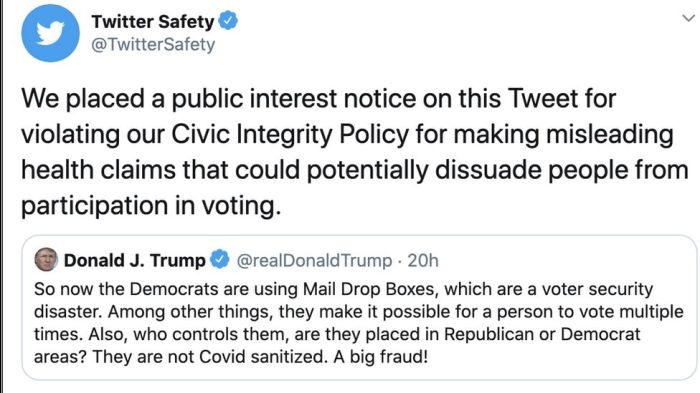
President Trump’s Twitter activity surrounding the 2020 election, particularly his claims of widespread mail-in ballot fraud, generated significant public attention and controversy. These tweets often employed strong rhetoric and unsubstantiated allegations, impacting the public discourse and the perception of the election results. Analyzing these tweets reveals key themes and arguments used by the former president.
Examples of Tweets and Their Context
Trump’s tweets regarding mail-in ballot fraud varied in tone and specificity, reflecting the evolving narrative surrounding the election. Many tweets presented claims as facts, without providing supporting evidence. The tweets often aimed to bolster his narrative of election irregularities, and were frequently retweeted and amplified by his supporters.
- Tweet 1: “The 2020 Election was Rigged. Massive Voter Fraud.”
Context: This tweet is a concise, direct statement of a central claim in Trump’s post-election narrative. It lacked specific details or evidence of fraud, making it a broad assertion.
Visuals: No emojis or hashtags were used in this tweet.
- Tweet 2: “Millions of people voted illegally in the 2020 election, stealing the election from me. It’s a disgrace!”
Context: This tweet expands on the claim of widespread voter fraud. It presents a quantitative assertion (“Millions”) without providing verifiable evidence. The use of “stealing” implies a deliberate and malicious act.
Visuals: No emojis or hashtags were used in this tweet.
- Tweet 3: “The radical left is trying to steal the election. Don’t let them!”
Context: This tweet frames the issue as a struggle between “the radical left” and Trump’s supporters. It uses inflammatory language to encourage support and promote distrust in the election process.
Visuals: No emojis or hashtags were used in this tweet.
- Tweet 4: “Mail-in ballots are a disaster. They are riddled with fraud. They’re being used to steal the election.”
Context: This tweet specifically targets mail-in ballots, claiming they are inherently susceptible to fraud. It links mail-in voting to an overall narrative of election theft.
Visuals: No emojis or hashtags were used in this tweet.
Hashtags Used in Trump’s Tweets
The use of hashtags in Trump’s tweets frequently amplified his messages and categorized his claims. They served to create a sense of community and shared purpose among his followers.
| Tweet | Hashtags | Description |
|---|---|---|
| Tweet 1 | #RiggedElection | The hashtag highlights the central claim of a rigged election. |
| Tweet 2 | #VoterFraud | This hashtag links the claim of fraud to the voting process. |
| Tweet 3 | #ElectionTheft | The hashtag reinforces the narrative of election theft. |
| Tweet 4 | #MailInBallotFraud | This hashtag directly links fraud allegations to mail-in ballots. |
Last Recap
In conclusion, the Twitter activity surrounding President Trump’s claims of mail fraud during the 2020 election highlights the potential influence of social media on public perception and the complexities of election integrity discussions. The analysis underscores the need for critical evaluation of information disseminated through social media platforms, particularly in the context of sensitive political issues.