Modernizing Workforce Intelligence: How Graph Technology Bridges the Operational Gap in Public Sector Decision-Making

Public sector operations leaders today are increasingly haunted by a singular, complex question that determines the efficacy of national defense, emergency response, and critical infrastructure: Who is available right now, equipped with the necessary skills and security clearances, in the optimal location, and whose redeployment will not trigger a catastrophic capability gap elsewhere in the organization? This inquiry is not merely a logistical puzzle; it is a high-stakes chain of dependencies where each link is managed by a different, isolated system. In the current global climate, where crises no longer arrive in a predictable sequence, the inability of these siloed systems to communicate is transitioning from a bureaucratic inconvenience into a significant threat to national resilience.
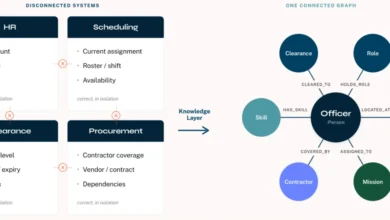
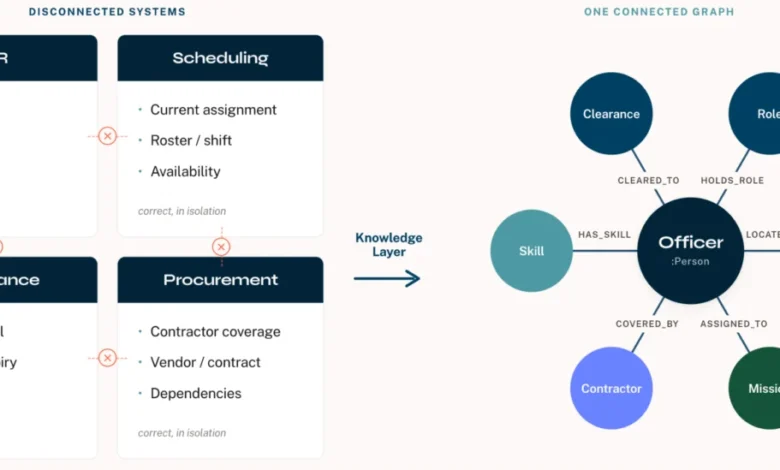
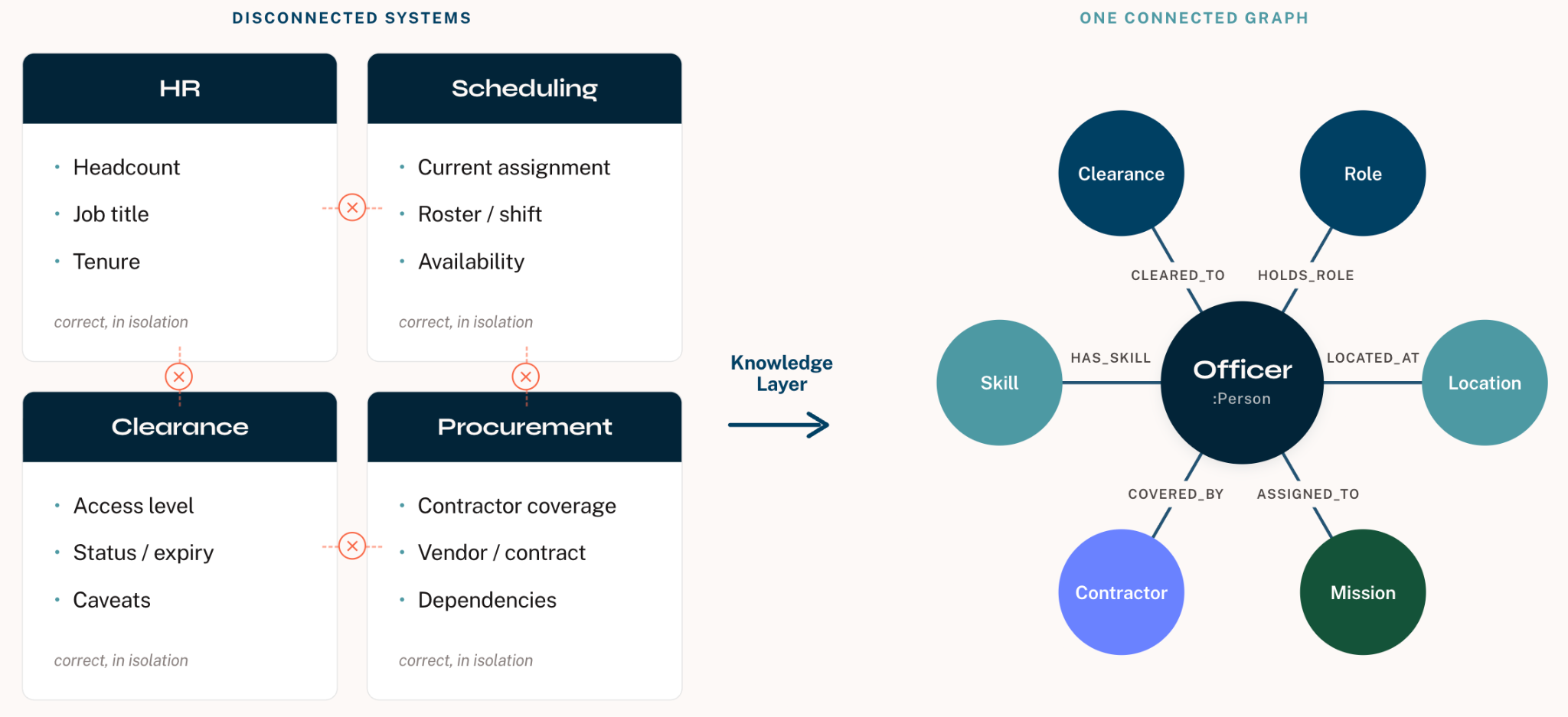
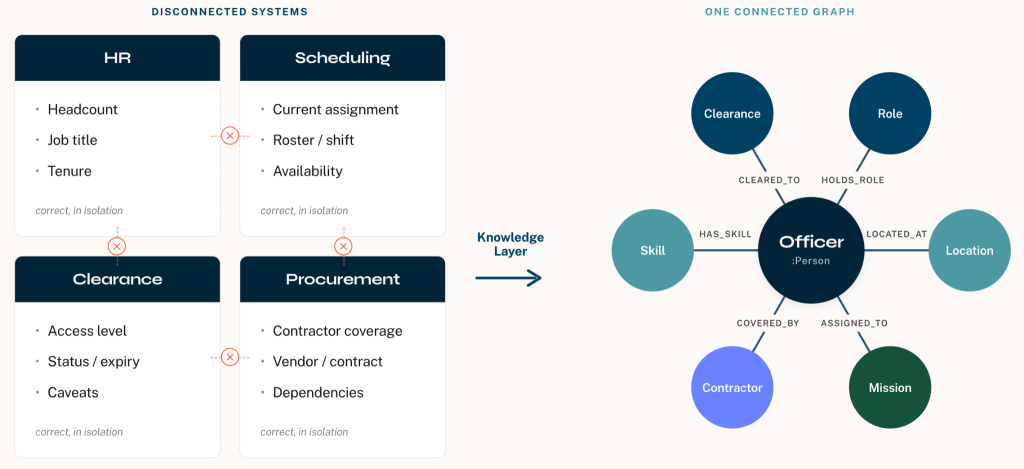
For decades, government agencies have relied on specialized software to manage specific domains. Human Resources (HR) platforms track employment status; scheduling tools monitor deployments; security databases manage clearances; and procurement systems oversee third-party contractors. While each of these systems is often accurate within its own narrow scope, none are designed to answer compound questions that cross departmental boundaries. When a crisis strikes—be it a cyberattack on a power grid or a sudden natural disaster—personnel with specialized expertise must be identified and moved within minutes. Currently, this process often involves manual data reconciliation, where staff must stitch together spreadsheets under extreme pressure. By the time a comprehensive briefing is ready, the operational reality on the ground has often changed, rendering the data obsolete.
The Shift from Sequential to Concurrent Crisis Management
The fundamental failure of current workforce management strategies stems from an outdated architectural philosophy. Most workforce systems were built for an era where pressures arrived in sequence. An organization would respond to one crisis, recover, and then prepare for the next. This allowed for deliberate decision-making and planned handovers. However, the modern operating environment is characterized by what sociologists call the "polycrisis"—a state where multiple, unrelated emergencies occur simultaneously.
Supporting data from the OECD Employment Outlook 2025 highlights the structural pressures currently weighing on advanced economies. Workforces are aging, talent pipelines are shrinking, and specialized skill shortages are accumulating faster than they can be replaced. This demographic shift is colliding with a massive uptick in operational demand. For instance, the EU Civil Protection Mechanism was activated 64 times in 2025 alone. These activations were not spread evenly throughout the year but occurred concurrently, as organizations were forced to respond to regional conflicts and natural disasters at the same time.
When these trends converge, they create "compound workforce pressure." Organizations find themselves with fewer experienced personnel exactly when they are expected to manage more overlapping events. In this environment, every hiring or deployment decision becomes a zero-sum game. Public sector leaders must decide which vacancy matters most and which capability gap creates the greatest downstream exposure. Without a unified view of the workforce, these decisions are often made based on intuition rather than empirical data, increasing the risk of mission failure.
The Structural Failure of the Data "Seam"
The primary obstacle to effective decision-making is not a lack of data. On the contrary, public sector organizations are often overwhelmed by data. The failure occurs in the "seams" between systems. Operational decisions almost always cross organizational boundaries. A deployment decision for a specialized cyber response team, for example, depends on a simultaneous understanding of certifications, security clearance levels, current physical location, and the impact of the move on the team’s current assignment.
In traditional relational databases, answering these questions requires "joins"—complex operations that link tables of data together. As the number of variables increases—adding contractor coverage, mission priority, and cascading impacts—the complexity of these joins grows exponentially. Eventually, the query becomes so cumbersome to maintain that it becomes slower than the decision-making process it was meant to support.
This gap between "system correctness" and "organizational intelligence" is where mission risk emerges. When systems cannot talk to one another, the organization loses its "peripheral vision." A leader might move a specialist to solve a problem in Department A, unaware that they have just disabled a critical function in Department B that was dependent on that same specialist’s unique clearance level.
A Chronology of Workforce Management Evolution
To understand the current crisis, one must look at the evolution of workforce technology over the last four decades:
- The Era of Record-Keeping (1980s–1990s): The focus was on digitizing paper records. HR systems were essentially electronic filing cabinets.
- The Era of ERP Integration (2000s–2010s): Enterprise Resource Planning (ERP) attempted to bring everything under one roof. While this improved payroll and accounting, it struggled with the "soft" data of skills, readiness, and real-time location.
- The Era of Siloed Optimization (2010s–2020s): Specialized SaaS tools emerged for scheduling, learning management, and security. While excellent at their specific tasks, they further fragmented the organizational view.
- The Era of Graph Intelligence (Present): The current shift toward "knowledge layers" that use graph technology to connect existing systems without the need for massive, risky data migrations.
This chronological progression shows a clear trend: as the world becomes more connected, the tools used to manage the workforce must also prioritize connectivity over mere data storage.
The "Silver Tsunami" and the Succession Crisis
Compounding the technological gap is a looming demographic crisis. Research from the MissionSquare Research Institute indicates that more than half of public sector HR leaders in the United States expect a massive wave of retirements within the next few years. Despite this "silver tsunami," only 13% of state and local governments have a formal succession planning process in place.
This lack of planning creates a dangerous knowledge vacuum. When a senior expert retires, they take with them not just their skills, but an informal understanding of the relationships and dependencies within the organization. In a siloed system, there is no digital record of who this person mentored or which unofficial roles they filled. Graph technology offers a way to map these informal networks and dependencies, allowing organizations to see exactly which missions are at risk when a specific individual leaves the service.
Transitioning to Workforce Intelligence via Graph Technology
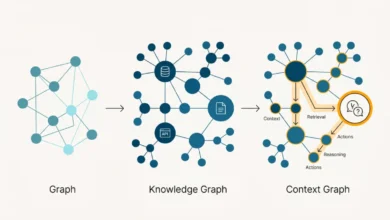
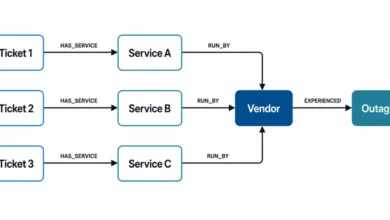
The solution emerging in the defense and intelligence sectors is the implementation of a "knowledge layer" powered by graph intelligence, such as the Neo4j Graph Intelligence Platform. Unlike traditional databases that store data in rigid rows and columns, a graph database stores data as "nodes" (people, skills, clearances) and "edges" (the relationships between them).
This approach does not require an organization to replace its existing HR or procurement systems. Instead, the knowledge layer sits on top of these platforms, pulling data from each to create a single, unified view of the workforce. This allows leaders to move from "reporting what exists" to "understanding what happens next."

With a connected knowledge layer, an operations leader can ask highly specific, multi-dimensional questions and receive answers in milliseconds:
- "Which contractors are currently filling roles that require a security clearance expiring in the next 60 days?"
- "If we move this team to the border, which specific emergency response capabilities will be degraded in the capital?"
- "Which individuals have the certifications to operate this new equipment but are currently assigned to low-priority administrative tasks?"
These are not HR questions; they are operational intelligence questions. They require a system that understands relationships as clearly as it understands individual data points.
Broader Impact and National Resilience
The implications of this technological shift extend far beyond administrative efficiency. In the context of national resilience, the ability to rapidly reconfigure a workforce is a strategic asset. For example, during a public health emergency, a government must be able to identify every employee with medical training, regardless of their current job title, and verify their location and clearance for sensitive facilities instantly.
Furthermore, this level of intelligence supports fiscal responsibility. By understanding the "cascading impact" of workforce decisions, governments can avoid the costly mistake of over-hiring in one area while under-utilizing talent in another. It allows for a more surgical approach to recruitment and training, ensuring that limited budgets are directed toward the capability gaps that pose the highest risk to the mission.
As the public sector faces a future of shrinking budgets and increasing crises, the organizations that thrive will be those that have turned their disconnected records into operational intelligence. The ultimate question for leaders is no longer whether they have the data, but whether they can see the connections within it before the next crisis forces those connections to the surface. The move toward graph-based workforce intelligence represents a fundamental shift in how the public sector values its most critical asset: its people. In an era of concurrent pressures, the ability to see the whole "human system" is not just an advantage—it is a necessity for public safety and national security.
Related posts: