
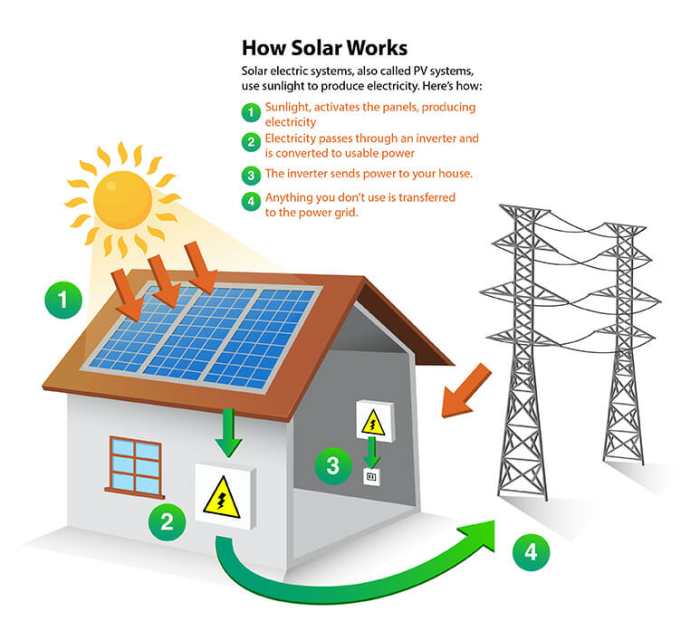
How community solar works is a fascinating topic, offering a pathway to cleaner energy for more people. It’s essentially a shared solar resource, allowing homeowners to benefit from solar power without needing their own rooftop installation. This system often involves a developer, investors, and community members working together to build and manage a solar farm, with electricity generated shared among participants.
Crucially, it’s distinct from traditional rooftop solar, presenting unique benefits and considerations.
This comprehensive guide delves into the intricate workings of community solar, exploring everything from project development and participant responsibilities to the environmental and economic advantages. We’ll examine the infrastructure, the potential for energy independence, and even address common concerns, providing a complete picture of this evolving renewable energy sector.
Introduction to Community Solar
Community solar is a clean energy solution that allows individuals and businesses to participate in solar energy generation without installing solar panels on their own rooftops. It leverages the power of shared resources, where multiple participants collectively invest in a larger solar array, and then receive credits for the electricity generated by that array. This approach is especially beneficial for those who lack rooftop space or are otherwise unable to install their own solar panels.The fundamental concept of community solar revolves around shared solar resources.
Instead of each household or business owning and maintaining their own solar panels, they contribute to a larger, centralized solar facility. This facility then generates clean energy, and the electricity produced is distributed among the participants based on their contracted agreements. This shared model is more cost-effective for smaller consumers and often involves partnerships between developers, installers, and community members.
Community Solar vs. Traditional Rooftop Solar
Community solar differs significantly from traditional rooftop solar in several key aspects. Rooftop solar involves installing panels directly on a property’s roof, allowing the homeowner or business owner to directly harness the sun’s energy. In contrast, community solar involves investing in a shared solar facility, often located in a designated area. Participants receive credits for the electricity produced by the community solar array, rather than generating electricity directly.
This shared model offers flexibility and accessibility to those without suitable rooftops or sufficient space.
Comparison of Community and Rooftop Solar
The following table Artikels the key differences between community and rooftop solar installations, considering cost, installation, and maintenance.
| Feature | Community Solar | Rooftop Solar |
|---|---|---|
| Cost | Lower initial investment for smaller-scale participants. Potential for lower long-term electricity costs through negotiated rates. However, ongoing administrative costs may exist. | Higher initial investment due to panel and installation costs. Potential for long-term savings in electricity bills. |
| Installation | Installation is handled by the community solar project developer. No on-site installation is required for the participant. | Requires professional installation on the participant’s property. This process involves permitting, inspections, and specialized expertise. |
| Maintenance | Maintenance is handled by the community solar project developer. Participants do not need to perform any maintenance. | Participants are responsible for routine maintenance, such as cleaning panels and checking connections. |
| Space Requirements | No on-site space requirements for the participant. | Requires sufficient roof space for panel installation. |
| Accessibility | Accessible to those without suitable rooftop space or sufficient roof area. | Limited by the availability of suitable roof space. |
“Community solar provides a cost-effective and accessible pathway to renewable energy, especially for those who may not be able to install solar panels on their own property.”
How Community Solar Projects are Developed

Community solar projects, offering clean energy access to diverse groups, are meticulously planned and executed. This involves a collaborative effort among developers, investors, and community members, navigating various stages from initial concept to final implementation. The process, while complex, ultimately benefits both the environment and local economies.Community solar projects don’t just spring up overnight. They require careful planning, securing funding, and obtaining necessary approvals.
Community solar is a fantastic way to get clean energy without needing your own rooftop panels. Essentially, a group of people pool their resources to invest in a solar array, and then share the generated electricity. It’s a great way to support sustainable energy and potentially save money on your electricity bills. Speaking of saving, did you know you can get a free handlift patch with any purchase of a value pack at sio beauty?
get a free handlift patch with any purchase of a value pack at sio beauty. This is a win-win for your skin and your wallet! While it might not directly involve solar panels, it’s all about community and supporting local businesses. And to return to the topic, community solar benefits the whole community by reducing our reliance on fossil fuels.
This detailed look at the development process highlights the crucial steps involved and the vital roles of all stakeholders.
Project Initiation and Feasibility Studies
A community solar project begins with an idea and a feasibility study. This study assesses the potential of the site, including solar irradiance levels, land availability, and permitting challenges. Factors such as zoning regulations, environmental impact assessments, and grid connection capacity are all evaluated to ensure the project’s viability. These studies are essential to understand the project’s economic and technical viability.
Securing Funding and Partnerships
Securing funding is a critical step in developing a community solar project. Developers often seek investors, including institutional investors, private equity firms, or even community funds. Partnerships with local governments or community organizations can also be crucial to gain support and resources. Investors assess the project’s financial projections, risk factors, and potential return on investment (ROI).
Site Selection and Acquisition
The selection of a suitable site is paramount. Ideal locations maximize solar energy production while minimizing environmental impact and permitting hurdles. Factors like land availability, property ownership, and proximity to the grid are considered. Acquisition of the land often involves negotiations with landowners and securing necessary easements.
Permitting and Approvals
Obtaining the necessary permits and approvals is a lengthy and complex process. This involves navigating local regulations, environmental assessments, and grid connection agreements. Thorough documentation and compliance with local codes are crucial. Community input and engagement are vital throughout this stage to address concerns and gain support.
System Design and Engineering
The design phase entails the technical specifications of the solar array. This includes the type of solar panels, inverters, and other components. Considerations for maximizing energy output, minimizing maintenance costs, and ensuring safety are critical. A thorough engineering study ensures the system is reliable and efficient.
Construction and Installation
The construction phase involves the physical assembly of the solar array. Qualified contractors and installers are hired to execute the work. Safety protocols are strictly adhered to during this stage. Detailed project plans and meticulous quality control are essential to ensure the project is built according to specifications.
Grid Connection and Testing
The grid connection process ensures the solar array is properly integrated into the local electricity grid. Testing is conducted to verify the system’s performance and ensure compliance with grid codes. This stage requires coordination with local utility companies.
Project Commissioning and Operations
After successful testing, the project is commissioned. This includes final inspections and the transfer of ownership. Operational procedures are established, and maintenance schedules are set. The community solar project is now generating clean energy and contributing to the local energy supply.
Environmental Benefits of Community Solar
Community solar projects play a significant role in reducing reliance on fossil fuels, lowering carbon emissions, and promoting renewable energy sources. These projects also provide economic benefits to the community through job creation and increased energy independence.
Benefits and Advantages of Community Solar
Community solar is more than just a trend; it’s a powerful way for homeowners to embrace renewable energy and reap numerous benefits. It offers a pathway to a cleaner energy future while also providing attractive financial incentives and potential savings. This approach to solar power isn’t limited to large-scale installations; it’s a community effort that can empower individuals to contribute to a sustainable energy landscape.
Key Advantages for Homeowners
Homeowners participating in community solar projects often find a compelling blend of environmental responsibility and financial advantages. They can support renewable energy initiatives without the significant upfront investment required for a rooftop solar system. This shared approach often lowers the cost per watt for each participant, making it an accessible option for a broader range of households. The savings are substantial and can include reduced electricity bills and the opportunity to participate in a sustainable energy project.
Financial Incentives and Tax Credits
Various financial incentives and tax credits can further enhance the attractiveness of community solar. These programs can vary by location and jurisdiction, so it’s crucial to research the specific incentives available in your area. Some programs may offer tax credits or rebates for the installation or participation. Understanding these incentives is key to maximizing the financial advantages of community solar.
Potential for Energy Savings
Community solar participation can lead to significant energy savings for homeowners. The amount of savings depends on factors like electricity rates, the size of the participating system, and the homeowner’s energy consumption patterns. For example, a household that uses a substantial amount of electricity during peak hours might see substantial savings as they benefit from the solar power generated during peak sun hours.
The energy savings can translate into reduced monthly electricity bills.
Comparison with Other Renewable Energy Options
Compared to other renewable energy options, community solar offers a unique combination of affordability, accessibility, and community involvement. While individual rooftop solar installations are popular, they require a significant upfront investment and may not be feasible for all homeowners. Community solar provides a more accessible path to renewable energy, making it a viable alternative for those seeking to reduce their carbon footprint without significant upfront capital expenditure.
Furthermore, community solar projects are often designed to serve a larger number of participants, potentially reducing the per-kilowatt cost for each participant.
Summary of Financial and Environmental Benefits
| Benefit | Description |
|---|---|
| Financial | Reduced electricity bills, potentially substantial savings, access to financial incentives, and tax credits. |
| Environmental | Reduced carbon footprint, support for renewable energy, and contribution to a cleaner energy future. |
Participant Responsibilities and Obligations
Joining a community solar project involves specific responsibilities and obligations for homeowners. Understanding these commitments is crucial for a smooth and successful experience. These obligations ensure the project functions efficiently and all participants fulfill their agreed-upon roles. Knowing your responsibilities and the associated legal frameworks allows for a more informed decision-making process.
Participant Responsibilities
Homeowners participating in community solar projects typically have responsibilities that align with their agreement. These responsibilities often include consistent payment of fees, adherence to the project’s rules, and communication with the project administrators. This proactive approach ensures a functioning system for all participants.
Contractual Agreements and Responsibilities
The contractual agreement is the cornerstone of a community solar project. It Artikels the terms of participation, including payment schedules, project maintenance, and dispute resolution procedures. This document defines the rights and obligations of each party. Understanding these details is paramount for avoiding misunderstandings and ensuring a positive experience. A well-defined agreement fosters transparency and trust between all parties.
Potential Risks and Liabilities
While community solar projects are generally considered safe and reliable, potential risks exist. These might include issues with the project’s performance, financial difficulties of the project developers, or unforeseen circumstances. These potential risks are Artikeld in the agreement and discussed with project participants. Having a thorough understanding of the agreement and the potential risks is essential for informed decision-making.
Common Questions and Answers Regarding Participant Obligations
- What are the payment terms for participating in a community solar project? Payment terms are detailed in the contract, and usually involve a fixed monthly fee based on the agreed-upon energy production. This fee is often determined by the amount of electricity the participant receives from the project.
- What happens if the community solar project experiences unexpected maintenance issues? The agreement typically Artikels procedures for handling maintenance issues. This may involve temporary reductions in energy production or other compensatory measures Artikeld in the agreement.
- What are the procedures for resolving disputes between participants and the project developer? The agreement usually includes a dispute resolution process, often starting with mediation and escalating to arbitration if necessary. This framework helps in navigating potential conflicts.
- How do I ensure that my rights as a participant are protected? Understanding the contract and related documents is crucial. Regular communication with the project administrators is vital to stay informed about any changes or developments. Reviewing and understanding the legal framework of community solar in your jurisdiction can help you ensure your rights are protected.
Legal and Regulatory Framework
Community solar projects operate within a specific legal and regulatory framework. This framework varies by jurisdiction, with regulations governing project development, permitting, and participant obligations. Understanding the legal and regulatory requirements of your jurisdiction is critical. This helps ensure compliance with local laws and regulations and allows for a transparent and compliant operation of the project.
Infrastructure and Technology Involved
Community solar projects aren’t just about sunlight; they’re about a complex interplay of technology and infrastructure. Understanding the technical underpinnings is crucial to appreciating the efficiency and reliability of these projects. From the solar panels themselves to the grid connections, every component plays a vital role in harnessing the power of the sun and delivering it to homes and businesses.
Technical Aspects of Community Solar Systems
Community solar projects rely on a sophisticated network of components working in harmony. Solar panels convert sunlight into electricity, but this electricity needs to be efficiently managed and delivered to the grid. Transformers step up the voltage, while inverters transform the direct current (DC) electricity generated by the panels into alternating current (AC) electricity that the grid can use.
Proper grid connections are paramount to ensuring safe and reliable power transfer.
Roles of Inverters, Transformers, and Grid Connections
Inverters are the heart of the solar power conversion process. They convert the DC electricity produced by the solar panels into AC electricity, which is the standard form used in homes and businesses. Different types of inverters exist, each with varying capabilities in terms of power handling and efficiency. High-efficiency inverters reduce energy losses during conversion.Transformers are essential for stepping up the voltage of the generated electricity.
The voltage needs to be high enough to travel efficiently through the power lines to reach the grid. Without transformers, the electricity would lose too much energy during transmission.Grid connections are critical infrastructure for community solar projects. These connections ensure that the electricity generated by the solar panels flows safely and reliably to the grid. They must be designed to handle the fluctuating nature of solar power generation and meet safety standards for electrical transmission.
Importance of Grid Stability and Energy Management
Maintaining grid stability is crucial for community solar projects. Solar power generation is intermittent, dependent on sunlight. Therefore, energy storage solutions and intelligent grid management systems are necessary to ensure consistent power supply. Smart grids, incorporating advanced monitoring and control systems, can optimize energy flow, balancing the intermittent nature of solar generation with the needs of the electrical grid.
Modern systems can even predict and adjust for weather changes and other fluctuations.
Schematic Diagram of a Typical Community Solar System
A typical community solar system includes several key components:
- Solar Panels: These panels are arranged in arrays, maximizing sunlight capture. They convert sunlight directly into electricity.
- Inverters: These devices convert the DC electricity from the panels into AC electricity usable by the grid.
- Transformers: These components increase the voltage of the electricity for efficient transmission through the grid.
- Grid Connection: This ensures safe and reliable power transfer to the grid. It often includes protective equipment and monitoring devices.
- Monitoring and Control Systems: These systems monitor the performance of the entire system, ensuring efficient operation and allowing for adjustments based on real-time data.
The diagram below provides a visual representation of these interconnected components.[Imagine a simple diagram here showing the above-listed components connected in a logical order, starting from solar panels and ending with the grid connection. The diagram should clearly label each component.]
Types of Solar Panels Used in These Projects
Various types of solar panels are used in community solar projects, each with its own performance characteristics and cost. Commonly used types include monocrystalline, polycrystalline, and thin-film panels. Monocrystalline panels generally offer the highest efficiency, while polycrystalline panels are a more cost-effective alternative. Thin-film panels, often using amorphous silicon, are another option, though they might have lower efficiency.
The choice of panel type depends on factors like budget, project size, and desired efficiency.
- Monocrystalline: These panels are known for their high efficiency, typically around 18-22% efficiency, and are commonly used in high-efficiency projects where maximizing output is a priority.
- Polycrystalline: These panels are more affordable than monocrystalline panels, and while their efficiency (typically 15-17%) is lower, they still provide a good balance between cost and performance.
- Thin-Film: These panels use thin layers of photovoltaic materials, making them potentially more flexible and lightweight. However, their efficiency is generally lower (typically under 10%) than traditional panels.
Community Solar and Energy Independence
Community solar empowers communities to take control of their energy future, fostering a sense of local ownership and reducing reliance on centralized power grids. This localized approach offers a tangible path towards energy independence, promoting sustainability, and reducing environmental impact. It’s a powerful tool for achieving greater resilience in the face of fluctuating energy costs and potential grid disruptions.Local communities gain a degree of energy self-sufficiency by participating in community solar projects.
This shift toward distributed generation of renewable energy strengthens local infrastructure and fosters economic development within the community.
Impact on Local Electricity Grids
Community solar projects, by their nature, distribute generation across a wider geographic area. This distribution helps to alleviate pressure on the existing electricity grid, particularly during peak demand periods. The reduced load on the grid can improve grid stability and reliability. Furthermore, the integration of renewable energy sources, such as solar, into the grid can lead to a more resilient and sustainable energy system.
Contribution to a Sustainable Energy Future
Community solar projects are a vital component of a sustainable energy future. By increasing the use of renewable energy, these projects help reduce carbon emissions and mitigate the effects of climate change. The transition to a more sustainable energy system is achievable through community-based initiatives, which directly contribute to environmental protection. These initiatives have a significant impact on the environment, contributing to a more sustainable future.
Energy Production Capacity of Community Solar Projects, How community solar works
The energy production capacity of a community solar project varies significantly based on several factors, including the size of the project, the solar panel technology used, and the amount of sunlight received in the area. Projects can range from small-scale initiatives to larger-scale developments that can generate substantial amounts of clean energy. Data on energy production is often project-specific and not readily available in aggregated reports, but individual project details are available upon request from the developers or project managers.
Community solar is a fantastic way to get clean energy, even if you don’t have space for your own panels. It essentially lets you invest in a shared solar array, benefiting from the clean energy it produces. Just like learning about the features of the Honor 8 in Europe, there are several key things to understand about community solar programs 5 things know about honor 8 europe , and this applies to how the system functions.
Ultimately, it’s a sustainable way to support the grid and lower your carbon footprint, while potentially saving you money on your electricity bills.
Comparison of Energy Output
| Project Name | Location | Estimated Annual Energy Output (kWh) | Number of Solar Panels |
|---|---|---|---|
| Sunnyside Community Solar Farm | Springfield, IL | 1,500,000 | 5,000 |
| Green Valley Solar Project | Los Angeles, CA | 2,200,000 | 7,000 |
| Northstar Solar Community | Denver, CO | 1,800,000 | 6,000 |
Note: Data for specific projects is illustrative and may not represent all community solar projects. Actual energy output can vary based on weather conditions and other factors.
Community Solar and Environmental Impact
Community solar projects are more than just a way to access clean energy; they represent a significant step towards a healthier planet. By shifting from reliance on fossil fuels to harnessing the power of the sun, these initiatives dramatically reduce our carbon footprint and pave the way for a sustainable energy future. This section explores the profound environmental benefits of community solar, emphasizing its role in mitigating climate change.
Environmental Benefits of Community Solar
Community solar farms, powered by photovoltaic (PV) panels, drastically reduce greenhouse gas emissions compared to traditional electricity generation. This shift away from fossil fuels directly contributes to cleaner air and a healthier environment. Reduced reliance on coal, natural gas, and other polluting energy sources translates to a significant decrease in harmful pollutants released into the atmosphere.
Reduction in Carbon Emissions
The environmental impact of community solar is profound, particularly in its reduction of carbon emissions. Each kilowatt-hour (kWh) of electricity generated from a community solar project avoids the emission of a certain amount of carbon dioxide. For example, if a community solar farm produces 1 million kWh annually, it prevents the emission of a substantial amount of CO2, equivalent to the amount of CO2 absorbed by a certain number of trees over a year.
This significant reduction contributes to cleaner air and a healthier environment for all.
Impact on Renewable Energy Sources
Community solar projects bolster the nation’s transition towards a more sustainable energy future by increasing the utilization of renewable energy sources. As more solar projects are developed and deployed, the percentage of electricity generated from renewable sources, like solar, will increase. This transition strengthens the energy independence of communities and reduces reliance on volatile fossil fuel markets. Community solar plays a crucial role in diversifying energy portfolios, reducing the need for power plants that rely on non-renewable resources.
Comparison of Community Solar’s Environmental Footprint to Traditional Energy Sources
Community solar significantly outperforms traditional energy sources in terms of environmental impact. A comparison of the carbon footprint of community solar versus, for instance, a coal-fired power plant reveals a stark difference. Community solar projects, by their very nature, generate electricity with minimal to no greenhouse gas emissions, while coal plants release substantial amounts of carbon dioxide and other pollutants into the atmosphere.
This comparison highlights the significant advantage of community solar in reducing the overall environmental burden of electricity generation.
Role of Community Solar in Mitigating Climate Change
Community solar plays a critical role in mitigating climate change by directly reducing greenhouse gas emissions. By promoting solar energy, these projects contribute to the global effort to limit the rise in global temperatures. The transition to renewable energy sources, such as solar, is crucial in reducing the harmful effects of climate change, including rising sea levels, extreme weather events, and disruptions to ecosystems.
The adoption of community solar projects is a key step towards achieving a more sustainable and resilient energy future.
Community Solar and Economic Development
Community solar projects aren’t just about generating clean energy; they’re also powerful catalysts for local economic growth. By bringing solar power to communities, these projects create jobs, boost property values, and increase tax revenues, ultimately strengthening the local economy. This economic impact ripples through various sectors, from construction and installation to maintenance and support services.These projects foster a positive feedback loop, encouraging further investment and development within the community.
The long-term benefits extend beyond the initial installation phase, providing a sustainable source of economic activity for years to come.
Community solar is a fantastic way to get clean energy without needing your own rooftop setup. Essentially, you buy shares in a solar project, and the generated electricity is fed into the grid, which you can then use. While this is happening, the European Parliament is wrestling with regulations for radio equipment, including the implications for iPhone charging and the future of Lightning connectors, as discussed in this article about the European Parliament iPhone USB-C radio equipment directive lightning rip.
This means, potentially, changes to how we connect our devices and potentially impacting the sustainability of solar power generation in the future, but community solar projects still offer a viable and environmentally friendly way to generate power.
Economic Benefits for Local Communities
Community solar projects stimulate economic activity in numerous ways. From the initial construction phase to ongoing maintenance, these projects create employment opportunities for local residents. Furthermore, the increased tax revenues generated from these projects can be reinvested in community infrastructure, improving schools, parks, and other essential services. This reinvestment creates a cycle of growth and prosperity for the community.
Job Creation Opportunities
The development and operation of community solar projects create numerous jobs across various sectors. Construction workers are needed for the initial installation, and maintenance personnel are required to ensure the system’s smooth operation. Furthermore, skilled labor, such as electricians and engineers, are needed for design and installation. Specialized roles, like project managers and administrators, also contribute to the workforce.
These jobs often involve training and skill development, benefiting the community’s workforce in the long term.
- Construction workers: These workers are needed for installation, construction, and setup. Depending on the size of the project, the number of construction workers needed can range from a few dozen to hundreds. They contribute to the local economy, spending money on goods and services in the area.
- Maintenance personnel: Ongoing maintenance is crucial for the longevity and efficiency of solar systems. This creates a need for skilled maintenance technicians to ensure the continued functionality of the system.
- Electricians and engineers: These professionals are crucial for designing and installing the solar systems. Their expertise is vital to the success and safety of the project.
- Project managers and administrators: These individuals manage the project’s timeline, budget, and personnel. Their skills are essential for smooth project execution.
Stimulating Local Economies
Community solar projects can significantly stimulate local economies by creating a demand for goods and services within the community. For instance, construction companies, material suppliers, and local businesses will benefit from the increased activity. The influx of spending from workers and project participants will have a positive ripple effect on local businesses. This increase in economic activity fosters a more robust and vibrant local economy.
Impact on Property Values and Tax Revenues
The presence of community solar projects can positively impact property values in the surrounding areas. Increased property values lead to higher tax revenues for local governments, allowing for investment in essential community services. Furthermore, the generation of clean energy and the creation of jobs contribute to a more desirable community environment, increasing property values.
Case Study: [Example Community Solar Project Name]
The [Example Community Solar Project Name] project, located in [Location], demonstrated significant economic benefits for the community. The project created over [Number] jobs during the construction phase and generated an estimated [Amount] in tax revenue for the local government over the first [Number] years of operation. The project also contributed to the creation of a local solar energy workforce.
Furthermore, it facilitated the development of local businesses by creating a demand for related goods and services. The positive impact of the project was evident in increased property values in the surrounding area. This case study showcases the potential for community solar to contribute to local economic development.
Addressing Common Concerns Regarding Community Solar

Community solar, while offering numerous benefits, often faces skepticism. Addressing these concerns head-on is crucial for fostering wider adoption and ensuring the success of this renewable energy model. This section will explore common reservations about community solar, presenting solutions and emphasizing the advantages of this innovative approach.Many individuals and communities are initially hesitant about community solar due to a lack of understanding about the process.
This often leads to misconceptions about costs, participation, and the overall impact on the community. This section will clarify these doubts and promote a more informed perspective on community solar.
Common Concerns and Solutions
Many potential participants express concerns about the financial implications of community solar. These concerns often stem from uncertainties about the cost of installation, maintenance, and long-term financial obligations. The upfront investment can seem daunting, but several factors can mitigate these financial concerns. Many programs offer attractive incentives and financing options to reduce the financial burden on participants.
Furthermore, the long-term energy savings from community solar often outweigh the initial investment. Participants can expect a reduced electricity bill, which offsets the cost of the investment over time.
Potential Obstacles and How to Overcome Them
One potential obstacle is the lack of awareness and understanding about community solar. Educational programs and outreach initiatives can effectively address this. Open forums, workshops, and informative materials can provide clarity on the benefits and practicalities of participating in a community solar project. Community solar advocates and project developers can play a key role in educating the public and building trust.
Frequently Asked Questions (FAQs)
- What if the solar project doesn’t perform as expected? Community solar projects are meticulously designed and monitored to ensure optimal performance. Experienced project developers and maintenance teams are typically involved to minimize potential issues and ensure long-term viability. The project’s design incorporates factors such as weather patterns and system efficiency to minimize the risk of underperformance.
- How does community solar impact property values? Studies have shown that solar installations, including community solar, generally do not negatively affect property values. In fact, in many cases, the presence of renewable energy infrastructure can even enhance property values, as it reflects environmentally conscious practices and modern sustainable initiatives.
- What happens if I move from my home? This depends on the specific community solar program and the contractual agreements. Some programs allow for the transfer of ownership to new residents, while others require the participant to sell their portion of the system or forfeit their benefits. The program details should Artikel the transfer procedures.
Government Policies and Support
Government policies play a crucial role in supporting community solar initiatives. Incentives such as tax credits, rebates, and streamlined permitting processes can significantly reduce the financial barriers for both developers and participants. These policies foster the growth of the community solar sector and promote a more sustainable energy future. Furthermore, policies that incentivize the use of renewable energy can create a supportive environment for community solar projects to thrive.
For instance, net metering policies can help to offset the costs of solar power generation.
Future of Community Solar: How Community Solar Works
Community solar is rapidly evolving, driven by growing demand for renewable energy and government incentives. The future of community solar projects hinges on continued innovation, addressing potential challenges, and expanding access to clean energy for all. This sector is poised for significant growth, promising a brighter, more sustainable energy future.
Emerging Technologies and Innovations
The integration of advanced technologies is transforming community solar projects. Smart inverters and energy storage systems are enhancing efficiency and grid stability. These technologies enable better management of energy flow, optimizing the output and reliability of the systems. Predictive analytics and machine learning are becoming increasingly important in optimizing the performance of community solar installations, leading to improved energy production and cost savings.
Potential for Growth and Expansion
Community solar projects are experiencing substantial growth, driven by rising awareness of climate change and a desire for clean energy solutions. Further growth depends on ongoing support from policymakers, including favorable regulations and financial incentives. The expanding interest in community solar is evident in the growing number of projects being developed across various states. This trend is expected to continue, with increased demand for renewable energy sources in the near future.
Examples of Evolving Community Solar
Community solar projects are adapting to changing needs. The inclusion of more diverse ownership models, such as co-ops and community-based organizations, allows for broader participation. Projects are also incorporating energy storage, enhancing grid resilience and providing a backup power source during outages. Integration with electric vehicle charging stations is another emerging trend, allowing community members to use the solar energy for charging their vehicles.
Long-Term Implications of Community Solar
The long-term implications of community solar are profound. This approach fosters a more sustainable energy landscape, promoting energy independence and environmental responsibility. The widespread adoption of community solar has the potential to reduce carbon emissions, mitigate the impacts of climate change, and create new economic opportunities in the renewable energy sector. This can lead to a decrease in reliance on fossil fuels, contributing to a more resilient and sustainable energy future.
Final Summary
In conclusion, community solar offers a compelling solution for individuals and communities seeking cleaner energy and economic advantages. It’s a model that leverages shared resources to create a sustainable energy future, empowering more people to participate in renewable energy. From the initial project development to the long-term implications, community solar is poised to play a vital role in our transition to a greener energy landscape.
We’ve explored the various aspects, and it’s clear that community solar is a multifaceted and promising approach to energy independence and environmental responsibility.