

FCC unveils rules for clear broadband labels to help consumers comparison shop, marking a significant step toward greater transparency and consumer empowerment in the broadband market. These new rules aim to make it easier for consumers to understand and compare different broadband plans, shedding light on critical factors like data caps, speeds, and pricing. This will hopefully lead to more informed decisions and potentially more competitive pricing.
The new labels will be designed with specific formatting guidelines, including font sizes, color schemes, and layout, all aiming for a user-friendly approach. Tables and visual aids will further assist consumers in comparing various plans from different providers, making the process easier and less overwhelming.
Introduction to Broadband Label Rules: Fcc Unveils Rules For Clear Broadband Labels To Help Consumers Comparison Shop
The Federal Communications Commission (FCC) has unveiled new rules for broadband service providers, mandating clear and consistent labeling to help consumers compare plans and choose the best option for their needs. These rules aim to address the often confusing array of options available, promoting transparency and empowering consumers to make informed decisions. The new labeling requirements will significantly impact the broadband market, encouraging competition and fostering better value for consumers.These regulations are designed to increase transparency in the broadband market.
Consumers will be able to more easily compare different plans, understand the speeds and data allowances they are purchasing, and find providers offering the best value. This transparency will encourage competition among providers, leading to more competitive pricing and better service offerings for consumers.
The FCC’s new rules for clear broadband labels are a game-changer for consumers, finally allowing them to easily compare plans. While the tech world is buzzing about whether the Pixel Watch’s older hardware holds it back, a question that’s been pondered by many, this new transparency in broadband options is equally crucial. Ultimately, consumers can now make informed decisions about their internet service, just like they can research and decide if the does pixel watch old hardware matter question affects their choice of a smart watch.
This empowers consumers to find the best value for their money, a significant step forward in the digital age.
Summary of the FCC’s Broadband Labeling Rules
The FCC’s new rules mandate that broadband providers include specific information on their service plans on labels or marketing materials. This information will be crucial in helping consumers understand the details of each plan and compare them side-by-side. The rules aim to provide a standardized way for consumers to evaluate and compare different options.
Key Components of the Labeling Requirements
The FCC’s new labeling requirements are comprehensive and designed to offer consumers detailed information. This information includes a standardized format to ensure that key elements of the plan are presented in a clear, comparable manner. The FCC aims to address the issue of varying and often confusing terminology used by providers.
- Download Speed: The labeling must clearly specify the advertised download speed, using a standardized unit of measurement (e.g., megabits per second). This will prevent misleading claims and ensure that consumers understand the actual download speeds they can expect.
- Upload Speed: Similar to download speed, the labeling must specify the upload speed, again using a standardized unit of measurement.
- Data Allowance: The monthly data allowance must be clearly stated in gigabytes (GB) or terabytes (TB). The labeling should also specify if the data allowance is capped or unlimited, and whether there are overage fees.
- Service Area: The service area covered by the plan must be clearly defined, avoiding vague descriptions. This will enable consumers to determine if the service is available in their location.
- Pricing: The pricing for the service, including any additional fees, must be clearly stated. This will allow consumers to compare pricing and avoid hidden costs.
Table of Key Information Regarding FCC’s New Broadband Labeling Rules
| Category | Required Element | Formatting Guidelines |
|---|---|---|
| Download Speed | Advertised download speed (e.g., 100 Mbps) | Use standardized unit (Mbps) and avoid vague terms like “up to” or “high speed”. |
| Upload Speed | Advertised upload speed (e.g., 20 Mbps) | Use standardized unit (Mbps) and avoid vague terms like “up to” or “high speed”. |
| Data Allowance | Monthly data allowance (e.g., 100 GB) | Specify unit (GB or TB), indicate cap or unlimited, and clearly state overage fees (if any). |
| Service Area | Precise geographic coverage | Avoid vague descriptions; use clear maps or descriptions. |
| Pricing | Total monthly cost and any additional fees | Clearly state all fees and avoid hidden charges. |
Consumer Understanding and Comparison
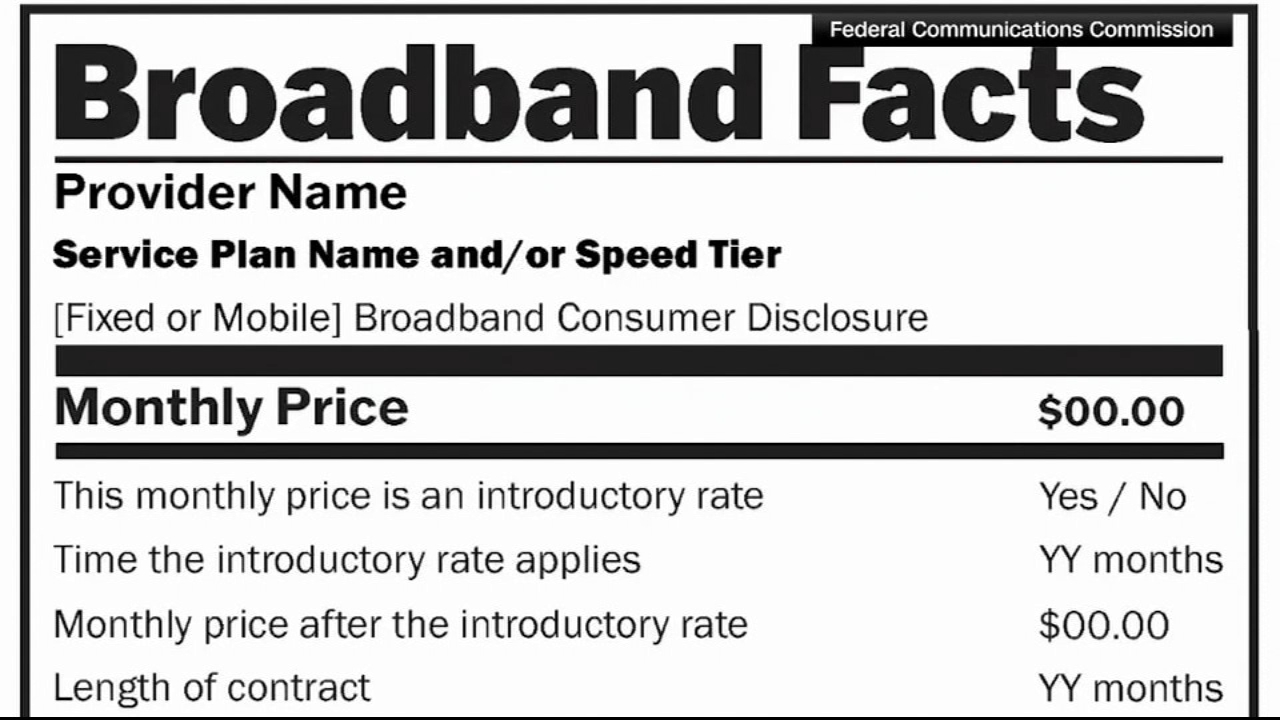
The FCC’s new broadband labeling rules promise a significant improvement in consumer understanding and the ability to compare different internet service providers. These rules are designed to make it easier for consumers to navigate the often confusing world of broadband plans, empowering them to make informed decisions about their internet service. By standardizing the way information is presented, consumers can more readily see the true value proposition of each plan.These standardized labels will clearly highlight key features of each plan, allowing consumers to directly compare aspects like data caps, download speeds, upload speeds, and pricing.
This transparency is crucial for consumers to understand the specific benefits and drawbacks of each option. This will help avoid the “hidden fees” and misleading marketing tactics that often confuse customers.
How Consumers Will Use the Labels, Fcc unveils rules for clear broadband labels to help consumers comparison shop
Consumers will use the labels to directly compare different broadband plans, focusing on essential elements. They will easily scan the labels to identify the key features of each plan and compare them side-by-side. This process will enable them to quickly evaluate the value offered by each provider.
Examples of Comparative Analysis
The standardized labeling will facilitate comparison in several ways. For example, data caps will be clearly displayed in megabytes or gigabytes, making it straightforward to understand the amount of data each plan allows. Download and upload speeds will be presented in megabits per second (Mbps), providing a clear understanding of the internet performance each plan offers. Pricing will be presented in a standardized format, showing monthly fees and any additional charges, making it easier to compare costs.
Potential Challenges in Interpretation
Despite the clear intention of the labeling rules, some challenges may still arise. Consumers might struggle with understanding technical specifications, such as different units of measurement for data caps or speeds. Also, complex pricing structures with multiple tiers or hidden fees can still be problematic, even with standardized labeling. It is important for providers to clearly explain these details and not use technical jargon.
Ensuring Clarity and Avoiding Confusion
Clear labeling is paramount to preventing confusion. Providers should avoid using vague language and should present information in a straightforward manner. Simple, easy-to-understand units of measurement, along with clear explanations of any additional charges, will reduce consumer confusion. Visual aids and graphics could also be helpful in simplifying complex information.
Example Table of Broadband Plans
| Provider | Plan Name | Download Speed (Mbps) | Upload Speed (Mbps) | Data Cap (GB) | Monthly Price ($) |
|---|---|---|---|---|---|
| FastNet | Basic | 100 | 20 | 100 | 50 |
| FastNet | Premium | 200 | 50 | 500 | 80 |
| SpeedyWeb | Standard | 150 | 30 | 200 | 65 |
| SpeedyWeb | Plus | 300 | 60 | 1000 | 100 |
The table above illustrates how the new labeling will help consumers compare broadband plans. Consumers can readily see the differences in speed, data allowance, and price, allowing them to make informed choices. Notice the standardized presentation of key features, which aids comparison.
Impact on Providers
The FCC’s new broadband labeling rules represent a significant shift in how providers must present their services to consumers. This increased transparency is designed to empower consumers with the information they need to make informed choices, but it also necessitates adjustments from providers. This shift will affect everything from pricing strategies to marketing campaigns, and understanding the implications is crucial for all stakeholders.Providers will need to meticulously review their current offerings and ensure all advertised plans align with the new labeling requirements.
This means a thorough analysis of data packages, speeds, and any limitations or exclusions associated with each plan. The rules are clear, but the implementation process can be complex, demanding significant resources.
Adjustments Required by Providers
Providers will need to revamp their marketing materials and online platforms to accurately reflect the new labels. This will require significant investment in updating websites, brochures, and any other promotional materials. They will also need to ensure their customer service representatives are well-versed in the new terminology and specifications.
The FCC’s new rules for clear broadband labels are a welcome step towards empowering consumers to compare and choose the best internet plans. It’s good to see the focus on transparency, which is often lacking in the tech world. Meanwhile, a recent development in the podcasting world is that Anchor co-founder Michael Mignano has left Spotify, a move that might have broader implications for the future of podcasting.
Hopefully, this increased transparency in the broadband market will translate to better deals and more options for everyone.
Potential Costs and Benefits
Implementing these new labeling requirements will undoubtedly incur costs. These costs include the expense of updating website and marketing materials, training personnel, and potentially re-evaluating pricing strategies. However, the benefits are likely to be substantial. Clearer, more standardized labeling can foster trust with consumers, potentially leading to increased sales and brand loyalty. It can also help in streamlining customer support and resolving issues more effectively.
Moreover, the increased transparency could create a level playing field, potentially minimizing the impact of aggressive marketing strategies.
Innovation in Plan Offerings
The clarity provided by the new labels may incentivize providers to innovate their offerings. Knowing consumers can easily compare plans, providers might be spurred to create more competitive packages that cater to specific needs and preferences. For instance, providers might introduce bundles with various features and services to differentiate their offerings, thereby attracting new customers. This increased clarity could also lead to more value-driven pricing, which benefits consumers.
Impact on Competition
The standardized labeling will, ideally, create a more level playing field for competition. This is because consumers will have a clearer understanding of the various options available, thereby reducing the reliance on potentially misleading marketing tactics. Providers who have been less transparent in their offerings may face a greater challenge in attracting and retaining customers. This may incentivize them to improve their plans to meet the new standards.
Provider Approaches to Compliance
| Provider Approach | Description | Potential Advantages | Potential Disadvantages |
|---|---|---|---|
| Proactive Compliance | Begin updating materials immediately, well in advance of the deadline. | Establishes a strong reputation for transparency, attracts early adopters, minimizes potential penalties. | Requires significant upfront investment and resources. |
| Reactive Compliance | Waiting until shortly before the deadline to make necessary updates. | Potentially lower immediate costs. | Increased risk of penalties, potential customer dissatisfaction, negative brand perception. |
| Phased Approach | Implementing changes in stages, focusing on high-impact areas first. | Manageable workload, allows for better resource allocation, potential for continuous improvement. | Potential for inconsistent messaging across different platforms, delays in full compliance. |
Long-Term Implications
The FCC’s new broadband labeling rules, aimed at empowering consumers to compare broadband plans, are poised to reshape the market in the long run. These regulations, by demanding transparency and clarity in service offerings, are likely to drive competition and innovation, ultimately benefiting consumers. The impact will extend beyond the immediate, impacting provider strategies and potentially even spurring wider adoption of similar standards across other industries.
Impact on Consumer Choice
These labeling rules are designed to empower consumers by providing them with the information they need to make informed decisions. Clearer labeling will lead to more transparent comparisons of speeds, data caps, and pricing structures. Consumers will have a greater ability to choose plans that best suit their needs and budgets. This transparency could encourage more consumers to switch providers in search of better value, which, in turn, could force providers to adjust their offerings and pricing.
For instance, if a provider is found to be charging substantially more for a service that offers comparable speeds and data, consumers may actively seek alternatives.
Provider Strategies and Innovation
The new labeling requirements will likely prompt providers to adjust their marketing and sales strategies. To remain competitive, providers will need to ensure their plans align with the clear and consistent labels, making sure they accurately represent their offerings. This could lead to a more competitive pricing environment as providers strive to present their services in a more favorable light.
Furthermore, providers might invest in improving their networks and services to deliver on the advertised speed and reliability, as this will become easier to verify for consumers.
Potential for Future Regulations
The success of these labeling rules could inspire further regulations in the broadband sector, potentially focusing on other areas of transparency. For instance, clearer information about network coverage and reliability could be required, leading to a more comprehensive understanding of the services being offered. This could be especially beneficial in areas with limited broadband access. Furthermore, ongoing evaluation of the labeling rules and their effectiveness could lead to refinements and adjustments to ensure ongoing consumer protection and fair market practices.
Wider Adoption in Other Industries
The successful implementation of these rules could serve as a model for other industries looking to increase transparency and consumer choice. The principles of clear and consistent labeling could be adapted to various sectors, including utilities, telecommunications, and even financial services. This would enhance consumer confidence and provide a level of fairness that benefits both consumers and providers.
Potential Long-Term Impacts of the FCC’s New Labeling Rules
| Aspect | Potential Positive Impact | Potential Negative Impact |
|---|---|---|
| Consumer Choice | Increased ability to compare plans, leading to better value and more informed decisions. | Potential for increased churn and customer dissatisfaction if providers fail to meet expectations. |
| Provider Strategies | Increased competitiveness, potential for innovation to meet consumer demands, and focus on service reliability. | Potential for increased marketing costs, and pressure to offer more attractive but potentially less profitable packages. |
| Market Dynamics | More transparent and efficient market, driving competition and innovation. | Potential for market consolidation if some providers struggle to adapt. |
| Future Regulations | Potential for further regulations to increase transparency in other sectors. | Potential for regulatory overreach or unintended consequences. |
| Wider Adoption | Increased transparency and consumer choice across various industries. | Potential for complexity and inconsistencies in implementation across different sectors. |
Visual Representation of Information
The new FCC broadband labeling rules aim to make it significantly easier for consumers to compare different internet service plans. A key aspect of this improvement is a standardized visual format that clearly displays essential information. This clear presentation ensures that consumers can readily grasp the key features of each plan, allowing for informed decisions.The visual format of the labels is designed to be highly accessible and user-friendly.
The FCC’s new rules for clear broadband labels are a great step towards helping consumers compare plans easily. It’s all about transparency, which is awesome. Meanwhile, did you know that Chrome has a new tool to boost your privacy? This new tool, detailed in chrome has new tool actually helps you guard your privacy , is a welcome addition to the digital landscape.
Ultimately, clear broadband labels and tools like this make it easier for everyone to make smart choices, empowering us all to navigate the digital world with more control and understanding.

Simplicity and clarity are paramount, minimizing any confusion that might arise from complex or overwhelming data. The focus is on presenting the essential information in a way that’s easily comparable.
Font Sizes, Colors, and Layout
The labels utilize a consistent font size and style for all critical data points, ensuring readability across different plans. A clear, easy-to-read font is chosen to enhance understanding. Color schemes are employed to highlight key features like download speeds, upload speeds, and price. For example, download speeds might be represented in a vibrant blue, while upload speeds are displayed in a contrasting green.
Pricing information might be presented in a distinct color to help consumers focus on the cost. The layout is strategically designed to ensure that all essential information is visible at a glance, with no clutter. This organized format promotes ease of comparison.
Illustrative Examples of Different Broadband Plans
To illustrate the new labeling rules, here are examples of different broadband plans:
- Plan A: This plan offers a baseline package, with a download speed of 100 Mbps, an upload speed of 20 Mbps, and a monthly cost of $50. The visual label will clearly display these figures in an easily digestible format, such as a table.
- Plan B: This plan offers an enhanced package, featuring a download speed of 200 Mbps, an upload speed of 20 Mbps, and a monthly cost of $75. This example demonstrates how the labels will highlight the increased speed and price difference.
- Plan C: This plan emphasizes high download and upload speeds, with 500 Mbps download and 50 Mbps upload speed, and a monthly cost of $100. This demonstrates the varying speeds and pricing available to consumers.
Structuring Information for Easy Understanding
The information within the label format is structured to facilitate easy comprehension. Essential details, like download and upload speeds, latency, and pricing, are grouped together for quick comparison. Clear labels accompany each data point, reducing any ambiguity. For instance, “Download Speed” is prominently displayed, and the corresponding value (e.g., 100 Mbps) is easily visible. This structured approach simplifies the comparison process.
Examples of Various Broadband Plans
To showcase the effectiveness of the labels in comparing plans, consider these examples:
- Fiber Optic vs. Cable: A fiber optic plan, with high download speeds, would be clearly differentiated from a cable plan, possibly with a slightly lower download speed but a lower price. The labels will highlight the key differences and enable a precise comparison.
- Symmetrical vs. Asymmetrical: A symmetrical plan (equal download and upload speeds) will be readily distinguishable from an asymmetrical plan (different download and upload speeds). This is critical for users who require fast upload speeds for video conferencing or online gaming.
- Contract vs. No-Contract Options: A plan with a contract might display a slightly lower monthly fee but a higher overall cost due to early termination fees. The labels will clearly delineate the total cost of ownership for each plan, allowing consumers to make informed decisions.
Hypothetical Broadband Label
| Feature | Plan A | Plan B | Plan C |
|---|---|---|---|
| Download Speed (Mbps) | 100 | 200 | 500 |
| Upload Speed (Mbps) | 20 | 20 | 50 |
| Monthly Cost ($) | 50 | 75 | 100 |
| Contract Length | 12 Months | No Contract | 12 Months |
This hypothetical table demonstrates how the new labels would clearly present different plans’ specifications, allowing for direct comparisons. The consistent formatting facilitates easy understanding and decision-making.
Addressing Consumer Concerns
The FCC’s new broadband labeling rules aim to empower consumers by providing clear, comparable information about internet service offerings. However, change often brings apprehension. Understanding potential consumer concerns is crucial to ensuring the rules’ success and fostering trust in the process. This section explores those concerns and proposes solutions to enhance consumer comprehension.
Potential Consumer Concerns
Consumers might find the new labeling system overwhelming. Complex technical terms, a deluge of data points, and the need to compare multiple providers can lead to confusion and frustration. Concerns about the accuracy and impartiality of the presented information are also valid. Additionally, some consumers might struggle to interpret the information effectively, especially those less familiar with technical specifications.
Finally, the lack of a readily available, standardized platform for comparing services might cause challenges.
Solutions to Address Consumer Concerns
Clear, concise language is paramount. Technical jargon should be minimized, and explanations should be readily accessible. The labels should prioritize user-friendly design, using visual aids and intuitive layouts to facilitate comprehension. An easily navigable format that allows for quick comparison across different providers is also essential. Employing simple, consistent units of measurement will greatly reduce the potential for misunderstanding.
Independent verification of data accuracy is vital to ensure consumer confidence.
Improving Label Clarity
The labels can be further improved by highlighting key features in bold or with contrasting colors. Using icons or visual representations for abstract data points can significantly enhance understanding. Color-coded sections, charts, and graphs could make comparing services across different providers easier. Creating a standardized comparison table template, readily available online, can assist consumers in comparing broadband plans across different providers, thus reducing the burden of manual data collation.
Additional Support for Consumers
Educational resources are essential. The FCC can develop user-friendly guides and tutorials explaining the new labeling format. Dedicated online resources, such as interactive comparison tools and FAQs, can answer consumer questions in real-time. Workshops and seminars to explain the labels in person would also provide valuable support. Collaboration with consumer advocacy groups and financial institutions could create a wider dissemination network for information, ensuring broader reach.
Table of Potential Consumer Concerns and Solutions
| Potential Consumer Concern | Possible Solution |
|---|---|
| Overwhelming amount of data | Prioritize key features, use clear and concise language, employ visual aids and intuitive layouts, and provide easy navigation. |
| Difficulty interpreting technical terms | Minimize technical jargon, provide explanations, use standardized units, and include visual representations. |
| Lack of clear comparison tools | Develop an easily navigable comparison table template, available online, to allow quick comparison across providers. |
| Concerns about accuracy and impartiality | Ensure independent verification of data accuracy and maintain transparency in the labeling process. |
| Limited understanding of the labels | Create user-friendly guides, tutorials, interactive comparison tools, FAQs, workshops, and seminars. |
Summary

In conclusion, the FCC’s new broadband labeling rules represent a substantial effort to empower consumers with the information needed to make informed choices. While challenges remain in ensuring complete clarity and understanding, these rules pave the way for a more transparent and competitive broadband market. The long-term implications are significant, potentially fostering innovation and fairer competition among providers.