
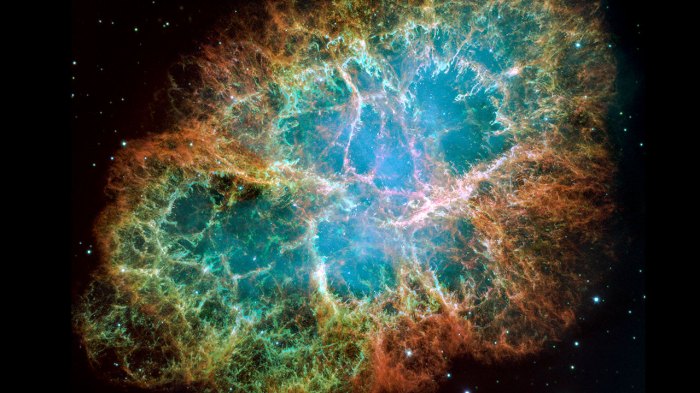
Dark energy universe expand mystery survey supernova unveils the secrets of the cosmos’s accelerating expansion. We’ll delve into the historical understanding of the expanding universe, exploring evidence like redshift and key discoveries. This journey takes us through the influence of dark energy, how supernovae are used to measure cosmic distances, and the ongoing mystery surrounding this enigmatic force.
From the expanding universe’s origins to the intricate methods used to detect dark energy, this exploration will illuminate the challenges and discoveries in understanding our universe’s fate. We’ll examine various survey techniques and models, providing insights into the accelerating expansion and the ongoing quest to unravel the enigma of dark energy.
The Expanding Universe
The universe isn’t static; it’s dynamic, constantly evolving and expanding. This expansion, a fundamental concept in modern cosmology, has been a subject of intense scientific investigation, leading to a profound understanding of the cosmos’s history and future. This exploration delves into the historical understanding, the evidence supporting this expansion, and the crucial concept of redshift, shedding light on the fascinating journey of our universe.The idea of an expanding universe wasn’t immediately accepted.
Early models often pictured a static, unchanging cosmos. However, meticulous observations and groundbreaking theories have revolutionized our perspective, revealing a universe in constant motion, stretching and evolving over billions of years.
Historical Understanding of Cosmic Expansion
Early cosmological models often assumed a static universe, a concept challenged by the observations and calculations of Edwin Hubble. These models struggled to explain the observed motions of galaxies and the distribution of matter across the vast cosmos. The understanding of the universe’s expansion is rooted in the shift from a static universe to one in constant motion.
Evidence Supporting Cosmic Expansion
The expansion of the universe is strongly supported by various observational pieces of evidence. One key piece of evidence is the redshift of distant galaxies. This redshift, a phenomenon where light from distant objects appears stretched towards the red end of the spectrum, indicates that these galaxies are moving away from us. The further away a galaxy is, the faster it’s receding.
This relationship, known as Hubble’s Law, is a cornerstone of modern cosmology.
Redshift and the Expanding Universe
Redshift, a phenomenon in which light from distant objects appears stretched to longer wavelengths, plays a crucial role in understanding the expanding universe. The stretching of light waves is directly related to the expansion of space itself. As space expands, the wavelengths of light traveling through it are stretched, leading to a shift towards the red end of the spectrum.
This redshift is directly proportional to the distance of the object, providing a crucial link between distance and recessional velocity.
Redshift (z) = (λobserved
λemitted) / λ emitted
This formula demonstrates the relationship between observed and emitted wavelengths of light, a key factor in measuring the expansion rate.
Timeline of Key Discoveries in Cosmic Expansion
Understanding the expansion of the universe is a journey through time, marked by significant discoveries and advancements.
The mystery of dark energy driving the universe’s expansion is being probed through surveys of supernovae. Meanwhile, recent reports highlight a concerning privacy leak related to broken Google Pixel phones, raising questions about the security of personal data. This vulnerability, detailed in a recent report at broken google pixel phone privacy leak , could potentially expose sensitive user information.
Regardless of these issues, the ongoing study of dark energy and its impact on the universe’s expansion continues to be fascinating.
- 1912: Vesto Slipher’s observations of galactic redshifts provided the initial clues about the motion of galaxies.
- 1929: Edwin Hubble’s groundbreaking work established the relationship between the distance and recessional velocity of galaxies, formulating Hubble’s Law. This relationship became a crucial cornerstone for understanding the expanding universe.
- 1920s-1930s: Debate about the nature of the universe, including the possibility of an expanding one, dominated the scientific community.
- 1998: The discovery of accelerating expansion of the universe by two independent teams (Supernova Cosmology Project and High-Z Supernova Search Team) revolutionized cosmology, leading to the concept of dark energy.
Comparison of Universe Expansion Models
Different models have been proposed to explain the expansion of the universe. These models differ in their assumptions about the nature of the universe’s constituents and their influence on the expansion rate.
| Model | Key Assumptions | Expansion Behavior |
|---|---|---|
| Static Universe | The universe is unchanging in size and structure. | Constant size and structure |
| Expanding Universe (Hubble’s Law) | Galaxies are moving away from each other. | Expansion driven by initial velocity and distance |
| Accelerating Expansion | The expansion of the universe is speeding up. | Expansion rate increases over time |
Dark Energy’s Influence
The accelerating expansion of the universe, a discovery rooted in supernova observations, presents a profound mystery. We now know that this expansion isn’t simply slowing down due to gravity, but is actually accelerating. This acceleration is attributed to a mysterious force known as dark energy, a component of the universe whose nature remains largely unknown. Understanding its properties and influence is crucial to comprehending the ultimate fate of the cosmos.Dark energy is a hypothetical form of energy that permeates all of space and is responsible for the accelerating expansion of the universe.
Its repulsive gravitational effect counteracts the attractive force of gravity, pushing galaxies further apart at an increasing rate. This seemingly simple explanation hides a complex reality, demanding a deeper investigation into the properties and potential explanations for this enigmatic force.
Ever wondered about the mysterious force driving the universe’s expansion? Scientists are using supernova surveys to study dark energy, but figuring out how it affects the universe’s expansion is a huge challenge. Interestingly, if you’re looking to stream Disney Plus on your Sony TV, you might want to check out this handy guide on does disney plus work sony tvs first.
Regardless of streaming compatibility, the mystery of dark energy and its role in the universe’s expansion continues to fascinate researchers.
Properties of Dark Energy
Dark energy exhibits a peculiar property: its density remains constant as the universe expands. This is in stark contrast to matter and radiation, whose densities decrease as the universe expands. This constant density, combined with its repulsive effect, suggests a unique form of energy unlike anything we currently understand. Its nature as a “cosmological constant” is one possible interpretation.
Potential Explanations for the Acceleration
Several alternative explanations have been proposed to account for the accelerating expansion. These include modified theories of gravity, proposing adjustments to Einstein’s theory of general relativity to accommodate the observations. However, dark energy remains the most straightforward and widely accepted explanation given the current data.
Methods of Detecting Dark Energy
Observations of distant supernovae, particularly Type Ia supernovae, play a critical role in detecting dark energy. These explosions provide a standard candle, allowing astronomers to measure distances to faraway galaxies. By observing how these distances change over time, scientists can infer the rate of expansion and, crucially, its acceleration. Other methods, like studying the large-scale structure of the universe and cosmic microwave background radiation, also contribute to our understanding of dark energy.
Theoretical Models of Dark Energy
Different theoretical models attempt to explain dark energy. These models offer diverse perspectives on the nature of this enigmatic force. The following table Artikels some of the prominent models:
| Model | Description | Key Predictions |
|---|---|---|
| Cosmological Constant | Dark energy is a constant energy density throughout space. | Constant acceleration of expansion. |
| Quintessence | Dark energy is a dynamic field that changes over time. | Varying acceleration of expansion. |
| Modified Gravity | Einstein’s theory of general relativity needs modification. | Different predictions depending on the specific modification. |
| Phantom Energy | Dark energy has negative pressure, leading to runaway expansion. | Unbounded expansion, potentially leading to a Big Rip. |
Each model presents its own challenges and implications for the future of the universe. Ongoing research continues to refine our understanding of dark energy and its role in shaping the cosmos.
Supernovae and Measurements: Dark Energy Universe Expand Mystery Survey Supernova
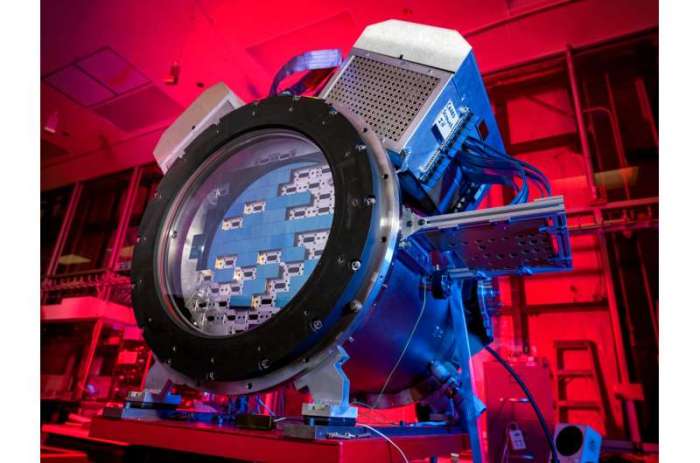
Supernovae, the spectacular explosions of massive stars, serve as cosmic lighthouses, illuminating the vast distances of the universe. By meticulously studying these stellar detonations, astronomers have developed powerful tools for measuring distances across the cosmos and uncovering the secrets of its expansion. This process, combined with other observational data, has led to the groundbreaking discovery of dark energy, a mysterious force driving the accelerating expansion of the universe.
Measuring Cosmic Distances with Supernovae
Supernovae, particularly Type Ia supernovae, act as standard candles, allowing astronomers to determine distances to distant galaxies. This is because Type Ia supernovae exhibit a consistent peak luminosity, meaning they all reach a similar brightness at their maximum. This predictable behavior allows astronomers to compare their observed brightness with their intrinsic brightness, thus calculating their distance. The further away a supernova is, the fainter it appears, allowing astronomers to estimate the distance to the host galaxy.
This method is crucial for measuring distances to galaxies too far for other techniques.
Types of Supernovae Relevant to Cosmic Expansion
Type Ia supernovae are the primary type used for measuring cosmic expansion. Their consistent peak luminosity makes them reliable standard candles. These explosions arise from a specific type of binary star system, where a white dwarf accretes material from a companion star until it reaches a critical mass, triggering a thermonuclear runaway. This runaway leads to the complete destruction of the white dwarf, resulting in a highly luminous explosion.
Other types of supernovae, like Type II, result from the core collapse of massive stars and do not exhibit the same predictable behavior. Their luminosity variations make them unsuitable for distance measurements on cosmological scales.
Evidence for Dark Energy from Distant Supernovae
Observations of distant Type Ia supernovae revealed a surprising result: they were dimmer than expected based on the expansion rate predicted by models that didn’t account for dark energy. This unexpected dimming implied that the expansion of the universe was accelerating, a phenomenon that could only be explained by the existence of a mysterious force, dubbed dark energy. This observation, along with other cosmological data, provided strong evidence for the existence of dark energy, a component that constitutes approximately 68% of the total energy density of the universe.
Identifying and Classifying Supernovae
Identifying and classifying supernovae involves a multi-step process. First, astronomers use automated sky surveys to detect transient objects. These surveys scan the sky repeatedly, looking for changes in brightness that could indicate a supernova. Follow-up observations with larger telescopes are then used to confirm the detection and obtain detailed photometry and spectroscopy. Spectroscopic analysis of the light emitted by the supernova helps to determine the type of supernova and its chemical composition.
This information helps astronomers classify the supernovae into different types and estimate the intrinsic luminosity of each. Spectroscopic features, such as the presence of specific elements and their relative intensities, are key for distinguishing between various supernova types.
Characteristics of Different Supernova Types
| Supernova Type | Mechanism | Peak Luminosity | Use in Distance Measurements |
|---|---|---|---|
| Type Ia | Thermonuclear runaway on a white dwarf | Very consistent | Excellent standard candle for cosmological distances |
| Type II | Core collapse of a massive star | Variable | Not suitable for distance measurements on cosmological scales |
| Type Ib/c | Core collapse of a massive star, with or without hydrogen envelope | Variable | Not suitable for distance measurements on cosmological scales |
This table summarizes the key characteristics of different supernova types, highlighting their mechanisms, peak luminosity, and suitability for measuring cosmic distances. Type Ia supernovae are unique for their predictable behavior, making them invaluable tools in cosmology.
The Mystery of Dark Energy
The universe is expanding, and at an accelerating rate. This surprising discovery, largely attributed to the observations of distant supernovae, has led to the concept of dark energy, a mysterious force pushing galaxies apart. Understanding this force is crucial to comprehending the ultimate fate of the cosmos. This mysterious energy, making up roughly 68% of the universe’s total energy density, remains one of the most significant unsolved problems in modern cosmology.The current understanding of dark energy is that it’s a constant energy density permeating all of space.
This constant energy density leads to a repulsive force that counteracts the attractive force of gravity, causing the expansion of the universe to accelerate. While we know it exists and how it affects the universe, the exact nature of dark energy remains elusive. It’s a component of the universe that doesn’t interact with light or any known force, making it incredibly difficult to study directly.
Current Understanding of Dark Energy
Dark energy is a hypothetical form of energy that permeates all of space and is responsible for the accelerating expansion of the universe. Its effects are most noticeable at vast cosmological scales. The simplest model for dark energy is a cosmological constant, a constant energy density throughout space. This model is consistent with observations of the accelerating expansion.
Key Unanswered Questions about Dark Energy, Dark energy universe expand mystery survey supernova
Several key questions remain about dark energy: What is its physical nature? Is it a fundamental constant or does it vary over time? What is its relationship to other fundamental forces and particles? The absence of a direct detection and a lack of theoretical explanations for its origin are major impediments to a comprehensive understanding.
Implications for the Future of the Universe
The accelerating expansion driven by dark energy has significant implications for the future of the universe. If dark energy remains constant, the universe will continue to expand at an accelerating rate, eventually reaching a state where galaxies are so far apart that they are effectively isolated. Stars will run out of fuel, and the universe will become increasingly cold and dark.
Alternative Explanations for Accelerating Expansion
While the cosmological constant is the leading explanation, alternative theories have been proposed. These include modified gravity theories, which attempt to explain the accelerating expansion without invoking a new form of energy. Some theories suggest that dark energy might not be a constant but rather a dynamic quantity that changes over time. Others suggest that dark energy might be related to a more fundamental aspect of space-time itself.
Ongoing Efforts to Study Dark Energy
Numerous ongoing projects are dedicated to studying dark energy. These include the continued observation of distant supernovae, measurements of the cosmic microwave background radiation, and studies of large-scale structure formation. Scientists are working to refine measurements of the expansion rate of the universe and the properties of dark energy, aiming to gain deeper insights into this enigmatic component of the cosmos.
Ever wondered about the mysterious force driving the universe’s expansion? Scientists are studying supernovae to understand dark energy, but the puzzle remains. Protecting your investment while you ponder the cosmos is important too! For example, if you own a Samsung Galaxy S6 Edge, you’ll want to check out the top 6 cases available here. They’ll keep your phone safe and stylish, whether you’re a cosmologist or not.
The universe’s secrets are still out there, but your phone should be well-protected. This dark energy universe expansion mystery survey is fascinating!
Universe Expansion Surveys
Unraveling the secrets of the expanding universe requires meticulous observation and analysis of vast cosmic distances. This quest relies heavily on comprehensive surveys that meticulously map the distribution of galaxies and other celestial objects across the cosmos. These surveys not only provide crucial data for understanding the expansion rate but also shed light on the distribution of dark matter and energy, the building blocks of the universe.Understanding the expansion of the universe is crucial for comprehending its evolution.
By mapping the distribution of galaxies, these surveys can reveal patterns and insights into the forces shaping the cosmos. The data gathered from these surveys helps us refine models of the universe and understand the interplay of different cosmological components.
Different Types of Surveys
Various survey techniques are employed to study the universe’s expansion. These techniques differ in their methodologies and the data they collect. The primary goal remains the same: to meticulously map the positions and characteristics of celestial objects, enabling accurate measurements of the universe’s expansion. This mapping process is crucial for understanding the underlying physical processes driving cosmic evolution.
- Redshift Surveys: These surveys measure the redshift of distant galaxies. Redshift, a phenomenon predicted by the Doppler effect, indicates the stretching of light waves as the universe expands. The greater the redshift, the farther the galaxy, and the more the light waves have been stretched. This allows researchers to determine the distance and velocity of galaxies, providing insights into the expansion rate at different cosmic epochs.
- Supernova Surveys: Explosions of massive stars, called supernovae, act as standard candles, allowing for accurate distance measurements at vast cosmological distances. By measuring the brightness of these explosions, astronomers can determine their distances. The observed brightness and redshift allow researchers to map the expansion history and identify the presence of dark energy.
- Galaxy Cluster Surveys: These surveys map the distribution of galaxy clusters, large groups of galaxies bound together by gravity. The clustering patterns reflect the distribution of matter in the universe, which in turn provides constraints on cosmological models. These surveys are essential for understanding the large-scale structure of the universe and its evolution.
Data Collected by Surveys
These surveys collect a wealth of data, encompassing various properties of celestial objects. This detailed information is vital for understanding the cosmos. The data typically includes:
- Redshift values: Measurements of the stretching of light from distant galaxies.
- Luminosity distances: Distances to celestial objects calculated from their observed brightness.
- Galaxy positions and shapes: Data about the distribution and characteristics of galaxies across the universe.
- Galaxy cluster distribution: Mapping of galaxy clusters and their spatial arrangement.
Challenges in Measuring Expansion at Vast Distances
Measuring the expansion of the universe at vast distances presents significant challenges. The distances involved are immense, and the light from distant objects has traveled for billions of years, potentially undergoing various distortions. Several factors complicate the task:
- Cosmic distances: Determining precise distances to extremely distant objects is notoriously difficult. Methods need to be robust enough to account for the immense distances involved and the effects of the expanding universe.
- Light travel time: The light we observe from distant objects has traveled for billions of years. During this time, the universe’s expansion has changed, introducing complications in interpreting the data.
- Cosmological effects: Gravitational lensing, the bending of light by massive objects, can distort the apparent positions and brightnesses of distant galaxies, requiring sophisticated analysis to account for these effects.
Comparison of Survey Results and Implications
Comparing the results of different surveys provides a more comprehensive picture of the universe’s expansion. The consistency of findings from independent surveys strengthens the validity of cosmological models. Discrepancies between surveys can prompt further investigation and refinements to our understanding of the cosmos.
Key Characteristics of Major Universe Expansion Surveys
| Survey Name | Primary Method | Key Findings | Limitations |
|---|---|---|---|
| Sloan Digital Sky Survey (SDSS) | Redshift surveys of galaxies | Detailed map of galaxy distribution, insights into large-scale structure | Limited to relatively nearby galaxies |
| Supernova Cosmology Project | Supernovae observations | Evidence for accelerating expansion, crucial for understanding dark energy | Requires accurate calibrations for supernovae brightness |
| Pantheon+ | Combined supernovae data | Precise measurement of the expansion rate, refined understanding of dark energy | Reliance on different data sets requires careful cross-calibration |
Visualization and Representation
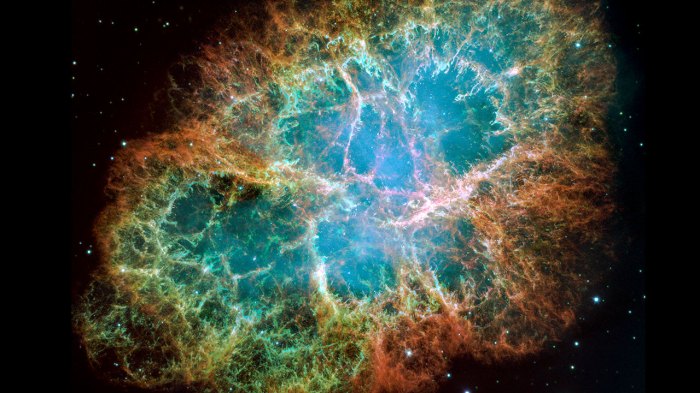
Unveiling the mysteries of the expanding universe requires powerful tools for visualization. From the distribution of galaxies to the accelerating expansion driven by dark energy, accurate representations are crucial for understanding these cosmic phenomena. Visualizations allow us to grasp the vastness and complexity of the cosmos, revealing patterns and relationships that might otherwise remain hidden.
Visualizing the Universe’s Expansion Over Time
A key aspect of visualizing the expanding universe is to show how distances between galaxies increase over time. A simple animation can depict this. Imagine a series of dots representing galaxies. Initially, the dots are clustered closely together. As time progresses, the dots move further apart, with the separation increasing at an accelerating rate, illustrating the effect of dark energy.
This animation would clearly demonstrate the concept of an expanding universe. Moreover, different colors or sizes could be used to represent galaxies of different types or ages, adding more complexity to the visualization. A crucial aspect is to scale the animation correctly, maintaining accurate proportions and distances between galaxies.
Visualizing the Distribution of Galaxies and Clusters
Understanding the distribution of galaxies and clusters of galaxies is vital to mapping the large-scale structure of the universe. A three-dimensional map, perhaps using a color gradient to represent density, would be effective. Denser regions would be highlighted in brighter colors, showcasing the locations of galaxy clusters. Such a map could also incorporate the distribution of dark matter, a crucial component in galaxy formation, as indicated by gravitational lensing effects.
The map would effectively visualize the filaments and voids that characterize the cosmic web, the large-scale structure of the universe.
Visualizing the Accelerating Expansion Caused by Dark Energy
Dark energy’s accelerating effect on the universe’s expansion is a fundamental concept. A graph showing the expansion rate (Hubble parameter) over time is necessary. The graph should clearly demonstrate how the expansion rate increases over time. The acceleration, driven by dark energy, can be highlighted by a curve that shows a positive second derivative, which means the rate of expansion is increasing.
The graph would compare the expected expansion rate in a universe without dark energy with the observed expansion rate, thus emphasizing the impact of dark energy.
Visualizing the Observable Universe’s Extent
The observable universe, defined by the distance light has traveled since the Big Bang, is vast. A visualization can showcase this by showing a sphere centered on Earth. The radius of this sphere represents the distance light could travel in the age of the universe. A scale bar would be crucial to show the distances involved, demonstrating the immense size of the observable universe.
The visualization should also highlight that beyond this sphere, light from other regions hasn’t reached us yet. This emphasizes the limitations of our current observations.
Visualizing the Relationship Between Distance, Redshift, and the Expansion Rate
The relationship between distance, redshift, and the expansion rate is fundamental to cosmology. An infographic can illustrate this relationship. The infographic should include three axes: distance, redshift, and expansion rate. A scatter plot of observed supernovae, plotted on these axes, can show the correlation between distance, redshift, and the expansion rate. A line representing the predicted relationship for a non-accelerating universe can be included for comparison.
The clear deviation of the observed data from this line demonstrates the accelerating expansion driven by dark energy. This visual representation makes the relationship easily comprehensible.
Wrap-Up
In conclusion, the dark energy universe expand mystery survey supernova highlights the remarkable journey of scientific discovery. We’ve seen how observations of distant supernovae provided crucial evidence for dark energy, and explored the ongoing efforts to understand its nature. The future of cosmology hinges on unraveling this cosmic enigma, and this survey offers a glimpse into the profound questions that continue to shape our understanding of the universe.