Comprehensive Enterprise Cloud Portfolios Drive Next-Generation Artificial Intelligence Infrastructure and Scalable Compute Solutions


The rapid acceleration of artificial intelligence across global enterprise sectors has fundamentally transformed the requirements for modern cloud infrastructure. As organizations transition from exploratory machine learning proofs of concept to large-scale, production-ready AI deployments, the underlying technology stack must evolve to support unprecedented computational demands. Modern cloud ecosystems are no longer evaluated solely by traditional storage and processing metrics; rather, they are judged by their ability to seamlessly integrate high-performance compute, container orchestration, managed database engines, sophisticated networking, and robust security frameworks into a unified, developer-friendly platform. This shift has prompted major cloud service providers to revamp their product portfolios, offering comprehensive suites designed to simplify the deployment, scaling, and management of artificial intelligence and machine learning applications.
The evolution of enterprise cloud computing is rooted in the convergence of big data analytics, distributed systems, and specialized hardware accelerators. Over the past decade, cloud infrastructure has progressed from basic virtual machine hosting to complex, microservices-driven architectures. The emergence of generative AI and deep learning models has further accelerated this trajectory, creating a critical need for elastic compute resources capable of handling massive parallel processing workloads. Industry analysts note that contemporary IT infrastructure must now provide instantaneous scalability, fault tolerance, and low-latency data access to remain competitive in a market increasingly dominated by automated intelligence.
Chronology of Infrastructure Evolution and Cloud Adaptation
The roadmap toward modern AI-optimized cloud environments spans several distinct technological milestones over the last fifteen years.
In the early 2010s, the cloud computing market was primarily defined by basic infrastructure-as-a-service (IaaS) offerings. Enterprises utilized remote servers mainly for web hosting, static data storage, and legacy application migration. Compute resources were largely static, and scaling required manual intervention or rudimentary autoscaling scripts.
By the mid-2010s, the adoption of containerization technology, spearheaded by Docker and orchestrated by Kubernetes, revolutionized software deployment. Organizations began breaking monolithic applications into distributed microservices. Cloud providers responded by introducing managed container registries and orchestration engines, allowing developers to package applications and their dependencies into standardized, portable units.
As data volumes expanded exponentially toward the end of the decade, the complexity of database administration prompted the rise of fully managed database services. Cloud providers assumed the operational burden of patching, scaling, and backing up popular relational and non-relational database engines, enabling engineering teams to focus exclusively on application logic rather than database maintenance.
Entering the 2020s, the mainstream proliferation of artificial intelligence models created an inflection point. Traditional CPU-based architectures proved insufficient for training deep neural networks and running real-time inference engines. Cloud providers began incorporating specialized hardware—such as Graphics Processing Units (GPUs) and Tensor Processing Units (TPUs)—into their core compute offerings. Furthermore, advanced networking, zero-trust security frameworks, and comprehensive developer tooling were integrated directly into cloud platforms to safeguard sensitive corporate data and accelerate the software development lifecycle.
Core Architectural Pillars of Modern Cloud Portfolios
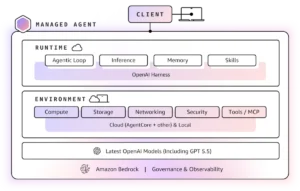
To effectively power artificial intelligence applications, a cloud ecosystem must rely on a synchronized set of architectural components. Each pillar plays a critical role in ensuring that AI models can be built, trained, deployed, and scaled securely and efficiently.
Compute Resources and Hardware Acceleration
At the foundation of any AI-driven cloud environment lies high-performance compute. Modern cloud compute resources must dynamically allocate processing power to match fluctuating workloads. For AI training and inference, this means offering virtual machines and bare-metal instances equipped with advanced parallel processing capabilities. By abstracting the underlying hardware complexity, cloud providers enable developers to provision thousands of processing cores within minutes, dramatically reducing the time required to train complex machine learning models.
Containers, Images, and Deployment Pipelines
Containerization remains the bedrock of reproducible software engineering, particularly in machine learning operations (MLOps). Safe storage and management of containers, virtual machine images, and automated backups ensure that AI models behave consistently across development, staging, and production environments. Container registries allow data scientists and software engineers to version-control their application environments, mitigating the risk of dependency conflicts and streamlining continuous integration and continuous deployment (CI/CD) pipelines.
Managed Databases and Data Persistence
Artificial intelligence is fundamentally data-driven; the accuracy of any model is directly proportional to the quality and volume of the data it processes. Fully managed resources running popular database engines—ranging from traditional relational systems to high-speed distributed NoSQL databases and vector databases—are essential for storing structured and unstructured data. These managed services handle automated backups, high availability, and horizontal scaling, ensuring that applications have uninterrupted access to real-time information streams.
Management, Development Tools, and Observability
Controlling distributed infrastructure and gathering deep operational insights require sophisticated management and development tools. As AI deployments scale, monitoring resource utilization, latency, and model drift becomes a paramount concern. Comprehensive dashboards, logging utilities, and infrastructure-as-code (IaC) integration empower engineering teams to maintain governance, optimize cost efficiency, and troubleshoot anomalies before they impact end-users.
Advanced Networking and Traffic Control
The distributed nature of modern AI applications necessitates robust networking infrastructure. Securely controlling traffic to and from applications involves implementing virtual private clouds, load balancers, content delivery networks, and distributed denial-of-service (DDoS) mitigation. In the context of AI, low-latency networking is especially crucial for real-time inference applications, conversational interfaces, and distributed model training where data must transfer rapidly across multiple server nodes.
Security and Resource Protection
As cyber threats grow in sophistication and corporate data privacy regulations become more stringent, security cannot be treated as an afterthought. Modern cloud portfolios incorporate multi-layered security features, including identity and access management (IAM), encryption at rest and in transit, vulnerability scanning, and automated compliance auditing. These tools help protect enterprise accounts and valuable data assets from unauthorized access and malicious exploitation.
Scalable Cloud Storage
Reliable, scalable cloud storage underpins the entire ecosystem. Whether dealing with raw multi-terabyte datasets for AI training, high-frequency transactional logs, or user-generated media, cloud storage architectures must provide virtually infinite scalability coupled with high durability. Object storage, block storage, and file storage services work in tandem to ensure that data is accessible whenever and wherever it is needed within the cloud topology.
Industry Data and Quantitative Analysis
Market research underscores the critical necessity of comprehensive, integrated cloud portfolios for enterprise AI adoption. According to recent data from global technology market advisory firms, global spending on public cloud infrastructure is projected to surpass one trillion dollars within the next several years, with artificial intelligence workloads representing the fastest-growing segment of this expenditure.
Furthermore, enterprise surveys indicate that over 75 percent of organizations cite infrastructure complexity and data silos as primary bottlenecks in deploying machine learning models to production. Providers that offer unified ecosystems—where compute, storage, databases, and security are natively integrated—report significantly higher customer retention and faster deployment velocities. Statistics show that businesses utilizing fully managed database and container services reduce their operational overhead by an average of 35 percent compared to organizations managing self-hosted infrastructure. Additionally, investments in specialized AI compute clusters have surged by triple-digit percentages year-over-year, reflecting the immense computational appetite of modern large language models and computer vision systems.
Expert Perspectives and Industry Reactions
Technology analysts and enterprise executives have widely acknowledged the strategic importance of comprehensive cloud portfolios. Industry leaders emphasize that the competitive advantage in the current technological landscape belongs to organizations that can bridge the gap between complex AI research and scalable enterprise execution.
"The conversation has shifted decisively from what artificial intelligence can theoretically achieve to how efficiently enterprises can operationalize it at scale," noted a leading enterprise cloud analyst. "Companies no longer want to stitch together disparate tools from multiple vendors. They require a cohesive, end-to-end platform where compute, data management, and security operate seamlessly together. Providers that fail to deliver a holistic ecosystem risk losing enterprise market share to competitors offering unified, developer-centric platforms."
Software engineering directors have similarly echoed the need for robust developer tools and managed services. "When engineering teams spend less time provisioning servers, configuring networks, and troubleshooting database replication lag, they invest more energy into building innovative product features," stated a chief technology officer at a prominent financial technology firm. "Integrated cloud portfolios remove the friction inherent in distributed systems architecture, allowing organizations to innovate at a much faster pace."
Broader Implications and Future Outlook
The maturation of enterprise cloud portfolios tailored for artificial intelligence carries profound implications for the global economy, labor markets, and technological innovation. As cloud infrastructure becomes more intelligent and automated, the barrier to entry for developing sophisticated AI applications continues to drop. This democratization of high-performance computing enables small and medium-sized enterprises to compete with established industry giants, fostering a more dynamic and innovative marketplace.
However, this rapid technological expansion also introduces new challenges. Energy consumption associated with large-scale data centers and AI model training has emerged as a significant environmental concern, prompting cloud providers to invest heavily in renewable energy sources and energy-efficient hardware design. Additionally, the increasing complexity of cloud environments heightens the demand for skilled cybersecurity professionals, data engineers, and MLOps specialists who can navigate and secure these advanced architectures.
Ultimately, the ongoing enhancement of cloud compute, storage, networking, and security products will define the trajectory of digital transformation in the coming decade. By providing the essential building blocks for artificial intelligence, modern cloud ecosystems are laying the groundwork for the next wave of technological breakthroughs across healthcare, finance, logistics, scientific research, and beyond. As these platforms continue to evolve, their ability to balance raw computational power with intuitive management tools and uncompromising security will remain the ultimate benchmark of industry leadership.