
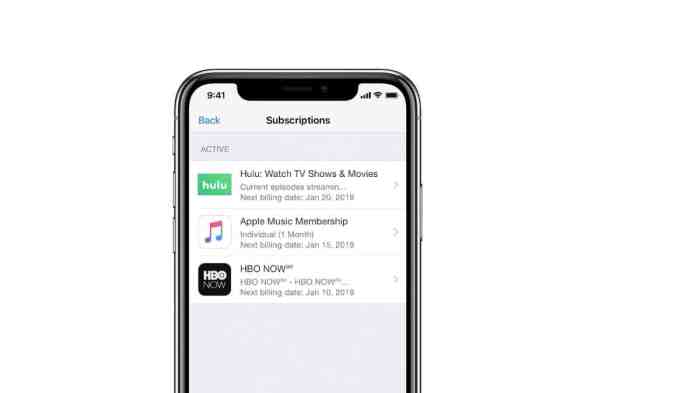
Apple ios iphone in app subscriptions discount policy – Apple iOS iPhone in-app subscriptions discount policy governs how apps offer price reductions on their services. Understanding this policy is crucial for both developers and users, as it dictates everything from introductory offers to seasonal promotions. This deep dive explores the intricacies of this policy, examining its structure, implementation, and the user experience it creates.
The policy encompasses various discount types, from percentage-based reductions to flat-rate offers. Developers must adhere to Apple’s guidelines regarding the implementation of these discounts, which often involve legal and regulatory considerations such as data privacy and consumer protection. This article details the practical aspects of creating and managing in-app subscription discounts, including the technical methods and user interface design considerations.
Introduction to Apple iOS In-App Subscription Discount Policies
In-app subscriptions have become a ubiquitous feature within iOS applications, providing users with access to premium content, functionalities, or services. These subscriptions often offer a recurring payment structure, allowing developers to generate revenue streams and users to access exclusive features. Understanding the various discount policies surrounding these subscriptions is crucial for both developers and consumers.The typical structure of an in-app subscription model involves a recurring payment cycle (monthly or yearly).
Users subscribe to a service, and their accounts are charged automatically at the specified intervals. This model allows developers to maintain consistent revenue streams and provides users with convenient access to services.Discounts within this context represent a crucial tool for attracting new users, encouraging engagement, and driving overall revenue. They can significantly impact both the user experience and the financial health of the application.
Apple’s iOS iPhone in-app subscription discount policies are always a hot topic. While we’re all waiting to see if those policies change, news about Google’s password manager sharing function spotted ( google password manager sharing function spotted ) hints at a larger shift in how we manage digital accounts. This could ultimately affect the way in-app subscriptions are handled, possibly opening up new possibilities for discounts or bundled offers.
Types of In-App Subscription Discounts
Discounts in in-app subscriptions are designed to incentivize user sign-ups and engagement. Various types exist, each with specific goals and implementation strategies.
- Introductory Discounts: These are often used to attract new users. They offer a reduced price for a limited time, often for the first few months of a subscription. This incentivizes immediate engagement and helps the app gain traction.
- Promotional Discounts: These are used to promote specific features or events. For instance, a developer might offer a discount on a premium feature for a limited period or during a holiday season. This encourages users to utilize specific functionalities and boosts engagement with the app.
- Seasonal Discounts: Discounts tied to specific times of the year, like holidays or special occasions. These discounts can be targeted to specific user demographics or appeal to a wider audience. Examples include discounts during back-to-school promotions or holiday seasons.
Common Use Cases of In-App Subscription Discounts, Apple ios iphone in app subscriptions discount policy
Discounts play a significant role in driving user acquisition and retention. They can be strategically implemented in a variety of scenarios.
- User Acquisition: Offering introductory discounts can significantly increase the number of new users. By enticing users with a lower price point for a limited time, developers can attract a larger user base, thereby increasing overall revenue potential.
- Engagement Boosting: Promotional discounts on specific features can encourage users to explore and engage with different aspects of an app. For instance, a discount on a premium feature might incentivize users to try out that feature, leading to greater overall engagement with the app.
- Feature Promotion: Developers can use discounts to highlight new features or functionalities. By making premium features more accessible through discounts, developers can increase user adoption and feedback on these new aspects.
- Retention Strategy: Offering occasional discounts or special promotions can help retain existing subscribers. This demonstrates appreciation for continued engagement and reinforces the value of the subscription.
Policy Structure and Implementation: Apple Ios Iphone In App Subscriptions Discount Policy
Implementing in-app subscription discounts within iOS apps requires a meticulous approach, carefully balancing consumer benefits with adherence to Apple’s guidelines. This process involves not only the technical aspects of discount application but also critical legal and regulatory considerations. Navigating these complexities is essential for app developers to provide attractive subscription options while maintaining compliance.Understanding the nuances of Apple’s guidelines is paramount for successful discount implementation.
This involves a thorough grasp of the platform’s rules and procedures, including specific limitations and best practices. Proper implementation ensures a positive user experience and avoids potential issues.
Typical Implementation Process
The typical process for implementing discount policies in iOS apps begins with meticulous planning. Developers need to clearly define the discount structure, including the type of discount (percentage, flat rate, etc.), the duration, and any eligibility criteria. A robust system for tracking and managing discounts is crucial for maintaining accurate records and fulfilling consumer expectations. This includes mechanisms for accurately calculating and applying discounts, and managing any potential refunds or adjustments.
Thorough testing of the discount mechanism across various scenarios is vital to ensure accurate and consistent application across all user cases.
Legal and Regulatory Considerations
Legal and regulatory considerations for discounts are paramount. Developers must adhere to data privacy regulations, ensuring transparent disclosure of how user data is collected, used, and protected. Consumer protection laws also play a significant role. These regulations necessitate clear communication of the terms and conditions of the discount, including any limitations or restrictions. Examples include compliance with local consumer protection laws that might dictate specific rules for discounts, such as limits on the duration of a discount or conditions for claiming a refund.
Apple Guidelines for In-App Subscription Discounts
Apple provides comprehensive guidelines for in-app subscription discounts. These guidelines detail the permissible types of discounts, the necessary disclosures to users, and the required methods for communicating discount terms. Developers need to carefully review these guidelines to ensure their discount policies are compliant. This involves checking for specific limitations on the types of discounts offered, ensuring proper disclosure within the app’s subscription page, and ensuring that discounts are not being used for fraudulent or misleading purposes.
Apple’s iOS iPhone in-app subscription discount policy is a bit of a maze, isn’t it? It’s all about finding those hidden gems, and sometimes you need to dig a little deeper than just the app store. For example, you might find some surprisingly good deals when exploring features like the Snapchat Beauty Bestie AR filter, especially if you’re looking to stock up on NYX makeup from their online shop.
This site has some solid insights into that. Ultimately, navigating in-app subscription discounts on your iPhone still requires a bit of detective work, but understanding how apps work can save you money.
Dispute Resolution and Complaints
Apple has established procedures for handling disputes or complaints related to discount policies. Developers should be familiar with these procedures to facilitate a smooth resolution process for any issues that arise. This involves clear communication channels, providing evidence to support claims, and promptly addressing user concerns. Apple’s resolution processes are usually transparent and are intended to provide a fair resolution for both the user and the developer.
Comparison of Discount Types
| Discount Type | Description | Application |
|---|---|---|
| Percentage Discount | A percentage reduction from the original price. | Effective for broad-based reductions, e.g., a 20% discount on all subscriptions. |
| Flat Rate Discount | A fixed amount reduction from the original price. | Suitable for specific price reductions, e.g., a $5 discount on a yearly subscription. |
| Tiered Discounts | Discounts based on subscription duration or frequency. | Effective for promoting longer-term commitments, e.g., a higher discount for annual subscriptions compared to monthly. |
The table above illustrates common discount types and their typical applications. Choosing the right discount type depends on the specific goals of the promotion and the desired customer response.
Customer Experience and User Interface
A seamless user experience is crucial for in-app subscription success. Customers need clear, concise information about discounts, and the process for claiming them should be intuitive. This section details how to present discount policies to users effectively, emphasizing best practices for UI/UX design.
Discount Policy Presentation
The way discount policies are presented directly impacts user engagement and satisfaction. Clear and easily accessible information is key. Users should be able to quickly understand the terms, conditions, and eligibility requirements for any discounts. This involves using a user-friendly layout and visually appealing elements.
Best Practices for Presenting Discount Information
Presenting discounts within the app should prioritize clarity and accessibility. Use prominent visual cues, such as contrasting colors and icons, to highlight discount offers. Avoid cluttering the interface with excessive information; focus on key details. Provide clear calls to action (e.g., “Claim Discount,” “Learn More”). A well-structured layout enhances user understanding and facilitates easy navigation.
Effective UI/UX Design Examples
Effective UI/UX design for communicating discounts includes clear visual cues. Use contrasting colors for discount banners or badges, making them stand out from regular content. Icons associated with discounts should be easily recognizable, like a price reduction icon or a percentage sign. Emphasize the duration of the discount and any eligibility requirements to avoid confusion. Use a concise, readable font and avoid overly technical language.
User Interface Elements for Subscription and Discount Details
| UI Element | Description | Example |
|---|---|---|
| Discount Banner | A prominent visual element highlighting the discount offer. | A large, colored banner with a visually striking icon and clear text stating the discount percentage. |
| Subscription Summary | A section that displays the current subscription plan and associated discounts, if any. | A table clearly outlining the current plan, price, and any applied discount. |
| Discount Details Section | A section that provides comprehensive details about the discount, including terms and conditions. | A collapsible panel revealing the terms, conditions, and duration of the discount offer. |
| FAQ Section | A dedicated area for addressing frequently asked questions about discounts and promotions. | A list of common questions and their corresponding answers. |
Handling User Inquiries
Providing a clear and efficient method for users to address questions about discount policies is essential. Implement a dedicated support section within the app with clear instructions for submitting inquiries. Include an FAQ section that addresses common questions regarding discount eligibility, application, and usage. Ensure prompt and helpful responses to user inquiries to maintain a positive user experience.
Consider integrating a live chat feature for instant support.
Technical Aspects of Discount Management
The success of in-app subscription discounts hinges on a robust technical infrastructure. This involves careful planning and implementation to ensure smooth operation, maintainability, and scalability as the user base and subscription offerings grow. Effective management of discounts, from code validation to complex combinations, is crucial for a positive customer experience.Accurate and timely application of discounts is vital for maintaining user trust and satisfaction.
The system needs to handle various discount types, from fixed percentage reductions to tiered pricing structures, and seamlessly integrate with the existing payment processing mechanisms. Moreover, it must be capable of adapting to future changes in pricing strategies or promotion campaigns without disrupting existing functionality.
Discount Code Integration
Discount codes, whether entered manually or scanned, need secure and efficient integration into the in-app purchase process. This includes robust validation to prevent fraudulent use and ensure proper application to eligible transactions. For example, a dedicated database or API endpoint can store and manage discount codes, linking them to specific subscription tiers, promotional periods, and user segments. The system should clearly identify valid codes and communicate any errors to the user.
Handling Multiple Discount Types
Managing multiple discount types, including percentage-based discounts, tiered discounts, and bundle discounts, requires a flexible system architecture. This architecture should allow for the combination of different discount types, while ensuring that the correct discount is applied and the total cost is accurately calculated.A crucial aspect is the precedence rules for multiple discounts. For instance, a percentage discount might take precedence over a fixed dollar amount discount, if the percentage discount results in a lower price.
Apple’s iOS in-app subscription discount policies are always a bit of a mystery, aren’t they? It’s fascinating how these policies can be so complex, sometimes mirroring the intricacies of something like the Nintendo Switch 2 Dbrand killswitch nintendo switch 2 dbrand killswitch – a fascinating bit of tech! Ultimately, understanding these nuances is key to navigating the digital marketplace, and in-app subscriptions remain a crucial aspect of that.
I’m still trying to figure out the full scope of Apple’s discount policy!
The system needs to prioritize discount applications in a defined order. Using a weighted or hierarchical system for discount rules allows for complex combinations and targeted promotions.
Scaling the Discount System
As the user base grows and the number of subscription plans and discounts increases, the system must be able to handle the increased workload without performance degradation. A scalable database design is essential to handle the growing data volume efficiently. Employing a distributed architecture, such as a microservices approach, allows for the modular scaling of specific components, like discount validation or application, without affecting the entire system.Cloud-based infrastructure can also play a crucial role in scaling the system.
The cloud offers elastic resources, allowing for dynamic allocation of computing power and storage based on demand. This helps prevent bottlenecks and ensures optimal performance, even during peak promotional periods.
Technical Flowchart for Discount Application
[Start] --> [User initiates purchase] --> [Check for active discounts] --> [Identify applicable discounts] --> [Apply discounts sequentially based on precedence rules] --> [Calculate final price] --> [Update payment gateway with final amount] --> [Confirm purchase] --> [End]
This flowchart illustrates the general process for applying discounts. Each step involves specific technical considerations, including data validation, API calls, and database interactions.
Examples and Use Cases
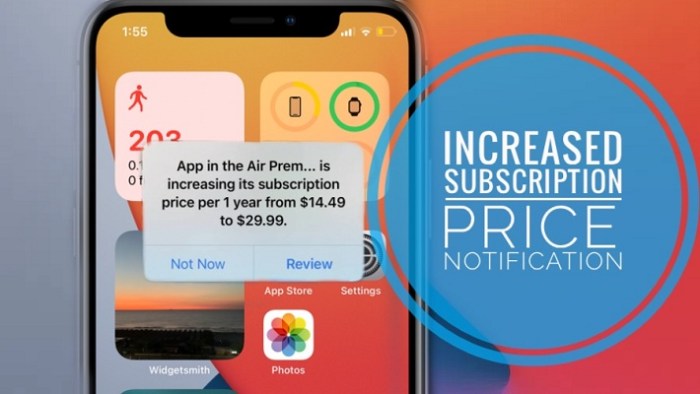
In-app subscription discounts are a powerful tool for driving user engagement and retention. They offer a way to incentivize new sign-ups and encourage continued use, which can be particularly valuable in competitive app markets. Successful implementations of these policies are not only about the discount itself but also about aligning it with the app’s overall value proposition and user needs.
Effective in-app subscription discount policies consider factors like the target audience, the pricing model of the app, and the overall user experience. A well-structured policy can foster customer loyalty, increase user lifetime value, and boost app revenue over time.
Successful Discount Policy Examples
Various apps have implemented successful in-app subscription discount policies, tailoring them to their specific user bases and app functionalities. For instance, a productivity app might offer a significant discount for a limited time to attract new users, while a gaming app might offer discounts for bundles of in-game items or extended playtime. These examples demonstrate the flexibility and potential of discount policies.
App Categories Utilizing Discounts
In-app subscription discounts are employed across diverse app categories. Entertainment apps, productivity tools, and educational resources are just a few examples. Each category can benefit from different types of discounts, tailored to the specific features and value proposition of the app.
- Entertainment Apps: These apps often offer tiered subscription options with varying levels of access to content or features. Discounts can be targeted to attract new subscribers or incentivize upgrades to premium tiers. For example, a streaming music service might offer a substantial discount for a limited-time introductory offer, encouraging trial periods and subsequent subscription renewals.
- Productivity Apps: These apps might offer discounts for longer subscription periods, or for bundles of features. Discounts can be aimed at attracting new users or rewarding loyal customers with exclusive access to advanced tools or functionality.
- Educational Apps: Educational apps can use discounts to make premium content accessible to more students or teachers. Discounts might be bundled with educational initiatives, such as partnering with schools or educational institutions.
Discount Implementation in Various App Types
The implementation of subscription discounts varies depending on the app type. For example, a gaming app might use a tiered discount system based on the length of the subscription. A productivity app, however, might focus on offering discounts tied to specific features or functions. This adaptability is crucial to aligning the discount policy with the overall value proposition of the app.
| App Category | Subscription Discount Approach |
|---|---|
| Entertainment | Introductory offers, tiered discounts, bundles of content |
| Productivity | Discounts for longer subscriptions, feature bundles, loyalty programs |
| Educational | Discounts for multiple users, bulk purchasing options, partnerships with schools |
Detailed Policies for Different App Types
Let’s delve into the specifics of discount policies for three distinct app types:
Streaming Music App
This app offers tiered subscription plans: Basic, Premium, and Family. A 50% discount is offered on the Premium plan for the first three months to attract new users. The Family plan is discounted by 20% for the first year of subscription, promoting family sharing. These discounts are designed to attract new subscribers and encourage long-term engagement.
Productivity Suite
This app offers a free trial with limited features, then a subscription for full access. A discount of 25% is offered for the annual subscription, highlighting the value proposition of consistent access to the suite’s tools. Discounts are also offered for multiple user licenses, catering to businesses and teams.
Educational Platform
This platform offers access to educational courses and materials. Discounts are offered for students, educators, and bulk purchases. Partnerships with schools and educational institutions allow for discounted group subscriptions, facilitating wider access to the educational resources.
Future Trends and Predictions
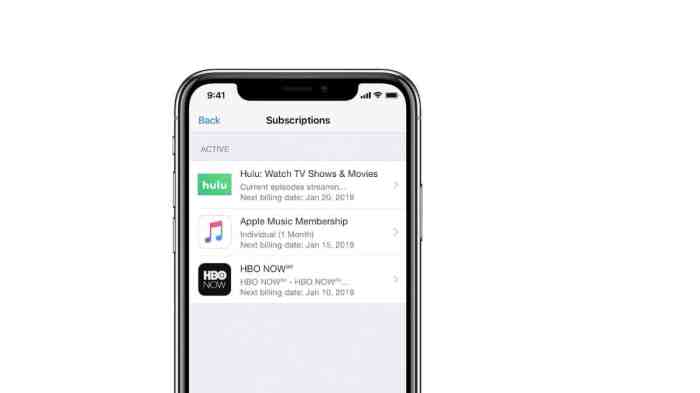
The in-app subscription landscape is constantly evolving, driven by technological advancements and shifting consumer preferences. Predicting the precise trajectory of discount policies is challenging, but analyzing current trends provides valuable insights into potential future developments. The increasing prevalence of subscriptions across various app categories suggests a need for dynamic and personalized discount strategies.
Potential Developments in Discount Models
Discount models will likely become more sophisticated and personalized. Instead of one-size-fits-all promotions, future models will likely incorporate user data and engagement metrics to tailor discounts to individual needs and preferences. This could involve tiered discounts based on usage frequency, lifetime value, or specific in-app actions. For example, a music streaming app might offer a larger discount to a user who consistently listens for extended periods or unlocks premium features.
Evolution of Subscription Services
The evolution of mobile subscription services is marked by a growing emphasis on bundling and cross-app integrations. Users are increasingly accustomed to managing multiple subscriptions across various platforms. This trend will likely drive the development of more comprehensive discount packages that span multiple apps within an ecosystem. For instance, a gaming company might offer a discounted bundle for all its subscription services.
Impact of Increased Subscription Use on Discount Strategies
The rising prevalence of subscriptions will undoubtedly impact discount strategies. App developers will likely need to analyze subscriber behavior and churn rates to optimize their discount policies. Effective discount strategies will not only attract new subscribers but also encourage retention and increase lifetime value. A subscription service that understands user preferences and adapts its discount offers accordingly will likely see greater success.
Emerging Trends in Mobile Subscription Services
Several emerging trends suggest the direction of mobile subscription services and the evolving discount policies.
- Dynamic Pricing: Discount policies will likely become more dynamic, adjusting in real-time based on demand, user behavior, and competitor pricing. This approach could lead to more personalized and effective offers.
- Subscription Bundles: Cross-app subscription bundles will become increasingly common. This allows for more comprehensive offerings and bundled discounts for users who engage with multiple services.
- Freemium with Graduated Discounts: The freemium model, with tiered pricing and discounts based on premium features unlocked, will likely continue to be popular. This allows for different levels of access and value, encouraging greater engagement and conversions.
- Personalized Recommendations: Subscription services will increasingly use personalized recommendations to suggest relevant discounts and offers based on user preferences and past purchases. This creates a more engaging and tailored experience.
- Gamification and Incentives: Discounts and promotions may incorporate gamification elements, rewarding users for specific actions, such as referrals, reviews, or consistent engagement. This can drive loyalty and incentivize participation.
Summary of Promising Trends
- Dynamic pricing adapting to real-time market conditions and user behavior.
- Cross-app bundles offering comprehensive discounts and experiences across multiple services.
- Personalized recommendations targeting specific user preferences and needs.
- Gamification of discounts rewarding users for engagement and referrals.
- Subscription bundles offering a broader range of services with potential cost savings.
Ultimate Conclusion
In conclusion, Apple’s in-app subscription discount policy provides a framework for developers to offer attractive deals to users. This policy touches upon several crucial aspects, from implementation details to customer experience design. The future of in-app subscription discounts likely involves a greater emphasis on user-centric design and a continued evolution in discount models to better cater to user preferences and evolving market trends.