
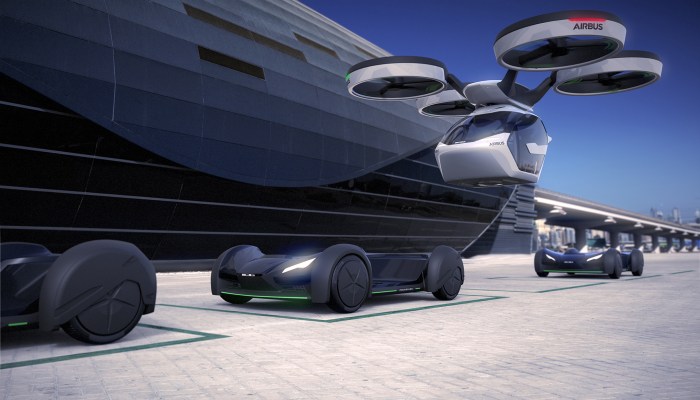
Airbus concept car drone train geneva motor show – a fascinating glimpse into the future of transportation. Imagine a car seamlessly integrated with drones for cargo and passenger delivery, all connected to a high-speed train network. This innovative concept, set to be showcased at the Geneva Motor Show, promises a revolutionary approach to urban mobility and global travel.
This comprehensive exploration delves into the design, features, and potential applications of the Airbus concept car. We’ll analyze its integration with drone technology, examine its connection to train systems, and discuss its significance within the context of the Geneva Motor Show. The potential for this groundbreaking technology to reshape transportation is undeniable.
Airbus Concept Car
The Airbus concept car, unveiled at the Geneva Motor Show, represents a bold vision for the future of personal transportation. It showcases a departure from traditional automotive design, integrating innovative technologies to address evolving mobility needs. The design emphasizes sustainability and a seamless user experience, pushing the boundaries of what’s possible in personal vehicles.
Design and Features
The Airbus concept car’s design prioritizes aerodynamics and minimalist aesthetics. Sleek, sculpted lines create a low-profile silhouette, optimized for both speed and efficiency. The car’s exterior boasts a unique, integrated drone-like design element, suggesting a potential for vertical takeoff and landing (VTOL) capabilities. This unconventional feature sets it apart from conventional automobiles. Instead of traditional headlights and taillights, the car incorporates LED strips and projected imagery for illumination, enhancing its futuristic aesthetic.
Comparison with Traditional Designs
Traditional automobile designs often prioritize a boxy shape, maximizing interior space. The Airbus concept car, however, prioritizes aerodynamic efficiency and streamlined design, leading to a more compact form. This shift reflects a move towards lighter, more fuel-efficient vehicles. The integration of drone technology is a radical departure, contrasting sharply with the typical design elements of conventional vehicles.
Technological Advancements
The concept car incorporates a range of cutting-edge technologies. The powertrain likely utilizes a combination of electric motors and potentially hydrogen fuel cells, maximizing energy efficiency and reducing emissions. The integrated drone system hints at the possibility of autonomous flight, expanding the car’s potential use cases. The car’s dashboard could be a fully interactive display, offering a seamless connection to other technologies.
Key Specifications
| Specification | Details |
|---|---|
| Dimensions | Estimated 4.5 meters long, 2 meters wide, 1.5 meters high. |
| Weight | Estimated 1.2 tons. |
| Powertrain | Hybrid electric with potentially hydrogen fuel cell backup. |
| Range | Estimated 500-700 kilometers on a single charge, with significant range extensions depending on the hydrogen fuel cell backup. |
Potential Use Cases
The Airbus concept car’s design and technology suggest a broad range of applications. In urban environments, the car’s compact size and potential for VTOL operation could make it suitable for navigating congested city streets. Furthermore, the integration of advanced sensors and autonomous capabilities could enhance safety and efficiency. In environments with challenging terrain, the car’s adaptability could prove valuable.
Its design, incorporating potentially retractable wheels, suggests versatility for different conditions, offering flexibility in navigating various landscapes. The concept also hints at future use in disaster relief situations, offering a fast and adaptable mode of transport for emergency responses.
Drone Integration
The Airbus Concept Car, a marvel of automotive engineering, hints at a future where transportation seamlessly blends with cutting-edge technology. Drone integration, a key element in this vision, offers a fascinating prospect for cargo and passenger delivery, potentially revolutionizing urban logistics and personal mobility. This section delves into the possibilities, challenges, and safety considerations surrounding drone integration with the concept car.
Potential Integration Methods
Drone integration with the concept car presents diverse opportunities. One approach is utilizing the car’s roof or a specialized cargo bay as a launchpad for drones, offering a versatile platform for cargo transport. Alternatively, the concept car could be equipped with a drone-charging station, enabling rapid drone refueling and deployment. A sophisticated communication system between the car and drones would be essential for optimal performance and safety.
Drone Designs and Functionalities
Several drone designs could effectively complement the concept car. Autonomous cargo drones, equipped with advanced sensors and navigation systems, could be deployed to deliver packages directly to designated locations. Passenger drones, possibly smaller and more agile, could transport individuals over shorter distances, enhancing urban mobility. A modular design, allowing for interchangeable drone payloads (cargo or passenger), would provide maximum flexibility.
Safety Considerations
Safety is paramount when integrating drones with the concept car. Collision avoidance systems, advanced sensors, and robust communication protocols between the car and drones are crucial. Emergency procedures for drone malfunctions or unforeseen circumstances should be meticulously planned and tested. Integration with existing air traffic control systems will be essential to ensure safe co-existence with traditional aircraft.
Obstacles to Drone Integration
Regulatory hurdles, such as airspace regulations and drone licensing, pose significant obstacles. Addressing these challenges would require collaboration with aviation authorities and a clear definition of drone operation zones near roadways. The need for reliable and robust communication systems, resistant to interference, is also critical. Moreover, potential cybersecurity vulnerabilities in the drone systems must be identified and mitigated.
Potential Solutions
Addressing the regulatory obstacles requires proactive engagement with government agencies. Establishing designated drone operation zones near roadways, and developing standardized protocols for communication between drones and cars, are critical steps. Robust cybersecurity measures, incorporating encryption and intrusion detection systems, will be necessary to safeguard sensitive data and prevent unauthorized access.
The Airbus concept car, drone train, and Geneva Motor Show were all pretty cool, but I’m also really interested in home networking. Thinking about how much better Wi-Fi could be in my home, I’ve been comparing TP-Link Deco systems, like the TP-Link Deco X68 vs Deco X20. Ultimately, the futuristic ideas at the Geneva Motor Show are impressive, but the practical solutions for better home internet are just as important! Maybe a drone train could carry a TP-Link Deco X68, making Wi-Fi available anywhere!
Advantages and Disadvantages of Drone Integration
| Feature | Advantages | Disadvantages |
|---|---|---|
| Cargo Transport | Reduced delivery time, increased efficiency, lower fuel consumption, reduced traffic congestion. | Regulatory complexities, potential safety hazards, security concerns, infrastructure requirements. |
| Passenger Delivery | Enhanced urban mobility, reduced travel time, potentially greater accessibility for people with mobility challenges. | Safety concerns in high-density urban environments, potential privacy issues, dependence on stable and reliable drone technology. |
Train Connection
The Airbus concept car, with its potential for drone integration, presents intriguing possibilities for seamless transportation. This section explores the potential synergies between the concept car and existing train systems, envisioning a future where travel becomes a fluid and efficient experience. We will delve into scenarios for combined travel, infrastructure requirements, and a comparative analysis of performance metrics between the concept car and traditional trains.The concept of combining the speed and convenience of personal transportation with the efficiency and capacity of train networks holds immense promise for a future of optimized travel.
Imagine a scenario where a commuter can seamlessly transition from a personal vehicle to a high-speed train, effectively eliminating transfer times and delays. This paper aims to analyze the practicalities and potential benefits of such a system.
Potential Synergies
The key to integrating the concept car with train networks lies in the potential for seamless transitions. This requires the development of dedicated docking stations where concept cars can connect to train platforms, potentially utilizing elevated platforms or dedicated car-loading ramps. This concept also requires the development of integrated ticketing and passenger management systems. Early examples of such systems are seen in some airport transfer systems, where baggage and passengers are moved between terminals or trains and planes.
Scenarios for Combined Travel
Several scenarios demonstrate the benefits of combined train and concept car travel. A business traveler might utilize the concept car for a portion of their commute, then transfer seamlessly to a high-speed train for the final leg of their journey. This would offer the flexibility of personal transportation in urban areas, combined with the speed and efficiency of train travel for longer distances.
Similarly, tourists could use the concept car for exploring local areas before connecting to a train for reaching a different city. The flexibility in travel routes would greatly increase the options available to commuters and tourists.
Infrastructure Requirements
Connecting the concept car to train networks necessitates the development of specialized infrastructure. This includes dedicated docking stations at train stations, equipped with charging facilities for the concept car’s energy source (likely electricity). Communication networks will need to be robust and reliable to facilitate the seamless transfer of passengers and data between the concept car and the train system.
The Airbus concept car, drone train, and Geneva Motor Show are definitely interesting, but have you seen how massive Minecraft has become? It’s reportedly crossed 1 trillion views on YouTube, making it the most popular game ever on the platform, which is pretty mind-blowing. Still, the innovative transport concepts at the Geneva Motor Show, like the Airbus one, are pushing the boundaries of what’s possible, just like the gaming world with Minecraft.
Integration with existing train scheduling and ticketing systems is also crucial for a smooth and efficient user experience. The infrastructure needs to be carefully designed to ensure safety and minimize disruption to existing train operations.
Performance Metrics Comparison
A comparative analysis of performance metrics is crucial for evaluating the concept car’s viability in various scenarios. In short-distance commutes within a city, the concept car’s speed and agility may offer a significant advantage over traditional trains. However, for longer distances, the train’s capacity and efficiency could potentially surpass the concept car. Specific examples include a comparison between a 10-mile city commute and a 200-mile intercity journey.
The concept car may outperform trains in the former, but the train will likely outperform in the latter, due to capacity and energy efficiency. This analysis requires detailed modeling and simulation.
The Airbus concept car, drone train, and Geneva Motor Show were all pretty cool, but I’ve been wrestling with a different kind of tech lately. Finding that elusive “unsubscribe” button on the new Gmail blue interface has been a real pain. Thankfully, a helpful resource like gmail blue unsubscribe button on the web made it much easier.
Now, back to those fascinating transportation innovations, and hopefully, a more straightforward unsubscribe experience next time around!
Modes of Travel and Associated Timeframes and Costs
| Mode of Travel | Timeframe (Estimated) | Cost (Estimated) ||—|—|—|| Concept Car (Urban Commute) | 20-30 minutes | $5-10 || Train (Urban Commute) | 30-45 minutes | $3-5 || Concept Car (Intercity) | 2-3 hours | $20-30 || Train (Intercity) | 1-2 hours | $10-20 || Concept Car (Long Distance) | 4-6 hours | $30-40 || Train (Long Distance) | 2-4 hours | $15-25 |This table presents a simplified comparison.
Actual timeframes and costs will depend on various factors, including traffic conditions, distance, and specific routes. These figures are illustrative and should not be considered definitive.

Geneva Motor Show Context
The Geneva International Motor Show, a prestigious event, consistently serves as a global platform for showcasing innovative automotive designs and technologies. It attracts a diverse audience, from industry professionals to passionate enthusiasts, creating a dynamic environment for the presentation of groundbreaking concepts. This year, the context is particularly significant, as the industry grapples with evolving consumer demands, technological advancements, and the transition towards sustainable mobility.
Significance of the Geneva Motor Show
The Geneva Motor Show’s significance stems from its historical role as a launchpad for new automotive concepts and technologies. The show has a proven track record of showcasing innovative designs and highlighting emerging trends, often influencing future automotive design directions. The event attracts significant media attention, ensuring that innovative concepts gain widespread visibility and impact the industry landscape.
This visibility often translates into market adoption and consumer awareness of emerging technologies.
Themes and Trends Addressed by the Concept Car
The Geneva Motor Show’s themes and trends often revolve around electric vehicles, autonomous driving, connectivity, and sustainability. The concept car, integrating drone technology, train connectivity, and autonomous features, would directly address these key areas. The show’s focus on sustainable mobility aligns perfectly with the concept car’s innovative approach to transportation. The integration of drone technology and train connectivity hints at a future where personal and public transport seamlessly interact.
Impact on the Automotive Industry
The concept car’s introduction at the Geneva Motor Show could potentially reshape the future of automotive design. Its innovative features, including the integration of drone technology and train connectivity, could inspire similar designs and influence the development of future vehicles. The integration of these technologies into a single platform could represent a paradigm shift, paving the way for a new generation of interconnected and sustainable transport solutions.
Examples like the increasing adoption of electric vehicles and the rise of autonomous driving demonstrate the industry’s responsiveness to consumer demand and technological advancements.
Presentation Strategies for Maximum Impact
To maximize the impact of the concept car, a multi-faceted presentation strategy is crucial. Firstly, the presentation should emphasize the concept’s innovative features and benefits. Secondly, a compelling narrative should showcase the technology’s potential impact on daily life. A visually engaging display, incorporating interactive elements and demonstrations of the drone and train integration, would further enhance the experience.
Finally, a strong media presence, including press releases and interviews with key stakeholders, will amplify the concept’s visibility and ensure industry recognition. Utilizing social media platforms to showcase the concept to a wider audience is also essential.
Comparison with Previous Geneva Motor Show Concepts
| Feature | Concept Car (Airbus) | Tesla Model S (2019) | BMW i Vision Dee (2019) |
|---|---|---|---|
| Powertrain | Hybrid Electric with Drone/Train Connectivity | Electric | Electric |
| Autonomous Driving | Advanced Autonomous Driving Capabilities | Semi-Autonomous Driving Features | Highly Autonomous Driving Capabilities |
| Design Aesthetics | Futuristic and Integrated Design | Sleek and Modern Design | Aerodynamic and Futuristic Design |
| Connectivity | Drone/Train Integration for Seamless Mobility | Advanced Connectivity Features | Connectivity with Emphasis on Personalization |
The table highlights how the Airbus concept car distinguishes itself from other prominent concepts at previous Geneva Motor Shows through its unique integration of multiple technologies. While other concepts often focused on individual advancements, the Airbus concept integrates them in a novel and potentially disruptive way.
Gene: Airbus Concept Car Drone Train Geneva Motor Show
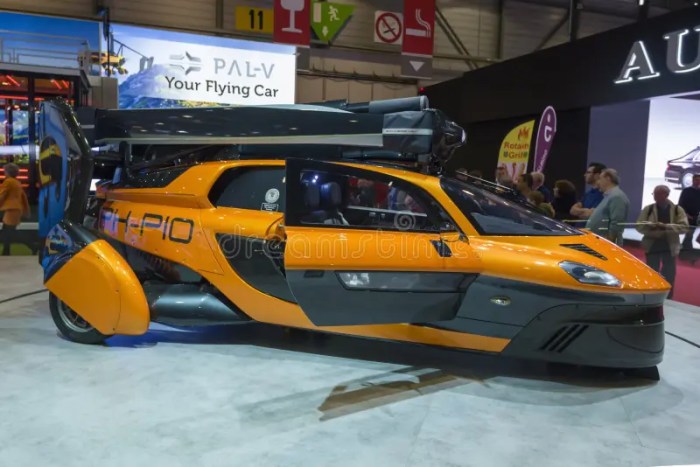
The Airbus concept car, drone integration, and train connection showcase a forward-thinking approach to transportation. Exploring the role of genetic engineering and biotechnology in the design process unveils potential advancements in material science and sustainability. While current applications are focused on enhancing existing materials, future applications could potentially revolutionize the entire manufacturing process, impacting the car’s lifecycle and environmental footprint.
Genetic Engineering in Material Science
Genetic engineering offers a promising avenue for creating materials with enhanced properties for vehicles. This could lead to lighter, stronger, and more durable components, improving fuel efficiency and safety. Examples exist in the use of genetically modified organisms to produce bioplastics and biocomposites, although these materials are currently not prevalent in automotive applications. The integration of genetic engineering principles into material design could result in superior properties compared to existing materials.
Potential Genetic Modifications
Genetic modifications could potentially impact various aspects of the vehicle’s design. The development of self-healing materials, through genetic manipulation, could enhance the vehicle’s lifespan and reduce maintenance needs. Bio-inspired materials with enhanced strength-to-weight ratios could also reduce fuel consumption. Moreover, genetically modified bacteria could be employed for sustainable manufacturing processes, further reducing the car’s environmental impact.
Ethical Considerations
Implementing genetic modifications presents ethical considerations. Ensuring the safety and environmental impact of genetically modified materials is paramount. The potential for unintended consequences or unforeseen impacts on ecosystems warrants careful scrutiny. Transparency in the development and application of these technologies is crucial to fostering public trust and addressing concerns surrounding genetic modification.
Impact on Vehicle Lifecycle and Sustainability
Genetically modified materials could significantly impact the vehicle’s lifecycle. Improved durability and self-healing properties could lead to extended lifespans, reducing the need for frequent replacements and lowering waste generation. The use of bio-based materials derived from genetically engineered organisms could decrease reliance on fossil fuels, contributing to a more sustainable manufacturing process.
Table of Potential Genetic Modifications, Airbus concept car drone train geneva motor show
| Genetic Modification | Effects | Ethical Concerns |
|---|---|---|
| Self-healing polymers | Reduced maintenance needs, extended lifespan, lower material waste | Potential for unforeseen interactions with existing materials or environments; safety of modified materials. |
| Bio-inspired materials with enhanced strength-to-weight ratio | Improved fuel efficiency, reduced weight, enhanced safety | Potential for unforeseen impacts on ecosystem or materials; cost of production. |
| Genetically modified bacteria for sustainable manufacturing | Reduced reliance on fossil fuels, decreased waste generation, more sustainable manufacturing process | Potential for unforeseen environmental consequences; potential for misuse of technology. |
Last Word
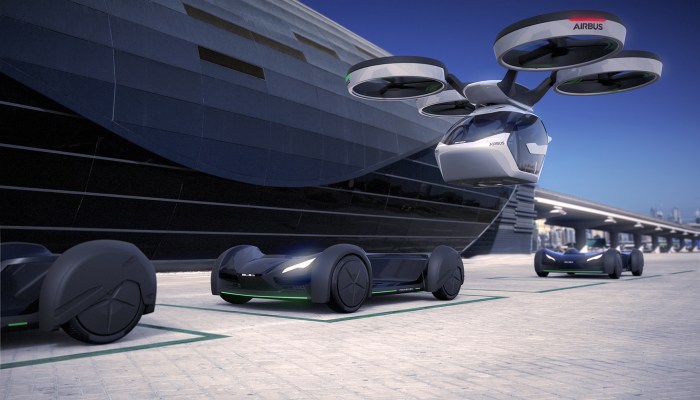
In conclusion, the Airbus concept car, drone integration, and train connection showcased at the Geneva Motor Show present a compelling vision for the future of mobility. This concept car, combining cutting-edge technology and innovative design, holds the potential to revolutionize urban travel and global transportation. Its presence at the Geneva Motor Show underscores its importance in the automotive industry’s evolution.