Filestack Revolutionizes Digital Media Management with Integrated Upload, Transformation, and Delivery Capabilities

The intricate challenges associated with managing digital media, particularly when sourcing content from diverse origins and accommodating varied formats and sizes, represent a significant hurdle for developers and businesses alike. Building bespoke solutions to handle the entire lifecycle of media assets—from ingestion to final presentation—is a resource-intensive endeavor that often diverts critical development time from core product innovation. In this complex landscape, platforms like Filestack are emerging as essential utilities, offering a robust, all-in-one solution to upload, transform, and deliver media assets in an optimized and highly efficient manner.
The Evolving Landscape of Digital Media and Its Challenges
The digital economy is increasingly visual, with an explosion of user-generated content, high-resolution imagery, and streaming video becoming central to almost every online experience. From e-commerce platforms showcasing product images to social media networks facilitating vast quantities of photo and video uploads, and enterprise applications handling document previews, the demand for sophisticated media management has never been higher. However, this proliferation of media brings with it a cascade of technical complexities. Developers routinely face issues such as accommodating disparate file types (JPEG, PNG, GIF, MP4, WEBP, AVIF, PDF, DOCX, etc.), managing wildly varying file sizes, ensuring cross-browser and cross-device compatibility, maintaining optimal performance for global audiences, and upholding stringent security standards.
Historically, addressing these challenges required extensive custom coding, integrating multiple third-party tools, or building out a substantial in-house infrastructure. This "do-it-yourself" approach often leads to increased development costs, slower time-to-market, maintenance overheads, and potential vulnerabilities if not meticulously managed. The imperative for modern businesses is to offload these non-core, yet critical, functions to specialized services that can provide scalable, reliable, and high-performance solutions.
Filestack’s Integrated Approach: A Three-Pillar Strategy
Filestack addresses these multifaceted challenges through a cohesive, three-pillar strategy encompassing streamlined uploading, dynamic transformation, and accelerated content delivery. This integrated platform aims to abstract away the complexities of media handling, allowing developers to focus on their primary application logic while ensuring an optimal media experience for end-users.
I. Streamlined Content Ingestion: The Gateway to Media Management
The initial phase of any media workflow involves getting files into the system. Filestack simplifies this often-cumbersome process by providing versatile and user-friendly uploading mechanisms. For developers looking to empower their users with effortless content submission, Filestack offers a powerful, pre-built UI component known as the "picker."
Integrating the picker into an application is straightforward, typically requiring just a few lines of JavaScript:
// Using JavaScript
const client = filestack.init("apikey");
const picker = client.picker();
picker.open();
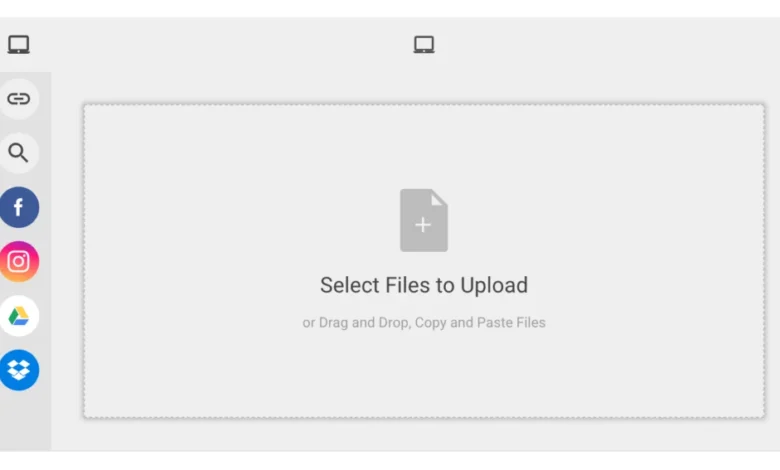
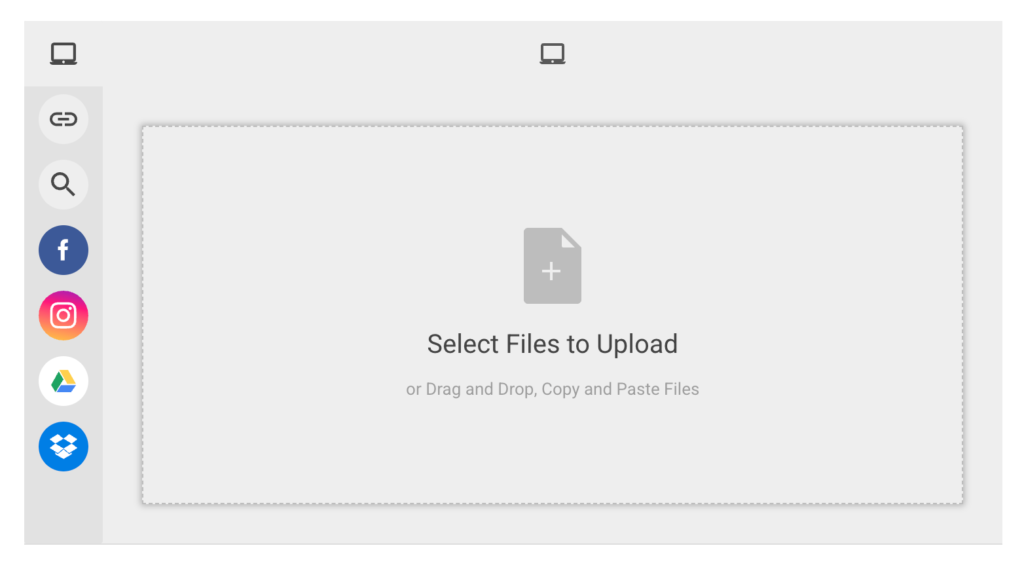
This code snippet deploys an elegant, highly functional, and feature-rich file uploading interface directly within the application. This UI component is not merely a basic file selector; it integrates seamlessly with over 20 popular cloud services and social media platforms, including Google Drive, Dropbox, GitHub, Facebook, and Instagram. This extensive connectivity allows users to directly upload files from their preferred cloud storage or social media accounts, eliminating the need for cumbersome downloads and re-uploads. Furthermore, the picker supports intuitive drag-and-drop functionality, a widely adopted user interaction pattern that significantly enhances the user experience by simplifying the file submission process.
Beyond client-side uploads, Filestack also provides robust options for backend integration, catering to scenarios where files are uploaded programmatically or from server-side processes. For Python developers, for instance, a dedicated library facilitates direct server-to-server uploads:
from filestack import Client

client = Client(APIKEY)

store_params =
    'location': 's3',
    'path': 'folder/subfolder/',
    'upload_tags':
          "foo":"bar"


filelink = client.upload(filepath='path/to/filename.jpg', store_params=store_params)
This example demonstrates how developers can leverage Filestack’s Python library to upload files, specify storage locations (like AWS S3), define directory paths, and even attach custom metadata tags for organization and future retrieval. Filestack distinguishes itself by offering a comprehensive suite of code libraries across various programming languages, significantly easing the developer experience and promoting rapid integration. This multi-language support ensures that teams working with different tech stacks can leverage Filestack’s capabilities without extensive re-engineering. The secure and efficient ingestion of files, regardless of their origin or format, lays the groundwork for subsequent processing steps.
II. Dynamic Transformation and Optimization: Tailoring Media for Every Need
Once files are uploaded, the next critical phase involves transforming them into optimal formats and dimensions suitable for diverse presentation contexts. Users can upload any file type, size, or format, but presenting these raw assets directly often leads to suboptimal user experiences, slow load times, and inconsistent visual quality. Filestack’s transformation engine is designed to address this by allowing developers to quickly and easily manipulate media assets to meet specific requirements. This capability extends beyond simple image resizing to encompass complex operations on videos, images, and documents, executable in real-time or via asynchronous workflows.
For images, transformations are often applied dynamically through URL parameters, offering immense flexibility without requiring server-side processing for each variation.
For example, resizing an image to a specific width is as simple as:
// Resize an image to have a width of 300px
https://cdn.filestackcontent.com/resize=width:300/pdn7PhZdT02GoYZCVYeF
More complex manipulations, combining multiple effects, can be chained within the URL:
// Add a color filter, rotate the image, and add a "polaroid" border to the image
https://cdn.filestackcontent.com/resize=width:300/sepia=tone:80/polaroid/pdn7PhZdT02GoYZCVYeF
Beyond these examples, Filestack’s transformation capabilities are extensive. Developers can perform:
- Image Manipulations: Cropping, rotating, mirroring, flipping, adding watermarks, applying various filters (grayscale, blur, sharpening), converting formats (e.g., JPEG to WebP or AVIF for modern web performance), and adjusting quality settings for compression.
- Video Transformations: Transcoding videos to different formats and resolutions, extracting thumbnails, creating GIF animations from video segments, and preparing videos for adaptive bitrate streaming to ensure smooth playback across varying network conditions.
- Document Transformations: Converting documents (PDF, DOCX, PPTX) into image previews or optimized web-friendly formats, enabling quick inline viewing without requiring users to download large files.
- Intelligent Features: Leveraging AI for tasks like smart cropping (focusing on key subjects), object detection, and content moderation.
The ability to combine these commands allows for the complete transformation of any file into the exact presentation required for users, ensuring responsiveness across devices and optimal performance. This dynamic approach is particularly vital in an era of diverse screen sizes and network speeds. Unoptimized media is a primary contributor to slow page load times, which directly impacts user engagement, search engine rankings, and conversion rates. Industry data consistently shows that even a one-second delay in mobile page load can decrease conversions by up to 20%. By automating and optimizing these transformations, Filestack helps businesses deliver superior user experiences.
Furthermore, Filestack provides the option for a user-interface-driven transformation experience, allowing content creators or end-users to apply modifications themselves through a visual editor. This empowers non-technical users to prepare media according to their needs without requiring developer intervention, significantly streamlining content workflows, particularly for platforms with user-generated content.
III. Accelerated Content Delivery: The Final Mile of User Experience
With files uploaded and optimally transformed, the final crucial step is delivering them to end-users with maximum speed and reliability. The performance of content delivery directly impacts user retention, engagement, and ultimately, business conversion rates. Slow-loading images or buffering videos can quickly lead to user frustration and abandonment.
Filestack addresses this critical need through its integrated Content Delivery Network (CDN). A CDN is a geographically distributed network of servers designed to serve content to users from the closest possible location, thereby reducing latency and improving loading speeds. Filestack’s CDN automatically caches all Filestack URLs the first time they are accessed, whether they are direct storage aliases or transformed assets. This means that subsequent requests for the same unique Filestack URL will be served from a cached copy, significantly reducing the load on origin servers and drastically cutting down delivery times for global audiences.
The cached copy of any unique Filestack URL typically persists for 30 days. After this period, the content will be re-cached upon its next request, ensuring that frequently accessed assets remain performant while less frequently accessed content is refreshed as needed. This intelligent caching strategy balances performance optimization with content freshness. The impact of a robust CDN is profound: faster load times lead to improved user satisfaction, lower bounce rates, and better SEO performance, as search engines increasingly factor page speed into their ranking algorithms. For businesses, this translates into higher conversion rates, increased engagement, and a more positive brand perception. The reliability of a global CDN also ensures that media assets remain accessible even during peak traffic loads or regional network disruptions, providing a consistent and high-quality user experience worldwide.
Broader Impact and Implications for Modern Development
Filestack’s comprehensive platform offers significant implications for the broader digital ecosystem:
- Enhanced Developer Productivity: By abstracting the complexities of media infrastructure, Filestack frees developers from the time-consuming tasks of building and maintaining custom uploaders, image processors, and content delivery systems. This allows engineering teams to allocate their resources towards developing core application features and innovation.
- Accelerated Time-to-Market: The ease of integration and the ready-to-use components mean that applications requiring robust media handling can be launched faster, giving businesses a competitive edge.
- Scalability and Reliability: As businesses grow and user-generated content scales, Filestack’s cloud-native architecture automatically handles increased load, ensuring consistent performance without requiring manual intervention or significant infrastructure investments from the client. This inherent scalability is crucial for dynamic web applications.
- Cost Efficiency: Offloading media management to a specialized service often proves more cost-effective than building and maintaining an in-house solution, considering server costs, bandwidth, storage, and developer salaries. Filestack’s tiered pricing, including a free trial period, allows businesses to scale their usage according to their needs.
- Improved User Experience (UX): From seamless uploads to lightning-fast, optimized content delivery, the end-user experience is significantly enhanced, leading to higher engagement, better retention, and increased customer satisfaction.
- Future-Proofing: Filestack continuously updates its platform to support new file formats, codecs, and web standards (like WebP or AVIF image formats), ensuring that client applications remain modern and performant without requiring constant updates to their media handling logic.
Conclusion: An Essential Utility for the Digital Age
In an increasingly media-centric digital world, efficient and effective media management is no longer a luxury but a fundamental requirement for success. The journey of a digital asset, from its initial upload to its final presentation, is fraught with technical complexities that can significantly impact user experience and business outcomes. Filestack’s platform emerges as a powerful, flexible, and indispensable utility that adeptly navigates these complexities. By providing an integrated solution for uploading, transforming, and delivering digital media in the most optimal style imaginable, Filestack empowers developers and businesses to focus on their core competencies, drive innovation, and deliver exceptional digital experiences to their users, thereby taking files from source to consumer with unparalleled efficiency and reliability. Its capacity to streamline these critical processes makes it an essential tool for any organization operating in the modern digital landscape.