Solving the ‘This Video Format Is Not Supported’ Error on YouTube TV for New MacBooks: A Deep Dive into Widevine and Digital Rights Management

The acquisition of a new computer, particularly a premium device like a MacBook, often heralds a period of enhanced productivity and seamless digital experience, free from the accumulated digital clutter and performance degradation of its predecessor. However, this initial optimism can occasionally be tempered by unforeseen technical hurdles unique to new hardware configurations. One such issue recently reported by users involves encountering a "This video format is not supported" error message when attempting to access streaming content on platforms like YouTube TV. This specific error, while seemingly an immediate playback failure, points to a deeper interaction between modern web standards, digital rights management (DRM) protocols, and browser configurations. The immediate resolution for this particular problem, identified through user experience and subsequent technical investigation, lies in ensuring the proper activation of Widevine within the user’s web browser. This mechanism, a crucial component in the contemporary streaming ecosystem, underscores the sophisticated interplay required for digital content delivery and consumption.
Understanding the Core Problem: The "Video Format Not Supported" Error
The "This video format is not supported" message is a common, yet often perplexing, notification for users attempting to stream video content online. Historically, such errors might have indicated a missing codec, a piece of software required to decode specific video or audio streams. In the early days of multimedia, users frequently had to download and install various codecs (e.g., DivX, Xvid, QuickTime, RealPlayer) to play different file formats, leading to a fragmented and often frustrating user experience. The modern web, however, largely moved past this paradigm with the advent of standardized video formats (like H.264 and now H.265/HEVC) and the robust capabilities of HTML5 video. Therefore, when this error appears on a contemporary platform like YouTube TV on a new MacBook, it rarely signifies a missing fundamental video codec.
Instead, in the context of commercial streaming services, this error almost universally points to an issue with Digital Rights Management (DRM). DRM technologies are designed to prevent unauthorized distribution and access to copyrighted material. Content providers, such as those licensing movies, TV shows, and live broadcasts to platforms like YouTube TV, mandate the use of robust DRM systems to protect their intellectual property. Without effective DRM, these providers would be hesitant to make their premium content available online, fearing widespread piracy. When a browser or device fails to properly implement or execute the required DRM protocol, the streaming service interprets this as an inability to secure the content, thus refusing playback and often issuing a generic "video format not supported" or similar error message. For YouTube TV, and many other major streaming services, the DRM system of choice is Google Widevine.

The Solution: Google Widevine DRM
Google Widevine is a prominent digital rights management component used by a vast array of streaming services to protect premium video content from unauthorized access and copying. Acquired by Google in 2010, Widevine has become an industry standard, integrated into web browsers, Android devices, smart TVs, and various streaming hardware. Its primary function is to securely deliver and decrypt licensed content, ensuring that only authorized users on compliant devices can access the media.
How Widevine Functions:
At a high level, Widevine operates through a client-server interaction:
- Content Encryption: When a video is prepared for streaming, it is encrypted using a key. This encrypted content is then stored on content delivery networks (CDNs).
- License Request: When a user initiates playback of protected content on a streaming service (e.g., YouTube TV), their browser or device sends a request to the streaming service’s license server. This request includes information about the device and browser’s DRM capabilities.
- License Issuance: The license server verifies the user’s authorization (e.g., subscription status) and the device’s security posture. If valid, it issues a decryption key, encapsulated within a license, back to the user’s device.
- Content Decryption and Playback: The Widevine module within the browser or device uses this license to decrypt the video stream in real-time. The decrypted video is then rendered for playback, usually within a secure playback environment to prevent screen recording or unauthorized copying.
Widevine comes in different security levels (L1, L2, L3), with L1 being the most secure, performing decryption entirely within a hardware-backed Trusted Execution Environment (TEE). L1 is typically required for playing high-definition (HD) and ultra-high-definition (UHD) content. If a device or browser cannot meet the L1 security requirements, it might fall back to L3 (software-based decryption), which often restricts playback to standard definition (SD) or prevents it altogether, depending on the content provider’s policies. The "video format not supported" error on a new MacBook often suggests that Widevine is either not enabled, not installed, or not functioning correctly, preventing the browser from obtaining or utilizing the necessary decryption license.

Browser and Operating System Integration on MacBooks
The specific context of a new MacBook is crucial. While macOS itself supports various multimedia frameworks, the actual implementation of DRM often resides within the web browser. The primary browsers used on macOS are Safari, Google Chrome, Mozilla Firefox, and Microsoft Edge.
- Google Chrome: As a Google product, Chrome has native and deep integration with Widevine. It is usually enabled by default, and issues are rare unless the component has been manually disabled or corrupted.
- Mozilla Firefox: Firefox also supports Widevine, leveraging it through its Encrypted Media Extensions (EME) implementation. Users might need to explicitly allow DRM content playback in Firefox’s settings if it’s disabled.
- Microsoft Edge: Based on Chromium, Edge also includes Widevine support, typically enabled by default.
- Apple Safari: Safari has historically taken a different approach to DRM, often relying on its own FairPlay Streaming DRM (FPS) for Apple-centric content and services (like Apple TV+). While Safari can play some Widevine-protected content, its integration might not be as seamless or universally robust as Chrome’s, especially for services primarily built around Widevine. This is a critical point for a new MacBook user, as Safari is the default browser. If a user tries to access YouTube TV via Safari and encounters the error, it’s possible that Widevine components are not fully enabled or configured as required by YouTube TV, or Safari’s specific implementation is encountering an incompatibility.
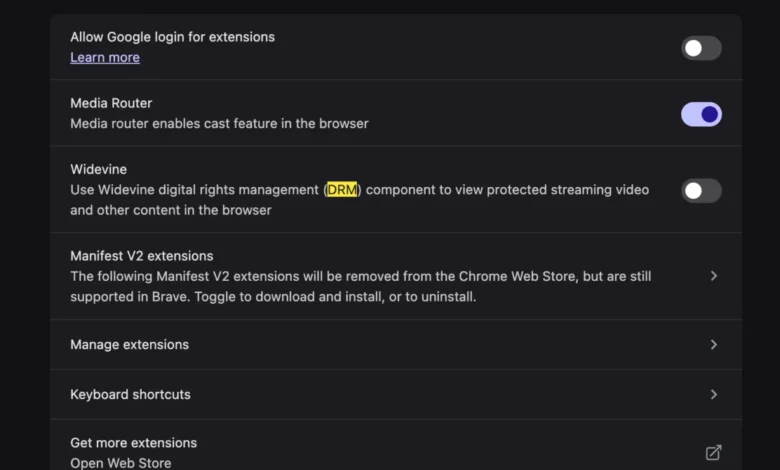
The image provided in the original article, depicting a browser settings page where "Widevine" is mentioned (implied to be enabled), strongly suggests that the issue was indeed browser-centric. For most users, enabling Widevine involves navigating to the browser’s settings, typically under "Privacy and Security" or "Content Settings," and ensuring that options like "Play DRM-controlled content" or "Allow sites to play protected media" are checked. If Widevine is missing or corrupted, a browser reinstallation or component refresh might be necessary.
Chronology and Evolution of Digital Rights Management
The journey to Widevine’s current ubiquity is rooted in the broader evolution of digital media and content protection:

- Late 1990s – Early 2000s: The Era of Physical Media and Early Digital Formats: Content was primarily distributed on physical media (CDs, DVDs). Early digital formats (MP3, DivX) faced rampant piracy, leading to the development of rudimentary DRM systems for music (e.g., Windows Media DRM) and video. These often required specific software players and were frequently criticized for user inconvenience.
- 2000s: Emergence of Streaming and Proprietary DRM: With increasing internet speeds, streaming began to gain traction. Companies like Apple (FairPlay for iTunes) and Microsoft developed their proprietary DRM solutions. This fragmented the market and often locked users into specific ecosystems.
- 2010: Google Acquires Widevine: Google’s acquisition of Widevine signaled a strategic move towards standardizing DRM for its burgeoning Android ecosystem and Chrome browser. This laid the groundwork for a more unified approach to content protection across diverse platforms.
- Mid-2010s: HTML5 and Encrypted Media Extensions (EME): The development of HTML5 video standard provided a native way to embed video directly into web pages without plugins. To integrate DRM, the W3C (World Wide Web Consortium) introduced Encrypted Media Extensions (EME). EME provides a standardized API for web applications to interact with DRM systems like Widevine, FairPlay, and PlayReady. This shift allowed browsers to natively support DRM without requiring users to install separate plugins (like Adobe Flash, which was heavily used for video in the past but had security vulnerabilities).
- Late 2010s – Present: Widevine Dominance: Widevine became the most widely adopted DRM system for web browsers and Android devices, primarily due to its integration with Chrome, Android, and its robust security features. Major streaming services globally, including Netflix, Amazon Prime Video, Disney+, Hulu, HBO Max, and YouTube TV, rely heavily on Widevine to protect their content.
This timeline illustrates a clear progression from fragmented, plugin-based DRM solutions to more integrated, browser-native, and standardized systems like Widevine, driven by the need for both content security and improved user experience.
Supporting Data and Market Context
The reliance on Widevine by YouTube TV and similar services is not arbitrary; it reflects its dominant position in the DRM landscape.
- Market Share of Widevine: While exact market share figures for DRM technologies are proprietary and difficult to precisely quantify, Widevine is estimated to secure content for billions of devices worldwide. It is the primary DRM solution for the Android ecosystem, the most popular mobile operating system globally, and is deeply integrated into Google Chrome, the most widely used web browser.
- YouTube TV’s User Base: As of late 2023, YouTube TV boasts over 8 million subscribers in the United States, making it one of the largest live TV streaming services. This substantial user base implies a critical need for reliable content delivery and protection, underpinning the importance of Widevine’s consistent functionality.
- Streaming Service Reliance: A 2022 report by Parks Associates indicated that over 70% of OTT (over-the-top) video services use at least one DRM solution, with Widevine being among the most frequently adopted due to its broad compatibility and security levels. This widespread adoption means that issues with Widevine can impact a significant portion of the global streaming audience.
- Incidence of Streaming Errors: While specific data on "video format not supported" errors directly linked to Widevine on new MacBooks is not publicly aggregated, general reports on streaming issues often highlight DRM-related problems as a significant category. User forums and support pages for streaming services frequently contain threads discussing these errors, indicating that while the solution might be simple (enabling Widevine), the initial confusion is widespread.
Official Responses and Industry Perspectives (Inferred)
While no direct official statements regarding this specific error on new MacBooks are available, the inferred positions of various stakeholders are consistent with the technical landscape:

- Google (Widevine Owner): Google consistently promotes Widevine as a robust, scalable, and secure DRM solution vital for the digital content ecosystem. Their perspective would emphasize the necessity of Widevine for content protection and the responsibility of browser vendors and device manufacturers to ensure its proper integration and functionality to facilitate access to premium content. They would highlight the benefits to content owners in enabling secure revenue streams and to users in gaining access to a wide variety of protected content.
- YouTube TV (Streaming Service Provider): YouTube TV, as a content distributor, relies on Widevine to meet the licensing requirements of its content partners (broadcasters, studios). Their stance would be that users must have a Widevine-enabled browser and device to access their service, as it is a non-negotiable condition for content rights. Their support documentation typically guides users on how to enable DRM in various browsers.
- Apple (MacBook Manufacturer & Safari Developer): Apple’s focus is on providing a secure, high-performance, and privacy-respecting user experience. While they have their own FairPlay DRM, they also acknowledge the need for interoperability with other industry standards. Their inferred position would be that macOS and Safari provide the necessary frameworks for Widevine to function, but that users or third-party browsers bear the responsibility for ensuring correct configuration. They would also prioritize user privacy and security, which sometimes means that certain features (like auto-enabling all DRM) might require explicit user consent.
- Browser Developers (Mozilla, Microsoft): Browser developers are caught between the demands of content providers for DRM and the preferences of some users for an open web free from proprietary restrictions. Their inferred position is one of pragmatic compromise: implementing EME and supporting Widevine to ensure access to popular streaming services, while also providing users with control over these features through privacy settings.
Broader Impact and Implications
The seemingly minor issue of a "video format not supported" error on a new MacBook due to Widevine highlights several broader implications for the digital ecosystem:
- User Experience vs. Content Security: This incident underscores the ongoing tension between providing a seamless, "just works" user experience and the critical need for content providers to protect their intellectual property. While enabling Widevine is a relatively simple step, the initial confusion and frustration can detract from the user’s perception of a new device or service. Striking the right balance is a perpetual challenge for technology companies.
- Technical Literacy and Digital Inclusion: Errors like this, while solvable with specific technical knowledge, can create barriers for less tech-savvy users. The expectation of self-service troubleshooting places a burden on the consumer, potentially leading to churn for streaming services or dissatisfaction with hardware. Clear, intuitive error messages and simplified configuration options are crucial for digital inclusion.
- Interoperability and Standardization: The prevalence of Widevine demonstrates the industry’s move towards a more standardized DRM solution, which benefits both content providers (easier distribution) and consumers (broader access to content across devices). However, even with standardization, subtle differences in browser implementation or default settings can still lead to friction points, especially across different operating systems or hardware.
- Security and Privacy Concerns: While DRM protects content, it also raises broader discussions about digital rights, consumer control, and potential privacy implications. Users often express concerns about the extent to which DRM systems monitor their viewing habits or restrict their legitimate use of purchased content. The secure nature of Widevine (especially L1) also means that certain parts of the decryption process are opaque to the user, a necessary trade-off for content protection but a point of contention for some privacy advocates.
- Future of Streaming Technology: As streaming technology evolves, so too will DRM. Future challenges include protecting content in increasingly complex environments (e.g., virtual reality, augmented reality), combating sophisticated piracy methods, and adapting to new hardware capabilities. The fundamental principle of secure content delivery, however, will remain paramount, making systems like Widevine continue to be central to the streaming experience.
In conclusion, the "This video format is not supported" error on a new MacBook, when traced back to an inactive Widevine component, serves as a microcosm of the complex technological underpinnings of modern digital content consumption. It illuminates the critical role of Digital Rights Management in enabling the streaming economy, the intricate relationship between hardware, operating systems, and web browsers, and the constant balancing act between robust security measures and a frictionless user experience. For users, understanding the existence and function of components like Widevine is becoming increasingly essential for navigating the contemporary digital landscape effectively.