The landscape of product development is undergoing a profound transformation, driven by rapid technological advancements and the burgeoning capabilities of artificial intelligence. In this dynamic environment, design principles are emerging not as mere aesthetic guidelines but as critical strategic tools that rally teams around a shared purpose, document organizational values, and provide an essential compass for decision-making. Far from being rigid rules, these principles offer a flexible framework that helps organizations navigate the hype, manage assumptions, and maintain coherence amidst the desire for faster delivery and the potential for "AI workslop." The core challenge now is not just to generate passable designs and code within minutes, a feat increasingly achievable with AI, but to discern what is truly worth designing and building, and what fundamental values these creations should embody.
The Foundational Importance of Defined Values
Without clearly articulated design principles, company initiatives risk becoming random, sporadic, and ad-hoc, leading to products that feel vague, inconsistent, or simply dull to end-users. This phenomenon is analogous to an organization’s voice and tone; if not intentionally designed and cultivated, it will inevitably be defined by external perceptions, often to the detriment of the brand. Design principles act as a preventative measure, serving as a set of guidelines and considerations that designers and product teams can apply with discretion, ensuring consistency without the need for constant debate over already agreed-upon foundational tenets.
Historically, the concept of design principles has evolved from the industrial revolution’s emphasis on utility and form to the digital age’s focus on user experience and interaction. Pioneers like the Bauhaus movement instilled the idea of "form follows function," laying groundwork for principles that prioritized clarity and efficiency. As design matured into a distinct discipline, particularly in the mid-20th century, figures like Dieter Rams articulated comprehensive philosophies that transcended mere aesthetics, advocating for design that was honest, useful, and long-lasting. Today, as AI integrates deeply into design processes, these principles become even more vital, acting as a human-centric check against the algorithmic outputs, ensuring that innovation remains anchored in ethical considerations and genuine user needs.
Real-World Application and Enduring Relevance
One outstanding resource that illustrates the breadth and depth of design principles is Ben Brignell’s Principles.design. This extensive repository offers over 230 pointers for design principles and methods, meticulously categorized and tagged, covering everything from language and infrastructure to hardware and organizational culture. Such resources highlight that good principles are more than just visionary statements; they embody a distinct point of view, explicitly outlining not only what an organization does but also what it chooses not to do. They articulate what an entity stands for in the world, transcending immediate profit motives or fleeting market trends.
Among the most influential and enduring sets of principles are Dieter Rams’ 10 principles of good design, originally formulated during his tenure at Braun. These principles, still profoundly relevant decades later, offer a humble, practical, and tangible overview of the considerations that shaped his iconic work. Rams’ principles stand out for their lack of grandiose claims and bold pronouncements; instead, they provide a clear articulation of design ambition rooted in genuine care for the product and its user. They represent an honest, sincere, and beautifully humane approach to design that continues to inspire.
Dieter Rams’ 10 Principles of Good Design: A Timeless Blueprint
Rams’ principles provide an excellent framework for understanding the essence of effective design guidance:
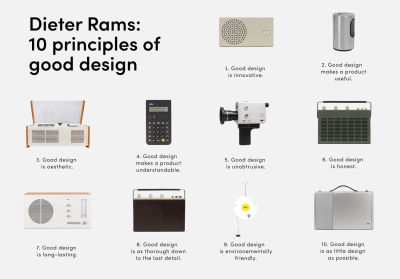
- Good Design Is Innovative: It doesn’t merely copy existing forms but explores new technological possibilities, always in conjunction with innovative utility.
- Good Design Makes a Product Useful: A product is bought to be used. It must fulfill certain criteria, not only functional, but also psychological and aesthetic.
- Good Design Is Aesthetic: The aesthetic quality of a product is integral to its usefulness, for products used daily affect our well-being.
- Good Design Makes a Product Understandable: It clarifies the product’s structure, making it speak for itself.
- Good Design Is Unobtrusive: Products fulfilling a purpose are like tools. They are neither decorative objects nor works of art.
- Good Design Is Honest: It does not make a product seem more innovative, powerful, or valuable than it actually is.
- Good Design Is Long-lasting: It avoids being fashionable and thus never appears antiquated. Unlike fashionable design, it lasts many years.
- Good Design Is Thorough Down to the Last Detail: Nothing must be arbitrary or left to chance. Care and accuracy in the design process show respect toward the user.
- Good Design Is Environmentally Friendly: Design makes an important contribution to preserving the environment by conserving resources and minimizing physical and visual pollution throughout the product’s lifecycle.
- Good Design Involves as Little Design as Possible: Less, but better – because it concentrates on the essential aspects, and the products are not burdened with non-essentials.
These principles, while originally conceived for industrial products, resonate powerfully within the digital realm, guiding the development of software, interfaces, and AI-powered experiences. They underscore that true value in design comes from thoughtful consideration, not just technical prowess or fleeting trends.
Modern Manifestations: From Tech Giants to Design Systems
Beyond individual luminaries, many contemporary organizations, particularly in the technology sector, have formalized their own design principles. Google’s Material Design, for instance, operates on principles like "Bold, Graphic, Intentional" and "Motion provides meaning," guiding developers and designers across a vast ecosystem of products to create consistent, intuitive, and aesthetically pleasing experiences. Apple’s Human Interface Guidelines similarly emphasize clarity, deference, and depth, ensuring that their devices and software maintain a distinct, user-friendly character. IBM’s Enterprise Design Thinking principles—focused on Hills, Users, and Playbacks—prioritize user outcomes and iterative collaboration across complex enterprise solutions. These examples demonstrate that design principles are not confined to abstract philosophy but are operationalized into tangible guidelines that influence every facet of product development, from micro-interactions to overarching strategic decisions.
Within the context of design systems, principles serve as the bedrock upon which component libraries, style guides, and documentation are built. They dictate the rationale behind design choices, ensuring that every element, from a button’s radius to a complex data visualization, aligns with the overarching vision. This centralized approach fosters efficiency, consistency, and scalability, critical factors for organizations developing multiple products or maintaining large digital presences.
Establishing Principles: A Collaborative Journey

The establishment of design principles is not typically a solitary endeavor but rather a collaborative process involving the entire product team. Principles are not solely for designers; given that the user experience encompasses everything from performance to customer support, ideal participants should represent these diverse areas. This cross-functional input ensures that the principles are holistic and reflect the entire user journey.
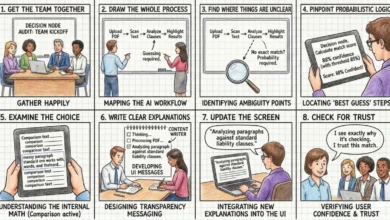
However, the process of defining principles can be challenging due to their abstract, sometimes ambiguous nature. To mitigate this, a structured workshop approach, inspired by practitioners like Marcin Treder, Maria Meireles, and Better, has proven effective. A typical 8-step workshop might unfold as follows:
- Preparation and Alignment: Define the workshop’s scope, objectives, and desired outcomes. Assemble a diverse group of stakeholders from design, engineering, product management, marketing, and customer support. Share pre-reading materials or prompts to prime participants.
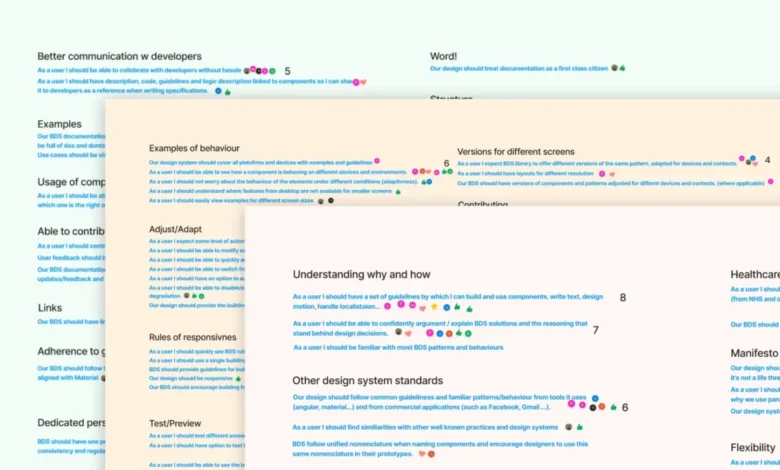
- Individual Brainstorming: Each participant individually brainstorms keywords, phrases, or short sentences that describe desirable qualities of the product, its users, or the organization’s approach. These should reflect values, user needs, and business goals.
- Sharing and Grouping: Participants share their ideas, and facilitators group similar concepts or keywords into broader themes. This helps identify common threads and areas of consensus.
- Drafting Initial Statements: For each theme, the group collaborates to draft concise, actionable statements. These initial principles should clearly articulate a value or belief.
- Refinement and Clarification: Each drafted principle is refined to be clear, memorable, and unique. This often involves ensuring they are inspiring, concise, and specific enough to be actionable. A useful technique is to pair each principle with an explanation of what it means and what it doesn’t mean (e.g., "Be Human" – Means empathy, approachability; Doesn’t mean sacrificing efficiency for sentimentality).
- Prioritization and Voting: Participants vote on the most critical principles, ensuring that the final set is manageable (typically 3-7 principles are ideal) and truly represents the team’s collective vision.
- Defining Do’s and Don’ts: For the selected principles, the team identifies specific "do’s" (actions that exemplify the principle) and "don’ts" (anti-patterns or behaviors to avoid). This translates abstract principles into concrete guidance.
- Socialization and Embedding Strategy: Develop a plan for communicating, sharing, and integrating these principles into daily workflows, decision-making processes, and documentation.
This structured approach transforms an otherwise abstract task into a concrete, collaborative exercise, yielding principles that are not only agreed upon but also deeply understood and owned by the entire team.
Broader Impact and Future Implications
The value of establishing design principles extends far beyond internal team alignment. Operationally, they streamline decision-making, reducing the need for endless debates that often stem from personal preferences or subjective taste. Instead, design choices are guided by established goals and values, leading to more consistent, effective, and efficient outcomes. This translates into significant business benefits: faster time-to-market, reduced rework, improved product quality, and a more coherent brand identity that resonates with users.
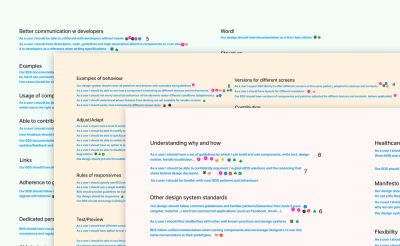
From a user perspective, products developed under clear design principles offer a superior experience. They are typically more intuitive, reliable, and delightful to use, fostering trust and loyalty. In an increasingly competitive digital landscape, this consistent and high-quality user experience can be a significant differentiator.
Perhaps most critically, in the age of AI, design principles serve as an ethical framework. As AI models become more sophisticated and autonomous in generating design elements or even entire user flows, human-defined principles become indispensable. They ensure that AI-driven designs align with human values, mitigate biases, prioritize accessibility, and uphold transparency. Without such guiding principles, there is a risk that AI, while efficient, could inadvertently perpetuate harmful biases or create experiences that are technically proficient but ethically compromised or emotionally hollow. Therefore, principles like "Be Accountable," "Prioritize User Control," or "Ensure Transparency" become paramount for responsible AI integration.
The ongoing work of practitioners like Vitaly, whose "Design Patterns For AI Interfaces" video course provides practical UX guidelines for designing AI features, exemplifies the next frontier in applying design principles. This course, along with live UX training, aims to equip designers with the tools to translate overarching principles into actionable patterns for AI-powered products, ensuring that these advanced interfaces are not only functional but also intuitive, ethical, and genuinely useful to people. It’s an explicit acknowledgment that as technology advances, the human-centric foundations of design must evolve alongside it, providing anchors in a sea of technological innovation.
Conclusion
Creating design principles is merely the first step; the bulk of the work lies in effectively sharing, embedding, and consistently applying them throughout an organization. This means integrating them into design systems, project templates, naming conventions, and every stage of product output. Principles are not static documents to be filed away; they are living guides that must be revisited, reinforced, and championed. They transform design from a matter of personal taste into a strategic discipline guided by shared goals and core values. As the lines between human and artificial intelligence blur in the design process, these principles will serve as critical safeguards, ensuring that innovation remains purposeful, ethical, and ultimately, humane. They are the essential tools for navigating the complexities of modern design, fostering collaboration, and creating products that truly matter in an increasingly interconnected and AI-driven world.