Svelte Ecosystem Experiences Major Expansion with New Features and Top Sentiment Rating in State of JS 2025

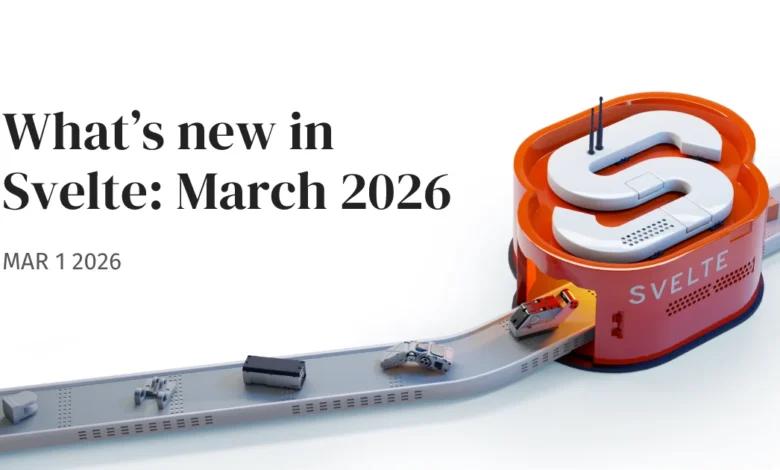
The Svelte web development ecosystem has reached a significant milestone this month, marked by a comprehensive suite of updates across the core Svelte compiler, the SvelteKit framework, and the command-line interface (CLI) tools. These technical advancements coincide with the release of the State of JS 2025 survey results, which confirm that Svelte continues to lead the industry in developer satisfaction and positive sentiment among reactive frameworks. As the software development landscape shifts toward more performant and less boilerplate-heavy solutions, Svelte’s unique "compiler-first" approach remains a dominant force in the front-end community.
Dominance in the State of JS 2025 Survey
The release of the State of JS 2025 survey has provided critical data regarding the current trajectory of web frameworks. For the third consecutive year, Svelte has secured the top position in terms of positive sentiment, a metric that combines developer satisfaction, interest, and the likelihood of continued use. According to the survey data, Svelte maintains a retention rate significantly higher than its primary competitors, including React and Vue.js.
While React remains the most widely used framework due to its massive corporate backing and established legacy codebase, Svelte’s growth in the "interest" category suggests a shifting tide. The survey indicates that a growing number of developers are looking for alternatives to the traditional Virtual DOM (Document Object Model) approach. Svelte’s methodology—which shifts the heavy lifting of reactivity from the browser to a build-time compilation step—is cited as the primary reason for this high sentiment. This approach results in smaller bundle sizes and faster runtime performance, addressing two of the most persistent challenges in modern web development.
Industry analysts suggest that the positive sentiment surrounding Svelte is also a reflection of its lower learning curve. Unlike frameworks that require complex state management libraries or a deep understanding of hook-based lifecycles, Svelte uses a syntax that closely mirrors standard HTML, CSS, and JavaScript. This "approachable" design philosophy has expanded Svelte’s reach beyond senior engineering circles into the broader educational and freelance markets.
Comprehensive Updates to Svelte and SvelteKit
The technical updates released this month focus on refining the developer experience and optimizing the performance of the Svelte 5 "Runes" system. Runes, the new reactivity API introduced to provide more explicit and powerful state management, have seen significant stability improvements. These updates address edge cases in reactive declarations and enhance the interoperability between legacy Svelte 4 components and the new Svelte 5 architecture.
SvelteKit, the framework’s full-stack offering, has also received a series of enhancements aimed at improving server-side rendering (SSR) and deployment flexibility. Key updates include refined routing logic and more robust handling of asynchronous data fetching during the pre-rendering phase. The SvelteKit adapters—which allow applications to be deployed seamlessly to platforms like Vercel, Netlify, and Cloudflare Workers—have been updated to support the latest runtime environments provided by these cloud vendors.
Furthermore, the Svelte CLI has undergone a major overhaul. The new CLI features provide a more streamlined onboarding process for new projects, including better TypeScript integration and a more intuitive configuration wizard. This focus on "DX" (Developer Experience) is a strategic move by the Svelte core team to lower the barrier to entry for enterprise-level development teams who require standardized tooling and rigorous type-checking.
Chronology of Svelte’s Evolution
To understand the significance of this month’s updates, it is necessary to look at the timeline of Svelte’s development over the past several years.
- 2016: Svelte 1.0 is released by Rich Harris, then a graphics editor at The New York Times. It introduces the radical idea of a framework that acts as a compiler.
- 2019: Svelte 3.0 is launched, bringing the "reactivity as a language feature" concept to the mainstream. This version sees a massive spike in community adoption.
- 2021: SvelteKit is announced as the successor to Sapper, providing a unified framework for building full-stack applications.
- 2023: Svelte 4 is released, focusing on performance optimizations and preparing the groundwork for the next generation of the framework.
- 2024: Svelte 5 enters the public sphere, introducing "Runes." This marks the most significant architectural change in the framework’s history, moving away from simple let-based reactivity to a signal-based system.
- 2025 (Current): The ecosystem stabilizes Svelte 5, integrates it fully into SvelteKit, and dominates industry sentiment surveys.
This chronology demonstrates a consistent pattern of innovation. Rather than iterating slowly on existing paradigms, the Svelte team has shown a willingness to reinvent the framework’s core mechanics to stay ahead of performance bottlenecks and evolving web standards.
Technical Analysis of the "Compiler" Advantage
The core of Svelte’s success, and the reason for the updates seen this month, lies in its architectural philosophy. Most modern frameworks, such as React, use a Virtual DOM to determine which parts of the user interface need to be updated. This requires the browser to run a "diffing" algorithm at runtime to compare the current state with the previous state.
Svelte eliminates this step entirely. During the build process, the Svelte compiler analyzes the code and generates highly optimized, surgical JavaScript that updates only the specific DOM nodes that change. This leads to several measurable advantages:
- Reduced Bundle Size: Because the framework itself does not need to be shipped to the client’s browser, the initial load time is significantly reduced.
- Memory Efficiency: Without a Virtual DOM, the memory overhead of the application is lower, which is particularly beneficial for low-powered mobile devices.
- Predictable Performance: Updates are direct and do not depend on complex reconciliation algorithms that can occasionally cause "jank" or UI stuttering.
The recent updates to the Svelte compiler have further optimized this process, specifically in how the framework handles "snippets"—a new feature in Svelte 5 that allows for more reusable and composable UI logic without the overhead of full components.
Market Implications and Professional Adoption
The high sentiment scores in the State of JS 2025 survey have tangible implications for the job market and the tech industry at large. Historically, React has been the "safe" choice for CTOs and project managers due to its vast ecosystem. However, as Svelte matures, it is increasingly being viewed as a viable—and often superior—alternative for performance-critical applications.
Several major organizations, including Apple, The New York Times, and Square, have integrated Svelte into their production environments. The primary drivers for this adoption are the need for high-speed user interfaces and the desire to reduce the carbon footprint of web applications by decreasing the amount of JavaScript processed by end-user devices.
The reaction from the developer community has been largely positive, though not without critical discourse. The transition to Svelte 5 and the introduction of Runes sparked a debate regarding the framework’s simplicity. Some long-time users expressed concern that Svelte was becoming as complex as the frameworks it sought to replace. However, the core team, led by Rich Harris and supported by Vercel, has maintained that these changes are necessary to handle the scale and complexity of modern web applications. The State of JS data suggests that the majority of the community agrees with this direction, seeing the new features as a necessary evolution rather than an unnecessary complication.
Broader Impact on the Web Development Landscape
Svelte’s continued dominance in developer sentiment is forcing a broader shift in the industry. We are currently witnessing a "convergence of features" across the front-end landscape. Many of the concepts pioneered or popularized by Svelte—such as signals-based reactivity and the movement away from heavy runtime libraries—are now being adopted by other frameworks. Vue has introduced its "Composition API," and even React is exploring "React Forget," a compiler designed to automate memoization.
Despite these moves by competitors, Svelte’s "first-mover advantage" in the compiler space gives it a unique edge. The framework is built from the ground up to be a compiler, whereas other frameworks are attempting to retrofit compiler logic onto existing runtime architectures. This month’s updates reinforce Svelte’s lead in this area, providing more refined tools for developers to build the next generation of the web.
The focus on the Svelte CLI and developer tooling also points toward a future where Svelte is not just a library for hobbyists or small teams, but a robust ecosystem capable of supporting massive, multi-team enterprise projects. By improving the CLI and SvelteKit’s deployment pipeline, the core team is addressing the "last mile" problems that often prevent large-scale adoption.
Future Outlook and Conclusion
Looking ahead, the Svelte team is expected to continue its focus on performance and developer ergonomics. With the foundation of Svelte 5 now firmly established and the community’s endorsement through the State of JS 2025 survey, the framework is well-positioned for continued growth.
Key areas of focus for the coming quarters will likely include further enhancements to the "Svelte Kit" server-side capabilities, potentially including more integrated solutions for database connectivity and authentication, areas where frameworks like Next.js currently hold an advantage. Additionally, as the web moves toward more decentralized and edge-computing models, Svelte’s lightweight footprint makes it an ideal candidate for "edge-first" development.
The updates released this month are more than just a list of bug fixes and features; they represent the ongoing maturation of a framework that has consistently challenged the status quo. By prioritizing performance through compilation and maintaining a high level of developer satisfaction, Svelte has moved from being an experimental alternative to a cornerstone of modern web architecture. For developers and businesses alike, the message from this month’s developments is clear: Svelte is no longer the future of web development—it is very much the present.