Corentin Bernadou: A Freelance Pioneer’s Journey Through the Complex Art of Web Animation and Shaders

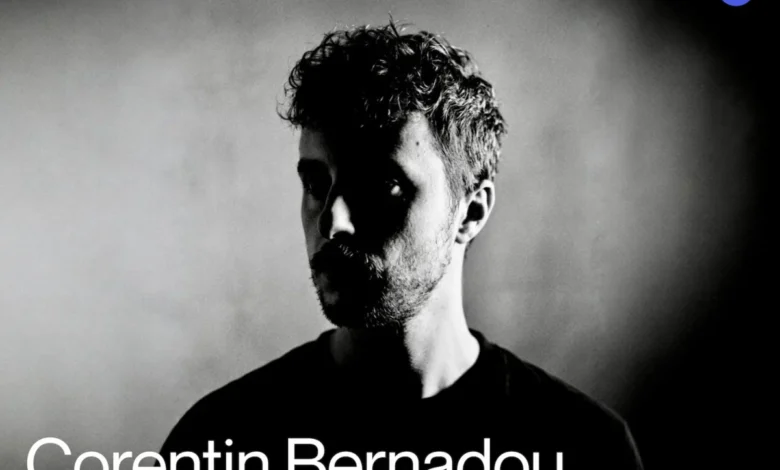
The dynamic world of creative development frequently unveils individuals whose journeys are as unconventional as their digital masterpieces. Corentin Bernadou, a French freelance developer, stands out as a prominent figure whose unwavering obsession with animations and motion has propelled him to the forefront of advanced web graphics. His recent spotlight on Codrops, a leading platform for web design and development inspiration, offers an insightful look into his unique career trajectory, profound dedication to continuous learning, and the methodologies behind his stunning visual experiments, serving as a testament to the power of self-driven passion in an ever-evolving digital landscape.
The Evolving Landscape of Creative Web Development
In an era where digital experiences increasingly demand interactivity and visual sophistication, the role of creative developers like Bernadou has become paramount. The web, once a static medium, has transformed into a canvas for rich, immersive narratives, driven by advancements in browser technologies and rendering capabilities. This shift has fostered a vibrant ecosystem where designers and developers push the boundaries of what is possible, transforming user interfaces into engaging, animated spectacles. Platforms such as Codrops, Awwwards, and FWA (Favourite Website Awards) play a critical role in this ecosystem, not only by showcasing groundbreaking work but also by fostering a community of innovators and providing invaluable resources for learning and inspiration. These platforms act as benchmarks for excellence, celebrating the technical prowess and artistic vision that define the cutting edge of web development. Bernadou’s journey, punctuated by recognition from these very institutions, exemplifies the aspirational path many aspiring creative technologists endeavor to follow.
A Non-Linear Journey to Digital Mastery
Bernadou’s professional path defies traditional linear progression, underscoring the notion that passion, rather than predefined academic routes, can be the ultimate compass. His early academic pursuits spanned philosophy and art history—disciplines seemingly far removed from the technical intricacies of web development. This initial exploration, however, hints at a foundational curiosity and an appreciation for abstract concepts and visual culture, elements that would later subtly inform his creative approach to digital motion. The turning point arrived during his communication studies, where he first encountered web design. This initial spark led him to pursue a full degree in Visual & User Experience Design.
Yet, even after graduating, Bernadou found himself at a crossroads, expressing frustration with the inherent limitations of design without the means to execute it. "Once the design is done, what comes next?" he pondered, a question that catalyzed his pivot towards development. This realization is common among many designers who seek greater control over the final product, desiring to translate their visions directly into functional, interactive experiences. What initially appeared daunting—the complex world of coding—became a personal challenge. Bernadou embarked on a self-taught journey, beginning with foundational web technologies like HTML and CSS. This period of self-education was significantly influenced by the creative works showcased on platforms like Codrops, Awwwards, and FWA, which unveiled a world of dynamic, animated web experiences that resonated deeply with his burgeoning ambition. This exposure solidified his aspiration: "that’s what I want to do."

Within months, through consistent effort and a methodical approach to achieving small milestones, Bernadou began his transition from designer to developer. His unwavering focus culminated in the creation of his first development portfolio, a crucial step for any aspiring professional. The success of this endeavor was immediate and significant, earning him a prestigious Site of the Day and Developer Award on Awwwards. This external validation not only boosted his confidence but also played a pivotal role in securing his first professional position at a digital agency. This achievement highlights the immense value of public recognition and industry accolades in launching a career, particularly for self-taught individuals seeking to establish credibility. After six years of honing his craft within an agency setting, Bernadou embarked on his latest challenge: establishing himself as an independent freelance developer, seeking greater autonomy and creative freedom.
The Engine of Innovation: Continuous Learning and Experimentation
Bernadou articulates a philosophy central to success in creative development: the field possesses "no ceiling." This perspective embraces the perpetual nature of learning and the futility of ever declaring oneself "done" with acquiring knowledge. This intrinsic motivation, fueled by the excitement of daily discovery, serves as his primary driver. While acknowledging the inherent challenges and late-night problem-solving sessions common in development, it is this boundless potential for growth that sustains his passion.
During his tenure at an agency, Bernadou experienced a common professional phenomenon: hitting a creative plateau. To overcome this, he set a new, ambitious goal: mastering complex animations using WebGL. WebGL (Web Graphics Library) is a JavaScript API for rendering interactive 2D and 3D graphics within any compatible web browser without the use of plug-ins. Its integration into web development revolutionized the kind of visual experiences possible, moving beyond traditional CSS animations to enable rich, GPU-accelerated graphics. Navigating the intricacies of WebGL requires a deep understanding of computer graphics principles, linear algebra, and shader programming—a significant leap from standard web development.
As he grappled with WebGL fundamentals, Bernadou began building and sharing experiments on social media, notably X (formerly Twitter), transforming his explorations into a public "diary" of progress. This act of sharing, often showcasing early iterations and learning processes, garnered unexpected attention and a supportive audience. This positive feedback loop was instrumental, providing the encouragement needed to persist and continue sharing his work. His initial explorations demonstrated a nascent talent for manipulating visual elements, creating dynamic "moving portraits," and intricate "spirals of sight." These early pieces, though perhaps not as refined as his later work, marked crucial steps in his journey toward advanced animation.
The pursuit of complex deformations naturally led Bernadou to the notoriously challenging domain of shaders. Shaders are small programs that run on the graphics card (GPU) and are responsible for rendering graphics. They define how light interacts with surfaces (fragment shaders) and how vertices are transformed (vertex shaders), allowing for incredibly detailed and customizable visual effects. Often considered the "steepest part of the learning curve" in computer graphics, mastering shaders unlocks a vast realm of visual possibilities. Bernadou credits resources from Codrops and Bruno Simon’s "Three.js Journey" for providing essential foundational knowledge. The results of his dedication were striking, showcased in experiments like "Ruby Campbell," "Through the Frames," "Flow of Portraits," and "Flow of Sound," which demonstrate sophisticated real-time visual manipulations and transitions, pushing the boundaries of interactive web experiences.
More recently, Bernadou’s focus has shifted towards the mathematical underpinnings of morphing and motion animations. This deep dive into mathematical principles allows for even greater control and precision in creating organic, fluid transformations of geometries. His latest experiments, such as "WebGL_Motion-Geometries" and "WebGL_Circle," illustrate complex, synchronized movements and shape transitions, signaling a continued evolution in his technical prowess and artistic vision. This ongoing exploration into the core mathematics of motion places him among a specialized group of developers who blend art, design, and advanced programming to create truly unique digital interactions.

The Freelance Frontier: Autonomy and Strategic Toolkit
Bernadou’s transition to freelancing marks a significant professional evolution, driven by a desire for increased autonomy and creative flexibility. The freelance model, particularly prevalent in the creative and tech industries, offers professionals the opportunity to select projects that align with their interests and expertise, collaborate with a diverse range of clients globally, and manage their own schedules. This shift from agency work to independent practice represents a common trajectory for experienced developers seeking to define their own career paths and achieve a different kind of professional fulfillment.
As a freelancer, Bernadou’s technology stack is adaptive, tailored to the specific demands of each project. While he previously worked extensively with vanilla JavaScript and custom WordPress setups, he has strategically embraced modern frameworks and headless architectures. His current preference for Nuxt.js, paired with headless Content Management Systems (CMS) like Prismic or Sanity, reflects a commitment to efficient, scalable, and highly performant web solutions. Nuxt.js, a framework built on Vue.js, facilitates server-side rendering and static site generation, improving performance and SEO—critical aspects for contemporary web projects. Headless CMS platforms decouple content from its presentation layer, offering greater flexibility for developers to integrate content into various front-end applications, a significant advantage for custom-built, animation-heavy sites.
For animations, GSAP (GreenSock Animation Platform) remains his indispensable tool. GSAP is a robust JavaScript animation library known for its high performance, reliability, and powerful feature set, making it a favorite among creative developers for crafting intricate and smooth animations across various browsers. On the WebGL front, Bernadou recently transitioned from OGL to Three.js. Three.js is a widely adopted, high-level JavaScript 3D library that simplifies the complexities of WebGL, allowing developers to create sophisticated 3D graphics directly in the browser with greater ease. This choice signifies a preference for a more mature and community-supported library, offering extensive documentation and a vast ecosystem of tools and plugins.
Beyond coding frameworks, Bernadou relies on a curated suite of productivity and development tools. Notion serves as his central hub for task management and project planning, a popular choice for freelancers seeking to organize their diverse workloads. Cursor is his chosen code editor, and Warp functions as his terminal. However, two "non-negotiables" stand out: his physical notebook, where he sketches and conceptualizes animation ideas before touching a keyboard, and Spotify, which provides the essential musical backdrop for his creative process. This blend of digital efficiency and analog ideation underscores a holistic approach to creative work, recognizing the importance of both structured execution and spontaneous inspiration. His willingness to share glimpses of his workstation and dock setup also reflects a common interest within the developer community in understanding the environments that foster creativity and productivity.
Charting an Unpredictable Future: Beyond the Horizon
Looking ahead, Bernadou expresses a delightful uncertainty about his future trajectory, a sentiment that aligns perfectly with his philosophy of continuous exploration and spontaneity. His creative process often begins with a simple "what if I tried this today?" query, fueled by inspiration gleaned from browsing innovative digital works. This commitment to improvisation and discovery is a cornerstone of his creative identity, ensuring his work remains fresh and personally engaging.

Despite this embrace of the unknown, certain directions are emerging. He acknowledges being "still at the beginning," with vast territories of complex animations, novel techniques, and yet-undiscovered ideas awaiting exploration. This perpetual state of learning is not confined to front-end graphics; he has also developed a growing interest in back-end development. While seemingly a departure, this interest represents a desire to understand and control more layers of the digital experience, potentially leading to full-stack capabilities that would further broaden his creative and professional scope.
Ultimately, Bernadou’s definition of success transcends conventional metrics. He hopes that freelancing will provide the ideal environment for sustained learning, experimentation, and uninhibited creation. The prospect of finding "the right people to work with"—collaborators who share his vision and passion—is integral to this vision. For him, making a living by pursuing what genuinely excites him every day is "the kind of success I’m looking for," a powerful statement about prioritizing fulfillment over pure financial gain or rigid career paths.
Insights for Aspiring Creative Developers
Bernadou’s journey offers valuable lessons for anyone aspiring to enter or advance within the field of creative development. His primary piece of advice is refreshingly direct: "don’t wait until you feel ready to start learning something new." He emphasizes the unprecedented accessibility of learning resources, empowering individuals to dive in regardless of perceived preparedness. This encourages a bias towards action and iterative learning rather than paralysis by perfectionism.
Furthermore, he advocates for listening to one’s inner restlessness. If one feels "stuck or uninspired" in their current work, that sensation is often a critical signal to seek new challenges or directions. This insight resonates with his own experience of hitting a plateau and subsequently pivoting to WebGL and shaders, reigniting his passion. This proactive approach to career management is crucial in a rapidly evolving industry where stagnation can quickly lead to obsolescence.
Finally, Bernadou actively encourages community engagement and collaboration. His public sharing of experiments on social media platforms like X (Twitter), Instagram, and LinkedIn not only served as a personal development diary but also fostered connections with a wider audience. He extends an open invitation for others to connect, collaborate, or simply share their own projects, reinforcing the collaborative spirit that underpins much of the creative development world.
In conclusion, Corentin Bernadou’s narrative is a compelling illustration of modern creative entrepreneurship. From his diverse academic background to his self-taught mastery of advanced web animations and shaders, his journey underscores the profound impact of passion, continuous learning, and strategic self-promotion. His work, showcased and celebrated on platforms like Codrops, not only pushes the visual boundaries of the web but also serves as a potent source of inspiration for a global community of aspiring developers. As he navigates the unpredictable landscape of freelancing, his commitment to exploration and the pursuit of genuine excitement defines a unique and admirable path to success in the digital age.