The Path of Maximum Resistance How Airwallex Founder Jack Zhang Rejected a Billion Dollar Stripe Offer to Build a Global Financial Infrastructure

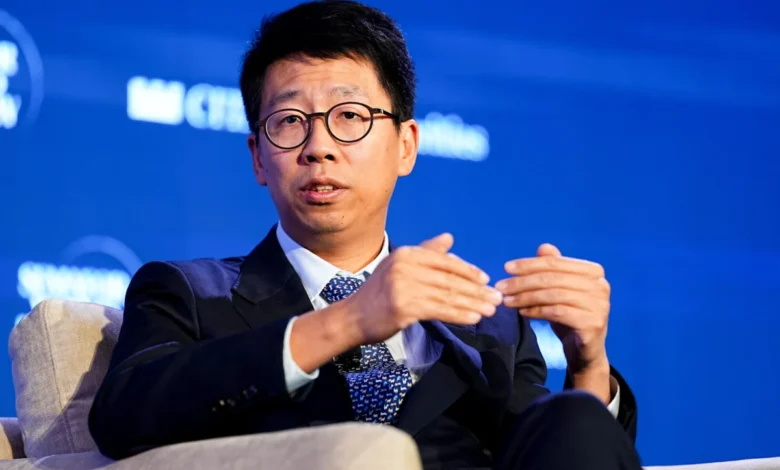
In the hyper-competitive landscape of Silicon Valley, a $1.2 billion acquisition offer for a three-year-old startup is usually the culminating moment of an entrepreneurial dream. For Jack Zhang, the 34-year-old co-founder and CEO of Airwallex, that moment arrived in 2018 inside the San Francisco residence of Michael Moritz, the legendary Sequoia Capital investor. Moritz, representing the interests of Stripe and its visionary co-founder Patrick Collison, presented a case that seemed mathematically undeniable: a buyout offer that valued Airwallex at roughly 600 times its then-annualized revenue of $2 million. Despite the allure of immediate generational wealth and the prestige of merging with the industry’s "golden child," Zhang ultimately chose a different trajectory, opting to compete rather than consolidate.
Today, that decision stands as a pivot point in the history of global fintech. Airwallex has evolved from a Melbourne-based payment processor into a multi-billion-dollar enterprise, claiming over $1.3 billion in annualized revenue and processing nearly $300 billion in transaction volume. As the company prepares for an eventual public debut, the story of its rise offers a blueprint for building a "hard-tech" financial stack in an era often dominated by superficial software layers.
The 2018 Crossroad: A Billion-Dollar Dilemma
The proposal from Stripe was not merely a financial transaction; it was a strategic move to absorb a rising competitor that was beginning to solve cross-border complexities in ways Stripe had yet to master. At the time, Stripe was already the darling of the developer world, but Airwallex was showing early signs of hyper-growth, expanding its revenue 100-fold in 2018 alone.
Zhang recalls a period of intense internal conflict following the meeting at Moritz’s home. For two weeks, he walked the streets of San Francisco, grappling with the weight of the decision. At one point, he even signaled an initial "yes." However, the consensus among his co-founders was split; two of the three remained staunchly against the deal. Upon returning to the Airwallex headquarters in Melbourne, Zhang found his clarity not in a spreadsheet, but on an office whiteboard. The company’s original mission—to build a financial infrastructure that allows any business to operate globally as if it were a local entity—remained largely unfulfilled. Selling would mean handing over the keys to that vision before the foundation was even dry.
The Architect’s Background: Resilience Born of Necessity
To understand Zhang’s appetite for risk and his "path of maximum resistance" philosophy, one must look at his formative years. Born in Qingdao, China, Zhang moved to Australia at the age of 15. Without his parents and possessing limited English proficiency, he was forced to navigate a foreign educational system while living with a host family.
When his family faced a financial crisis back in China, Zhang’s survival instincts took over. While pursuing a computer science degree at the University of Melbourne, he balanced a staggering four jobs simultaneously. His resume from that era included bartending, washing dishes, working graveyard shifts at a gas station, and picking lemons on a farm—a job he describes as the most grueling labor he has ever performed. This background in manual labor and high-stakes survival translated into a relentless work ethic in the corporate world. Before founding Airwallex, Zhang spent years as a high-frequency trading developer for an Australian investment bank, where he honed his technical skills in moving capital at scale.
The Coffee Shop Origin and the SWIFT Problem
The conceptual spark for Airwallex did not ignite in a boardroom, but in a small coffee shop in Melbourne that Zhang owned with his co-founder, Max Li. While attempting to source coffee beans from specialized suppliers in Brazil, Indonesia, and Guatemala, the duo encountered the systemic inefficiencies of the global banking system.
They watched as payments were frequently flagged, frozen, or "lost" within the correspondent banking network. Intermediary banks, particularly those in the United States enforcing Office of Foreign Assets Control (OFAC) sanctions, often held funds for weeks without explanation. When the money did arrive, it was significantly depleted by opaque currency conversion fees and wire charges. This frustration led Zhang to deconstruct the mechanics of the SWIFT network and the correspondent banking model, concluding that the only way to fix global money movement was to bypass the legacy intermediaries entirely and build a proprietary global network.
Strategic Differentiation: The Licensing Moat
While many fintech companies operate as "aggregators"—building software on top of existing banking rails—Airwallex chose the more difficult and time-consuming route of becoming a licensed financial institution in its own right. This strategy, which Zhang calls the "path of maximum resistance," involves securing individual financial licenses in every jurisdiction where they operate.
Currently, Airwallex holds approximately 90 financial licenses across 50 global markets. In comparison, industry estimates suggest Stripe holds roughly half that number. The acquisition of these licenses is a marathon, not a sprint; in Japan, the process took seven years of regulatory negotiation. In other emerging markets, Airwallex has had to acquire defunct shell companies to secure grandfathered licenses, subsequently gutting and rebuilding the underlying technology to meet modern security standards.
This licensing depth provides a significant competitive advantage. In Japan, for instance, competitors like Stripe and Square are often required to settle funds immediately into a merchant’s external bank account. Because Airwallex holds a fund transfer operator license, it can maintain those funds within its own ecosystem. This allows customers to hold local balances, issue corporate cards, and pay local vendors without ever incurring the 2% to 3% foreign exchange (FX) "tax" typically charged by traditional processors.
Financial Trajectory and the Valuation Gap
The financial performance of Airwallex has validated Zhang’s decision to remain independent. The company is currently growing at 85% year-over-year and projects reaching $2 billion in revenue within the next 12 months. Despite this rapid scaling, a significant valuation gap remains between Airwallex and Stripe.
In early 2025, Stripe was valued at approximately $159 billion following a secondary market tender offer. Airwallex’s most recent valuation sits at $8 billion, roughly one-twentieth of Stripe’s. However, Zhang points out that the operational metrics tell a different story. Stripe’s total payment volume (TPV) is roughly six times larger than Airwallex’s, yet its valuation is 20 times higher. This discrepancy suggests either a massive "brand premium" for Stripe or a significant undervaluation of Airwallex’s infrastructure-heavy model.
The Battle for the U.S. Market: CFOs vs. Developers
As Airwallex moves more aggressively into the United States, it finds itself in direct competition with Stripe on the latter’s home turf. However, the two companies employ different "go-to-market" strategies.
Stripe’s dominance was built on a "bottom-up" approach, targeting developers with easy-to-use APIs. For a decade, Stripe has been the default choice for founders starting new ventures. Airwallex, conversely, has historically targeted the "top-down" buyer: the Chief Financial Officer (CFO) and the treasury department. In markets like Australia and Southeast Asia, Airwallex is the primary tool for finance directors looking to manage global liquidity and minimize FX costs.
Zhang acknowledges that Airwallex still faces a "brand gap" in the developer community. To win the next phase of the fintech war, the company must convince engineers that its infrastructure is not just more cost-effective for the CFO, but more powerful and flexible for the person writing the code.
Implications and the Road to an IPO
The rivalry between Airwallex and Stripe is being watched closely by major venture capital firms, some of which hold stakes in both. Sequoia Capital (through its spun-off entity Hongshan) and Greenoaks Capital are prominent shareholders in both companies, betting on a global payments market large enough to sustain multiple decacorns.
Zhang has indicated that an Initial Public Offering (IPO) is likely three to five years away. Until then, the focus remains on building "autonomous finance" products. Airwallex is currently rolling out AI-powered agents designed to execute transactions, manage payroll, and optimize treasury functions without human intervention. The company’s thesis is that its decade of proprietary data across the entire financial stack—from collection to spend—provides a unique training set for financial AI that competitors relying on third-party rails cannot easily replicate.
As the global economy becomes increasingly decentralized, the demand for "local-everywhere" financial services continues to grow. By choosing the hard path of building its own rails, Airwallex has positioned itself as a critical utility for the modern enterprise. Whether it can eventually unseat Stripe as the global standard remains to be seen, but Jack Zhang’s $1.2 billion "no" has already secured his company’s place as a formidable architect of the future financial system.
Related posts: