Amazon S3 Tables Now Support Managed Migration of Apache Hive Tables to Apache Iceberg for Streamlined Data Lake Modernization

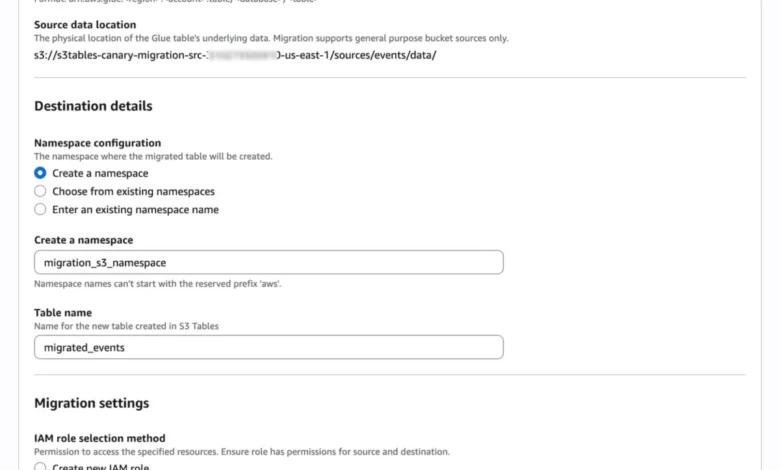
Modern enterprise data architectures are undergoing a profound structural evolution, driven by the need for high-performance open-table formats that can seamlessly scale to petabyte levels. AWS has introduced a significant advancement in data lake modernization by rolling out managed migration capabilities for Apache Hive tables directly into Apache Iceberg via Amazon S3 Tables. This development removes one of the most stubborn engineering bottlenecks in modern data engineering: converting legacy storage frameworks to high-performance open standards without requiring massive infrastructure overhauls or costly custom-built data pipelines.
For years, transitioning petabyte-scale datasets from legacy formats like Apache Hive to modern table architectures such as Apache Iceberg demanded weeks or even months of intensive engineering effort. Organizations had to provision dedicated compute resources, manually construct complex transformation and rollback pipelines, and navigate intricate data-type conversions while risking costly production downtime. The new fully managed, API-driven capability within Amazon S3 Tables drastically simplifies this lifecycle. By automating compatibility reporting, type conversions, file recompression, and compaction, AWS aims to accelerate enterprise adoption of Apache Iceberg as the universal standard for large-scale analytical datasets.
Understanding the Technological Shift: Hive Versus Iceberg
To fully grasp the significance of this managed migration tool, it is essential to examine the technical limitations of Apache Hive relative to the demands of modern cloud analytics. Apache Hive was initially conceived in the early days of Hadoop as a data warehouse software project built on top of Apache Hadoop, designed to facilitate data summarization, ad-hoc querying, and analysis of large datasets. While groundbreaking for its era, Hive’s file-listing and directory-based metadata model struggles to maintain peak performance as data lakes scale into petabytes and exabytes.

Conversely, Apache Iceberg has rapidly emerged as the undisputed open standard for large-scale analytics datasets. Iceberg introduces table formats that bring SQL-like table capabilities—such as full ACID (Atomicity, Consistency, Isolation, Durability) transactions, schema evolution, hidden partitioning, and time-travel queries—to object stores. This allows organizations to maintain absolute control over massive datasets while keeping their data open and queryable by any engine compatible with the Iceberg specification, including Amazon Athena, Apache Spark, Trino, and Presto.
Amazon S3 Tables were purpose-built to address the operational overhead of managing these sophisticated table formats at scale. By embedding automatic maintenance, optimization, replication, and native integration with S3 Intelligent-Tiering directly into the storage tier, S3 Tables ensure that Iceberg tables remain performant and cost-effective as they expand. However, bridging the gap between legacy Hive tables registered in the AWS Glue Data Catalog and these modern S3 Tables has historically remained a friction point for data architects.
The Mechanics of Managed Migration
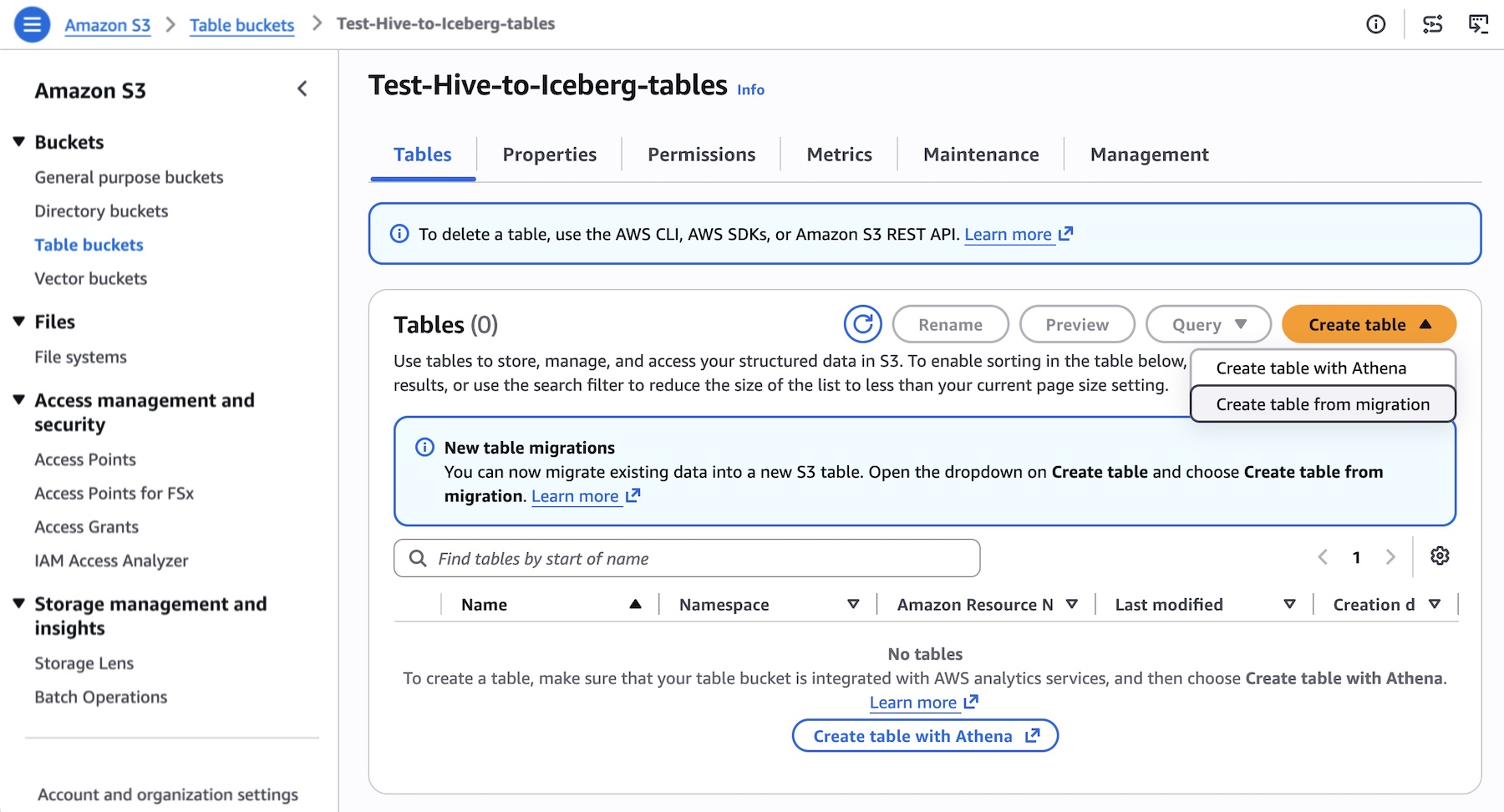
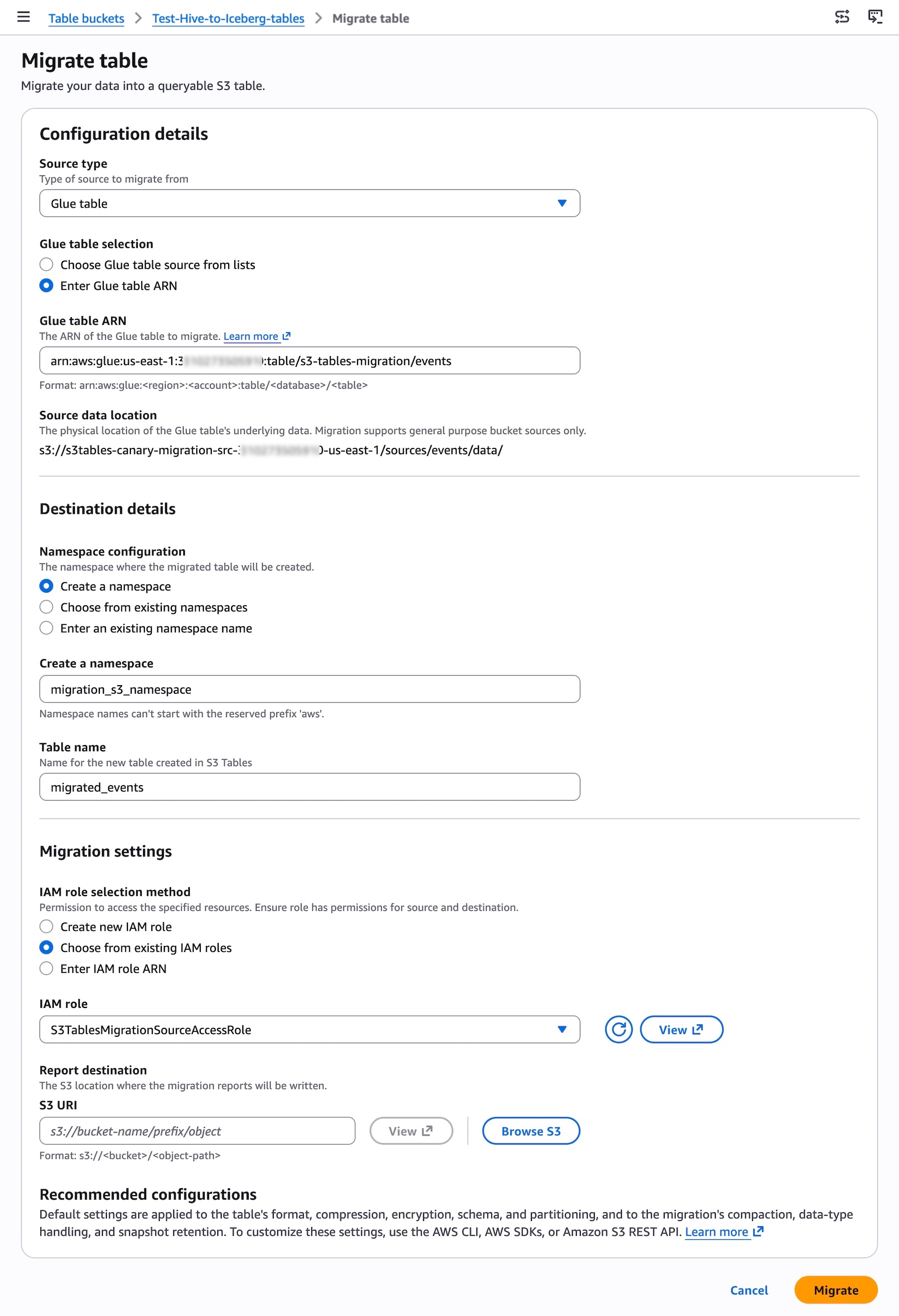
The newly launched migration workflow is designed to execute seamlessly behind the scenes while production workloads remain operational. When an administrator initiates a migration via the Amazon S3 console, AWS Command Line Interface (AWS SDKs), or through specialized AI tools like the Agent Toolkit for AWS, S3 Tables immediately execute a comprehensive pre-migration analysis.
Before committing any alterations or copying data, the system inventories all source objects within scope and generates a detailed compatibility report. This diagnostic phase flags potential type mismatches, incompatible values, or structural anomalies, allowing engineering teams to address discrepancies proactively according to predefined migration policies.

Once validated, S3 Tables handle the heavy lifting of the data transfer. Source objects stored in Parquet format within Amazon S3 are securely copied, recompressed, and compacted into the destination Iceberg table structure. A crucial operational benefit of this architecture is its continuous synchronization capability. Administrators can execute the sync-table-migration command multiple times to capture incremental updates occurring on the source table without disrupting ongoing production pipelines. The source table remains fully writable throughout this synchronization phase, with the destination table held in a read-only state.
The actual cutover window—the brief period when the destination table transitions from read-only to read-write mode—is measured in minutes rather than hours. This near-zero-downtime transition represents a massive operational win for mission-critical enterprise systems that cannot afford prolonged scheduled outages. Furthermore, the financial model is structured to minimize friction: customers incur charges solely for the data copied during the migration process, with zero fees assessed for the underlying Hive-to-Iceberg conversion logic. Additionally, source objects residing in S3 Intelligent-Tiering retain their current access tiers, preventing unexpected cost spikes during transit.
Comprehensive Integration and Automation Workflows
AWS has engineered this release to fit natively into existing developer workflows, supporting programmatic management through the AWS CLI, AWS SDKs, and the Agent Toolkit for AWS. Enterprises leveraging modern coding assistants and AI-driven agents can utilize specialized analytics skills, such as the migrating-hive-tables-to-s3-tables skill, to execute migrations safely under strict guardrails.
For programmatic deployments, infrastructure-as-code scripts can be deployed via JSON configuration files. A typical migration manifest coordinates critical parameters, including IAM role ARNs, destination table bucket configurations, encryption parameters utilizing AWS KMS keys, storage class assignments, explicit schema definitions, and customized maintenance policies. These maintenance settings dictate exact compaction targets—such as specifying a 512 MB target file size using a binpack strategy—as well as snapshot management rules that control minimum snapshots to retain and maximum snapshot age limits.
  "roleARN": "arn:aws:iam::123456789012:role/S3TablesMigrationRole",
  "destinationTable":
    "tableBucketARN": "arn:aws:s3tables:us-east-1:123456789012:bucket/my-destination-bucket",
    "namespace": "mynamespace",
    "name": "my_destination_table",
    "encryptionConfiguration":
      "sseAlgorithm": "aws:kms",
      "kmsKeyArn": "arn:aws:kms:us-east-1:123456789012:key/1234abcd-12ab-34cd-56ef-1234567890ab"
    ,
    "storageClassConfiguration":  "storageClass": "INTELLIGENT_TIERING" ,
    "tags":  "team": "s3tables", "purpose": "migration" ,
    "properties":
      "writeFormat": "parquet",
      "icebergFormatVersion": 2,
      "compressionCodec": "zstd",
      "dictionaryEncoding": true
    ,
    "schema":
      "type": "struct",
      "schemaId": 0,
      "identifierFieldIds": [1],
      "fields": [
         "id": 1, "name": "id",      "type": "long",   "required": true, "doc": "primary key" ,
         "id": 2, "name": "payload", "type": "string", "required": false
      ]
    ,
    "icebergSortOrder":
      "orderId": 1,
      "fields": [  "sourceId": 1, "transform": "identity", "direction": "asc", "nullOrder": "nulls-first"  ]

  ,
  "sourceType": "glueTable",
  "source":
    "glueTable":
      "catalogId": "123456789012",
      "databaseName": "my_glue_database",
      "tableName": "my_source_table"

  ,
  "dataMigration":":
    "maintenanceSettings":
      "icebergCompaction":  "targetFileSizeMB": 512, "strategy": "binpack" ,
      "icebergSnapshotManagement":  "minSnapshotsToKeep": 3, "maxSnapshotAgeHours": 168
    ,
    "migrationPolicies":
      "unmatchedSourceFieldsPolicy": "fail",
      "incompatibleValuesPolicy": "fail"

  ,
  "reviewMigrationPlan": false,
  "migrationOutput":
    "bucket": "arn:aws:s3:::my-report-bucket",
    "prefixes":
      "tableCompatibilityReport": "reports/table-compatibility/",
      "objectCompatibilityReport": "reports/object-compatibility/",
      "objectMigrationReport": "reports/object-migration/"
Once the migration is finalized, the resulting Iceberg tables are instantly queryable through direct integrations with Amazon Athena and Amazon SageMaker Unified Studio within the AWS console, alongside any external analytical engine that supports the Apache Iceberg REST API.
Regional Availability and Launch Scope
At its initial release, Amazon S3 Tables managed migration is generally available across a robust footprint of major global AWS Regions. These include US East (N. Virginia, Ohio), US West (Oregon), Asia Pacific (Mumbai, Singapore, Sydney, Tokyo), and Europe (Frankfurt, Ireland, Stockholm).
The initial launch scope specifically supports AWS Glue-registered Hive tables containing Parquet-formatted data residing within the same AWS account and geographic region. For developers seeking deeper integration, the AWS Model Context Protocol (MCP) Server and associated plugins offer automated assistance for querying documentation, verifying regional capabilities, and troubleshooting migration workflows.
Industry Implications and Strategic Analysis
The introduction of managed Hive-to-Iceberg migrations addresses a foundational friction point in enterprise data strategy. For years, organizations have recognized the long-term architectural superiority of open-table formats like Iceberg, yet many have delayed migration projects due to the daunting engineering overhead and the risk of destabilizing active production environments.
By abstracting the underlying complexity into an API-driven, managed service, AWS significantly lowers the total cost of ownership associated with data lake modernization. Enterprises can now repurpose engineering talent away from building custom ETL migration scripts and toward higher-value analytical modeling and machine learning initiatives. Furthermore, by enforcing standardization on Apache Iceberg, organizations reduce vendor lock-in, enhance query performance, and ensure that their foundational data layers remain flexible, secure, and ready for advanced artificial intelligence workloads. As data lakes continue to expand in both volume and strategic importance, tools that automate architectural transitions will become indispensable to enterprise digital transformation.