The Evolving UX Landscape: Navigating the Blurring Lines Between Design and Engineering in the Age of AI

The rapid integration of artificial intelligence across industries has dramatically reshaped established professional roles, none more so than that of the User Experience (UX) designer. Beginning in early 2026, a discernible shift in the industry’s expectations for UX professionals became apparent, fundamentally redefining the scope of their responsibilities. The long-standing debate over whether designers should possess coding skills was not resolved through professional consensus but rather dictated by emergent market demands and the swift adoption of AI technologies. A review of contemporary job listings reveals a stark transformation: UX roles now frequently mandate proficiency in AI-augmented development, technical orchestration, and the delivery of production-ready prototypes.
This convergence of design and engineering capabilities has introduced a complex dynamic. Many seasoned UX professionals, accustomed to focusing on human-centered research, information architecture, and visual aesthetics, now find themselves tasked with delivering both the conceptual "vibe" and the functional "code." The promise of AI agents to bridge technical gaps, previously requiring extensive computer science knowledge and years of coding experience, initially seemed revolutionary. However, as companies rush to embrace these new paradigms, the industry is increasingly discovering that AI-generated functional code, while often rapid, does not always equate to high-quality, maintainable, or secure code. This creates a challenging environment where the core value of user experience advocacy risks being diluted by an emphasis on rapid technical output.
The LinkedIn Pressure Cooker: Role Expansion in 2026
The job market provides a clear indicator of this evolving landscape. While traditional graphic design roles are projected to experience modest growth of approximately 3% through 2034, roles in UX, UI, and Product Design are forecast to surge by 16% over the same period, significantly outpacing the average job growth rate of around 5%. This robust expansion, however, is intrinsically linked to the proliferation of AI product development. In this burgeoning sector, "design skills" have paradoxically become the foremost in-demand capability, even surpassing traditional requirements such as coding proficiency and cloud infrastructure expertise. Companies engaged in building AI-powered platforms are actively seeking professionals who can effectively "translate technical capability into human-centered experiences," underscoring the critical need for intuitive and accessible interfaces for complex AI systems.
This evolving demand places UX designers in a high-stakes environment. Their responsibilities now extend beyond merely crafting user interfaces; they are increasingly expected to grasp the underlying technical logic of AI systems. This deep technical understanding is deemed essential to ensure that sophisticated AI functionalities remain intuitive, reliable, safe, and genuinely useful for end-users. This push has propelled many designers towards a "design engineer" model, requiring them to bridge the conceptual chasm between abstract AI logic and tangible, user-facing code.
A recent industry survey highlighted this collaborative shift, with 73% of designers now viewing AI as a primary collaborator rather than merely a supplementary tool. However, this "collaboration" often manifests as significant "role creep." Recruiters are no longer solely seeking candidates with expertise in user empathy, cognitive psychology, and information architecture; they now frequently demand individuals capable of prompting AI to generate functional React components and seamlessly integrate them into a code repository.
This dramatic shift has unveiled a pronounced competency gap within the design community. Experienced senior designers, who have dedicated decades to mastering the intricacies of cognitive load, accessibility standards, and ethnographic research, suddenly find their professional value being assessed by their ability to debug a CSS Flexbox layout or manage a Git branch. The core concern for many is not the advent of new technology itself, but rather the "reallocation of value" within the industry. Businesses, driven by competitive pressures and the allure of rapid deployment, are increasingly prioritizing the speed of output over the meticulous quality of the user experience. This fundamental reorientation is reshaping the very definition of a "successful" designer in 2026.
The Competence Trap: Two Skill Sets, One Compromised Outcome
A potentially hazardous narrative has taken root in many corporate boardrooms: the myth that AI inherently renders a designer "equal" to an engineer. This perspective suggests that since a Large Language Model (LLM) can generate a functional JavaScript event handler, the individual prompting it requires no profound understanding of the underlying programming logic. This misconception, however, overlooks a crucial reality: attempting to achieve mastery in two distinct, deeply specialized fields simultaneously often leads to achieving only an "averagely competent" level in both.

The "Averagely Competent" Dilemma
The expectation for a senior UX designer to become a senior-level coder is akin to demanding that a master chef also possess the expertise of a master plumber simply because "they both work in the kitchen." While the chef might manage to get a leaky faucet temporarily running, they would lack the deep understanding to diagnose the root cause of rattling pipes or prevent future, more significant structural failures. Similarly, a designer who ships an AI-generated component that fails during a high-traffic event, and who subsequently lacks the fundamental technical knowledge to manually trace and debug the underlying logic, ceases to be an expert. Instead, they become a significant liability, introducing risks related to system stability, security, and user trust.
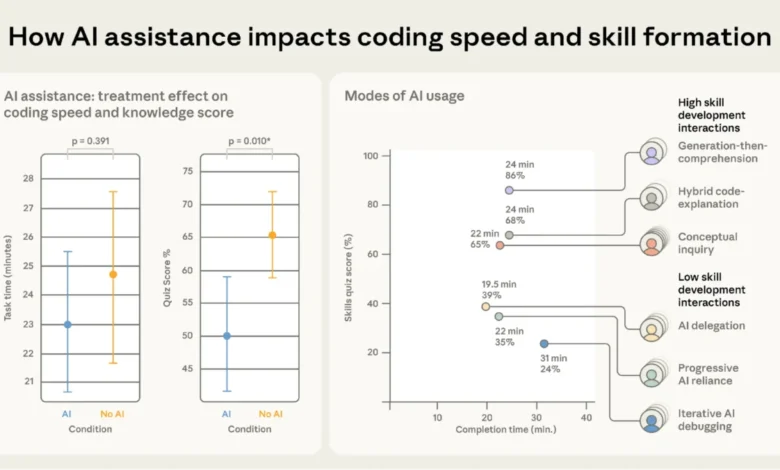
This dilemma is further illuminated by research from institutions like Anthropic, which suggests that while AI tools can indeed accelerate coding speed, their over-reliance without foundational understanding can impede the organic formation of genuine coding skills. This creates a paradox: designers might produce code faster, but their ability to understand, audit, and truly own that code diminishes, leading to an insidious accumulation of technical debt.
The High Cost of Unoptimized Code
Any experienced software engineer will attest that generating code with AI without precise, well-informed prompts and subsequent expert review frequently results in substantial rework. Because many designers, particularly those new to this expanded role, lack the comprehensive technical foundation necessary to critically audit the code provided by AI, they are inadvertently introducing significant amounts of "Quality Debt" into product ecosystems. This debt manifests in various forms, including inefficient algorithms, redundant code, poor architectural choices, and deviations from established coding standards.
Common Issues in Designer-Generated AI Code
Industry analysis and developer feedback consistently highlight several recurring problems with AI-generated code when handled by individuals without deep engineering expertise:

- Suboptimal Performance: AI-generated code, while functional, may not be optimized for speed, memory usage, or scalability. This can lead to slower applications, increased infrastructure costs, and a degraded user experience, especially under load.
- Security Vulnerabilities: Without a thorough understanding of secure coding practices, designers might inadvertently include or overlook security flaws in AI-generated code. This can expose applications to vulnerabilities such as SQL injection, cross-site scripting (XSS), or insecure data handling, leading to potential data breaches and compliance issues.
- Lack of Maintainability and Readability: AI models often prioritize functionality over code clarity, adherence to style guides, or logical structuring. This results in "spaghetti code" that is difficult for human engineers to read, understand, debug, and maintain, increasing future development costs and slowing down feature delivery.
- Inconsistent Architectural Patterns: AI-generated components might not align with a company’s established architectural patterns or design systems, leading to fragmented codebases and increased complexity in integration and future development.
- Accessibility Gaps: While AI can generate semantic HTML, ensuring true accessibility requires nuanced understanding of ARIA attributes, keyboard navigation, and screen reader compatibility, which generic AI prompts may miss without explicit, expert guidance.
- Dependency Bloat: AI might suggest or include unnecessary libraries or dependencies, increasing the application’s footprint and potential attack surface.
- Licensing Issues: Without careful prompting, AI might inadvertently generate code snippets derived from sources with incompatible licenses, creating legal risks for the organization.
Creating More Work, Not Less: The Rework Tax
The initial allure of AI was its promise to empower designers to independently ship features, thereby reducing the workload on engineering teams. The reality, however, has been the emergence of a "Rework Tax" – a hidden cost draining engineering resources across the industry. This tax is incurred when engineering teams must dedicate significant time to refactor, optimize, secure, and integrate AI-generated code that does not meet professional standards.
When a designer hands off AI-generated code that disregards a company’s internal naming conventions, coding standards, or established architectural patterns, they are not facilitating the engineer’s work. Instead, they are presenting a complex puzzle that requires substantial effort to solve, integrate, and make production-ready. A recent survey conducted by Netcorp on developer challenges with AI-generated code highlighted that the top issues included debugging, refactoring for quality, and integrating into existing systems – all tasks that contribute directly to this "Rework Tax." This negates the perceived efficiency gains, often leading to increased development cycles and frustration between design and engineering teams.
The Solution: Re-establishing Collaborative Synergy
To mitigate the escalating challenges and realize the true potential of AI, the industry must move away from the unsustainable model of the "Solo Full-Stack Designer" and pivot towards a robust model of integrated designer/coder collaboration. This paradigm shift acknowledges the unique and irreplaceable value of specialized expertise while leveraging AI as an intelligent assistant, not a replacement for deep knowledge.
The Ideal Reality: A Collaborative Ecosystem
In an optimized collaborative environment, the roles and responsibilities are clearly defined yet deeply intertwined:

- Designers as Visionaries and User Advocates: UX designers would leverage AI tools for rapid prototyping, concept exploration, and generating initial UI components. Their primary focus would remain on comprehensive user research, usability testing, information architecture, interaction design, and ensuring the holistic user experience. AI would augment their ability to visualize and iterate, allowing them to test more hypotheses faster, but the core decisions about human needs and interface principles would remain firmly in their domain.
- Engineers as Architects and Quality Guardians: Software engineers would utilize AI for generating boilerplate code, optimizing algorithms, and assisting with complex integrations. Their critical role would involve auditing AI-generated code for performance, security, maintainability, and adherence to architectural standards. They would integrate design components into the codebase, ensuring scalability, robustness, and long-term viability. Engineers would educate designers on technical constraints and possibilities, fostering a deeper mutual understanding.
- Shared AI-Powered Tooling: Both designers and engineers would utilize AI-powered tools that facilitate seamless handoffs and provide guardrails. This could involve AI-driven design systems that generate code compliant with company standards, or intelligent linters that flag potential issues in AI-generated components before they reach engineering.
- Cross-Functional Education: Regular workshops and knowledge-sharing sessions would empower designers with a foundational understanding of engineering principles (e.g., component lifecycle, API integration basics) and equip engineers with insights into user psychology and design thinking. This mutual respect and understanding would minimize friction and improve the quality of collaboration.
- Focus on Value, Not Volume: The emphasis would shift from sheer output speed to the delivery of high-quality, user-centric, and technically sound solutions. AI would accelerate iterative processes, freeing human experts to focus on complex problem-solving and innovation.
Beyond the Prompt: The Pendulum Swings Towards Quality
The industry is currently experiencing a phase of "AI Infatuation," where the novelty and perceived efficiency gains often overshadow critical long-term considerations. However, history suggests that the pendulum will inevitably swing back towards a prioritization of quality, stability, and genuine user value. Businesses that prioritize "designer-shipped code" without adequate engineering oversight will, over time, face an unavoidable reckoning. This will manifest in the form of crippling technical debt, escalating security vulnerabilities, costly accessibility lawsuits, and ultimately, a degradation of their brand reputation and customer trust.
The UX designers who will truly thrive in 2026 and beyond are those who resist the pressure to become mere "prompt operators." Instead, they will strategically position themselves as the unwavering guardians of the user experience. This outcome represents a perfect synergy for both experienced designers and the industry at large. Our inherent value has always resided in our unique ability to advocate for the human being interacting with technology. We must harness AI to augment our design thinking, enabling us to explore more ideas and iterate with unprecedented speed. Crucially, however, we must never permit AI to replace the specialized engineering expertise that is absolutely essential to ensure our designs are not only aesthetically pleasing and intuitive but also technically sound, secure, accessible, and performant for every single user. The future of exceptional digital products lies not in the homogenization of roles, but in the intelligent, respectful, and highly collaborative partnership between human-centered design and robust engineering, all amplified by the strategic application of AI.