
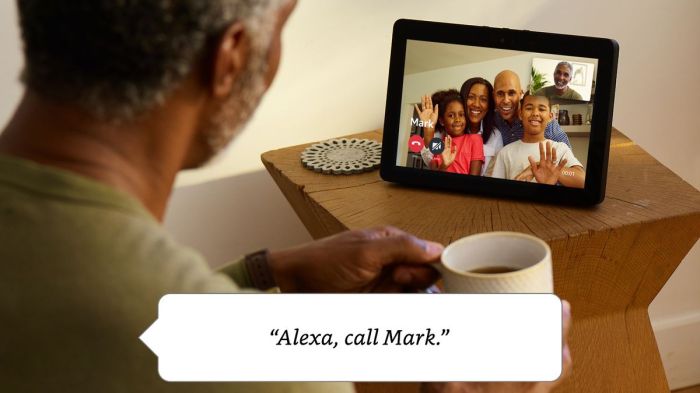
Google Home Assistant speaker device announced vs Amazon Echo: The smart speaker market is heating up! With the recent unveiling of Google’s new assistant speaker, consumers are eager to compare it to the long-standing Amazon Echo. This deep dive explores the features, functionalities, and ecosystems of both devices, examining their strengths and weaknesses, from voice assistant capabilities to user experience.
We’ll dissect their integration with smart home devices, hardware, pricing, and even their potential future in the rapidly evolving market.
Smart speakers have revolutionized how we interact with technology. From playing music to controlling smart home appliances, these devices have become increasingly essential in our daily lives. This comparison delves into the core components that set these two titans apart, allowing you to make an informed decision.
Introduction to Smart Speakers
The smart speaker market has exploded in recent years, transforming how we interact with technology. Two dominant players, Google Home and Amazon Echo, have shaped this evolution. This introduction will explore the historical context of smart speakers, detailing the key features of both Google Home and Amazon Echo, and comparing their respective market positions.The advent of smart speakers marked a significant shift from traditional audio devices.
Early attempts at voice-controlled technology, like personal digital assistants, often lacked the seamless integration and user-friendly design now commonplace. Smart speakers streamlined this experience, making voice interaction more intuitive and accessible to a wider audience.
Key Features of Google Home
Google Home’s core strength lies in its integration with the vast Google ecosystem. This allows for seamless control of various Google services, including music streaming, smart home devices, and information retrieval. The Google Assistant, powering the device, is renowned for its natural language processing capabilities, enabling complex commands and queries. Google Home excels in its ability to access a wealth of information, from real-time news updates to detailed weather forecasts.
Key Features of Amazon Echo
Amazon Echo, the market leader for a time, leverages its vast online retail network and extensive product offerings to build a comprehensive ecosystem. The Alexa voice assistant, a cornerstone of the Echo platform, is adept at managing tasks, controlling smart home appliances, and providing personalized recommendations. Echo’s focus on seamless shopping integration provides a unique selling point within its ecosystem.
Comparison Table
| Feature | Google Home | Amazon Echo |
|---|---|---|
| Price | Generally competitive with Amazon Echo, ranging from affordable entry-level models to premium options. | Often perceived as slightly more affordable for comparable functionalities, but pricing varies. |
| Functionalities | Comprehensive integration with Google services, offering a broad range of functionalities including music streaming, smart home control, and information access. | Wide range of functionalities, including music streaming, smart home control, and information access, often emphasizing the ease of shopping and entertainment. |
| Voice Assistant | Google Assistant, known for its natural language processing and access to Google’s extensive knowledge base. | Alexa, renowned for its extensive skills and integration with Amazon’s ecosystem, particularly in shopping and entertainment. |
| Ecosystem | Strong integration with Google’s vast ecosystem, encompassing services like Gmail, YouTube Music, and Google Maps. | Extensive integration with Amazon’s services, including Amazon Music, Prime Video, and online shopping. |
Market Positions
Both Google Home and Amazon Echo have carved out significant market positions within the smart speaker arena. Amazon’s early lead in the market is well-documented, while Google has steadily gained ground with innovative features and an expanding user base. This competitive landscape fosters ongoing innovation and improvement in both products.
Voice Assistant Capabilities
Voice assistants, like Google Assistant and Amazon Alexa, have become integral parts of our daily lives. Their ability to understand and respond to our spoken commands has revolutionized how we interact with technology. This section delves into the nuanced capabilities of these voice assistants, highlighting their strengths and weaknesses in handling various tasks.Google Assistant and Amazon Alexa, while both voice assistants, differ significantly in their approach to understanding natural language.
These differences impact their respective strengths and weaknesses when handling specific tasks.
Comparing Understanding of Natural Language
The core functionality of voice assistants hinges on their ability to interpret human speech. Google Assistant and Amazon Alexa utilize sophisticated algorithms to process spoken commands and requests. However, their approaches differ in terms of contextual awareness and ability to understand nuanced language. Google Assistant is known for its more sophisticated language models, leading to a greater capacity for understanding complex sentences and multiple requests.
The new Google Home Assistant speaker device announcement got me thinking about the ongoing Amazon Echo vs. Google Home debate. While comparing the two, I stumbled upon an interesting story about a researcher who seemingly had a conflict with the DJI bug bounty program, dji bug bounty program conflict researcher. This highlights the complexities of ethical considerations in tech, which reminds me that the Google Home vs.
Amazon Echo comparison also extends beyond simple features, but includes broader implications on the future of home assistant technology. Ultimately, the choice between these two smart speakers depends on individual needs and preferences.
Alexa, on the other hand, excels in specific, well-defined commands, often demonstrating a stronger ability to follow simple, direct instructions.
Strengths and Weaknesses in Handling Different Types of Tasks
Voice assistants demonstrate varying degrees of success when handling different tasks. Google Assistant excels in more complex tasks, such as scheduling appointments, controlling smart home devices, and providing in-depth information on diverse topics. Its strength lies in its broader knowledge base and ability to manage interconnected processes. Amazon Alexa, while capable in many areas, is frequently more effective in simple tasks, like playing music, setting alarms, and making calls.
Unique Skills and Features of Each Assistant
Each assistant boasts unique features and skills that cater to specific user needs. Google Assistant integrates seamlessly with Google’s ecosystem, offering enhanced functionalities for users who rely heavily on Google services like Gmail, Maps, and Calendar. Alexa, on the other hand, often features unique integrations with Amazon products and services, making it a powerful tool for managing Amazon-related tasks.
Examples of Voice Commands and Responses
| Voice Command | Google Assistant Response | Amazon Alexa Response |
|---|---|---|
| “Set a reminder for my doctor’s appointment tomorrow at 2 PM” | Confirmation of reminder set, with option to view calendar entry. | Confirmation of reminder set, with option to check reminders. |
| “Play some jazz music” | Selects a jazz music station from Google Play Music or other supported services. | Selects a jazz music station from Amazon Music or other supported services. |
| “What’s the weather like in London?” | Provides detailed weather forecast, including temperature, precipitation, and wind conditions. | Provides weather forecast, potentially with less detailed information. |
| “Find the nearest Italian restaurant” | Provides a list of nearby Italian restaurants, along with directions and ratings. | Provides a list of nearby Italian restaurants, with potentially less detailed information. |
Ecosystem Integration
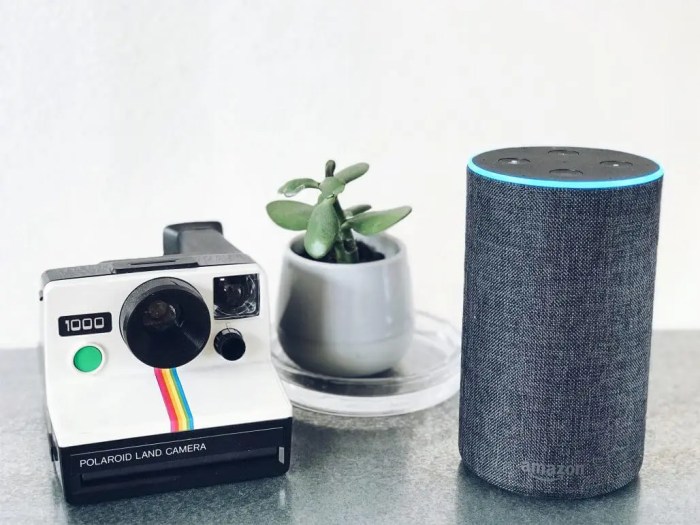
Smart speakers are more than just voice assistants; they’re gateways to a world of connected services and devices. Understanding how each platform integrates with its parent company’s ecosystem is crucial to evaluating its potential and limitations. This integration impacts not only the speaker’s core functionality but also its overall user experience and the potential for seamless smart home management.Google Home’s tight integration with Google services creates a cohesive experience for users already invested in the Google ecosystem.
Conversely, Amazon Echo’s integration with Amazon’s vast marketplace and services offers a different approach, focusing on convenience and ease of access to a wide array of products and services. The breadth and depth of these integrations significantly influence the user experience and the potential for future growth.
Google Home’s Integration with Google Services
Google Home’s strength lies in its seamless integration with Google services. This integration provides a consistent user experience across various Google products, like Search, Calendar, Gmail, and YouTube. For instance, you can ask Google Home to schedule a meeting in your Google Calendar or play music from your Google Play Music library. This unified approach allows for a streamlined workflow, where different Google services seamlessly interact through the speaker.
Amazon Echo’s Integration with Amazon Services
Amazon Echo’s ecosystem is built around the Amazon marketplace and its vast selection of products. This allows users to leverage the speaker for tasks like ordering products from Amazon, managing their Amazon Prime subscriptions, or controlling smart home devices compatible with the Amazon ecosystem. The integration is particularly strong in the area of online shopping, making it convenient to purchase products directly through the speaker.
Comparison of Ecosystem Breadth and Depth
Google’s ecosystem, while comprehensive, tends to focus on its core services. This often means that users already heavily invested in Google’s suite of apps will find the integration seamless. Amazon’s ecosystem, however, is significantly broader, encompassing not only its core services but also a massive marketplace and a wide array of third-party smart home devices. This comprehensive approach can be more appealing to users seeking a broader range of functionality and product choices.
Examples of Integration with Other Smart Home Devices
Both platforms support a wide range of smart home devices, although the specific brands and models vary. For instance, Google Home can control lights, thermostats, and security systems from various manufacturers, while Amazon Echo integrates with smart devices from brands like Philips Hue, Ring, and Nest.
Table of Supported Smart Home Devices
| Platform | Examples of Supported Devices |
|---|---|
| Google Home | Google Nest devices, Philips Hue lights, Samsung smart appliances, and various smart locks |
| Amazon Echo | Amazon Echo devices, Ring security systems, Philips Hue lights, Nest thermostats, and numerous smart plugs |
User Interface and Experience: Google Home Assistant Speaker Device Announced Vs Amazon Echo
Smart speakers, like Google Home and Amazon Echo, have revolutionized how we interact with technology. Their user interfaces, though seemingly simple, are carefully crafted to provide intuitive and efficient voice control. Understanding these interfaces is crucial to maximizing their potential and finding the best fit for individual needs.The user experience is heavily influenced by the platform’s design choices, voice recognition accuracy, and the range of compatible devices and services.
This section delves into the specifics of each platform’s interface, highlighting strengths and weaknesses to provide a clearer picture of their respective usability.
Google Home User Interface
Google Home’s interface emphasizes simplicity and a streamlined approach. Voice commands are the primary method of interaction, and the interface is designed to be responsive and direct. The Google Assistant’s natural language processing allows for complex requests, making it easier to control multiple devices or perform intricate tasks. For example, a user can say “Turn on the living room lights and set the thermostat to 70 degrees,” and the Google Home system will execute both commands efficiently.
Amazon Echo User Interface
The Amazon Echo interface focuses on a conversational and natural feel. Alexa, the voice assistant, is designed to understand and respond to requests in a conversational manner. The interface often incorporates visual cues and feedback through the speaker, providing confirmation of actions. This conversational approach can be appreciated for its natural flow. For instance, a user might say “Alexa, play some jazz music,” and Alexa will respond with confirmation and begin playing the requested music.
Ease of Use Comparison
Both Google Home and Amazon Echo are designed for ease of use, but their approaches differ. Google Home’s emphasis on simplicity might appeal to users seeking a straightforward control system. The Amazon Echo’s conversational interface, while potentially more natural, might require a bit more initial learning. This difference in approach can be observed in how they handle complex commands, with one system handling intricate requests more seamlessly than the other.
Ultimately, ease of use is highly subjective and depends on individual preferences and familiarity with voice assistants.
Just saw the Google Home Assistant speaker device announcement, and it’s interesting to compare it to the Amazon Echo. While the design is certainly a focal point, I’m more interested in the functionality. Speaking of interesting tech, have you checked out the Honor Watch 5 Ultra? The Honor Watch 5 Ultra looks stunning but the software drops the ball , which is a shame because the hardware looks promising.
Ultimately, I’m still eager to see how the Google Home Assistant speaker stacks up against the competition in the smart home space.
Strengths and Weaknesses
- Google Home: Strengths lie in its clean, streamlined design, strong natural language processing, and a broad range of integrated devices and services. A potential weakness is sometimes a less-intuitive approach to handling complex tasks compared to Amazon Echo.
- Amazon Echo: Strengths include a conversational approach that feels more natural for some users, and the expansive ecosystem of skills and devices that are available. A potential weakness is sometimes a slightly less precise understanding of natural language compared to Google Home.
User Interface Elements and Experience Aspects
| Feature | Google Home | Amazon Echo |
|---|---|---|
| Voice Recognition | Generally accurate, especially for well-enunciated commands. | Accurate, though sometimes requiring slightly more clarity, particularly in noisy environments. |
| Natural Language Processing | Excellent at understanding complex commands and requests. | Good at understanding natural language but may sometimes struggle with nuances. |
| User Interface Design | Clean and straightforward, focusing on minimal visual cues. | More conversational and intuitive, using visual cues for confirmation. |
| Integration with Devices | Extensive integration with various smart home devices. | Vast range of supported devices and smart home integrations. |
| Overall Experience | Simple and efficient for basic tasks; sometimes less flexible for more advanced use cases. | More natural and conversational but may require a steeper learning curve for complex tasks. |
Hardware and Design
The physical embodiment of smart speakers plays a crucial role in the user experience. Beyond the voice assistant capabilities, the design and build quality significantly influence how users interact with and perceive these devices. This section delves into the hardware specifications, design choices, and the overall aesthetic appeal of Google Home and Amazon Echo, examining the key differences in their construction and the impact on audio performance.
So, the Google Home Assistant speaker device announcement versus the Amazon Echo is definitely interesting, but honestly, I’m more excited about filmstruck streaming service, which now includes Turner Classic Movies and the Criterion Collection. Filmstruck streaming service turner classic movies criterion collection is a game-changer for movie lovers. It’s a great alternative for those who want something more than just the standard streaming options.
Still, the Google Home Assistant speaker is going to be a major player in the smart home market, regardless of how the Amazon Echo responds.
Hardware Specifications
The physical characteristics of smart speakers greatly impact their usability and perceived quality. Understanding the dimensions, materials, and speaker configurations helps users make informed decisions based on their needs and preferences.
- Google Home models vary in size, from the compact Google Nest Mini to the larger Google Nest Hub Max. The Google Nest Mini, for instance, features a compact, cylindrical design, prioritizing portability. The Google Nest Hub Max, on the other hand, boasts a larger footprint, incorporating a touchscreen display. Google Home speakers often employ a single-driver speaker setup for their audio output.
Their microphone arrays are designed for clear voice recognition in varying environments. Key materials used in Google Home devices are often high-quality plastics and potentially metal accents for a premium look.
- Amazon Echo devices also come in various sizes, with the Echo Dot being the smallest and the Echo Studio being the largest. The Echo Dot’s diminutive design is aimed at ease of placement, while the Echo Studio is built for a more prominent audio presence. Amazon Echo speakers frequently utilize a multi-driver speaker setup for a more balanced audio experience.
Their microphone arrays are designed for accurate voice recognition and are strategically placed to capture sound from different angles. The Echo devices frequently incorporate fabric or plastic materials, often with varying finishes, including glossy and matte options.
Audio Quality and Performance
The audio quality of smart speakers is a critical factor in user satisfaction. Different speaker configurations and driver designs contribute to the overall sound quality.
- Google Home speakers typically prioritize clarity and balance. The audio output is often described as having a wide soundstage, ensuring a good spread of audio across the room. While the Google Home Mini is compact, it delivers a surprisingly well-rounded sound for its size. However, the sound quality of the Google Home Mini is often more emphasized at lower volumes than high volumes.
- Amazon Echo speakers sometimes offer a richer bass response, and the sound can be more impactful in certain genres. The audio quality often varies depending on the model, with the larger and more sophisticated models often providing a more complete audio experience. The Amazon Echo Studio, for instance, is known for its emphasis on high-fidelity audio, resulting in a more nuanced and detailed sound reproduction.

Physical Design Elements, Google home assistant speaker device announced vs amazon echo
The physical design, including materials and aesthetic choices, plays a vital role in the user’s overall perception of the device.
- Google Home devices often feature clean lines and simple shapes, emphasizing a modern aesthetic. The materials employed in the Google Home line are typically robust, ensuring durability and resilience. Different color options and materials might be available to match user preferences. The cylindrical shape of the Google Nest Mini, for example, is meant to be visually unassuming and easy to integrate into various décor settings.
- Amazon Echo devices often showcase a more rounded and contemporary design language. Materials used in Amazon Echo devices vary, sometimes including premium-quality fabrics or textures for a sophisticated feel. Color options and design choices can vary based on the specific model. The Echo devices often feature a more angular and sculpted aesthetic compared to the Google Home models.
Technical Specifications Comparison
A table summarizing the key technical specifications of both device types is presented below.
| Specification | Google Home | Amazon Echo |
|---|---|---|
| Speaker Driver Type | Single driver, often tuned for clarity | Multi-driver, often tuned for balanced sound |
| Microphone Array | Multiple microphones for voice recognition in various environments | Multiple microphones for voice recognition and noise cancellation |
| Physical Dimensions (Example) | Google Nest Mini: ~4 inches | Echo Dot 4th Gen: ~3.8 inches |
| Materials | High-quality plastics, potential metal accents | Fabric, plastics, varying finishes |
| Connectivity | Wi-Fi, Bluetooth | Wi-Fi, Bluetooth |
Pricing and Availability
Smart speaker pricing often reflects a delicate balance between attracting consumers and maintaining profitability. This section delves into the pricing strategies of Google Home and Amazon Echo, examining availability, pricing models, and variations across different models. Understanding these factors is crucial for consumers seeking the best value and for businesses looking to leverage these devices.Pricing strategies for smart speakers often involve tiered models, aimed at capturing a broad range of consumers.
The availability and distribution channels significantly influence pricing, impacting consumer access and overall market penetration.
Pricing Strategies Comparison
The pricing strategies of Google Home and Amazon Echo differ slightly, though both aim for broad market penetration. Amazon, often employing aggressive pricing strategies, has traditionally offered a wider range of Echo devices with varying price points. This approach is designed to attract a diverse customer base. Google Home, on the other hand, often focuses on a more premium positioning, although some models are competitively priced.
This pricing strategy allows for greater margins and can be associated with features and design enhancements.
Availability and Distribution Channels
Both Google Home and Amazon Echo speakers are widely available through various channels. Amazon’s extensive online presence and retail partnerships, including major retailers like Best Buy and Target, provide significant reach and convenience for consumers. Google Home devices are available through Google’s online store, as well as major electronics retailers. These diverse distribution channels cater to a broad range of consumer preferences and needs.
Pricing Models and Subscription Costs
The core functionality of both Google Home and Amazon Echo is generally free. However, some advanced features or functionalities may be contingent on subscriptions, such as access to premium music services or certain cloud-based services. The pricing models vary slightly based on the device’s features. These subscription costs are generally minimal, often providing access to a broader range of functionalities and features.
Pricing Variations Across Different Models
The pricing variations reflect the range of features and functionalities. Entry-level models are often priced competitively, targeting budget-conscious consumers, while higher-end models are equipped with advanced features, such as enhanced audio quality, advanced voice recognition, and improved design, often commanding higher price points. The availability of different models or editions can influence pricing as well.
Price and Availability Comparison Table
| Device Model | Approximate Price (USD) | Availability Channels |
|---|---|---|
| Google Home Mini | $49 | Google Store, major retailers |
| Google Nest Audio | $99 | Google Store, major retailers |
| Amazon Echo Dot (3rd Gen) | $49 | Amazon.com, major retailers |
| Amazon Echo (4th Gen) | $99 | Amazon.com, major retailers |
| Google Nest Hub | $129 | Google Store, major retailers |
| Amazon Echo Show 10 | $149 | Amazon.com, major retailers |
Note: Prices and availability may vary depending on region and retailer. This table provides a general overview of pricing and availability for different models of smart speakers.
Market Trends and Future
The smart speaker market, fueled by the smart home revolution, is experiencing dynamic growth and evolving rapidly. Factors like increasing affordability, enhanced voice assistant capabilities, and wider ecosystem integrations are driving the demand for these devices. This section delves into the current market trends, anticipates future developments, and examines the impact of the smart home revolution on the smart speaker market.
Current Market Trends
The smart speaker market is currently dominated by a few key players, with Amazon Echo and Google Home leading the charge. Competition is fierce, prompting continuous innovation in voice assistant capabilities, user interfaces, and hardware design. Smart speakers are becoming increasingly integrated into the fabric of daily life, offering users convenient access to information, entertainment, and control over smart home devices.
The market trend demonstrates a shift from simple voice control to more complex tasks and sophisticated interactions.
Potential Future Developments
Future smart speaker devices will likely see significant advancements in natural language processing (NLP), enabling more intuitive and context-aware interactions. Improved speech recognition and understanding will lead to more seamless and error-free voice commands. Enhanced integration with other smart home devices and services is anticipated, facilitating more sophisticated automation and control over the home environment. Personalized experiences tailored to individual user preferences and routines will become more prevalent.
This personalized approach will offer a more seamless integration of voice control with daily life.
Factors Influencing Demand
Several factors contribute to the sustained demand for smart speaker devices. The increasing affordability of these devices makes them accessible to a wider consumer base. The rise of smart home ecosystems encourages integration and creates a compelling value proposition for users. Enhanced voice assistant capabilities, with improved understanding and response times, are a significant draw. The convenience of voice control for a variety of tasks, from playing music to setting reminders, contributes to the ease of use.
Impact of the Smart Home Revolution
The smart home revolution has significantly impacted the smart speaker market, accelerating adoption and innovation. The interconnected nature of smart home devices creates a synergistic effect, driving demand for centralized control and automation capabilities offered by smart speakers. The seamless integration of smart speakers with various smart home platforms further enhances their value and functionality. This integration has led to an increased demand for home automation solutions.
Projected Market Trends (Next 5 Years)
| Year | Trend | Description | Example |
|---|---|---|---|
| 2024 | Increased Integration | Smart speakers will become more deeply integrated into smart home ecosystems, allowing for more complex automation and control. | Seamless control of lighting, temperature, and security systems via voice commands. |
| 2025 | Enhanced NLP | Significant improvements in natural language processing will enable more context-aware and intuitive interactions. | Understanding complex requests and providing contextually relevant responses. |
| 2026 | Rise of AI-Powered Features | AI-powered features like personalized recommendations and predictive capabilities will enhance user experience. | Predictive scheduling based on user habits. |
| 2027 | Focus on Security and Privacy | Enhanced security features and robust privacy safeguards will be crucial for maintaining user trust. | Secure voice authentication and data encryption. |
| 2028 | Multi-Device Collaboration | Smart speakers will seamlessly collaborate with other smart devices, creating a unified smart home experience. | Voice commands controlling multiple devices across different ecosystems. |
Conclusive Thoughts
In conclusion, both Google Home and Amazon Echo offer compelling smart speaker experiences. The choice ultimately depends on individual needs and preferences. Google’s emphasis on seamless integration with Google services and products might appeal to existing Google ecosystem users, while Amazon’s extensive ecosystem and established brand recognition might be attractive to a broader range of consumers. The detailed comparisons across features, functionalities, and the future market trends provide a comprehensive view to navigate the competitive smart speaker market.