
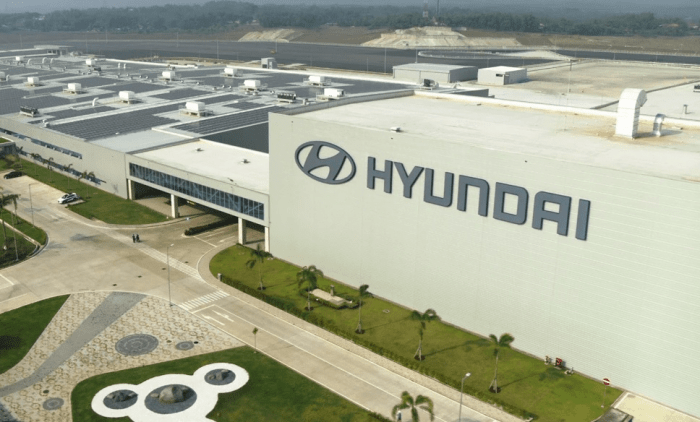
Hyundai building ev battery production facilities georgia – Hyundai building EV battery production facilities in Georgia marks a significant step in the global push for electric vehicles. This investment signals Hyundai’s commitment to not only producing electric vehicles but also to establishing a crucial component of the future automotive industry within the US. The project promises substantial economic benefits, technological advancements, and environmental considerations.
Hyundai’s plans for Georgia encompass a range of facilities, a substantial investment, and a projected timeline. The company is strategically positioning itself to meet the increasing demand for electric vehicles and compete effectively in the market. The project is expected to have a ripple effect on the local economy, creating jobs and stimulating growth in related industries. This move underscores Hyundai’s proactive approach to the evolving landscape of sustainable transportation.
Overview of Hyundai’s EV Battery Production Expansion in Georgia
Hyundai Motor Group is significantly expanding its electric vehicle (EV) battery production footprint in Georgia. This substantial investment underscores the growing importance of battery manufacturing in the global automotive industry and the strategic value of the US market for Hyundai. The company’s commitment to establishing these facilities positions them as a key player in the EV revolution.
Hyundai’s Announced Plans for Battery Production Facilities in Georgia
Hyundai’s plans encompass the development of multiple battery production facilities in Georgia. This expansion represents a substantial commitment to domestic EV battery manufacturing, enhancing their supply chain resilience and potentially reducing reliance on foreign suppliers. The project is expected to bring significant economic benefits to the state.
Scale and Scope of the Investment
The investment details the creation of new facilities with substantial production capacity. Hyundai aims to meet the increasing demand for EV batteries, positioning themselves to become a major player in the global EV market. The scale and scope of the investment are significant, reflecting the company’s long-term strategy for growth in the electric vehicle sector. Projected timelines suggest a phased approach to facility construction and operation, ensuring efficiency and maximizing production output.
Strategic Rationale Behind Hyundai’s Decision, Hyundai building ev battery production facilities georgia
Several factors contributed to Hyundai’s decision to establish these facilities in Georgia. These include the availability of skilled labor, supportive government policies, and proximity to key automotive industry partners. The strategic rationale behind the decision is multi-faceted, aiming to strengthen their presence in the US market and improve supply chain efficiency. By producing batteries domestically, Hyundai is aiming to lower production costs, potentially reducing the risk of supply chain disruptions and increasing responsiveness to market demands.
Comparison to Similar Investments by Other Automakers
Hyundai’s investment in Georgia aligns with a broader trend of automakers expanding their battery production in the United States. Several companies, including Tesla, LG Energy Solution, and others, have also invested heavily in US battery production facilities. This trend reflects the increasing importance of securing domestic battery supply chains and supporting the growing EV market. The competition among automakers in this sector is likely to intensify, driving further investment and innovation in battery technology and manufacturing.
Hyundai’s strategy is consistent with the evolving landscape of global automotive manufacturing, reflecting a proactive approach to addressing the growing demand for EV vehicles.
Economic Impact of the Facilities
Hyundai’s commitment to expanding EV battery production in Georgia promises a significant boost to the state’s economy. This investment isn’t just about building factories; it’s about creating a robust ecosystem for the burgeoning electric vehicle industry. The ripple effects will be felt across various sectors, from materials production to logistics, fostering growth and innovation.The construction and operation of these facilities will have a substantial economic impact, generating jobs and stimulating economic activity.
Hyundai’s new EV battery plant in Georgia is a big deal, signaling a major push into electric vehicles. While that’s happening, did you know Amazon’s now offering a $100 gift card when you buy the Google Pixel 9a? Sign me up Amazon will now give you a free USD100 gift card when you buy the affordable Google Pixel 9a ! It’s a great deal, and a welcome addition to the growing EV industry.
This new battery plant is definitely shaping the future of electric vehicles in the US.
The creation of this new manufacturing base will not only improve the region’s overall economic standing but will also position it as a key player in the global EV market.
Job Creation and Economic Stimulus
The construction phase of these facilities will create numerous jobs in various roles, from construction workers to engineers and technicians. The ongoing operation of these plants will ensure a continued influx of employment opportunities, attracting skilled labor from both within and outside the region. This influx of workers will naturally lead to a rise in demand for housing, retail services, and other essential businesses.
This phenomenon, known as the multiplier effect, is a well-established economic principle that demonstrates the interconnectedness of economic activities.
Supply Chain Implications
The new facilities will necessitate a robust supply chain to support the production process. This involves the procurement of raw materials, parts, and components. The demand for these materials will encourage the growth of related industries, such as mining, processing, and refining. This development will, in turn, lead to the expansion of supporting industries and infrastructure, further enhancing the local economy.
For example, the need for specialized transportation and logistics services will lead to investment in infrastructure and the growth of companies providing these services.
Impact on Related Industries
The battery production facilities will have a substantial impact on industries beyond direct manufacturing. The increased demand for materials like lithium, cobalt, and nickel will stimulate mining and processing activities, generating jobs and investment in those sectors. The demand for specialized equipment and technology will encourage the growth of the machinery and equipment sector. Additionally, the logistics sector will experience growth, as the transportation of raw materials and finished products will increase.
The demand for specialized equipment will likely lead to advancements in automation and technology, as industries strive to improve efficiency and meet the increased production needs.
Projected Job Growth
The following table provides a projected overview of job growth in various sectors related to the new EV battery production facilities in Georgia. These figures are estimates and subject to change based on various factors, such as market demand and technological advancements.
| Sector | Projected Job Growth (approximate) |
|---|---|
| Construction | 10,000-15,000 |
| Manufacturing | 5,000-7,000 |
| Materials Production (e.g., Lithium Mining, Battery Component Manufacturing) | 2,000-3,000 |
| Logistics and Transportation | 1,500-2,500 |
| Related Services (e.g., Engineering, Consulting) | 1,000-2,000 |
Technological Advancements in Battery Production

Hyundai’s expansion into EV battery production in Georgia signifies a significant commitment to the future of electric vehicles. This investment isn’t just about building factories; it’s about embracing cutting-edge battery technology to power the next generation of mobility. The choice of technologies and manufacturing processes will be crucial for the company’s success in this rapidly evolving market.The battery production process is undergoing a revolution, driven by the need for higher energy density, faster charging times, and more sustainable manufacturing practices.
Hyundai’s Georgia facilities are likely to reflect these advancements, focusing on efficiency and environmental responsibility. This is a critical juncture for the industry, as the transition to EVs necessitates a robust and reliable supply chain for battery components.
Battery Chemistries and Their Advantages
The choice of battery chemistry is a critical decision, impacting factors such as performance, cost, and sustainability. Different chemistries offer unique trade-offs.
- Lithium-ion (Li-ion) batteries remain the dominant technology in EVs due to their high energy density. Various chemistries within Li-ion, such as NMC (Nickel-Manganese-Cobalt), NCA (Nickel-Cobalt-Aluminum), and LFP (Lithium Iron Phosphate), exhibit varying performance characteristics. NMC, for instance, offers high energy density but has environmental concerns associated with cobalt extraction. LFP batteries, conversely, offer a lower energy density but are often considered more sustainable due to their reduced reliance on cobalt.
The choice of specific chemistry will likely depend on the intended application and target market segment.
Current Trends and Innovations in Battery Technology
The battery technology landscape is constantly evolving. Innovations are focused on enhancing efficiency, safety, and sustainability.
Hyundai’s new EV battery plant in Georgia is a major step forward, and it’s exciting to see this industry grow. It’s all about the future, and reminds me of that endlessly looping, inspiring tune, the song that doesn’t end , which perfectly captures the relentless innovation and progress in this sector. This massive investment shows Hyundai’s commitment to electric vehicles and positions them as a leader in the global transition to sustainable transportation.
- Solid-state batteries are a promising area of research. These batteries have the potential to offer higher energy density, improved safety, and potentially faster charging times compared to traditional lithium-ion batteries. However, their commercial viability is still being evaluated. Early examples, like those developed by companies like Solid Power, are showing promising results, but scaling up production remains a significant challenge.
- Advanced battery management systems (BMS) are essential for optimizing battery performance, ensuring safety, and extending battery lifespan. These systems use sophisticated algorithms to monitor battery health and adjust charging and discharging parameters in real-time. This leads to increased efficiency and a longer lifespan for the batteries.
Production Efficiency and Sustainability
The importance of sustainable and efficient battery production cannot be overstated. Minimizing environmental impact while maximizing production efficiency is crucial.
- Recycling and reuse of battery components are becoming increasingly important. The development of robust recycling infrastructure will be essential to ensure the responsible disposal of spent batteries and recover valuable materials for reuse in the production of new batteries. Several companies are already exploring these options, including battery manufacturers and specialized recycling firms.
- Raw material sourcing is also a key consideration. Strategies for sourcing raw materials responsibly and ethically are becoming paramount. The focus on sustainable sourcing is being driven by increasing awareness of the environmental and social impact of mining activities. For example, some companies are collaborating with mining companies to ensure responsible sourcing and ethical labor practices.
Comparison of Different Battery Chemistries
Different chemistries offer distinct advantages and disadvantages.
| Chemistry | Energy Density | Cost | Sustainability | Safety |
|---|---|---|---|---|
| NMC | High | Moderate | Moderate (Cobalt concern) | Moderate |
| NCA | High | Moderate | Moderate (Cobalt concern) | High |
| LFP | Lower | Lower | High | High |
“The choice of battery chemistry is a critical decision, influenced by performance requirements, manufacturing costs, and environmental considerations.”
Environmental Considerations
The burgeoning electric vehicle (EV) industry, while promising a cleaner future, presents significant environmental challenges related to battery production. From the mining of raw materials to the energy-intensive manufacturing processes, the environmental footprint of EV batteries is a critical consideration. Understanding these impacts and Hyundai’s strategies for mitigating them is crucial for assessing the true sustainability of this transition.The production of lithium-ion batteries, a cornerstone of EV technology, demands considerable energy and resources.
The environmental impact extends beyond the manufacturing process, encompassing the lifecycle of the battery from extraction to disposal. Understanding these complexities is vital for creating sustainable practices and achieving a net-positive environmental outcome.
Energy Consumption in Battery Production
Battery production consumes substantial amounts of energy across various stages, from the initial extraction of raw materials to the final assembly. This energy consumption contributes to greenhouse gas emissions and, consequently, climate change. For instance, the smelting of lithium ore requires significant energy input, often relying on fossil fuels. Minimizing energy consumption throughout the production chain is a key environmental priority.
The use of renewable energy sources in battery factories can substantially reduce this impact.
Waste Generation in Battery Production
Battery manufacturing generates substantial waste, including hazardous materials like heavy metals. Proper management and disposal of these materials are essential to prevent environmental contamination. The efficient recycling of battery components is crucial for minimizing waste and maximizing resource utilization. This includes establishing effective recycling infrastructure and developing innovative recycling technologies.
Resource Extraction and its Impact
The extraction of raw materials for batteries, such as lithium, cobalt, and nickel, can have significant environmental consequences. These activities can lead to habitat destruction, water pollution, and soil degradation. Sustainable sourcing practices are critical to minimizing these negative impacts. Companies must prioritize ethical sourcing and collaborate with suppliers who adhere to environmentally responsible mining practices. Transparency in the supply chain is also essential to monitor and mitigate potential risks.
Hyundai’s new EV battery plant in Georgia is a big deal, highlighting the growing importance of domestic manufacturing. This surge in production reflects a broader trend, and it’s worth considering how these investments connect to the Biden administration’s efforts to bolster domestic infrastructure, including cybersecurity initiatives like those detailed in the Biden executive order on cybersecurity and government infrastructure, which addressed the Colonial Pipeline and SolarWinds Hafnium attacks.
Ultimately, a secure and robust supply chain, like the one Hyundai is building in Georgia, is critical for the future of electric vehicles.
Hyundai’s Sustainability Initiatives
Hyundai has publicly articulated its commitment to sustainability in battery production. These initiatives include a focus on using renewable energy in its manufacturing facilities. They also emphasize the development of battery recycling technologies to minimize waste. A detailed commitment to responsible sourcing, including ethical mining practices, is another aspect of Hyundai’s strategy.
Potential Environmental Risks and Mitigation Strategies
Several environmental risks are associated with battery production. These include potential water contamination from mining operations, air pollution from manufacturing processes, and the release of hazardous waste. Implementing stringent environmental regulations and robust waste management protocols are crucial mitigation strategies. Investing in research and development for cleaner manufacturing processes and advanced recycling technologies is essential for reducing environmental risks.
Collaboration with governmental agencies and environmental organizations can help establish industry-wide standards and best practices.
Environmental Footprint of Different Battery Technologies
The environmental footprint varies significantly among different battery technologies. For instance, lithium-ion batteries, while widely used, have a higher carbon footprint than some alternative battery chemistries. The use of alternative materials and manufacturing processes is essential for reducing the environmental impact of various battery technologies.
| Battery Technology | Environmental Impact (Estimated) |
|---|---|
| Lithium-ion | Medium to High (depending on sourcing and manufacturing processes) |
| Sodium-ion | Potentially Lower (due to lower cost of raw materials and manufacturing) |
| Solid-state | Potentially Lower (due to potentially reduced materials use and improved recycling) |
Different battery technologies are being researched and developed to potentially reduce their environmental footprint. The long-term environmental impact of each technology will depend on various factors, including raw material sourcing, manufacturing processes, and recycling infrastructure.
Infrastructure Development and Logistics
The expansion of Hyundai’s EV battery production in Georgia hinges critically on robust infrastructure. Adequate transportation networks, reliable power grids, and a skilled workforce are essential to ensure smooth operations and maximize efficiency. Logistics play a pivotal role in the entire process, from procuring raw materials to delivering finished products. This section explores the critical infrastructure components and logistical considerations.
Transportation Networks
Efficient transportation networks are vital for moving raw materials, components, and finished products. Georgia’s existing infrastructure, including highways, ports, and rail lines, needs to be evaluated and potentially enhanced to support the increased volume of goods. This includes not only the movement of materials within Georgia but also the connectivity to national and international transportation hubs. A well-developed network ensures timely delivery and reduces logistical bottlenecks.
- Highway improvements and expansions are crucial to accommodate the increased volume of shipments.
- Investments in rail infrastructure can facilitate cost-effective transport of bulk materials and components.
- Enhancement of port facilities is essential for receiving international shipments of raw materials and exporting finished batteries.
Power Grid Capacity
The battery production process demands significant amounts of electricity. Ensuring an adequate and reliable power grid is essential to support the manufacturing operations. Potential upgrades or expansions of the existing power grid infrastructure in the area are necessary to meet the increased energy demands. This includes both ensuring a steady supply and the necessary voltage and current capacity.

Skilled Labor
A sufficient pool of skilled labor is indispensable for successful battery production. Training programs and educational initiatives focusing on the technical aspects of battery manufacturing are required. This includes skilled technicians, engineers, and other specialized personnel to ensure smooth and efficient operations. Attracting and retaining this talent is a key aspect of long-term success.
Material Sourcing and Logistics
The sourcing and logistics of raw materials for battery production are critical to efficiency. Reliable suppliers and efficient procurement processes are essential to maintain a consistent supply of high-quality materials. The transportation of raw materials from various sources to the production facility must be optimized. Accurate forecasting and inventory management are vital to prevent supply chain disruptions.
- Effective procurement strategies ensure the timely and cost-efficient acquisition of raw materials.
- Establishing strategic partnerships with suppliers is essential for long-term supply chain stability.
- Optimization of transportation routes and modes for raw materials is key to minimizing costs and transit times.
Manufacturing Component Logistics
The logistics of procuring and transporting manufacturing components are crucial for the production process. Efficient management of component inventory and a reliable supply chain are critical to avoid production delays. A robust network of suppliers and efficient warehousing facilities are needed to maintain a steady supply of components.
- Developing efficient warehousing and inventory management systems will prevent delays.
- Ensuring quality control throughout the supply chain for components is essential for high-quality production.
- Maintaining strong communication and coordination with component suppliers is key to minimizing disruptions.
Finished Product Logistics
The logistics of transporting finished products to customers are crucial for market access and efficiency. This includes considerations such as packaging, transportation, and delivery schedules. A well-planned logistics strategy will minimize costs and ensure timely delivery.
Potential Challenges
Infrastructure development often faces challenges like securing funding, navigating regulatory hurdles, and overcoming community concerns. Environmental impact assessments and public engagement are critical to minimize potential negative impacts on local communities.
| Raw Material | Source | Transportation Route | Logistics Partner |
|---|---|---|---|
| Lithium | South America | Ocean freight to Savannah Port, then truck to factory | Shipping company X |
| Cobalt | Africa | Ocean freight to Port of Savannah, then truck to factory | Shipping company Y |
| Nickel | Indonesia | Ocean freight to Port of Savannah, then truck to factory | Shipping company Z |
| Graphite | China | Ocean freight to Port of Savannah, then truck to factory | Shipping company A |
Potential Challenges and Opportunities: Hyundai Building Ev Battery Production Facilities Georgia

Hyundai’s ambitious expansion into EV battery production in Georgia presents a complex interplay of challenges and opportunities. Successfully navigating these factors will be crucial for the project’s long-term success and its contribution to the broader automotive industry and the state’s economy. The challenges demand innovative solutions, while the opportunities promise significant advancements in technology and economic growth.
Labor Shortages
Attracting and retaining a skilled workforce is critical for the smooth operation of these new facilities. A shortage of qualified personnel in battery production, manufacturing, and related fields could significantly impact production timelines and efficiency. This challenge necessitates proactive strategies for workforce development, training programs, and potentially attracting talent from other industries. For example, partnerships with local universities and vocational schools can equip the workforce with the necessary skills.
Supply Chain Disruptions
The production of EV batteries relies on a complex and intricate global supply chain. Disruptions, such as material shortages, logistical bottlenecks, or geopolitical instability, can severely impact production. Building resilient supply chains through diversification of suppliers and establishing local sourcing strategies is essential to mitigate these risks. This approach would reduce reliance on single points of failure and improve overall supply chain stability.
Regulatory Hurdles
Navigating the regulatory landscape, including environmental regulations, permitting processes, and labor laws, is crucial for the smooth implementation of the project. Strict adherence to environmental standards and compliance with labor regulations will be essential for long-term sustainability and public acceptance. Clear communication with regulatory bodies and proactive engagement in the permitting process are crucial steps to mitigate potential delays and ensure compliance.
Innovation and Collaboration
The new facilities present an opportunity to drive innovation in battery technology and manufacturing processes. Collaborations with research institutions, universities, and other industry players can accelerate advancements and lead to breakthroughs in battery performance, cost-effectiveness, and sustainability. Such partnerships can foster a dynamic environment for knowledge sharing and the development of cutting-edge solutions.
Societal and Community Impacts
The establishment of these new facilities will have a significant impact on the local community, including job creation, infrastructure development, and economic growth. Addressing potential concerns regarding community well-being, infrastructure needs, and social equity is essential for successful community integration. This includes proactive engagement with local stakeholders and a focus on equitable distribution of benefits and opportunities.
Potential Risks and Mitigation Strategies
| Potential Risk | Mitigation Strategy |
|---|---|
| Labor Shortages | Develop training programs, attract talent from other industries, partner with local educational institutions. |
| Supply Chain Disruptions | Diversify suppliers, establish local sourcing strategies, develop robust contingency plans for material shortages. |
| Regulatory Hurdles | Maintain open communication with regulatory bodies, ensure compliance with environmental and labor regulations, proactively engage in the permitting process. |
| Community Concerns | Engage with local stakeholders, address concerns regarding infrastructure development, ensure equitable distribution of economic benefits. |
Comparison with Other Battery Production Facilities
Hyundai’s Georgia EV battery plant represents a significant investment in the burgeoning global battery manufacturing sector. Understanding its position requires a comparative analysis with existing and planned facilities worldwide. This analysis considers factors such as location, technology, and environmental impact to paint a comprehensive picture of Hyundai’s ambitions and the broader industry landscape.Analyzing global battery production facilities reveals a diverse range of approaches, driven by varying economic incentives, technological priorities, and environmental regulations.
Each facility’s success depends on its ability to optimize these interconnected factors.
Location Decisions of Battery Production Facilities
Global battery production facilities are strategically located to take advantage of various factors. Proximity to raw material sources, supportive government policies, and skilled labor pools often influence these decisions. For example, facilities in China frequently benefit from abundant raw material supplies and substantial government support. Similarly, locations with strong infrastructure and logistics networks are attractive for their efficiency and cost-effectiveness.
Comparative Analysis of Production Costs
The cost structure of battery production varies significantly. Factors like raw material prices, labor costs, and energy costs play a critical role. For instance, facilities located in regions with lower labor costs may experience lower production expenses, but this may be offset by higher transportation costs or tariffs. Furthermore, access to cheaper energy sources significantly influences production costs.
Different facilities adopt different strategies to optimize these factors, impacting the overall cost-effectiveness of their production.
Comparative Analysis of Technologies
The technological landscape of battery production is constantly evolving. Different facilities utilize varying chemistries and manufacturing processes. Some prioritize high-capacity batteries, while others focus on cost-effectiveness. This competitive landscape compels innovation, leading to continuous advancements in battery technology. The adoption of advanced technologies and automation is a key driver in optimizing production efficiency.
Comparative Analysis of Environmental Standards
Environmental considerations are increasingly crucial in the battery industry. Facilities striving to minimize their environmental footprint prioritize sustainable practices, including recycling materials and reducing emissions. Compliance with stringent environmental regulations is a key determinant in the competitiveness of these facilities. The global push for environmentally friendly production practices will continue to shape the landscape of battery manufacturing.
Comparative Analysis of Environmental Standards
A crucial aspect of evaluating battery production facilities is their environmental performance. This involves assessing their impact on air and water quality, waste management practices, and carbon footprint. Each facility strives to optimize its environmental performance to comply with local and global regulations, and to build a sustainable reputation.
Comparative Analysis of Production Costs
The cost of battery production is multifaceted and dependent on various factors. These factors include raw material costs, labor costs, energy costs, and transportation costs. Production costs are crucial for determining the competitiveness of a battery facility. Facilities located in regions with low labor costs may have lower operational expenses, but this may be offset by higher transportation costs or tariffs.
Comparative Analysis of Production Costs
The production costs of battery cells vary greatly across facilities. Several factors influence this variability, including the scale of operations, raw material prices, labor costs, energy costs, and the complexity of the manufacturing processes. Optimizing these factors is vital for achieving cost-effectiveness.
Comparative Table of Different Battery Production Facilities
| Facility | Location | Technology | Environmental Standards | Production Costs |
|---|---|---|---|---|
| Hyundai Georgia | Georgia, USA | NMC/NCA | High | TBD |
| Tesla Gigafactory | Nevada, USA | NMC | High | High |
| BYD | China | NMC/LFP | Moderate | Low |
| LG Chem | South Korea | NMC/NCA | High | Moderate |
Final Summary
Hyundai’s battery production facilities in Georgia are poised to reshape the American automotive landscape. This significant investment brings about a confluence of economic growth, technological innovation, and environmental sustainability. The project’s success will depend on factors like infrastructure development, skilled labor availability, and effective mitigation of potential environmental risks. The project is not only crucial for Hyundai but also for the future of electric vehicles in the United States and globally.